
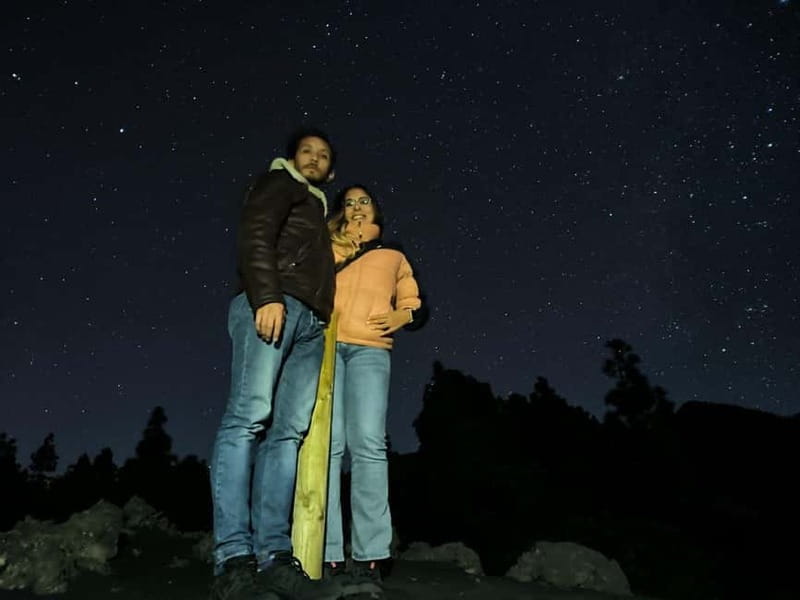
Review · LA PALMA
La Palma: Stargazing in the best sky in the world
Look up, and La Palma gets much bigger. This 1.5-hour evening tour takes you to a high astronomical viewpoint, where certified guides explain constellations, satellites, planets, galaxies, and myths beneath one of the world’s finest night skies. I especially like the small groups of 10 to 15 people and the chance to adjust the telescope for your own eye.
I also like the unhurried pace. You get time with the binoculars and telescope instead of being pushed aside after one quick look. The main consideration is the weather: the meeting point, start time, equipment, or even the activity itself can change at short notice, so you need to stay flexible and check your phone that day.
Key points to know before booking
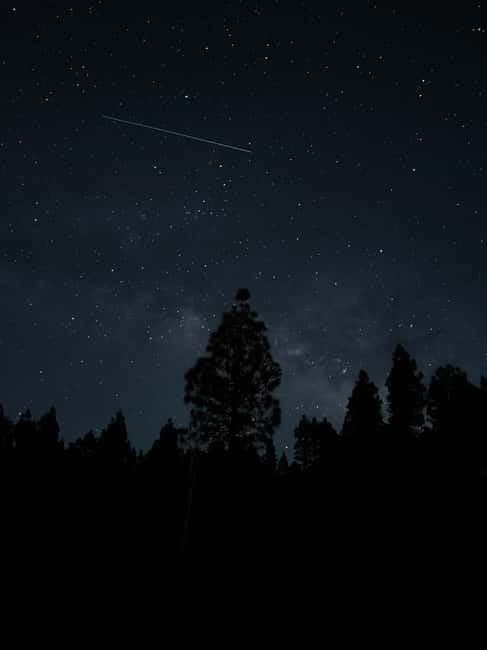
- Three possible observation areas: The usual sites are Llano del Jable at 1,341 meters and Llano de Las Ventas at 1,320 meters. A private location at San Antonio Volcano may also be used.
- Small groups make a difference: With roughly 10 to 15 people, the guide can give more personal help at the telescope.
- The telescope is not a quick photo stop: You can adjust it for your eye and spend time observing without haste.
- The program changes with the sky: The guide chooses the start time and location around clouds, wind, humidity, haze, alerts, and the position of visible objects.
- Nicolas is one guide to look for: He has been praised for clear explanations and strong storytelling. María José is another named contact for the meeting point.
- Bring serious warm clothing: High viewpoints can feel cold after sunset, and the tour specifically calls for warm clothes and shoes.
Why La Palma is such a good place for stargazing
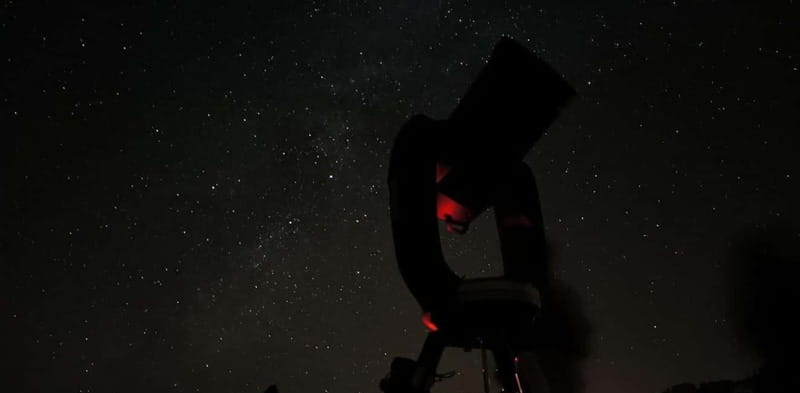
La Palma sits in the Canary Islands, far from the glow of large cities. Its high volcanic viewpoints offer dark skies and open views, making the island a respected place for astronomical observation. You do not need to know any astronomy before arriving. The guides build the evening from simple observations to larger questions about space.
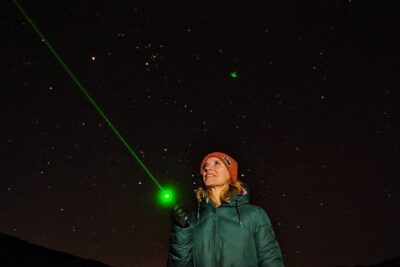
The darkness is the main attraction, but it is not the whole experience. A guide uses an astronomical laser to point out constellations, satellites, and other moving objects. That matters because the night sky can seem like a random spray of lights at first. Once someone connects those points for you, the sky becomes easier to read.
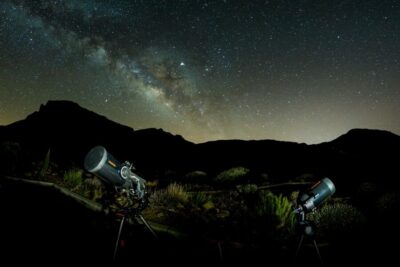
The tour also mixes different tools. You begin with your own eyes, then use binoculars to see wider areas, and finally move to the telescope for closer views. Each method shows something different. The naked eye gives you the scale of the sky. Binoculars reveal broad regions with nebulae and star clusters. The telescope brings selected objects closer.
More Stargazing Tours in Spain:
- Tenerife: Teide National Park Sunset & Stargazing Tour
★ 4.2 · 3,812 reviews - Tenerife: Sunset and Stargazing at Teide National Park
★ 4.7 · 2,826 reviews - Teide National Park Sunset & Stargazing with Dinner (Star Safari)
★ 5.0 · 2,601 reviews
Starting at an astronomical viewpoint
The published starting location is Mirador Astronómico del Llano del Jable, but you should not assume that is the final meeting point. The operator checks conditions on the day and may use Llano de Las Ventas, only about five minutes away, or San Antonio Volcano near Fuencaliente.
Llano del Jable and Llano de Las Ventas are both high sites, at about 1,341 and 1,320 meters above sea level. They are around 39 minutes from Santa Cruz, Los Cancajos, and Los Llanos according to the stated travel times. San Antonio Volcano is lower, at 633 meters, and is about 40 minutes from those main areas. It is also roughly 15 minutes from the Princess Hotel.
You do not get hotel transport, so you need your own way to the chosen location. The exact site depends on clouds, wind, humidity, haze, government alerts, available space, and the objects the guide hopes to show. That sounds like a complication, but it is sensible. A fixed location would be less useful if the sky there is covered by cloud.
On arrival, look for the guide at the center of the viewpoint. The group uses a red light, and you can contact the team if you cannot find them. Arrive 15 minutes early. Turn off your car lights when approaching, and keep any white flashlight pointed at the ground. Bright light affects everyone’s night vision, even if you use it for only a few seconds.
The first hour: constellations, satellites, and stories
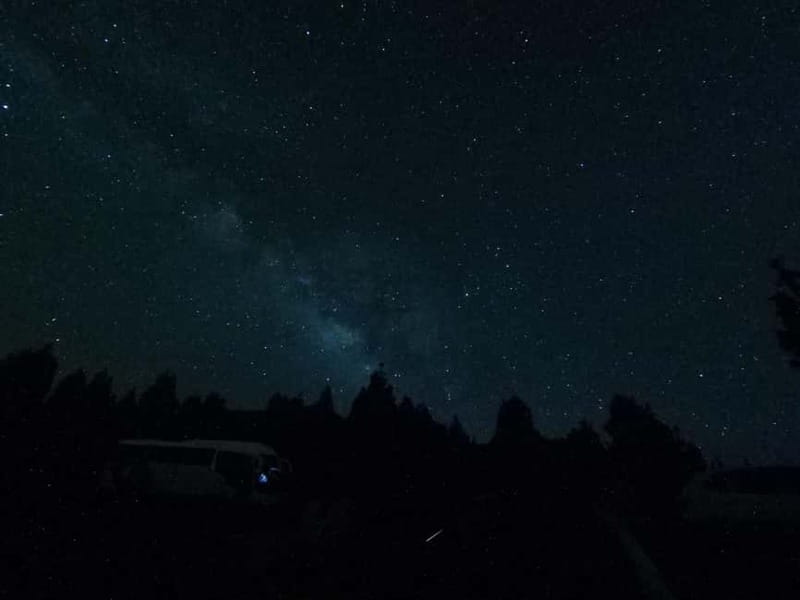
The evening begins with the naked-eye sky. The guide uses a laser to identify constellations and explain what you are seeing. This is a good opening because it gives you a frame of reference before the equipment comes out.
You may also watch satellites or other moving objects cross the sky. Those quick movements help you understand that the night is not static. Some things seem fixed because they are very far away, while others pass overhead in real time.
The explanations are not limited to astronomy terms. The program includes myths and legends from different cultures, along with basic ideas about the physics of the Cosmos and the chemistry that forms stars. That mix should suit you if you like stories with your science. It also gives families and first-time observers an easier way into the subject.
Nicolas has received particular praise for clear explanations and storytelling. That is important here because a guide can easily lose a group by using too much technical language. The best parts of this kind of evening are the moments when a difficult idea becomes understandable without being watered down.
Binoculars reveal the wider sky
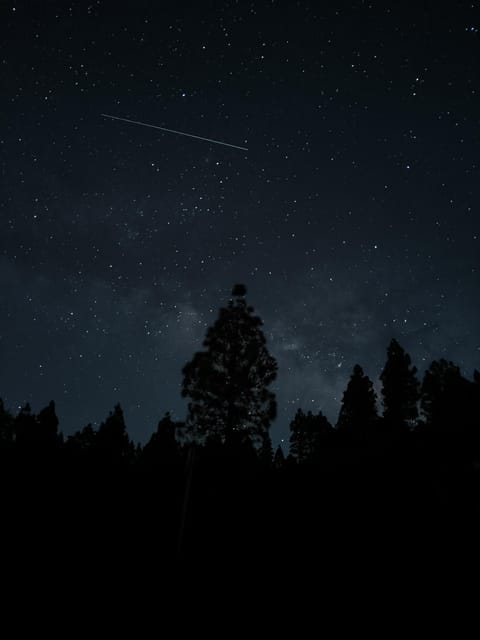
After the naked-eye introduction, you look through binoculars at larger regions of the sky. This is different from using a telescope. Binoculars give you a wider field, so you can see star clusters and nebulae as part of their surrounding area.
I like this stage because it shows how astronomers use more than one instrument. A telescope may bring one object closer, but binoculars can help you understand its setting. You get a better sense of how much is happening between the bright points you first noticed.
The group size matters here. With 10 to 15 people, the guide can move around and help without turning the activity into a long queue. The stated format also promises personalized treatment, which may include helping you position the binoculars or answering questions about what you see.
Still, you should keep your expectations sensible. A 1.5-hour session cannot show every region of the sky or explain every object in detail. The focus is on a guided introduction, with enough variety to give you a feel for amateur astronomy in one evening.
Same dark sky, a different way to spend it:
- Teide National Park: Sunset & Stargazing Safari with Dinner
★ 4.6 · 2,115 reviews - Teide by Night: Sunset & Stargazing with Telescopes Experience
★ 4.5 · 1,492 reviews - Teide: Guided Sunset & Stargazing Tour by Night with Dinner
★ 4.7 · 1,339 reviews - Sunset & Stargazing Experience From Teide
★ 4.5 · 1,129 reviews
The telescope turns the night personal
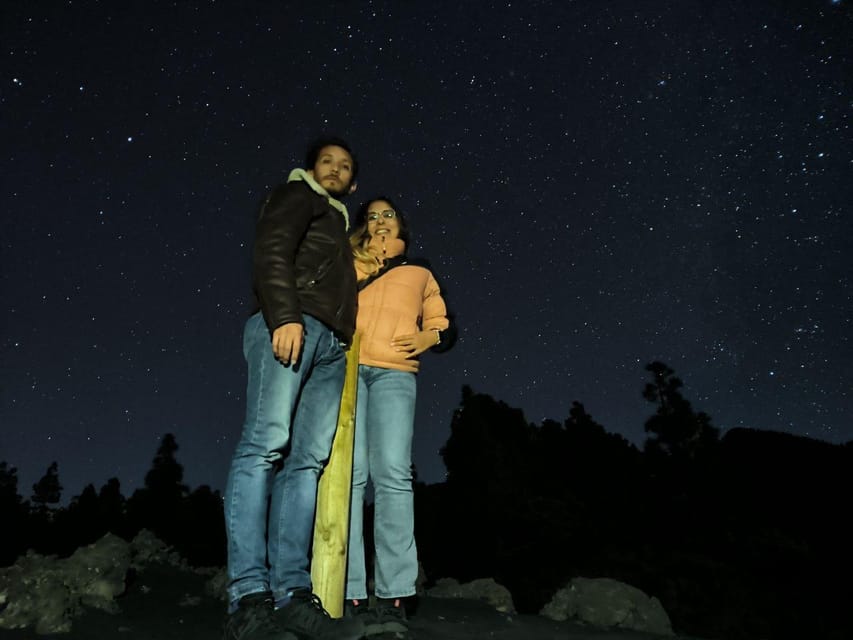
The telescope is the main event for many people. The program may move from the Solar System to the Moon, planets, stars, and then more distant galaxies and nebulae, depending on what is visible that night.
Possible sights include the Moon’s surface, Jupiter with its four Galilean moons, and Saturn with its recognizable shape. The wording is important here: these objects depend on the date, time, weather, and their position in the sky. You should not book expecting every listed object on every visit.
One useful feature is that you can adjust the telescope for your own eye. That small detail changes the experience. Instead of simply being shown an image, you take part in setting up the view. The tour describes this as feeling like an amateur astronomer for a night, and that claim makes sense because you get hands-on time rather than only a lecture.
The guides also allow observation without haste. That is a real advantage. A rushed telescope line can leave you with a blurry glimpse and no chance to refocus. Here, the smaller group and slower pace should give you a better opportunity to settle your eye and ask a question.
A VIP telescope option, called fast pass access, is available for an extra fee. The standard experience already includes telescope viewing, so the add-on is mainly for someone who wants quicker or more privileged access. I would consider it only if the group is larger than expected or if telescope time is your top priority.
From nearby planets to distant galaxies
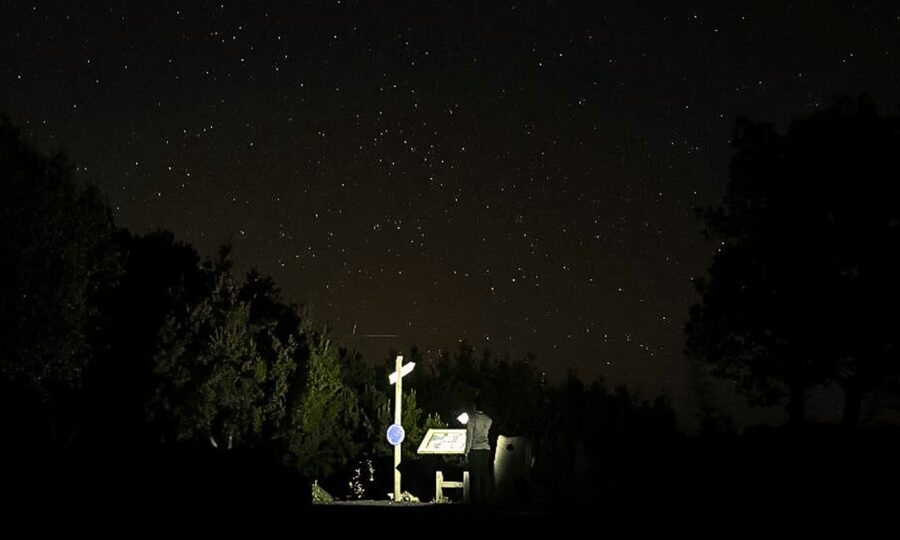
The sequence of objects gives the evening a useful sense of distance. The guide may begin with our Solar System, then move outward to stars, nebulae, and galaxies. You are not simply looking at pretty points of light. You are being shown how astronomers divide the Universe into different scales.
The Moon is especially interesting on a full moon night. Its brightness can reduce the visibility of faint deep-space objects, but it also becomes the main subject. The operator says full moon evenings focus on the Moon’s beauty and meaning, so you should not treat a bright moon as a failed version of the tour. It creates a different program.
On a darker night, the guide may focus more on faint nebulae, clusters, and galaxies. Even then, what you see depends on conditions and the equipment in use. The value comes from having someone explain what you are looking at and why it matters, not from collecting a guaranteed checklist of objects.
The scientific and cultural sides work well together. You may hear about the chemistry that creates stars, then move into a traditional story about a constellation. That combination keeps the subject human. You do not need to choose between a technical lecture and a simple folklore show.
Weather is part of the plan, not a small footnote
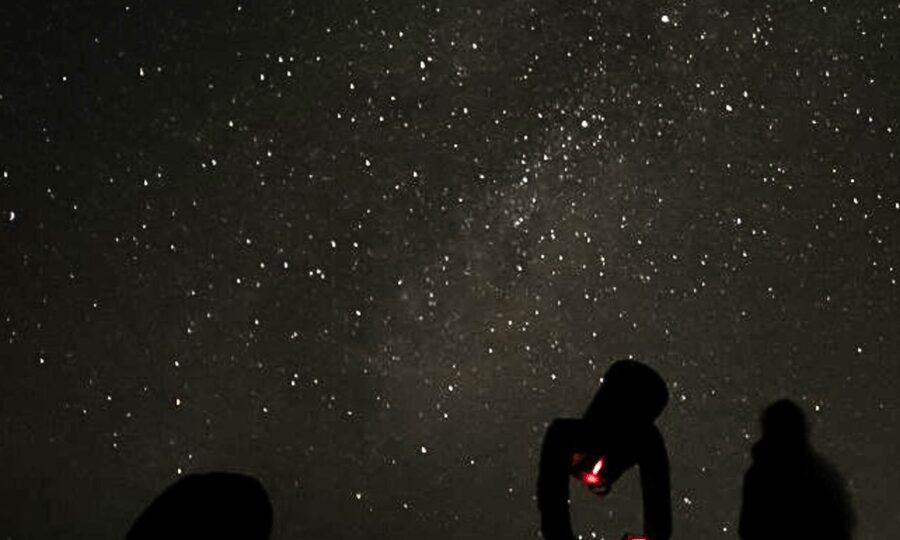
You should take the weather policy seriously. The activity takes place outdoors and depends entirely on the night sky. Wind, clouds, humidity, haze, official alerts, and site conditions can all affect the decision.
The operator may postpone, relocate, or cancel if safe observation is not possible. A sheltered or indoor private location may sometimes be available, but it is not something you should assume. The team checks weather radar and the celestial objects expected to be visible, then sends the confirmed meeting point and time on the day of the activity.
The start time is approximate because sunset changes through the year, and the best observing window depends on visibility. Check WhatsApp, email, or SMS on the day. If you do not use WhatsApp, tell the operator in advance.
This flexibility is good for the quality of the evening, but it requires cooperation from you. Do not make a tight dinner reservation immediately after the tour. Do not set off for the wrong viewpoint without checking your messages. Astronomy does not follow a fixed timetable just because a booking calendar does.
Dress for a cold, dark viewpoint
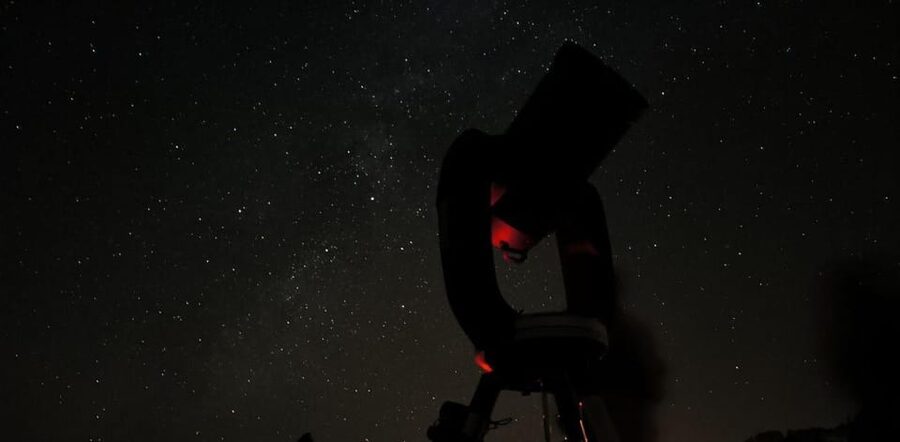
Warm clothing is not optional advice. The usual sites are high, and you may spend much of the evening standing still. Bring warm layers, comfortable clothes, warm shoes, and comfortable footwear.
There is no food included, and no bathroom is listed at the meeting point. Plan accordingly before you leave. You should also avoid carrying anything that requires bright light to use. Red light helps preserve night vision, and the meeting team uses it at the viewpoint.
The tour is listed as wheelchair accessible, but the changing locations and outdoor setting mean you should confirm the practical details for your own needs before booking. The access conditions may differ between the high viewpoints and the private site.
Is $45 a fair price?
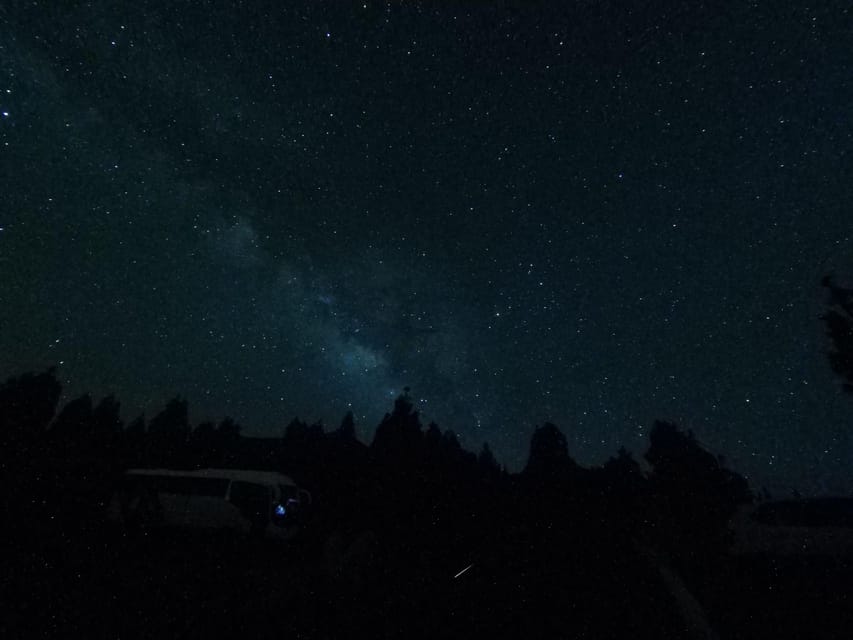
At $45 per person, this sits in a reasonable range for a small-group guided astronomy experience. You are paying for a certified astronomical monitor, the use of binoculars and a telescope, the laser-guided explanation, and roughly 90 minutes to 1 hour 45 minutes of instruction and observation.
The price is strongest if you want more than a dark place to look up. You could arrive at a viewpoint on your own, but you would not necessarily know which constellations you were seeing, which moving lights were satellites, or how to use the telescope. The guide adds structure and meaning.
The value also depends on the final conditions. A clear night with visible planets can make the experience feel especially worthwhile. A cloudy or wind-affected evening may lead to a relocation or cancellation. That uncertainty is unavoidable with outdoor astronomy, but it is the main reason to keep your schedule flexible.
A group photo with the stars is available if you select the add-on. Observation at Roque de Los Muchachos is not included, so do not confuse this experience with a visit to the island’s major observatory area. This is a separate evening activity at designated viewpoints.
Who will enjoy this experience most?
I would choose this tour if you are curious about the night sky but do not own astronomy equipment or know where to begin. The guides explain the science in accessible terms and add myths, legends, and history, so the evening is not aimed only at serious hobbyists.
Families may like the variety of the program, especially the laser-guided constellations and the chance to see Jupiter or Saturn if visible. Couples and solo visitors should appreciate the small groups and slower telescope access. It also suits anyone who wants a quieter evening away from the usual sightseeing circuit.
You may want to skip it if you dislike cold outdoor activities, need a guaranteed fixed schedule, or expect every planet and galaxy named in the description to appear. This is a sky-led experience. The conditions decide what the guide can show.
Should you book La Palma stargazing?
Book it if you can accept weather changes and want a personal introduction to the stars. The strongest features are the small group, hands-on telescope adjustment, clear storytelling, and the chance to view the Moon, planets, clusters, nebulae, and galaxies in a genuinely dark setting.
Check your messages on the day, arrive early, dress warmly, and leave room in your schedule. If the sky cooperates, $45 buys a memorable night with more substance than a simple lookout stop. If clouds intervene, the operator’s flexibility and safety policy matter just as much as the equipment.
FAQ
How long does the stargazing activity last?
The stated duration is 1.5 hours, but it can last between 1.5 hours and 1 hour 45 minutes depending on group questions and interest.
What languages are available?
The live guide is available in English and Spanish.
Where does the activity meet?
The published starting point is Mirador Astronómico del Llano del Jable. The operator may instead use Llano de Las Ventas or San Antonio Volcano, depending on weather, safety, site conditions, and visible objects.
When will I receive the exact meeting point?
The operator contacts you on the same day through WhatsApp, email, or SMS after checking the weather and sky conditions.
Do I need to arrange transport?
Yes. Transport to the viewpoint and from the viewpoint to your hotel is not included.
What equipment is included?
The activity includes naked-eye stargazing with an astronomical laser, binocular observation, and observation through an advanced astronomical telescope.
Can I see Jupiter and Saturn?
You may see Jupiter with its four Galilean moons or Saturn if those objects are visible and conditions are suitable. The exact objects change with the date, time, weather, and their position in the sky.
What happens on a full moon night?
The program focuses on the Moon’s appearance and meaning. A full moon can change which faint objects are visible, so the evening may differ from a darker night.
What should I wear?
Bring warm clothing, warm shoes, and comfortable footwear. The activity is outdoors, and the high viewpoints can be cold after sunset.
Can I cancel for a refund?
You can cancel up to 24 hours in advance for a full refund. You can also reserve now and pay later, according to the stated booking terms.
Just added around Spain
- VIP Sunset & Stargazing experience★ 4.5 · 44 reviews
- Skip the Line: Teide Observatory Entrance Ticket★ 3.0 · 33 reviews
- Small Group Teide Stargazing Tour with Picnic at Sunset★ 5.0 · 3 reviews
- TEIDE NIGHT Astronomy Stargazing Bus Tour, Meal & Drinks included!★ 4.0 · 15 reviews
- Sunset and stargazing from Teide★ 3.5 · 51 reviews
- Tenerife Exclusive & Private Gastronomic, Sunset-Stargazing★ 5.0 · 3 reviews
- PRIVATE TOUR Teide National Park: Hiking and Stargazing★ 5.0 · 38 reviews
- Sunset & Stargazing Experience from Teide★ 4.0 · 31 reviews
Stargazing Tours, compared.
Dubai Red Dunes ATV, Camels, Stargazing & 5* BBQ Al Khayma Camp
Read our review →
Teide National Park Sunset & Stargazing with Dinner (Star Safari)
Read our review →
Sunset Camel Trek, Al Khayma Camp, Stargazing & BBQ
Read our review →
Overnight Safari, Dinner, Stargazing & Al Khayma Camp
Read our review →
Dubai Overnight Desert Safari, BBQ & Stargazing at Al Khayma Camp
Read our review →Browse the lists this tour appears in