
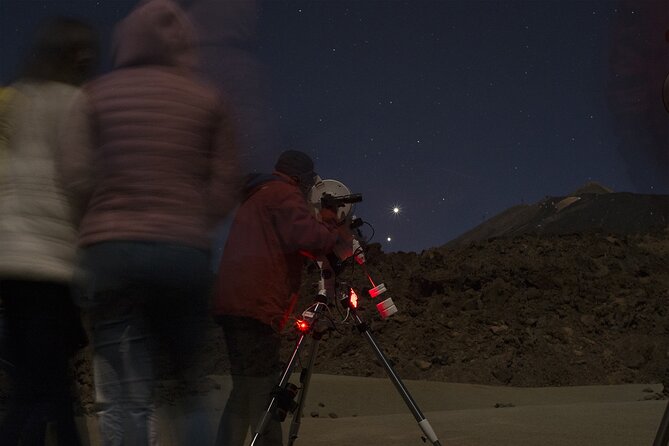
Review · NATIONAL PARK
Teide National Park: Moonlight Tour & Stargazing Experience
The moon is your opening act. This short evening outing takes you into Teide National Park for a guided look at the night sky, with naked-eye explanations followed by telescope views of the moon, planets, star clusters, and galaxies. I like the clear focus on astronomy, and I like that an astrophotographic telescope can turn what you see into images. The main catch is simple: you must arrange your own transport to the mountain and drive back afterward.
At $42.10 per person, the tour offers good value for anyone curious about the sky but unsure where to begin. The guide explains stars and constellations in plain English, and one French-speaking guest found the English explanations easy to follow. Allow extra care for the return drive, since the mountain roads can be dark and misty after the tour.
Key points to know before booking
- Moon-centered viewing: The evening’s main subject is the moon, with other objects such as planets, star clusters, and galaxies added when possible.
- A short, focused format: The experience lasts about 1 hour 20 minutes, so it suits a single evening without taking over your night.
- Professional astronomy guidance: A Starlight Guide explains the sky with the naked eye before you look through the telescopes.
- Small maximum group: No more than 20 people are accepted, which should make it easier to hear the explanations and reach the viewing equipment.
- You drive yourself: Transport is not included, and the activity begins and ends at the Mines of San Jose meeting point.
- Weather matters: Poor conditions can lead to a new date or a full refund, while cancellations made at least 24 hours ahead receive a full refund.
Why Teide after dark feels so different
Teide National Park is well known as a daytime stop, but night changes the mood completely. The roads, volcanic surroundings, and open sky take on a quieter character once the sun goes down. This tour gives you a reason to stay after the usual daytime sightseeing has ended.
The setting matters because astronomy needs more than a telescope. You need a place where you can look up without the glare and distraction of a city. The guide first helps you read the sky with your own eyes, then directs your attention to objects that are easier to appreciate through the equipment.
That order is useful. You do not simply walk up to a telescope, look through it, and move on. You learn what you are looking at first. For a beginner, that small bit of context can make the moon, a planet, or a star cluster feel like part of a larger picture rather than a random bright spot.
The evening is also a good match for people who like calm outings. One guest described the quiet as a major part of the pleasure and found the guide’s passion infectious. You should not expect a fast-moving sightseeing program. This is a compact lesson in the sky, held outdoors in a dramatic natural setting.
More National Park Stargazing in Tenerife:
- Tenerife: Teide National Park Sunset & Stargazing Tour
★ 4.2 · 3,812 reviews - Tenerife: Sunset and Stargazing at Teide National Park
★ 4.7 · 2,826 reviews - Teide National Park Sunset & Stargazing with Dinner (Star Safari)
★ 5.0 · 2,601 reviews
Starting at the Mines of San Jose at 7:30 pm
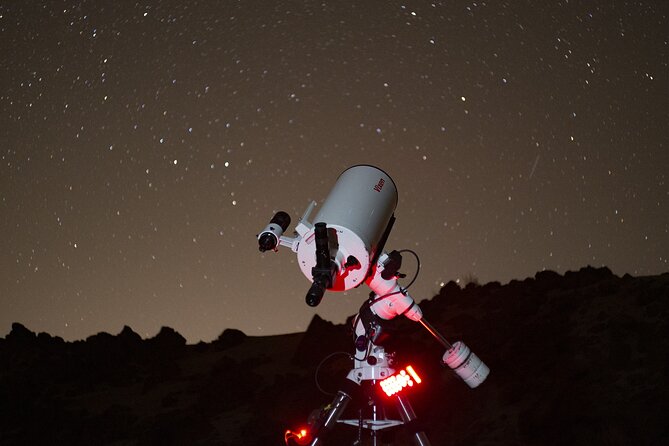
The meeting point is Mines of San Jose, in Teide National Park, at 7:30 pm. The activity ends back at this same point. Since transport is not included, you need to plan your route to the park and your drive home before booking.
The meeting point detail is important. This is not a hotel pickup, and the price does not include a transfer or dinner. If you are staying elsewhere on Tenerife, check your driving plan carefully and leave room for delays. The road back may feel more demanding after dark, especially if mist appears.
If the timing permits, arriving a little before sunset is a smart move. You can get your bearings in daylight and enjoy the area before the astronomy session begins. This tip came directly from the experience of a guest who felt the setting was especially beautiful before night fully arrived.
You should also arrive dressed for outdoor conditions. The instructions say to dress appropriately, but they do not provide a precise temperature forecast or clothing list. A warm extra layer is a sensible choice, since you will be standing outside and watching the sky rather than moving continuously.
The first lesson uses only your eyes
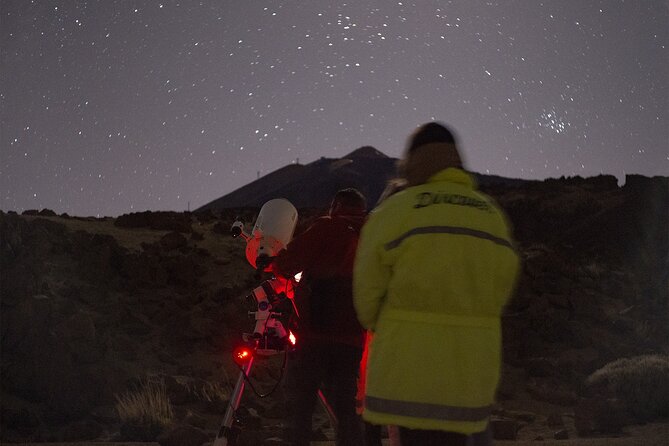
The guide begins with an explanation of the night sky without relying on the telescope. You learn how to identify stars and constellations, then receive help understanding what is visible overhead.
This part may be the most useful section for someone new to astronomy. A large telescope can show you something impressive, but it cannot teach you how to find your way around the sky. The naked-eye introduction gives you a basic map before the closer viewing starts.
The guide is described as a professional Starlight Guide specializing in astronomy. That title matters here because the value of the tour rests heavily on explanation. The strongest praise has centered on the guide’s enthusiasm, clear instructions, and ability to make the subject approachable for beginners.
The English presentation appears to be accessible. One French-speaking participant specifically found the explanations perfectly understandable and said the guide communicated a genuine passion for the subject. Still, the activity is offered in English, so you should be comfortable following spoken explanations in that language.
Moon viewing is the evening’s main event
The astronomical observation is centered on the moon. That makes this a particularly good choice if you want a clear, rewarding target rather than a session built only around faint objects.
The moon is familiar from everyday life, but a telescope can change your sense of scale. Details that look like a pale pattern from the ground become features worth examining closely. The supplied feedback singles out Saturn as amazing, showing that the session can also produce memorable planet views when the timing and conditions cooperate.
The tour does not promise a fixed list of planets or galaxies on every date. The sky changes, and visibility depends on conditions. The description says you may observe the moon, planets, star clusters, or galaxies through the telescope, so think of those as possible targets rather than guaranteed stops.
That is not a weakness unique to this activity. Astronomy always depends on what is above you and how clear the sky remains. The weather policy recognizes this: if poor weather forces a cancellation, you can receive a different date or a full refund.
More Stargazing Tours in Tenerife:
- Teide National Park: Sunset & Stargazing Safari with Dinner
★ 4.6 · 2,115 reviews - Teide by Night: Sunset & Stargazing with Telescopes Experience
★ 4.5 · 1,492 reviews - Teide: Guided Sunset & Stargazing Tour by Night with Dinner
★ 4.7 · 1,339 reviews - Sunset & Stargazing Experience From Teide
★ 4.5 · 1,129 reviews
Telescopes add detail, not just drama
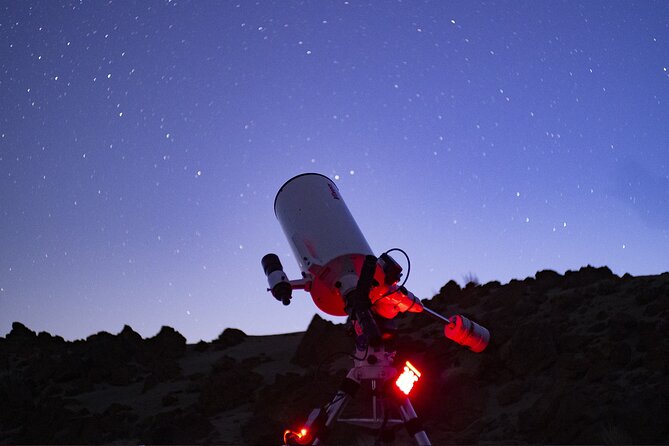
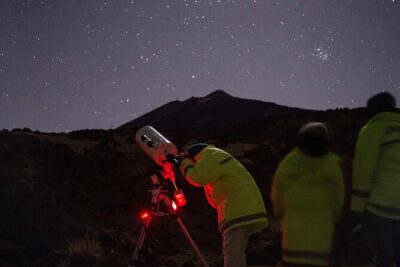
After the naked-eye lesson, you look through high-end telescopes at selected objects. This gives the evening a clear progression: orientation first, close observation second.
The experience also includes an astrophotographic telescope. The stated aim is to turn what you see into striking images. That is a nice extra for anyone who enjoys visual records of a trip, though the available information does not promise that every participant receives a personal photograph or that images are sent afterward.
The equipment is valuable because it gives the guide more ways to show the sky. A moon-centered session can remain interesting for first-time observers, while additional objects may appeal to people who already know a little about astronomy. You do not need to bring specialist knowledge to get something from it.
The group limit is 20 people. That is not an intimate private lesson, but it is a manageable size for a short public activity. You may still need to wait your turn at the telescope, especially if everyone wants a look at the same object. The guide’s explanations should be easier to follow than they would be in a very large crowd.
What the 1 hour 20 minutes includes
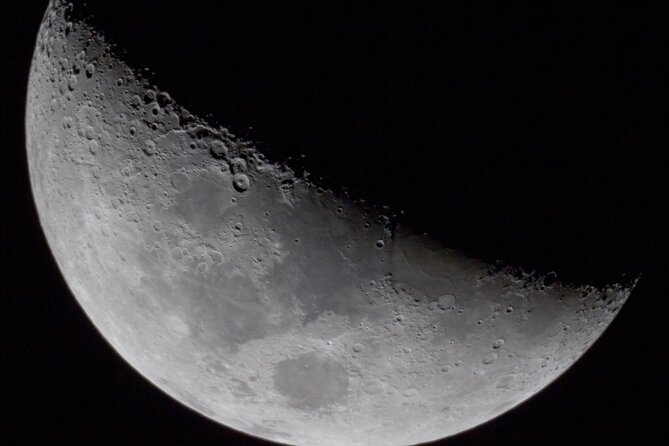
The listed duration is about 1 hour 20 minutes, all centered on the one stop at Teide National Park. There is no separate meal, show, or long walking route built into the plan.
You can expect the session to cover:
- An introduction to the night sky with the naked eye
- Help identifying stars and constellations
- Telescope viewing of the moon and other visible objects
- Use of an astrophotographic telescope
- Guidance from a professional astronomy guide
- Insurance during the activity
The short format is useful if your Tenerife schedule is full. You can pair it with daytime sightseeing without giving up an entire evening. On the other hand, people who want a long astronomy workshop may find the session brief.
The tour works best when you treat it as a focused introduction, not a full observatory course. You get a guided look at the sky and a chance to use quality equipment, but the supplied details do not promise detailed instruction in photography, telescope operation, or constellation study beyond the evening’s explanation.
Price and value at $42.10
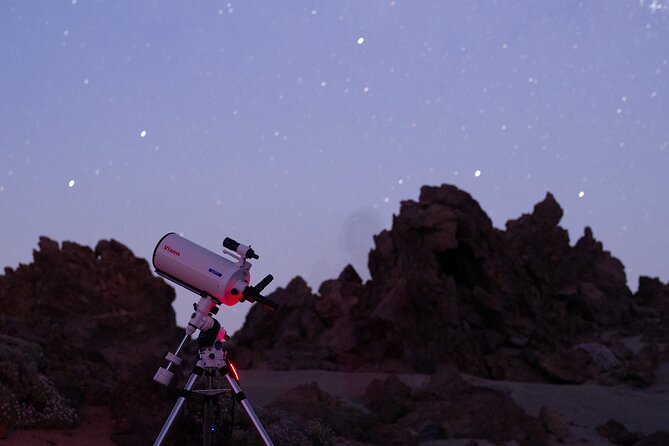
At $42.10 per person, the price is reasonable for a guided telescope experience in one of Tenerife’s most memorable settings. Your fee covers the astronomy explanation, telescope observation, astrophotographic equipment, a professional guide, and insurance.
The value is strongest if you would otherwise have no way to identify objects in the sky or access suitable equipment. Buying or carrying your own telescope would be impractical for most holidaymakers. Here, the guide chooses what to show and explains why it matters.
The value is weaker if you are mainly looking for transportation. You must pay for and arrange your own way to the Mines of San Jose, and dinner is not included. The tour price is for the astronomy session itself, not a complete evening package.
The booking pattern suggests planning ahead can help. This experience is booked, on average, 21 days before the date. The maximum group is only 20 people, so last-minute availability may not always be reliable, especially when weather leads to rescheduling.
The drive home deserves serious attention
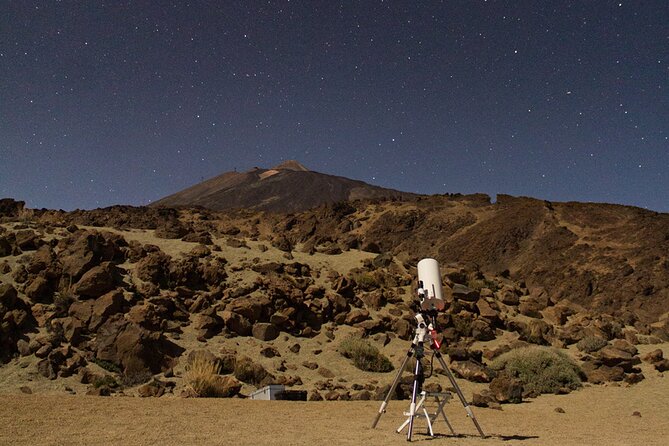
The most practical warning concerns the return journey. After the session, you drive away from the mountain on your own. One guest specifically advised caution because the roads can be dark and misty.
That point should shape your decision. If you are not comfortable driving mountain roads at night, the lack of included transport is a real drawback. The tour itself may be calm and easy, but getting there and back is part of the experience you are buying.
Plan your fuel, route, and timing before you arrive. The supplied information does not name a transfer service or offer hotel collection, so you should not assume that one is available. If another person in your group is driving, agree in advance who will handle the return.
Do not let this warning put you off automatically. It simply means the activity suits an independent driver better than someone seeking a fully organized evening. The same remote setting that makes the sky appealing also makes the journey more demanding after dark.
Who will enjoy this evening most
I would recommend this tour to first-time stargazers, families with older children, couples seeking a quiet activity, and anyone who wants more than a daytime visit to Teide National Park. The guide-led format removes much of the guesswork.
It is also a good fit if you enjoy learning in small doses. You receive enough explanation to understand the sky, but you are not expected to study astronomy in advance. The clear English guidance should help beginners follow along.
Children can participate, but they must be accompanied by an adult. The activity is open to most people, though you should consider the outdoor setting and the need to travel to and from the meeting point.
I would hesitate to recommend it to someone who wants a long, technical astronomy course, a meal, or organized hotel transportation. It may also disappoint if you expect every visit to include a particular planet or galaxy. The moon is the reliable focus, while other objects depend on what can be seen that night.
Cancellation, clouds, and sensible planning
You can cancel for a full refund if you do so at least 24 hours before the start time. Changes or cancellations made inside that 24-hour window are not accepted for a refund.
Weather is a special factor. If poor conditions cause the activity to be canceled, you are offered another date or a full refund. This policy is fair, since clear skies are central to the experience, but you should keep some flexibility in your Tenerife schedule.
The tour has a 4.9 rating from 14 reviews, with 93 percent of participants recommending it. That is a strong early record, though the sample is not large. The most consistent praise is directed at the enthusiastic guide, the clear explanations, the moon and stars, and the peaceful setting.
Should you book the Teide moonlight tour?
Book it if you want a short, well-guided introduction to astronomy and are happy to drive yourself to Teide National Park. The moon-centered format, quality telescopes, passionate guide, and chance to see planets or star clusters make the $42.10 price fair.
Think twice if night driving on mountain roads worries you, or if you need transport, food, or a guaranteed view of a specific object. For most beginners, though, this is a pleasant way to turn a famous daytime park into a thoughtful evening experience. Arrive before sunset if you can, dress for outdoor conditions, and leave extra care for the trip home.
FAQ
Where does the tour begin?
It begins at Mines of San Jose, 38300, Santa Cruz de Tenerife, Spain.
What time does the experience start?
The start time is 7:30 pm.
Where does the tour end?
The activity ends back at the Mines of San Jose meeting point.
How long does the tour last?
The experience lasts approximately 1 hour 20 minutes.
Is transportation included?
No. Transport to and from the meeting point is not included.
Is dinner included?
No. Dinner is not included in the price.
What language is the tour offered in?
The tour is offered in English.
What will I see through the telescopes?
The observation centers on the moon. Depending on visibility, you may also see planets, star clusters, or galaxies.
Can children join the tour?
Yes. Children can participate, but they must be accompanied by an adult.
What happens if bad weather cancels the tour?
You will be offered a different date or a full refund.
How far in advance can I cancel for a full refund?
You must cancel at least 24 hours before the experience start time for a full refund.
Just added around Tenerife
- VIP Sunset & Stargazing experience★ 4.5 · 44 reviews
- Skip the Line: Teide Observatory Entrance Ticket★ 3.0 · 33 reviews
- Small Group Teide Stargazing Tour with Picnic at Sunset★ 5.0 · 3 reviews
- Sunset and stargazing from Teide★ 3.5 · 51 reviews
- Tenerife Exclusive & Private Gastronomic, Sunset-Stargazing★ 5.0 · 3 reviews
- TEIDE NIGHT Astronomy Stargazing Bus Tour, Meal & Drinks included!★ 4.0 · 15 reviews
- Sunset & Stargazing Experience from Teide★ 4.0 · 31 reviews
- “Stargate” Tenerife stargazing★ 5.0 · 13 reviews
National Park Stargazing, compared.
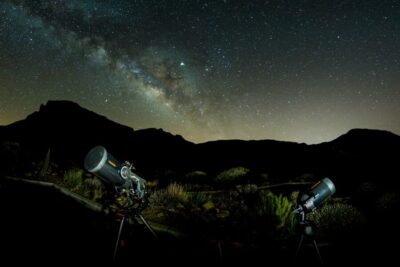
Teide National Park Sunset & Stargazing with Dinner (Star Safari)
Read our review →
Teide National Park: Sunset & Stargazing Safari with Dinner
Read our review →
Uluru: National Park Astronomy Tour with Telescope and Photo
Read our review →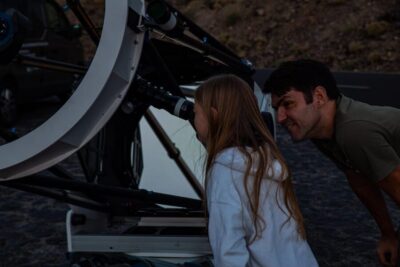
Teide National Park: Guided Large Telescope Stargazing Tour
Read our review →
Browse the lists this tour appears in