
Review · THE USA
Boulder: Guided Astronomy Tour
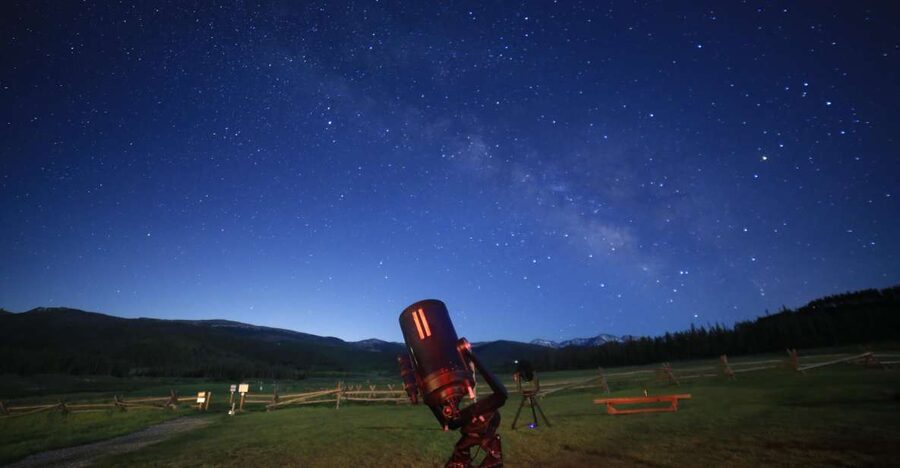
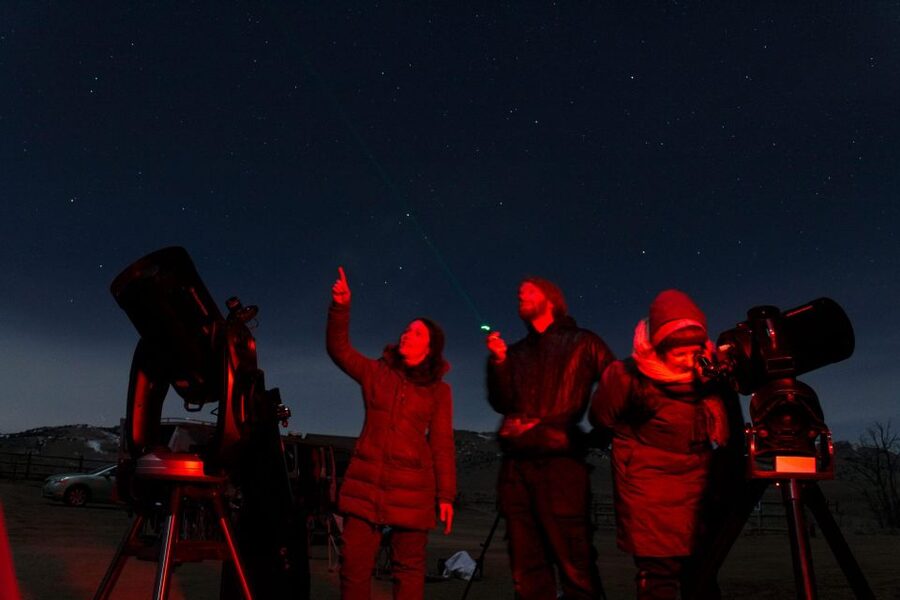
The stars come out just beyond Boulder. This two-hour evening tour pairs large, high-powered telescopes with a professional astronomer who explains what you are seeing, not just where to look. I especially like the hands-on format and the easy trailhead setting, where you can watch the sunset, sit in provided camp chairs, and step straight into the viewing area without a hike. The main thing to consider is the cold: once the sun drops, temperatures can fall quickly, so warm clothing is essential.
I also like that the group is limited to seven people. That gives you a better chance to ask questions and reach the eyepiece without feeling lost in a crowd. Hailey and Kota have earned particularly strong praise for their astronomy skills and clear guidance. Still, the exact objects you see depend on the weather and the night sky, and the tour can be canceled if clouds block the stars.
Key points at a glance
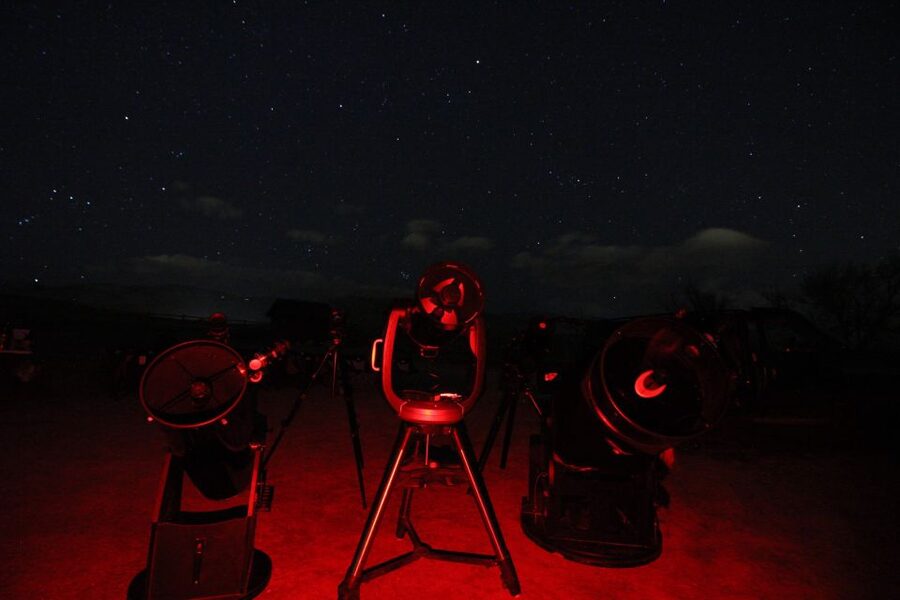
- Several large telescopes: Look closely at planets, clusters, nebulae, and galaxies with your own eyes.
- A small seven-person group: The format leaves room for questions and individual help at the eyepiece.
- No hiking required: The Boulder Valley Ranch Trailhead has flat ground, easy parking access, and a pit toilet.
- More than stargazing: A laser pointer, solar system model, meteorites, and star-navigation lessons make this a real astronomy class under the sky.
- Comfort items supplied: Camp seating, red lights, water, snacks, blankets, scarves, and hand warmers upon request make the late hour easier.
- Weather matters: Clouds can cancel the tour, and the visible objects will change from one night to another.
What the Boulder night-sky tour is really like
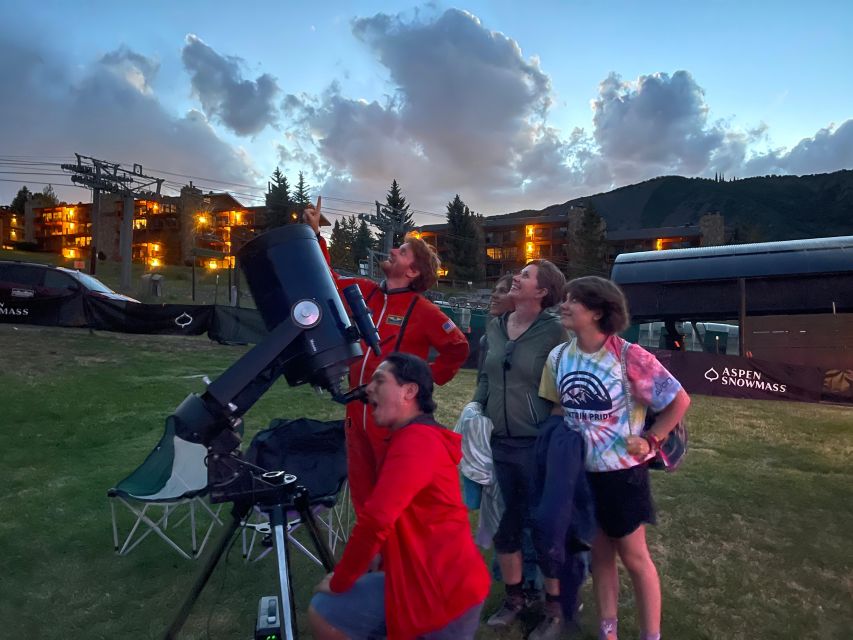
This is not a bus ride from one viewpoint to another. You meet at a trailhead, settle into a chair, and spend the evening looking upward while an astronomer guides the session.
The tour starts at sunset and lasts two hours. That timing matters. You get a little daylight to find the meeting point and see the area around Boulder Valley Ranch before darkness takes over. It also gives the guide a natural way to explain how the sky changes from the last glow on the horizon to a full field of stars.
The tour begins at 3900 Longhorn Road, but I would not enter that physical address blindly into a GPS app. Search for Boulder Valley Ranch Trailhead in Google Maps instead. On arrival, look in the southeast corner of the parking lot, across from the bathroom. The telescopes and astronomy equipment should make the setup easy to spot.
The ground is flat, and you do not need to hike. That is a big advantage for families, older visitors, and anyone who wants to spend the night looking at the sky rather than worrying about uneven paths. A pit toilet is available at the trailhead, though this is still a simple outdoor meeting point, not a full visitor center.
More Guided Tours in the USA:
- Griffith Observatory Hike: Guided Tour through Griffith Park
★ 5.0 · 1,020 reviews - Los Angeles: Griffith Observatory Guided Hike/Walking Tour
★ 4.9 · 199 reviews - Private Getty Center to Griffith Observatory Guided Tour
★ 5.0 · 185 reviews
Sunset sets the pace for the evening
The sunset portion is more than a waiting period before the stars appear. You may see wildlife in the area, and the setting gives you time to get comfortable before the main viewing begins.
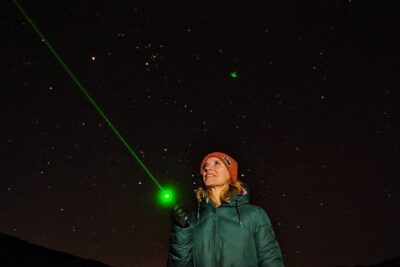
As the light fades, the guide can start with easier subjects: the first visible planets, bright stars, and familiar constellations. A laser pointer helps connect individual stars into patterns, which is much easier than trying to match a printed chart on your own.
I like this gradual start because it suits people who are new to astronomy. You do not need to arrive knowing the names of stars or understanding how to read the sky. The guide gives you a starting point, then builds outward to navigation, satellites, and more distant objects.
The sunset timing also creates one practical issue. You may spend part of the first half hour in changing temperatures, so dress for the end of the evening, not the beginning. A comfortable afternoon can become a chilly night surprisingly fast.
Telescopes turn distant objects into personal discoveries
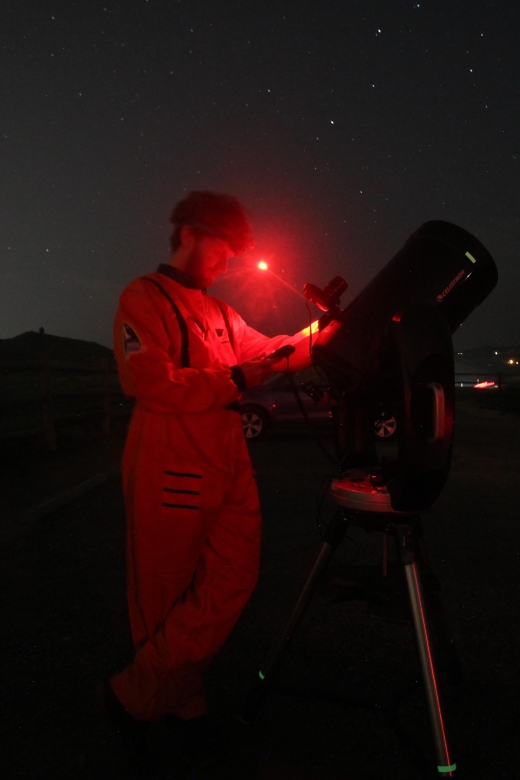
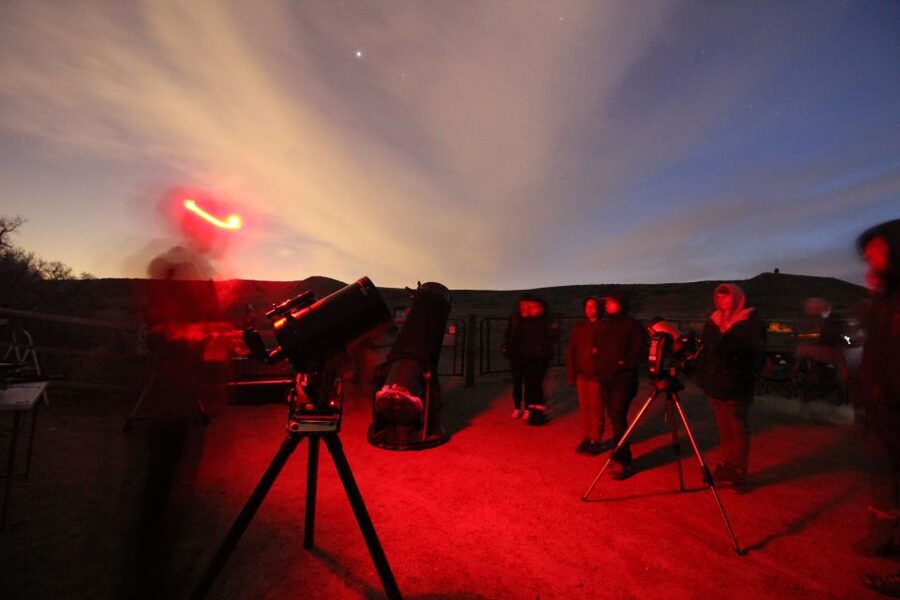
The heart of the experience is the telescope viewing. Several large telescopes are set up so you can take turns looking at celestial objects through the eyepieces.
A photograph on a phone cannot quite prepare you for seeing an object with your own eye. The view may be subtle rather than brightly colored, but the scale is the point. You are looking at a real planet, star cluster, nebula, or galaxy through an instrument on site, not at an image on a screen.
The guide may point out planets, star clusters, nebulae, galaxies, satellites, and shooting stars if luck and conditions cooperate. The exact lineup is not fixed. Time of year, cloud cover, visibility, and the position of objects in the sky all affect what appears during your two hours.
That uncertainty is part of the appeal, but it is also important to understand before booking. You should not arrive expecting every item on a wish list. A cloudy night may lead to cancellation, and even a clear night will offer a different selection of objects from one season to the next.
The small group helps here. With a maximum of seven participants, the guide can assist you at the eyepiece and respond to questions. The supplied step stool makes it easier for shorter visitors to reach the telescope, and a cane is available for stability while moving around the viewing area.
The laser pointer makes the sky easier to read
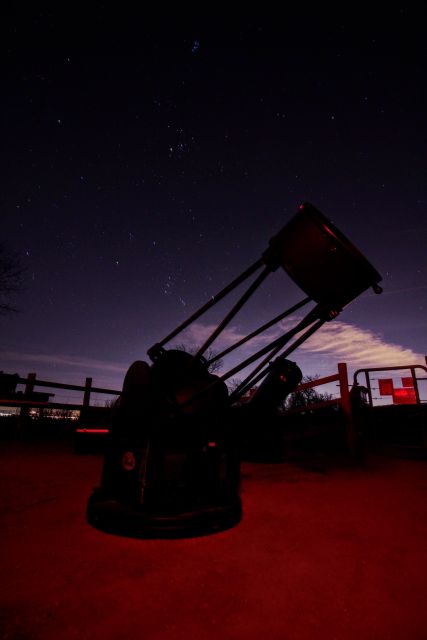
Many people can see stars but cannot make sense of them. The laser-guided portion solves that problem by showing you how the points of light relate to one another.
The guide uses the laser to identify constellations and explain star navigation. This gives you something useful to take home: the ability to recognize a few patterns instead of simply remembering that the sky looked impressive.
The session can also include satellites and shooting stars. Satellites move steadily across the sky, while a meteor may appear for only a second. You cannot schedule the latter, so treat it as a bonus rather than a promised feature.
The astronomy lesson is not limited to pointing upward. A solar system model helps explain distance and scale, while actual meteorites give you a physical connection to objects that came from space. These demonstrations are especially useful for children old enough to stay awake through a late evening, though the activity is geared toward a developed mind and very young children may fall asleep.
Babies under one year are not suitable for this experience. Families with older children should also think about the late start and the cold. The subject matter can hold a child’s attention, but the nighttime schedule may not.
More Stargazing Tours in the USA:
- Small Group Big Island Twilight Volcano and Stargazing Tour
★ 5.0 · 1,619 reviews - Sedona Stargazing Tours LLC
★ 4.5 · 881 reviews - The Original Sedona UFO and Stargazing Night Tour
★ 4.5 · 269 reviews - Mauna Kea Stargazing Experience + Photos
★ 5.0 · 261 reviews
Equipment and comfort are part of the value
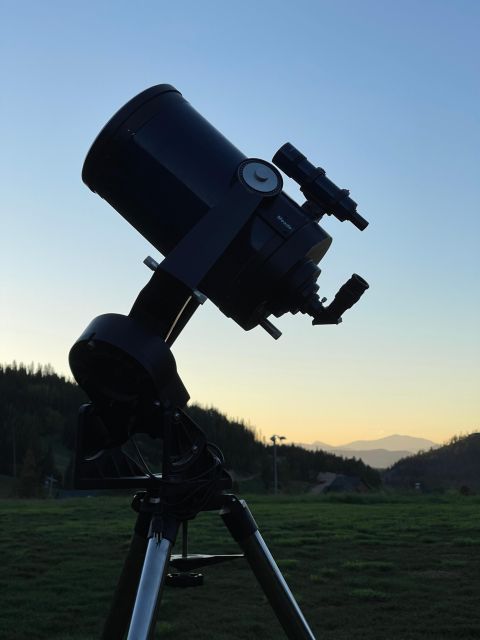
At $45 per person, the tour is priced as a short, specialized activity rather than a general sightseeing stop. The value depends on what you want from an evening.
If you only want a quick look at the stars, you may find the price hard to justify. You can see a night sky without paying for a tour. But this experience gives you professional guidance, multiple large telescopes, hands-on demonstrations, seating, red lights, and a small group. For someone curious about astronomy, those extras turn a casual view into a structured two-hour lesson.
The red flashlight is particularly useful. Ordinary white light can interfere with night vision, making it harder for you and others to see faint stars. A red light lets you move around without ruining the dark adjustment that your eyes are working to develop.
Camp seating means you do not have to stand for the entire program. Bottled water is available upon request, and snacks are included. Blankets and scarves are available, with hand warmers upon request. Even so, I would bring your own warm layers and blanket if you have room. Supplied comfort items are helpful, but personal clothing is the safest way to stay warm.
You can also take home astronomy-themed postcards and stickers. A business card with a quick reference guide helps you recall the objects and topics covered during the session. These are small touches, but they make the experience feel more useful after you leave the parking lot.
Getting there is simple, but use the right map search
The trailhead can be reached by car, taxi, Lyft, or Uber. The important detail is the map search. Use Boulder Valley Ranch Trailhead rather than relying on the listed street address, since direct GPS entry can sometimes send you the wrong way.
If you are coming from Denver, public transportation directions are available through the operator’s directions page. You should still check your return plan carefully because the activity ends after dark at a trailhead outside central Boulder.
The meeting area is flat and accessible, and the tour is wheelchair accessible. The cane and step stool provide extra help, but the outdoor setting remains basic. If you use a wheelchair or have particular mobility needs, it is sensible to contact the operator ahead of time so the setup can match your needs.
The two-hour format gives you enough time to learn
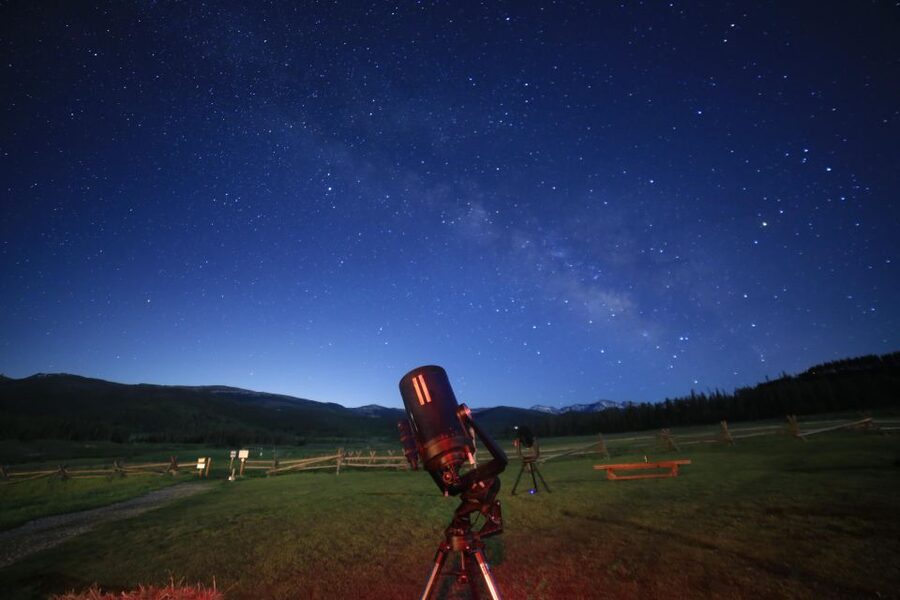
Two hours is a good length for this kind of activity. A shorter session could feel rushed, especially when telescopes need to be shared and the guide is explaining new ideas. A much longer session might become uncomfortable once the cold settles in.
The likely rhythm is easy to follow:
- You arrive around sunset and find the setup in the southeast corner of the parking lot.
- The guide introduces the equipment and begins with the fading daylight.
- The laser pointer helps identify constellations and explain navigation.
- You rotate through the telescopes for close views of visible planets and deep-sky objects.
- The solar system model and meteorites add a hands-on lesson.
- The session continues with changing targets, questions, and possible sightings of satellites or meteors.
The exact order can change with the sky. That flexibility is a strength because the guide can respond to what is visible instead of forcing a rigid script.
Hailey and Kota received especially strong praise for knowing their subject and explaining it well. That matters because astronomy can become confusing quickly. A guide who can answer questions in plain language makes the difference between simply looking and actually understanding what you are seeing.
Who will enjoy this most
I would choose this tour if you want a low-effort outdoor activity with real instruction. You do not need hiking ability, specialist equipment, or previous astronomy experience.
It suits:
- Couples looking for a quiet evening outside Boulder.
- Families with older children who can manage a late program.
- Visitors who want to learn constellations rather than only take sunset photos.
- Anyone curious about planets, galaxies, meteorites, and telescope viewing.
- People who prefer small groups to large organized outings.
- Visitors who need flat ground and provided seating.
I would think twice if you dislike cold weather, need a busy schedule with no weather risk, or expect guaranteed views of a particular planet or galaxy. The night sky does not follow a fixed itinerary, and clouds can end the activity before it begins.
The tour is also not ideal for babies under one year. Very young children may sleep through the late program, while older children with a strong interest in space may find the models and telescopes rewarding.
Booking, cancellations, and private groups
You can cancel up to 24 hours before the tour for a full refund. A reserve-now, pay-later option is available, which helps if your Boulder plans are still shifting.
The operator can often work with special availability requests, but earlier contact is better. At least one week of notice is preferred. Private group rates are flexible, so you should contact AstroTours.org directly if you want a session arranged for your own group.
Because weather controls the experience, keep some flexibility in your schedule. A cloudy forecast can prevent cancellation decisions from being clear until closer to the start time, and the tour may be called off when stars cannot be seen.
Should you book the Boulder astronomy tour?
I would book it if the night sky interests you and you want more than a dark place to look upward. The combination of an experienced astronomer, several large telescopes, a laser-guided lesson, meteorites, a solar system model, and a seven-person limit gives the $45 price solid value.
Bring thermal clothing, arrive with questions, and search for Boulder Valley Ranch Trailhead rather than the street address. If you can accept a little weather uncertainty and the possibility of a very cold evening, this is a thoughtful, accessible way to meet the Colorado sky.
FAQ
How long does the Boulder astronomy tour last?
The tour lasts two hours and begins at sunset. Starting times vary, so check availability for the date you want.
Where does the astronomy tour meet?
It meets at the Boulder Valley Ranch Trailhead parking lot. Search for Boulder Valley Ranch Trailhead in Google Maps, then look for the setup in the southeast corner of the lot, opposite the bathroom.
How much does the tour cost?
The listed price is $45 per person.
What can I see through the telescopes?
The guide may show planets, constellations, star clusters, nebulae, galaxies, satellites, and shooting stars if conditions allow. The exact objects vary by night.
Is hiking required?
No. The tour takes place at an easy-to-find trailhead with flat ground, and no hiking is required.
What should I bring?
Bring thermal clothing and additional warm layers because it can become cold after sunset. You may also want to bring your own blanket.
Is the tour wheelchair accessible?
Yes, the activity is wheelchair accessible. A cane for stability and a step stool for reaching telescope eyepieces are also available.
Just added around the USA
- Stargazing and Milky Way Portrait in Capitol Reef National Park★ 4.5 · 13 reviews
- Temecula Wine Country Stargazing Tour★ 5.0 · 2 reviews
- Astronomy and Stargazing Tour in Utah★ 5.0 · 8 reviews
- Private Stargazing – Sequoia National Park★ 4.5 · 14 reviews
- Sedona Night Hike and Stargazing★ 5.0 · 7 reviews
- Stargazing Tour with Telescopes and Video Astronomy in Sedona★ 5.0 · 40 reviews
- Sunset Sedona Sacred Places -gourmet picnic dinner and stargazing★ 5.0 · 12 reviews
- PRIVATE Sedona Jeep Tour 4X4 Stargazing Tour at Night★ 4.5 · 11 reviews
Stargazing Tours, compared.
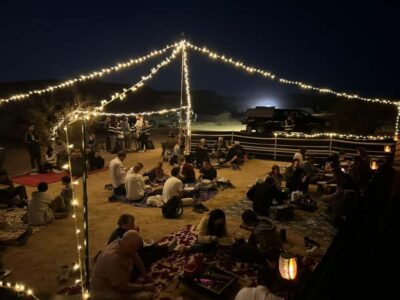
Dubai Red Dunes ATV, Camels, Stargazing & 5* BBQ Al Khayma Camp
Read our review →
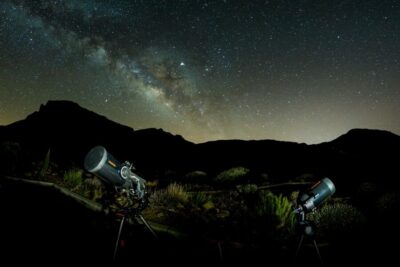
Teide National Park Sunset & Stargazing with Dinner (Star Safari)
Read our review →
Sunset Camel Trek, Al Khayma Camp, Stargazing & BBQ
Read our review →
Overnight Safari, Dinner, Stargazing & Al Khayma Camp
Read our review →
Dubai Overnight Desert Safari, BBQ & Stargazing at Al Khayma Camp
Read our review →Browse the lists this tour appears in