
Review · MARSA ALAM
Marsa Alam SPACE OBSERVERS ( Desert Stargazing )
The desert gets interesting after sunset. This Marsa Alam evening combines a small Bedouin camp, camel riding, sunset views, dinner, and serious stargazing with a GPS-directed 15-inch Meade telescope. I like the clear mix of local culture and astronomy, and I like the small group limit of 12 people. The main consideration is timing: the trip runs for about five and a half hours, with much of the evening spent outdoors in a simple desert setting.
You leave your hotel around 4:00 pm and return near 8:30 pm. The astronomy portion is the main reason to book, but the earlier stops give the night a human side. Guides such as Harabi, praised for speaking French, German, and English, can make the experience easier for mixed-language groups. Just remember that the $85 price does not include the $5 government fee, and hotels south of Marsa Alam require an extra $10 transport charge.
Key points at a glance
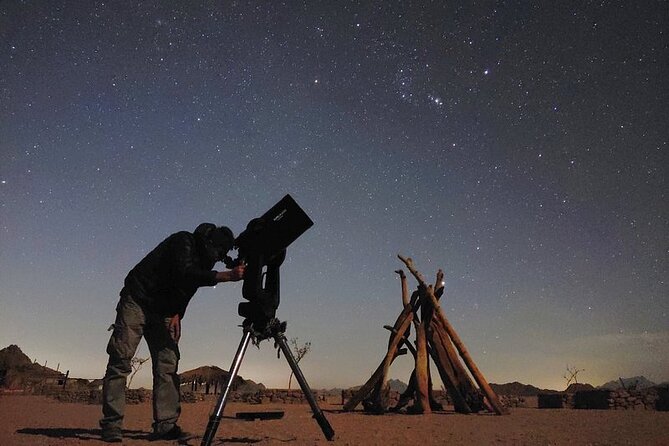
- A 15-inch Meade telescope gives you a better look at planets and deep-space objects than ordinary naked-eye stargazing.
- The Ababda camp at Padi Valley offers Bedouin tea, bread made over a campfire, dinner, and a simple introduction to local desert life.
- A sunset climb up a small cliff adds a fine photo stop before darkness takes over.
- A 30-minute camel ride is included, but it is a short taste of desert travel rather than a long riding expedition.
- Small groups are capped at 12 people, which should make it easier to hear the guide and take a turn at the telescope.
- Saturn and the Milky Way may be visible, though the exact view depends on the night and observing conditions.
Why this Marsa Alam evening works
Marsa Alam is well known for water activities, but the desert after dark gives you a very different view of the region. Away from the resort lights, the sky becomes the main attraction. This outing makes good use of that setting by pairing astronomy with a short visit to an Ababda Bedouin camp.
I like that the evening does not treat stargazing as a quick photo stop. You have time for a proper explanation from a professional astronomer and a chance to use large telescopes. The company says it has worked in astronomy since 2008, with more than 15 years of tour operation and a team of 10 astronomy-focused guides who speak different languages.
The cultural side is modest rather than staged as a large village show. You visit a simple tented camp, drink Bedouin tea, hear about daily life, and watch bread being prepared over a fire. That simplicity is part of the appeal, though you should not expect a large museum, a polished entertainment complex, or an extensive cultural program.
More Desert Stargazing Safaris in Egypt:
- Hurghada: Sea & Desert Horse Tour, Stargazing, Dinner & Show
★ 4.5 · 1,592 reviews - Hurghada: Star Stargazing Desert Adventure by Jeep & Dinner
★ 4.7 · 694 reviews - Hurghada: Sea & Desert Camel Ride w/Dinner, Show, Stargazing
★ 4.3 · 634 reviews
From your hotel to Padi Valley at 4:00 pm
Pickup begins around 4:00 pm in an air-conditioned vehicle. That matters in Marsa Alam, where a late afternoon desert transfer can still be hot. The ride takes you toward the Ababda camp at Padi Valley, and the listed plan allows about an hour for this first part.
Transport details may vary slightly. The standard description refers to a modern, clean, air-conditioned vehicle, while one account describes an adventurous Jeep ride. I would treat the vehicle type as something to confirm when you book, especially if the style of transfer matters to you.
The small group limit is useful here. With no more than 12 participants, pickup and camp activities should feel more manageable than a large coach excursion. You also receive hotel pickup, bottled water, and a soft drink with dinner, which keeps the evening simple and practical.
A short camel ride, not a full expedition
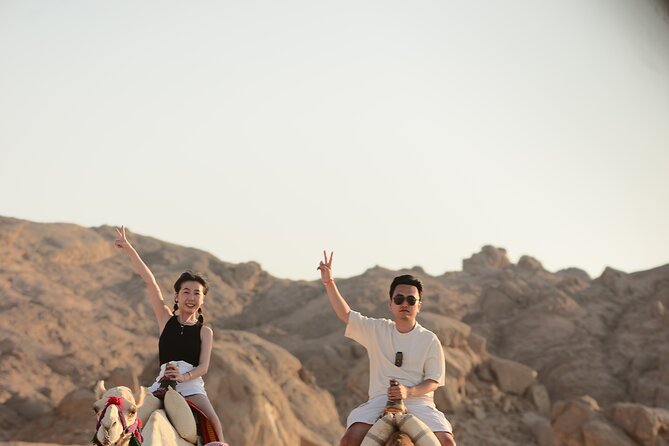
At the camp, you spend about 30 minutes riding a camel. This is enough time to try the experience, take photographs, and get a feel for traditional desert transport without committing to a long ride.
If you have never ridden a camel, a short session is a sensible introduction. The movement can feel unusual, especially when the animal rises or sits, so the limited duration may be welcome. If you already want a long camel trek, this tour will probably feel too brief.
The ride is included in the price, and the itinerary places it before you settle into the tent. You should wear clothes that allow easy movement and shoes suitable for uneven ground. Those are basic desert comforts, but they can make the evening much more pleasant.
Bedouin tea and bread by the fire
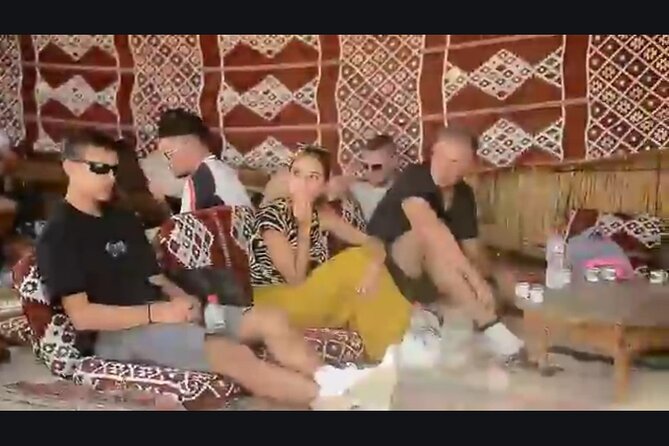
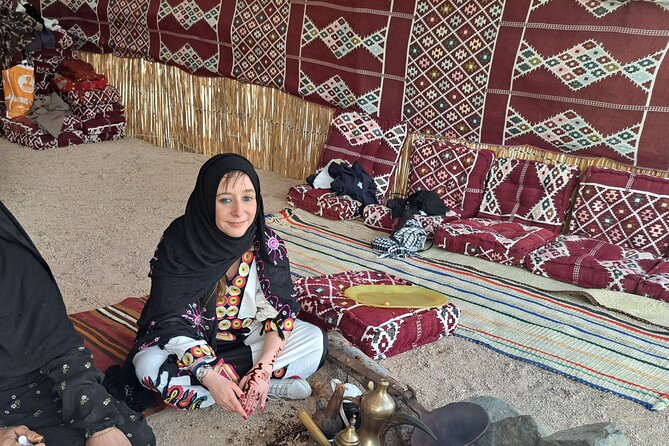
After the camel ride, the camp becomes the focus. You receive Bedouin tea and hear about the simple life of the Bedouin community from a professional guide. The experience is not presented as a lengthy cultural course. Instead, it gives you a short introduction before the sunset and dinner portions begin.
Watching bread being made over a campfire is one of the more grounded details of the evening. It connects the meal to the place rather than treating dinner as a buffet that could happen anywhere. I would pay attention during this part, since the food preparation may be more memorable than a standard restaurant stop.
The word simple is important here. The camp is not described as luxurious, and the account of the visit emphasizes a small family setting rather than a large tourist production. That can be a strength if you want a quiet desert visit. It may be a drawback if you expect air-conditioned dining, elaborate seating, or a long list of activities.
More Stargazing Tours in Egypt:
- Sharm El-Sheikh: Ultimate ATV Quad, Stargazing & BBQ Dinner
★ 4.7 · 4,084 reviews - Hurghada: Sunset Quad Bike, Camel w/ Opt Stargazing and BBQ
★ 4.2 · 1,705 reviews - Hurghada: Quad Bike, Sea, Camel, Safari, Stargazing & Dinner
★ 4.2 · 1,454 reviews - Makadi Bay: ATV, Sea View, Camel, Stargazing, Dinner & Show
★ 4.3 · 1,368 reviews
Sunset from the small cliff
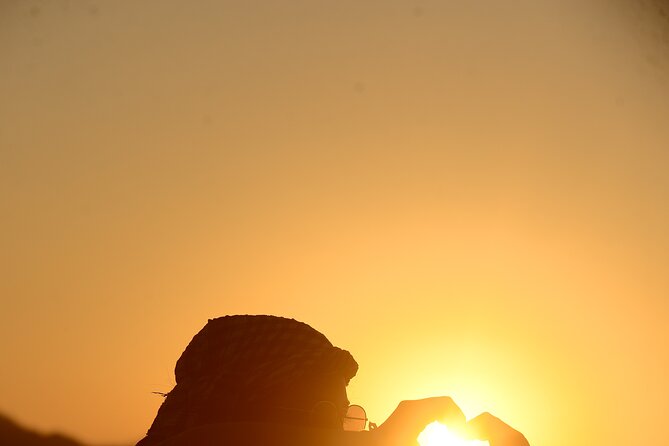
Before dinner, you climb a small cliff to watch the sunset. This is one of the best-timed parts of the schedule. You arrive in daylight, see the desert in warm evening light, and then remain in place as the sky darkens for astronomy.
The climb is described as small, but the ground is still desert terrain. I would use shoes with a firm sole and take care on the way up and down. The stop is also a good chance to take photographs before the main telescope session begins.
Sunset gives the evening a natural rhythm. Instead of driving into darkness and waiting for the astronomy activity to start, you watch the desert change first. The contrast between the sunset and the later star-filled sky helps make the astronomy feel like part of a complete evening rather than an isolated technical demonstration.
Dinner under the desert sky
The evening includes a freshly prepared Bedouin barbecue dinner with an open buffet. Coffee and tea are included, along with bottled water and a soft drink during dinner.
Food is an important part of this tour because it gives you time to sit down between activities. After the camel ride and sunset climb, a meal also breaks up the evening before the telescope work begins. The supplied details do not list particular dishes, so I would not book this expecting a specific menu.
The camp setting is part of the meal. You eat in a desert environment, likely with darkness arriving around you, rather than in a conventional Marsa Alam dining room. That setting adds atmosphere, but it also means you should prepare for an outdoor evening with limited information about seating, temperature, or facilities.
The astronomy session and the 15-inch Meade telescope
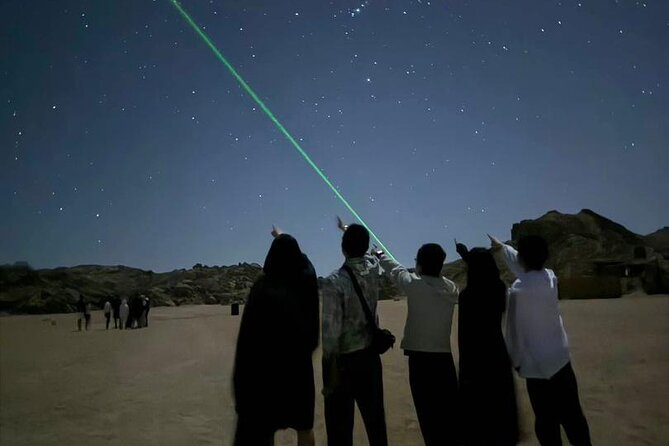
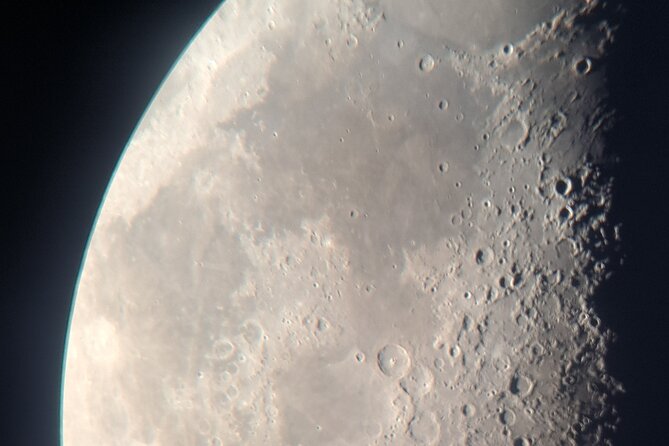
The astronomy section lasts about one hour. This is the heart of the experience, and the equipment sets it apart from simply lying on a blanket and looking upward. The GPS-directed Meade telescope has a 15-inch aperture, allowing the astronomer to guide you toward planets, stars, and deep-space objects.
A telescope cannot guarantee a particular sight. Clouds, haze, moonlight, and the position of celestial objects all affect what you see. Still, the supplied accounts specifically describe views of the Milky Way and Saturn, so those are useful possibilities rather than empty promises.
You should expect explanation as well as observation. The astronomy guides are described as professionally specialized, and the stated aim is to help you gain a new understanding of the universe. That makes this suitable for beginners, families, and couples who want more than a quick look through a basic telescope.
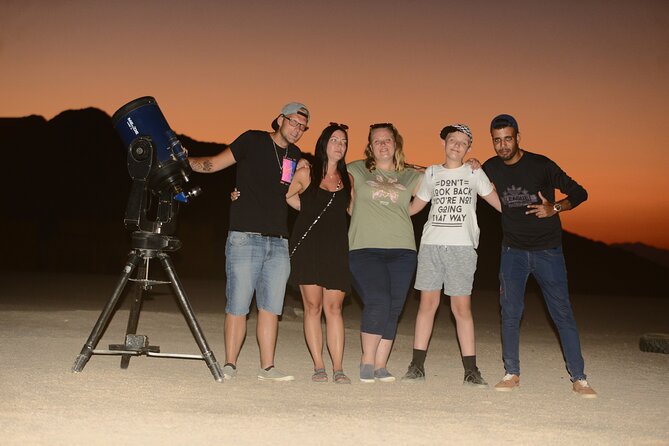
The group size matters most here. With a maximum of 12 people, you have a better chance of hearing the guide and getting time at the telescope. If the full group attends, you may still need to wait for your turn, since one telescope cannot serve everyone at once. The experience is likely to work best when you arrive ready to listen and share the viewing time.
What the strongest praise tells you
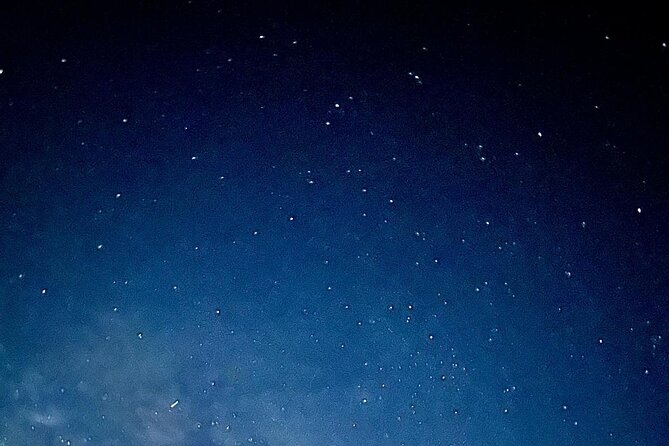
The most consistent positive points are easy to identify. The guides receive warm attention, the desert setting creates the mood, and the astronomy feels like more than a token extra.
Harabi is singled out as a particularly good guide. His ability to speak French, German, and English is useful for international groups, and his role covers both the drive and the explanation of Bedouin life. Another account praises Moussa for attentive care during the evening. Since guide assignments can change, you should not assume one named guide will be present, but the company’s multilingual approach is worth noting.
The Jeep transfer is described as adventurous, while dinner is praised as delicious. The strongest night-sky comments focus on seeing the Milky Way and Saturn. Those details suggest that the best part of the outing comes after dinner, when the desert becomes quiet and the equipment begins to do its work.
At the same time, the camp should be understood on its own terms. This is not a grand Bedouin theme park. Its appeal comes from a plain tent, tea, bread, fire, desert air, and a smaller human scale. If that sounds appealing, the simplicity will likely feel genuine. If you want polished entertainment, you may find the program restrained.
Is $85 good value?
The listed price is $85 per person. For that amount, you receive hotel pickup, air-conditioned transport, a professional guide, the camel ride, Bedouin tea, dinner, drinks, and use of the telescopes. The $5 government fee is extra, bringing the usual basic total to $90 per person before any south Marsa Alam transport supplement.
Value depends on what you want from the night. If you only want to see stars, a simpler local stargazing option might cost less. Here, you are paying for a full evening with transport, food, cultural stops, and a professional telescope session.
The extra $10 transport charge applies to hotels south of Marsa Alam. Ask about that location fee before you finalize your budget. The company also offers pickup, which saves you from arranging a separate taxi into the desert.
For a family, the price can make sense because the outing serves several interests at once. Children can try the camel ride, watch bread being made, see the sunset, and learn about space. Couples may prefer the quiet desert setting and evening sky. Serious amateur astronomers should keep expectations measured: this is a guided tourism experience, not a dedicated observatory night with a full range of instruments.
Who should book this experience?
I would recommend it to you if you want a well-rounded Marsa Alam evening with astronomy at its center. It suits first-time stargazers because you do not need your own equipment or prior knowledge. The guide handles the telescope and explains what you are seeing.
It also works well for families and mixed-age groups. The activities change often enough to keep the evening moving, and the 12-person limit is friendlier than a large excursion.
You may want to skip it if you dislike outdoor conditions, camel riding, shared telescope time, or simple camp facilities. It is also not ideal if your only goal is a long, silent astronomy session. The sunset, meal, cultural presentation, and transport all take time, so the telescope portion is about one hour of a five-and-a-half-hour outing.
Book at least a day ahead if you need flexibility. Free cancellation is available when you cancel at least 24 hours before the start time. Changes or cancellations inside that window are not refunded, and the experience is often reserved about 24 days ahead, so leaving it until the last minute may not be wise.
My verdict on the Marsa Alam star-gazing tour
You should book this experience if you want the desert to be part of the story, not just a dark place for looking at stars. The combination of Bedouin tea, fire-baked bread, a sunset viewpoint, barbecue dinner, and a proper 15-inch telescope gives the evening useful variety.
The best reasons to go are the small group, the strong guide support, and the chance to see the Milky Way or Saturn through serious equipment. The main limits are the simple camp, the short camel ride, the one-hour telescope session, and the extra fees that are not included in the headline price.
For most visitors staying in Marsa Alam, this is a good choice when you want culture, scenery, food, and astronomy in one outing. Go with sensible expectations, dress for an outdoor desert evening, and let the night sky carry the final act.
FAQ
Where does the Marsa Alam Space Observers tour take place?
The tour travels from Marsa Alam to the Ababda Bedouin camp at Padi Valley, where the camel ride, cultural activities, dinner, and astronomy session take place.
What time does the tour start and finish?
Pickup begins around 4:00 pm, and the return drive to your hotel starts around 8:30 pm after the activities finish. The full experience lasts approximately five hours and 30 minutes.
Is hotel pickup included?
Yes. Pickup is offered, and transfers use a modern, clean, air-conditioned vehicle. Hotels south of Marsa Alam require an additional $10 transportation fee.
How large is the group?
The tour has a maximum of 12 participants.
What telescope is used?
The astronomy session uses a GPS-directed Meade telescope with a 15-inch aperture.
Is dinner included?
Yes. The experience includes a Bedouin barbecue dinner served as an open buffet, along with bottled water and a soft drink during dinner. Coffee and tea are also included.
What extra fees should I expect?
The government fee is $5 per person. A further $10 transportation charge applies to hotels in south Marsa Alam. Purchases from the Bedouin pharmacy or handmade shop are not included.
Just added around Egypt
- ( canyon hurghada & stargazing )★ 4.9 · 16 reviews
- Super Safari 5In1quad Camel Ride Dinner African Nubian show star gazing in sharm★ 4.0 · 9 reviews
- Safari Quad Bike Adventure, Camel, Show, Dinner & Stargazing★ 5.0 · 53 reviews
- Sharm El-Sheikh: Ultimate ATV Quad, Stargazing & BBQ Dinner★ 5.0 · 5 reviews
- Sharm El Sheikh: ATV Desert Stargazing Adventure with BBQ Dinner★ 4.5 · 27 reviews
- Star Gazing Safari tour By ATV Quad, Bedouin Dinner, telescope – Sharm El Sheikh★ 3.5 · 20 reviews
- Star Gazing Safari Tour by ATV Quad and Dinner in Sharm El Sheikh★ 5.0 · 3 reviews
- Quad biking, camel riding and stargazing in Sharm el Sheikh 5×1★ 4.0 · 11 reviews
Desert Stargazing Safaris, compared.
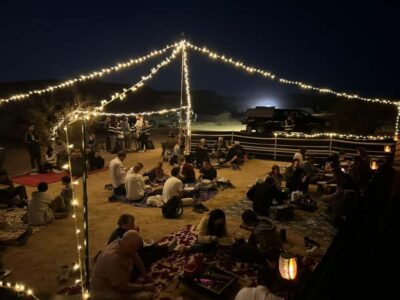
Dubai Red Dunes ATV, Camels, Stargazing & 5* BBQ Al Khayma Camp
Read our review →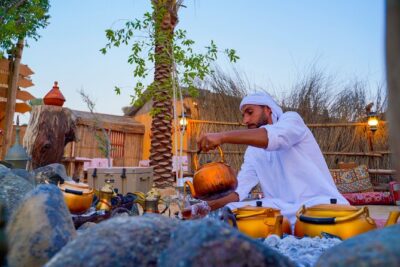
Sunset Camel Trek, Al Khayma Camp, Stargazing & BBQ
Read our review →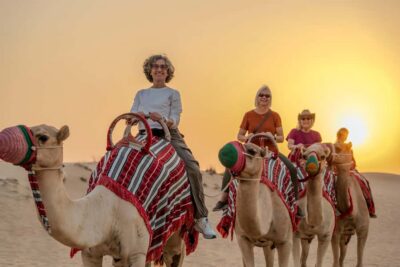
Overnight Safari, Dinner, Stargazing & Al Khayma Camp
Read our review →
Dubai Overnight Desert Safari, BBQ & Stargazing at Al Khayma Camp
Read our review →Evening Desert Safari with Camel Ride & Stargazing
Read our review →
Sea & Desert Horse Tour, Stargazing, Dinner & Show
Read our review →
Pinnacles Desert: Sunset BBQ & Stargazing Tour +Sandboarding
Read our review →
Pinnacles Desert Sunset Dinner and Stargazing Tour
Read our review →Browse the lists this tour appears in