
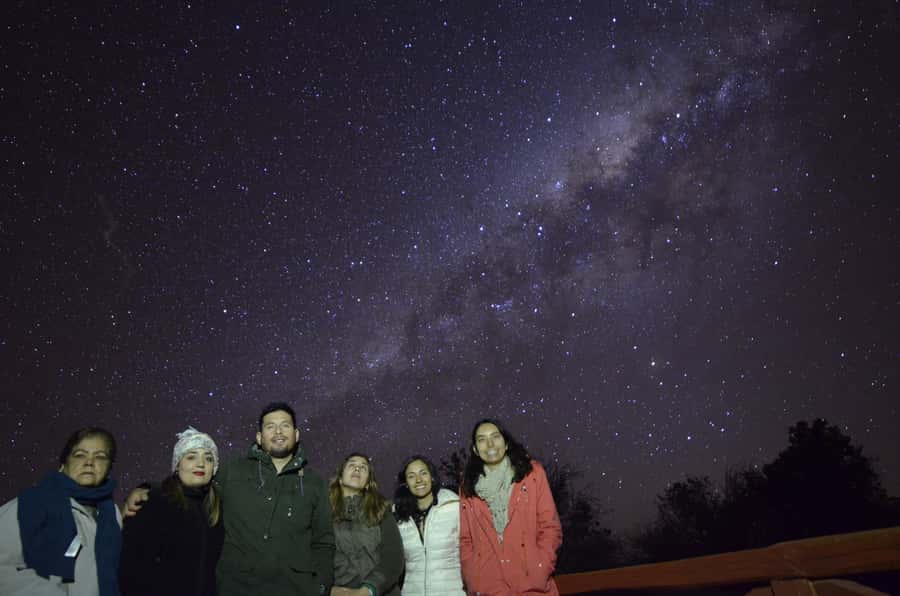
Review · SAN PEDRO DE ATACAMA
San Pedro de Atacama: Etno-Stargazing Tour with Transfer
The Atacama sky does the heavy lifting. This 150-minute evening tour combines telescope viewing with Western astronomy and Andean star lore, making it more than a quick look at bright stars. I especially like the clear, well-explained guidance and the chance to view planets, clusters, nebulae, and galaxies through a telescope. The included photo is another fine touch. The main drawback is simple: moonlight and clouds can change the night, and the desert becomes very cold after sunset.
You travel only about 10 to 15 minutes from San Pedro de Atacama, but that short ride gets you away from much of the town’s light. Guides such as Felipe, Claudio, Salvador, Yvonne, and Margarete have earned praise for making astronomy easy to follow in both English and Spanish. Plan carefully, though: pickup times shift with the season, and cloudy conditions may move your tour to a later hour or another night.
Key points to know before you book
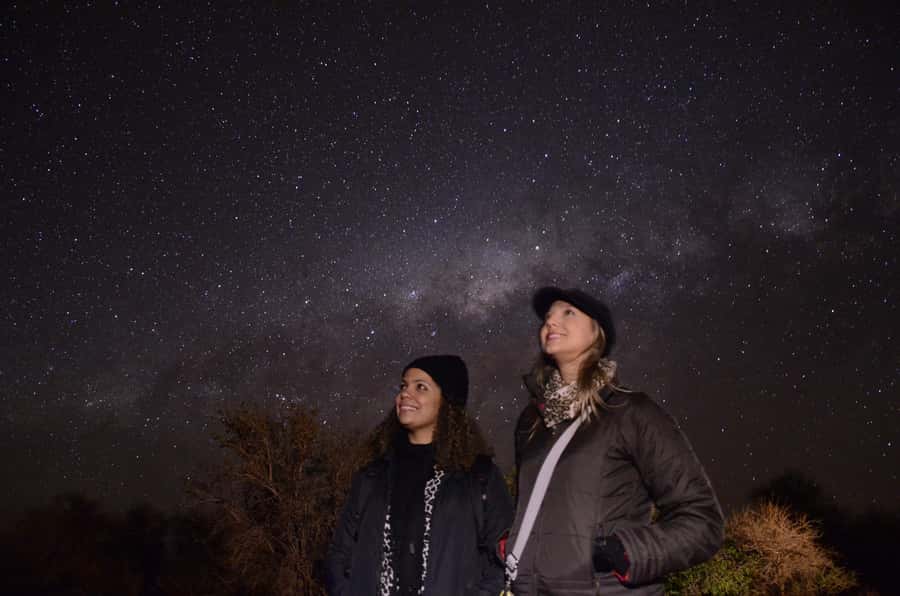
- Two ways of reading the sky: You first learn the Western scientific view, then see how ancient Andean communities interpreted the Milky Way and celestial figures.
- Telescope time is part of the tour: With help from the guide, you can look at planets, stars, binary stars, clusters, nebulae, and galaxies, depending on the season and conditions.
- The Southern Cross is a highlight: The tour helps you recognize stars and patterns that are especially important in the Southern Hemisphere.
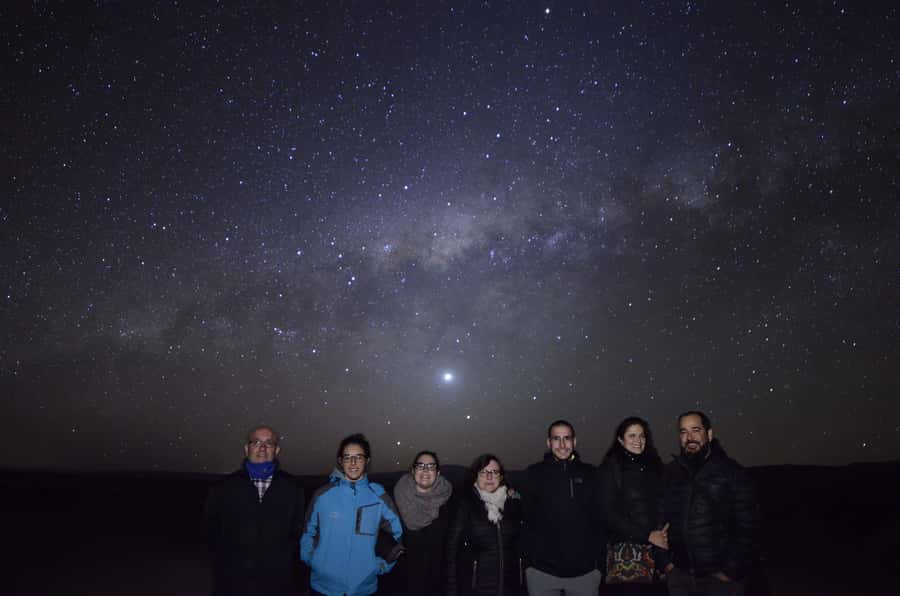
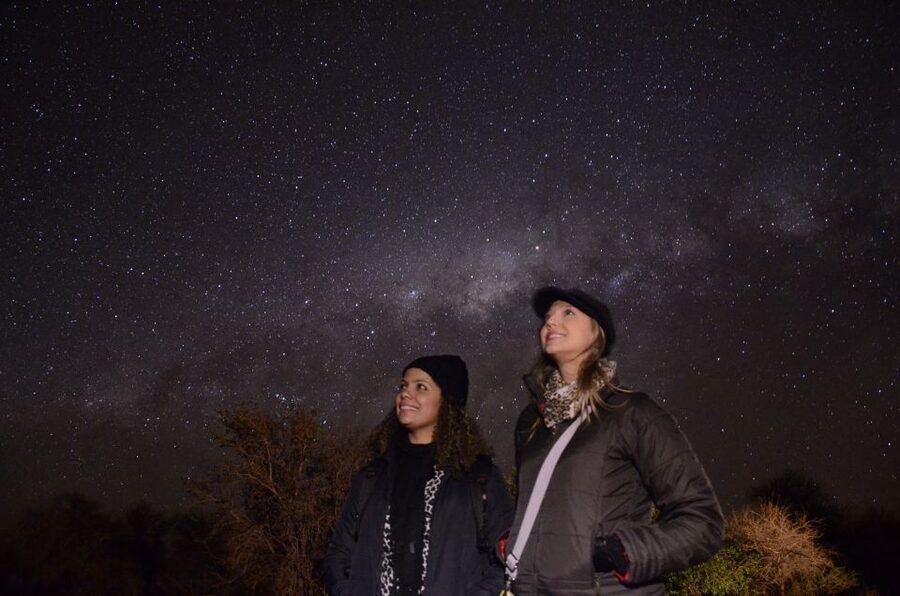
- A photograph is included: The operator takes a souvenir photo with the stars and sends it by email. In bright moonlight, the photo may be taken through the telescope eyepiece instead.
- Warmth matters: Bring layers, even if San Pedro felt hot during the day. Ponchos and, at times, blankets are provided, but the cold can still catch you out.
- The price is fair for a guided night: At $41 per person, transportation, an astronomy guide, telescope use, drinks, and a sky photo are included.
Leaving San Pedro for a darker sky
The meeting point is Restaurant Tara at Licancabur 10, with pickup and return arranged in San Pedro de Atacama. The transfer out takes about 15 minutes by van. That is short enough to avoid a tiring late-night journey, but long enough to put some distance between you and the town’s lamps.
One practical warning: make sure you can identify the meeting point before the evening begins. A guest once had trouble finding Restaurant Tara because the name was not familiar locally, and the guide had to come looking. I would arrive early, keep the operator’s contact details handy, and confirm the pickup point with your accommodation.
Pickup is listed at 7 p.m. from April through August. During Chilean summer time, it is generally between 9 and 9:20 p.m. Exact availability depends on the date. Since stargazing needs darkness, the late start is part of the deal.
The tour includes pickup and drop-off in San Pedro, but not in the ayllus. If you are staying outside the central pickup area, check the meeting arrangements before paying. The van ride itself is not the attraction, but it makes the evening much easier than arranging a separate taxi in the dark.
More Stargazing Tours in San Pedro De Atacama:
- San Pedro de Atacama: Stargazing Experience
★ 4.7 · 489 reviews - Astronomical Tour with Guide and Pick Up San Pedro de Atacama
★ 4.5 · 145 reviews - “Astronomical Adventure in San Pedro de Atacama”
★ 4.5 · 96 reviews
A Western lesson under the Southern Hemisphere sky
At the viewing site, the guide begins with the scientific side of the night sky. You learn about stars, their brightness and colors, planets, the solar system, deep space, constellations, and the formation of the cosmos.
This first part gives you a useful framework. Instead of being told only that a bright point is Saturn or a cluster is far away, you learn what you are seeing and why it matters. Guides use laser pointers and direct attention to specific areas of the sky, helping you connect the lecture with the actual stars above you.
The language is generally accessible rather than technical. Felipe has been praised for handling difficult questions and connecting current astronomy with older ideas. Claudio has also been singled out for keeping children interested with facts that were clear without becoming childish. That makes this a good choice for families with children aged around 10 and up, as well as adults who know little about astronomy.
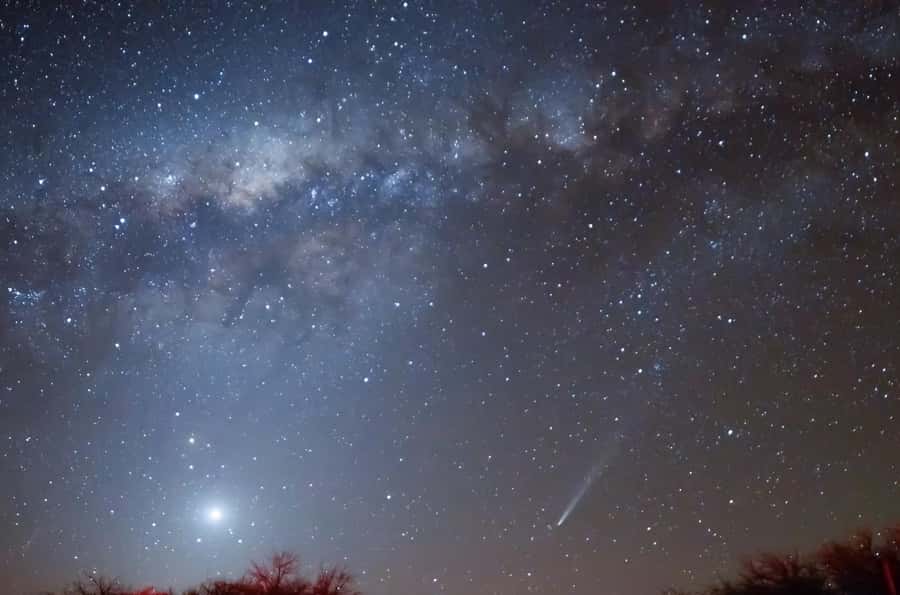
You may see different objects depending on the time of year, weather, and moon phase. Possible targets include planets, binary stars, star clusters, nebulae, and galaxies. Saturn has been a particular highlight when visible, while the crescent moon, Antares, and various clusters have also been observed through the telescopes.
Do not expect a fixed list of celestial objects. The guide works with what is in the sky that night. That is a strength, since the tour responds to real conditions, but it also means one date will not produce exactly the same viewing as another.
Andean astronomy gives the night a human meaning
The second part shifts from modern Western astronomy to the sky traditions of the Andes. Long before Spanish arrival, Indigenous communities observed the heavens closely and used them to understand daily life, seasons, animals, water, rivers, schedules, and ideas about life after death.
This section is one of the tour’s most distinctive features. You do not simply learn the names of Greek constellations. You hear how different cultures saw figures in the dark spaces between stars, and how the Milky Way could be understood as more than a band of light.
The tour also takes you back to ancient Greece, where the Western tradition of connecting stars into figures developed. Seeing both systems side by side helps you understand that constellations are not pictures objectively stamped onto the sky. They are stories and tools created by people, shaped by where they lived and what they needed to know.
The Southern Cross is a natural focus. It is one of the most recognizable patterns in the southern sky, and learning to locate it gives you a useful reference point for the rest of your time in Chile. The guide can also explain the meaning of other Southern Hemisphere stars and show how the sky differs from what you may know at home.
For me, this cultural layer gives the evening more weight. You are not only looking farther into space. You are also learning how human communities used the sky to organize time, place, and belief.
Taking your turn at the telescope
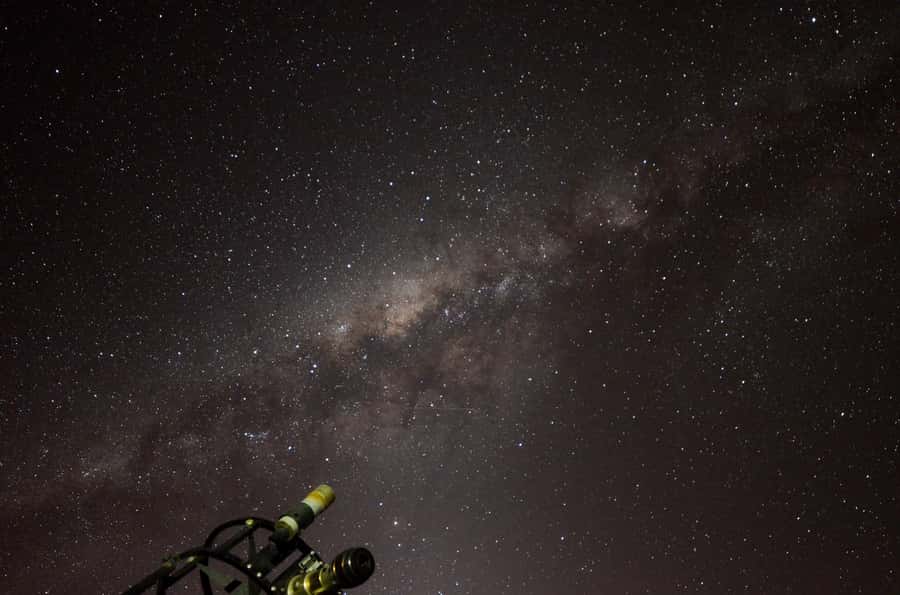
After the explanation, you get a chance to look through the telescope with the guide’s help. The operator provides the equipment, and the guide focuses it on selected objects. At times, two large telescopes are available, which reduces waiting and allows the group to see more than one target.
This is a hands-on part of the experience. You do not need to know how to operate an observatory telescope. The guide points out where to look, adjusts the focus, and explains what appears in the eyepiece.
The view through a telescope can surprise you. A star may become a pair of stars. A bright planet may show features that are invisible to the naked eye. A cluster can change from a faint blur into a group of separate points. What you see depends on the season, the equipment, and the atmospheric conditions, so keep your expectations flexible.
The guide’s role matters here. A telescope can feel disappointing if you are left alone with a tiny moving dot. Here, the explanations turn each sighting into a short lesson. Felipe, Claudio, and other guides have been praised for taking time to refocus the telescope and answer questions.
Bring binoculars if you have them. They are not a substitute for the supplied telescope, but they can help you scan the sky between guided observations. Comfortable shoes also make sense, since you are outside for much of the evening.
Same dark sky, a different way to spend it:
- San Pedro de Atacama: Guided Atacama Desert Stargazing Tour
★ 3.9 · 93 reviews - San Pedro de Atacama: Stargazing Experience with Transfer
★ 3.5 · 8 reviews - San Pedro de Atacama: Astro Tour with big telescopes
★ 5.0 · 6 reviews - San Pedro de Atacama: Stargazing Tour in the Atacama Desert
★ 3.0 · 5 reviews
Fire, drinks, and a welcome warm-up
The listed refreshments include coffee, tea, or red wine. Experiences have also included warm chocolate, snacks, a bonfire, and on some evenings a pisco sour or other drink. Since the exact food and beverage offering can change, treat the telescope and guide as the main value rather than booking solely for the picnic.
The fire is a practical pleasure in the Atacama night. After standing still while looking through telescopes, you will appreciate a place to sit and warm your hands. Some setups have included sofas, benches, ponchos, and a carefully arranged snack area.
Do not underestimate the temperature. The desert can be hot in daylight and sharply cold after dark. Wear several warm layers, long trousers, and comfortable shoes. Ponchos are provided on some tours, and blankets may be available, but I would not rely on them as your only protection.
Smoking, alcohol, and drugs are not permitted as general activities, even though a modest amount of wine or another included drink may be served by the operator. Follow the guide’s instructions, especially around the fire and telescope equipment.
The star photo makes a useful souvenir
At the end, you receive a courtesy photo with the night sky, sent by email. The photography adds something tangible to an experience that otherwise exists mainly in the moment.
The photo session can include individual and group images, with the guide or photographer suggesting where to stand and how to pose. Some evenings have included several attempts, giving people a better chance of getting a pleasing result.
The moon affects this part as well as the stargazing. On bright moonlit nights, the included image may be taken only through the telescope eyepiece. That is worth knowing before you book if the photo matters to you.
Check the lunar calendar first. A darker, moonless sky usually gives you more visible stars and a stronger sense of the Milky Way. A full or nearly full moon can still make planets and the moon itself excellent telescope targets, but fainter stars will be harder to see.
Timing, weather, and the real value of $41
At $41 per person, this tour offers a good package for the price. You receive transport from central San Pedro, a live astronomy guide, telescope use, drinks, and a photo. If you paid separately for a ride, a guided lecture, and a professional night-sky image, the total would likely be less tidy and less convenient.
The 150-minute duration is long enough to include transport, teaching, telescope time, photography, and refreshments without turning into an exhausting all-night outing. The listed route includes about 15 minutes out, roughly 90 minutes at the site, and about 25 minutes returning.
Weather is the one part the operator cannot control. Clouds or poor conditions can lead to a later start on the same night or the next night. The operator should notify you, but keep the following morning in mind if you have a very early excursion. A delayed start near 11 p.m. has produced a better sky on difficult weather nights, but it also means a late return.
The tour has free cancellation up to 24 hours in advance, and you can reserve while paying later. Wheelchair accessibility is listed, though the outdoor viewing setup may still be worth confirming directly if you have specific mobility needs.
Who will enjoy this San Pedro night tour?
I would choose this for anyone who wants more than a quick photo beneath the stars. It suits first-time stargazers, couples, families, and curious adults who appreciate a guide able to explain science without burying you in jargon.
It is particularly good for people who want cultural context. The Andean astronomy section separates it from a basic telescope session, and the Southern Cross gives visitors from the Northern Hemisphere a new part of the sky to learn.
Children can enjoy it too, especially when the guide keeps the session interactive. The late hour and cold may be harder for younger children, so bring extra layers and think about the next morning’s schedule.
I would hesitate only if you need a guaranteed start time, dislike cold outdoor evenings, or have a tightly packed itinerary. The tour may shift because of weather, and a moonlit night will not look like a moonless one.
Should you book the Etno-Stargazing Tour?
Yes, if you want a well-priced introduction to the Atacama sky with real explanation behind the spectacle. The strongest reasons to book are the guides, the mix of Western and Andean astronomy, the telescope access, and the included photo.
Book for a darker moon phase when possible, and leave room in your schedule for a weather delay. Wear warmer clothes than you think you need, confirm the Restaurant Tara meeting point, and treat the snacks and fire as pleasant extras.
If those conditions suit you, this is one of San Pedro’s better evening choices. You leave with a clearer idea of what you saw, a new respect for Southern Hemisphere stars, and a photograph that helps the night stay with you.
FAQ
Where does the tour start?
Pickup is available from Restaurant Tara at Licancabur 10 in San Pedro de Atacama.
Is hotel pickup included?
Pickup and drop-off are included in San Pedro de Atacama, but pickup does not include the ayllus.
How long does the experience last?
The advertised duration is 150 minutes, including the transfer and the guided astronomy session.
What time does pickup take place?
Pickup is listed at 7 p.m. from April through August. During Chilean summer time, pickup is generally between 9 and 9:20 p.m. Check the available start time for your date.
Which languages are offered?
The live tour is offered in English and Spanish.
What can I see through the telescope?
Depending on the season and conditions, you may see planets, stars, binary stars, star clusters, nebulae, galaxies, and other objects in the solar system or deep space.
Is a photograph included?
Yes. A courtesy photo with the stars is sent by email. During periods of strong moonlight, the photo may be taken only through the telescope eyepiece.
Should I check the moon phase before booking?
Yes. Moonlight changes how many stars you can see. A bright moon can reduce visibility of fainter stars, although the moon and some planets may still be excellent telescope targets.
What should I wear?
Bring warm clothing, comfortable clothes, and comfortable shoes. The desert can be very cold at night. Binoculars are also suggested.
What happens if the weather is bad?
The schedule or tour may change because of weather. The operator may move it to a later time the same night or to the next night, and alternative options may be offered if cancellation is necessary.
Just added around San Pedro De Atacama
- San Pedro de Atacama: Astronomical Tour★ 3.9 · 3 reviews
- San Pedro de Atacama: Stargazing Tour in the Atacama Desert★ 3.0 · 5 reviews
- San Pedro de Atacama: Stargazing Experience with Transfer★ 3.5 · 8 reviews
- SAN PEDRO DE ATACAMA: ASTRONOMICAL TOUR★ 3.6 · 3 reviews
- San Pedro de Atacama: Etno-Stargazing Tour with Transfer★ 3.5 · 5 reviews
- San Pedro de Atacama: Astro Tour with big telescopes★ 5.0 · 6 reviews
- From San Pedro de Atacama: Astronomy Tour★ 5.0 · 2 reviews
- Chile: Astronomical Tour in the Atacama Desert★ 4.8 · 4 reviews
Stargazing Tours, compared.
Dubai Red Dunes ATV, Camels, Stargazing & 5* BBQ Al Khayma Camp
Read our review →
Teide National Park Sunset & Stargazing with Dinner (Star Safari)
Read our review →
Sunset Camel Trek, Al Khayma Camp, Stargazing & BBQ
Read our review →
Overnight Safari, Dinner, Stargazing & Al Khayma Camp
Read our review →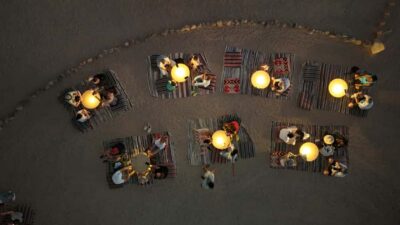
Dubai Overnight Desert Safari, BBQ & Stargazing at Al Khayma Camp
Read our review →Browse the lists this tour appears in