
Review · TENERIFE
Tenerife: Stargazing at Mt. Teide
Stars look different above volcanic Tenerife. This one-hour Mt. Teide stargazing experience pairs professional telescopes with live explanations in English, Spanish, or French. I like the chance to see planets such as Saturn, Jupiter, or the Moon through a powerful lens, and I like the setting near the cable car base station in Teide National Park. The main drawback is that the sky may not deliver a wall of stars if the Moon is bright.
I also like that on-site monitors help explain what you are seeing, rather than leaving you alone with a telescope and a shrug. But at $47 per person, with transport and food excluded, the value depends on how much you enjoy astronomy and how easily you can reach Mt. Teide yourself.
Key points before you book
- Saturn and the Moon can be the stars of the show: Telescope views may be more memorable than the naked-eye sky.
- The experience lasts one hour: Expect a focused introduction and telescope viewing, not a long night tour.
- The meeting point is near the cable car base station: Check your booking details carefully, since the exact meeting point can vary.
- A bright Moon changes the experience: It can make stars harder to see, but it may look striking through the telescope.
- Bring serious warm clothing: Teide can feel cold at night, and sturdy footwear is required.
- This suits independent visitors: Transport is not included, and the activity is not suitable for children under eight or people with mobility impairments.
Why Mt. Teide makes a good place for stargazing
Mt. Teide gives this short activity a strong sense of place. You are not looking at planets from an ordinary town square. You are in the volcanic surroundings of Teide National Park, near the cable car base station, with a sky that feels far removed from the resort areas below.
The location matters because a stargazing outing needs darkness, clear air, and a setting that limits the visual clutter of daily life. The experience description points to the special climate of Teide National Park, and the guides use that setting to connect the constellations you see with the night skies known to people in earlier times.
That does not mean every night will be perfect. The Moon can be bright enough to wash out many of the fainter stars. One participant expected a sky packed with stars and found the view less dramatic than hoped because of moonlight. That is not a fault the guide can control, but it is an important part of your expectations.
If you are hoping mainly to see a huge blanket of stars, choose your date and moon conditions with care if that information is available when you book. If you are happy to study bright objects through a telescope, moonlight may not be bad news at all. The Moon itself has produced some of the strongest memories on this experience.
More Stargazing Tours in Tenerife:
- Tenerife: Teide National Park Sunset & Stargazing Tour
★ 4.2 · 3,812 reviews - Tenerife: Sunset and Stargazing at Teide National Park
★ 4.7 · 2,826 reviews - Teide National Park Sunset & Stargazing with Dinner (Star Safari)
★ 5.0 · 2,601 reviews
Arriving at the cable car base station
Your meeting point can vary with the option you book, so read the confirmation rather than heading automatically to the cable car base station. The activity takes place near that area, but the exact instructions matter, especially if you are driving up independently.
Transport is not included. You need to arrange your own way to the meeting point, and this affects the real cost of the outing. At $47 per person, the activity may be reasonable for someone already spending an evening in Teide National Park, but it becomes a larger expense if you also need to organize a special drive or other transport.
One practical warning comes from the access arrangements. A delay of about 30 minutes was reported because of the number of cars in the area. Give yourself plenty of time to arrive, park, and find the correct meeting point. Do not plan to reach the area at the last possible minute.
The place may also feel confusing before the activity begins. One French-speaking participant described arriving at the bottom of the cable car and wondering why the area appeared closed, then being met around 10 p.m. for ticket checks and the start of the experience. That suggests you should not assume that an apparently quiet or closed area means you are in the wrong place.
The first part of the hour: getting oriented
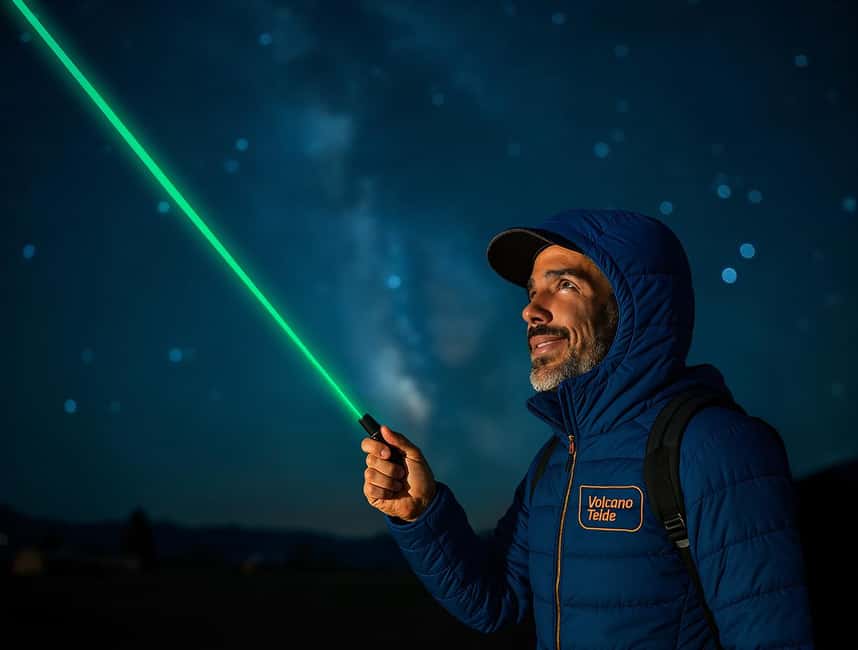
The guide begins by introducing the night sky and the objects you may view. The experience is led in English, Spanish, or French, and the language choice can make a real difference. A French-speaking guide named Maxime was praised for explaining the subject clearly, while another French-language outing with Natasha and her assistant was noted for making the subject easy to follow.
The guides are not there only to point a telescope at something bright. They explain the universe and use monitors at the site to provide information about the objects viewed through the equipment. For you, this means the activity has an educational side, even though it lasts only one hour.
The balance between explanation and telescope time is worth considering. One participant felt the talk ran too long and left too little time to use the telescopes. That criticism is useful because astronomy talks can be absorbing, but your main reason for booking may be to look through the equipment yourself.
I would approach the opening talk as preparation, not filler. A short explanation can help you understand why an object looks the way it does and where a constellation sits in the sky. Still, if you want long, repeated turns at the telescope, this one-hour format may feel tight.
What you see through the telescopes
The telescopes are the heart of the experience. You may look at planets, galaxies, and other celestial objects, with the exact viewing list depending on the night. Jupiter and Saturn have both been visible, while the Moon has appeared especially bright and clear through the equipment.
Saturn is a strong example of why a telescope changes the experience. Seeing it as a point of light is one thing. Seeing its rings through a telescope gives you a more direct connection with the night sky, even if the image is small.
Keep your expectations realistic. Telescope images are not like the sharp, colorful photographs used in space documentaries. One participant found Jupiter and Saturn rather small and blurry. That does not make the viewing pointless, but it does mean you should treat the experience as a chance to observe real objects through a working telescope, not as a cinema-quality display.
The Moon may be the clearest target. Its brightness can reduce the number of visible stars, but the same brightness can make lunar viewing impressive. If your date falls during a bright moon phase, the experience may shift from searching for faint constellations to studying the Moon and brighter planets.
The equipment gives the activity its value. Without the telescopes, you would mainly have a guided look at the sky. With them, you have a chance to see objects that are difficult to make out with the naked eye.
Same dark sky, a different way to spend it:
- Teide National Park: Sunset & Stargazing Safari with Dinner
★ 4.6 · 2,115 reviews - Teide by Night: Sunset & Stargazing with Telescopes Experience
★ 4.5 · 1,492 reviews - Teide: Guided Sunset & Stargazing Tour by Night with Dinner
★ 4.7 · 1,339 reviews - Sunset & Stargazing Experience From Teide
★ 4.5 · 1,129 reviews
The monitors and the guide’s explanations
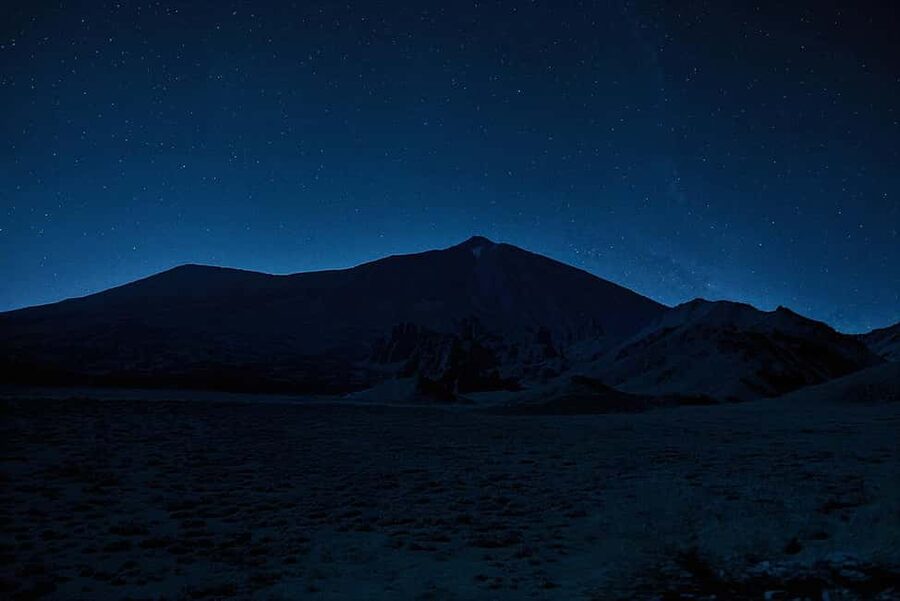
The on-site monitors add a useful second layer. You are not limited to waiting for your turn and guessing what the telescope is showing. The guide can use the screens to give context about the object, its place in the sky, and the wider universe.
I especially like this feature for beginners. If you already know the major constellations and planets, the talk may feel basic at times. If you are new to astronomy, the monitors and explanations can help you connect a bright point of light with something meaningful.
The constellation portion may be less detailed than some people expect. One participant wanted more help with star patterns and their positions, but felt that only a few were explained. If constellation recognition is your main goal, ask questions during the session and listen closely when the guide points out specific shapes.
The guide quality appears to have a noticeable effect on the experience. Maxime was praised for teaching a great deal, and Natasha was praised for communicating the astronomy well. The activity is therefore not just about clear skies and equipment. The person leading the session helps determine how much you take away.
Cold air, sturdy shoes, and the right clothing
Do not dress for Tenerife’s beaches. The instructions specifically call for warm clothing, comfortable clothes, and sturdy footwear. That advice matters because you will be outside at night in a high mountain setting.
A warm jacket is the basic minimum. You may also want extra layers, since you can add or remove them more easily than you can fix being underdressed. Comfortable, sturdy shoes are important on the volcanic ground around the activity area.
The setting is part of the appeal, but it also creates the main comfort issue. You are not stepping out of a heated building for a quick glance at the stars. The hour can feel long if you are cold, especially while waiting for a turn at a telescope.
Pets are not allowed. Children under eight cannot take part, and children who do attend must confirm their age with a passport or ID card. People with mobility impairments should also note that this experience is not considered suitable for them.
Is one hour enough?
One hour gives you a neat, manageable introduction. It works well if you want to add astronomy to a wider day in Teide National Park without committing to a long evening program. The fixed length also makes it easier to plan around dinner or a drive back down the mountain.
The tradeoff is limited telescope time. A talk, ticket check, group organization, and several telescope targets all need to fit into that hour. If the guide spends a generous amount of time explaining the sky, you may have less time at the eyepiece.
That is why your priorities matter. If you want a short, guided introduction with a chance to see planets, one hour is sensible. If you want an extended astronomy session with detailed constellation instruction and repeated views through several instruments, you may find the format too brief.
The experience uses more than one telescope, according to the practical feedback from the outing. That gives you the chance to see objects through different equipment, although the amount of time available for each view can vary.
Measuring the $47 price
At $47 per person, the price is not simply paying for an hour outdoors. It covers the live guide and the stargazing equipment, including the professional telescopes and monitors used during the session.
I think the price is easiest to justify if you already have your own transport and a strong interest in astronomy. A clear view of Saturn, Jupiter, or the Moon can make the evening feel worthwhile, especially if the guide explains what you are seeing in a language you understand well.
The value is less certain if you mainly want to see a dense field of stars. Moonlight can reduce the star count, and telescope images may look small or soft. Since transport and food are extra, the total evening budget can rise beyond the advertised price.
This is not a general sightseeing tour with several stops. It is a specialized, one-hour activity. You are paying for the setting, the guide, and access to equipment that most people do not carry with them. That makes it a better choice for curious sky watchers than for someone looking for a broad introduction to Tenerife.
Who will enjoy this experience most?
I would recommend it to adults, older children, and couples who enjoy science, night skies, and unusual settings. It can also suit families with children eight and older, provided the children can manage the cold, the late timing, and the need to follow age verification rules.
It is a good fit if you want a guided activity rather than simply stopping at a viewpoint and looking upward. The multilingual format helps if you prefer English, Spanish, or French, and the explanations give structure to what might otherwise be a quiet but confusing hour.
You should think twice if you dislike cold weather, have difficulty walking on uneven ground, or want a long session with extensive constellation instruction. The activity is also a poor match if you need included transport, since you are responsible for getting to the meeting point.
Practical booking advice for Mt. Teide
Check the exact meeting point for your chosen option. The location may vary, and the area around the cable car can be confusing at night.
Arrive early enough to deal with cars, parking, and ticket checks. A reported delay caused by heavy vehicle access shows why a relaxed schedule is useful.
Pack warm layers and sturdy shoes, even if Tenerife feels warm at sea level. Bring a passport or ID card for children, as their ages must be confirmed.
The activity offers free cancellation up to 24 hours in advance for a full refund. You can also reserve now and pay later, which helps if your mountain plans depend on weather or your wider schedule.
Should you book Mt. Teide stargazing?
Book it if you want a short, focused astronomy experience with real telescopes and a live guide. The strongest reasons are the chance to view objects such as Saturn, Jupiter, and the Moon, plus the unusual setting near Mt. Teide’s cable car base station.
Think carefully if your dream is only a sky packed with stars. Moonlight may reduce the number of visible stars, and the one-hour format may leave less telescope time than you hoped. Still, the guides can make the difference, especially if you get a clear explanation in English, French, or Spanish.
For an independent visitor already planning an evening at Teide, $47 can be fair value. For someone paying extra to reach the mountain and expecting a long astronomy session, the cost may feel high. Pack warm clothes, arrive early, and book this for the telescopes and the guide, not just for a guaranteed blanket of stars.
FAQ
Where does the Mt. Teide stargazing experience take place?
It takes place near the cable car base station on Mt. Teide in Teide National Park. The exact meeting point may vary depending on the option you book.
How long does the stargazing experience last?
The activity lasts one hour. Starting times depend on availability.
What languages are available?
Live guides are available in English, Spanish, and French.
Is transport included?
No. Transport and food are not included, so you need to arrange your own way to the meeting point.
What should I wear?
Wear warm, comfortable clothing and sturdy footwear. Nighttime conditions near Mt. Teide can be cold.
Are children allowed to join?
Children under eight are not permitted. Children who attend must confirm their age with a passport or ID card.
Can I cancel for a refund?
Yes. You can cancel up to 24 hours in advance for a full refund. The activity also offers a reserve-now, pay-later option.
Just added around Tenerife
- VIP Sunset & Stargazing experience★ 4.5 · 44 reviews
- Skip the Line: Teide Observatory Entrance Ticket★ 3.0 · 33 reviews
- Small Group Teide Stargazing Tour with Picnic at Sunset★ 5.0 · 3 reviews
- Sunset and stargazing from Teide★ 3.5 · 51 reviews
- Tenerife Exclusive & Private Gastronomic, Sunset-Stargazing★ 5.0 · 3 reviews
- TEIDE NIGHT Astronomy Stargazing Bus Tour, Meal & Drinks included!★ 4.0 · 15 reviews
- PRIVATE TOUR Teide National Park: Hiking and Stargazing★ 5.0 · 38 reviews
- Sunset & Stargazing Experience from Teide★ 4.0 · 31 reviews
Stargazing Tours, compared.
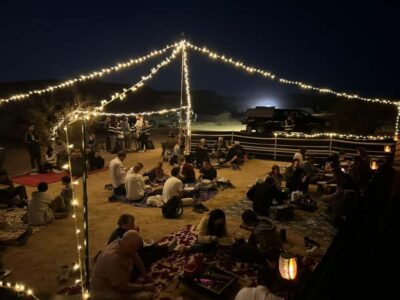
Dubai Red Dunes ATV, Camels, Stargazing & 5* BBQ Al Khayma Camp
Read our review →
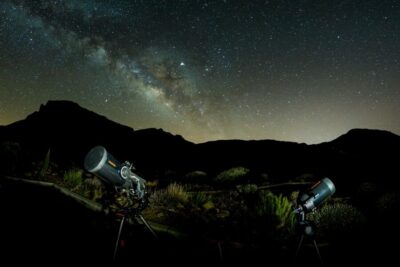
Teide National Park Sunset & Stargazing with Dinner (Star Safari)
Read our review →
Sunset Camel Trek, Al Khayma Camp, Stargazing & BBQ
Read our review →
Overnight Safari, Dinner, Stargazing & Al Khayma Camp
Read our review →
Dubai Overnight Desert Safari, BBQ & Stargazing at Al Khayma Camp
Read our review →Browse the lists this tour appears in