
Review · TENERIFE
Tenerife: Teide Stargazing with an Astrophysicist
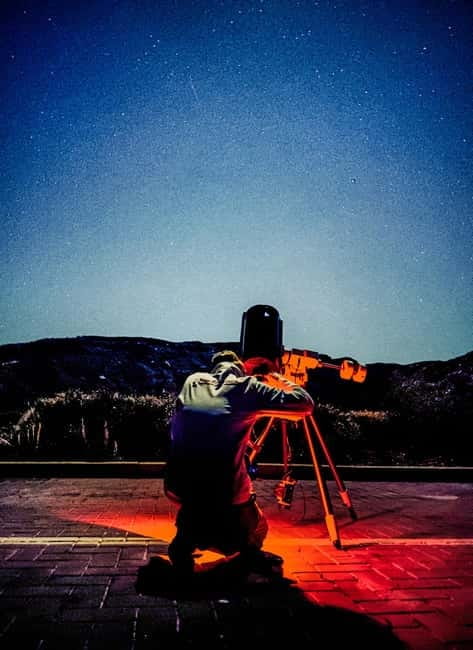
The best show in Tenerife starts after sunset. This 1.5-hour stargazing session at Teide National Park combines an 8-inch telescope with clear explanations from a trained astrophysicist and certified guide. I like the small groups, limited to 10 people, and I like that the session goes beyond pointing at bright stars. You learn how the telescope works, how constellations fit into old myths, and what astronomers are studying today.
The main catch is the setting. The meeting point is at the Parador de Cañadas del Teide, and you must get there by your own car or taxi. The mountain air can also be cold, with temperatures of 0 to 4°C from October through March. If you arrive in a thin holiday shirt, the stars may not be the only thing making you shiver.
Key points before you book
- A compact 10-person group: You get a better chance to ask questions and see the telescope without a long queue.
- An expert guide called Adal: He is praised for making astrophysics understandable for children, beginners, and serious amateurs.
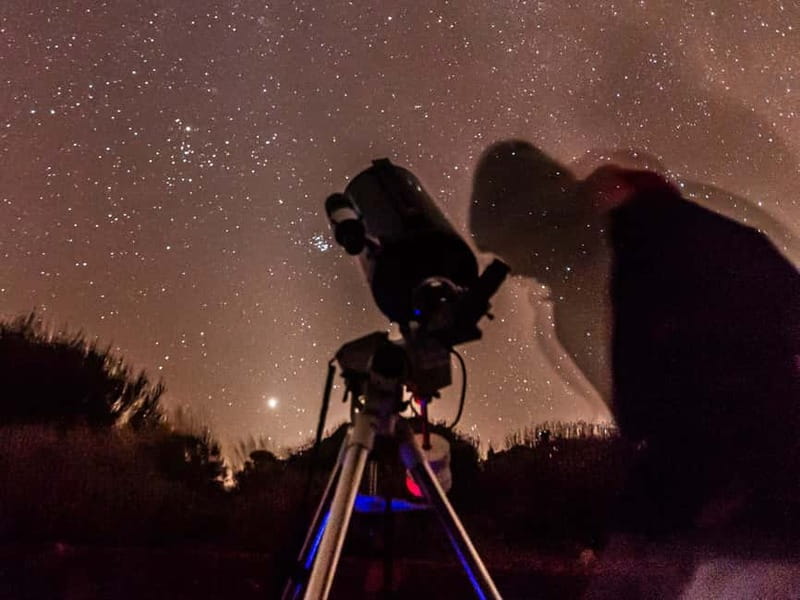
- A proper 8-inch telescope: Depending on the night, you may see the Moon and craters, planets, star clusters, binary stars, nebulae, or a galaxy.
- A high-altitude meeting point: The session takes place outside the Parador de Cañadas del Teide, not at your hotel or a city pickup point.
- A short, focused evening: The whole activity lasts 90 minutes, so it fits neatly into a day spent exploring Teide National Park.
- Weather can change the plan: Poor mountain conditions may lead to cancellation, with a full refund from the operator.
Why Teide is a fine place to look up
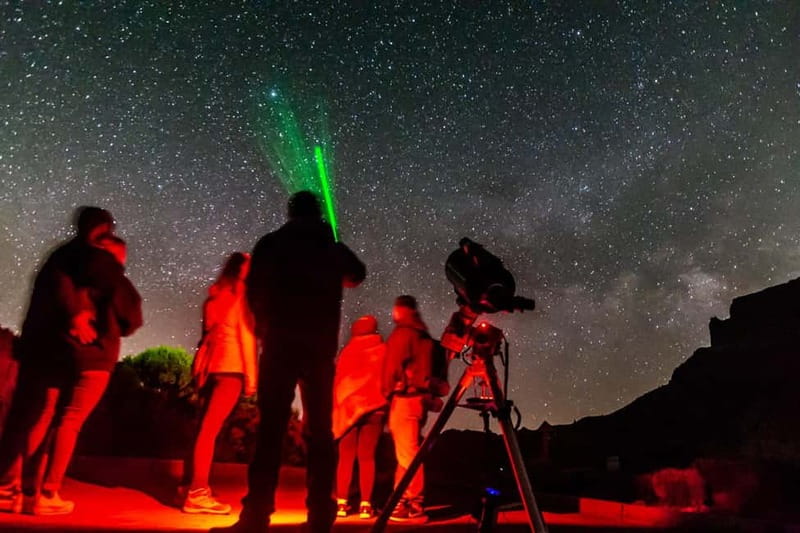
Teide National Park gives this activity a useful sense of place. You are not looking at the sky from a resort promenade or a busy town street. You meet around the Parador in Las Cañadas del Teide, surrounded by the high mountain setting of Tenerife.
That matters because the purpose of a stargazing session is not only the telescope. You also want a darker, quieter setting where the sky has a chance to look impressive. One participant felt the session could have moved farther from nearby street lighting, so do not expect every viewing position to be perfectly dark. If the guide can shift the group away from lights, that may improve the experience.
Still, the location is a strong reason to book. One visitor described the sky as unlike anything seen elsewhere, while another suggested going a little deeper into the dark instead of staying close to the road. Take that as useful advice: arrive ready for an outdoor session and pay attention to the exact meeting instructions.
More Stargazing Tours in Tenerife:
- Tenerife: Teide National Park Sunset & Stargazing Tour
★ 4.2 · 3,812 reviews - Tenerife: Sunset and Stargazing at Teide National Park
★ 4.7 · 2,826 reviews - Teide National Park Sunset & Stargazing with Dinner (Star Safari)
★ 5.0 · 2,601 reviews
Meeting at the Parador de Cañadas del Teide
The tour begins at the entrance and outdoor patio of the Parador de Cañadas del Teide. This is both the starting point and the ending point, so the plan is easy once you arrive.
Getting there is your responsibility. Transport is not included, and you need your own vehicle or a taxi. That can make this harder to arrange than a hotel pickup tour, especially if you are staying on the coast or do not want to drive mountain roads after dark.
I would build extra time into your arrival. You do not want to rush in from another part of the island and then begin the session cold, tired, and distracted. Bring water, wear sturdy comfortable shoes, and dress for the temperature rather than the weather at your beach hotel.
The operator offers regular group sessions on Tuesdays and Fridays. Private sessions can be arranged on other days, but you should confirm the details and price before relying on that option.
The 90-minute program, step by step
This is a single-location experience rather than a tour with several stops. The value comes from how the guide uses the time.
Getting the telescope ready
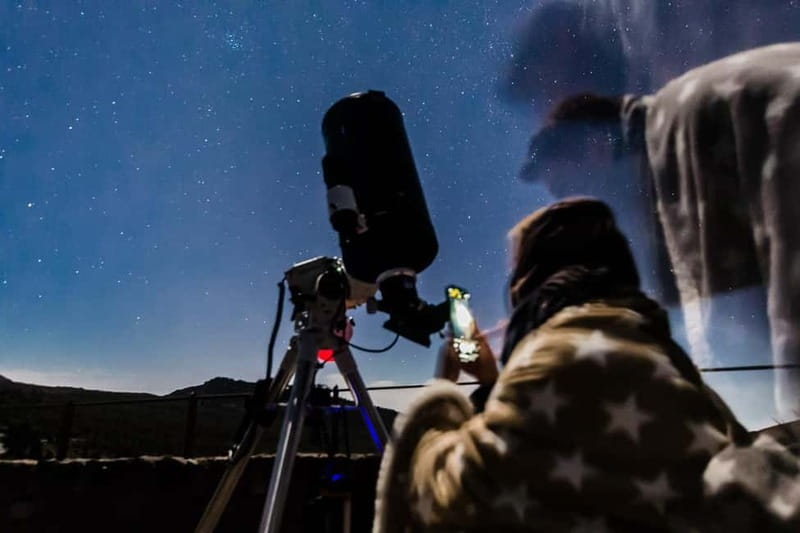
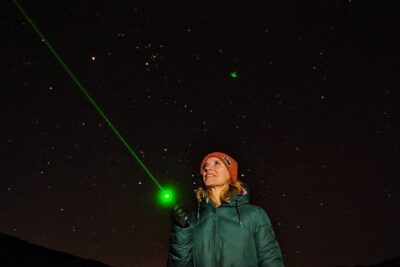
The session includes a professional 8-inch telescope, a laser guide, and a lantern. A useful part of the evening is watching the equipment being set up and learning what each piece does.
That small lesson helps you understand the viewing rather than treating the telescope like a magic box. You can see how the guide prepares it, then follow along as different objects are selected. One visitor especially liked being shown how to set up the telescope before looking through it.
The group size helps here. With no more than 10 participants, you are not lost in a large crowd. You can ask a question, listen to the answer, and then take your turn at the eyepiece.
Same dark sky, a different way to spend it:
- Teide National Park: Sunset & Stargazing Safari with Dinner
★ 4.6 · 2,115 reviews - Teide by Night: Sunset & Stargazing with Telescopes Experience
★ 4.5 · 1,492 reviews - Teide: Guided Sunset & Stargazing Tour by Night with Dinner
★ 4.7 · 1,339 reviews - Sunset & Stargazing Experience From Teide
★ 4.5 · 1,129 reviews
Learning the constellations
The guide then helps you find constellations and explains the myths connected with them. This gives structure to a sky that can otherwise look like a mass of scattered points.
You will also hear about the history of astronomy and current astrophysical research. The presentation is not limited to a list of star names. Adal has been praised for explaining difficult subjects at different levels, from children to enthusiastic amateurs.
That flexibility is important. A beginner should not need to know the difference between a nebula and a star cluster before arriving. At the same time, an experienced amateur should still have room to ask more technical questions.
Viewing the night sky through the telescope
The exact objects depend on the season, the Moon, cloud cover, and visibility that evening. Past sessions have included the Moon and its craters, Jupiter, Saturn and its rings, some moons, Neptune, a galaxy, a reflection nebula, star clusters, and false binary star systems.
Do not treat that list as a promise for your particular night. Astronomy is governed by conditions, not a fixed menu. The guide adjusts the session to what is visible, which is one reason the activity may feel different from one visit to the next.
The Moon can be a particularly satisfying target because its craters are easy to understand through the telescope. Planets and star clusters offer a different kind of reward. You may also learn why two stars can appear close together without actually forming a true pair.
The best part is the link between what you see and what you are told. A quick look through a telescope can be pleasant, but an explanation of what you are seeing makes the moment stick.
Adal makes the science approachable
The strongest part of this experience is the guide. Adal is described as warm, enthusiastic, funny, and deeply committed to his subject. Several people singled out his ability to answer questions without making beginners feel embarrassed.
That is exactly what you want from an astronomy guide. The subject can become technical quickly, but Adal reportedly adjusts his explanations to the people in front of him. Families with children aged 9 and 13 found the session engaging, while adults with little background also felt included.
He is not simply delivering a memorized speech. The session appears to benefit from his personal excitement about astrophysics. That enthusiasm can turn a chilly outdoor hour into something lively and memorable.
The guide also adapts to the conditions. If clouds, moonlight, or visibility affect the night, the session can focus on what remains available. That makes the guide’s skill more important than the equipment alone.
One small point of caution: the supplied information names the guide as Adal, while one comment uses Adel and another uses Adrian. Adal is the name most consistently associated with the experience, but your guide may differ depending on the date.
Is $47 a fair price?
At $47 per person, I consider this a reasonable price for a small-group astronomy session led by a trained astrophysicist. You are paying for more than a telescope view. The fee covers the guide’s instruction, the 8-inch equipment, the laser-guided presentation, and a group capped at 10 people.
The price looks better if you value explanation and personal attention. A large public stargazing event might offer a lower cost, but you could spend more time waiting and less time asking questions. Here, the small group gives the guide room to explain the telescope and respond to individual interests.
The value is less convincing if you only want a quick look at the stars. The session lasts 90 minutes, and transport, food, and drinks are not included. You also have to make your own way to the Parador, which adds time and possibly taxi costs.
I would book it as an evening activity within a wider Teide visit, especially if astronomy interests you. I would think twice if your schedule is already packed, your transport is uncertain, or you are expecting a full-night observatory program.
Cold-weather planning matters
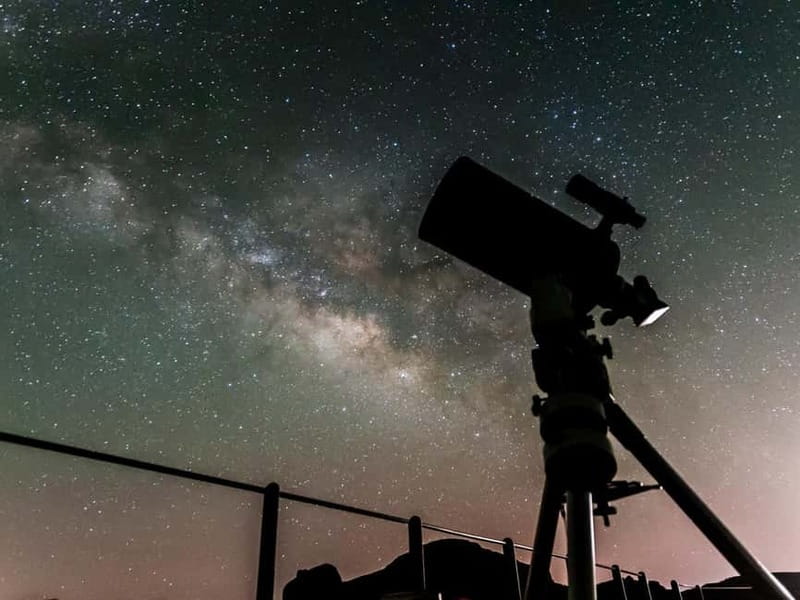
The high mountain location means you should pack for conditions at Teide, not for the sunny weather at the coast.
From October through March, temperatures can be around 0 to 4°C. From April through September, the suggested range is 10 to 15°C. Bring thermal layers, a warm jacket, long trousers, warm shoes, and water.
Comfortable clothing matters because you will spend the session outside. You may be standing around the telescope, waiting for your turn, listening to explanations, and looking up for long periods. Cold hands and thin footwear can make a good astronomy lesson feel like endurance training.
The activity is not considered suitable for children under 8, and high-mountain conditions may also make it unsuitable for some children aged 7 to 9. Babies under 1 are not suitable for the experience. Families with older children should judge the cold and late timing carefully.
Weather and cancellation: plan with flexibility
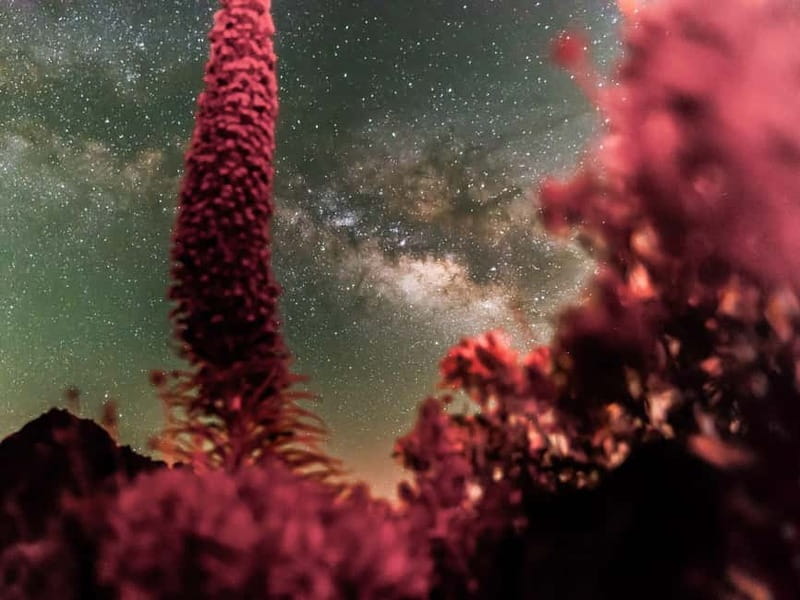
Mountain weather can change the evening. If conditions are unsafe or the sky is unsuitable, the operator may cancel. You receive a full refund if the operator cancels.
That policy protects you financially, but it does not protect your holiday schedule from disappointment. One booking was canceled on the morning of the planned Friday evening session because of weather at the top of the mountain. The guide later explained the reason by text, and the money was returned the following weekend.
I recommend avoiding this as your only must-do activity on the final night of your trip. If the weather turns, you may not have another chance to reschedule. Booking with at least one spare evening gives you more flexibility.
You can cancel for a full refund up to 24 hours before the start time. Cancellations within the final 24 hours do not qualify for a refund, except when the operator cancels because of conditions.
Who will enjoy this most?
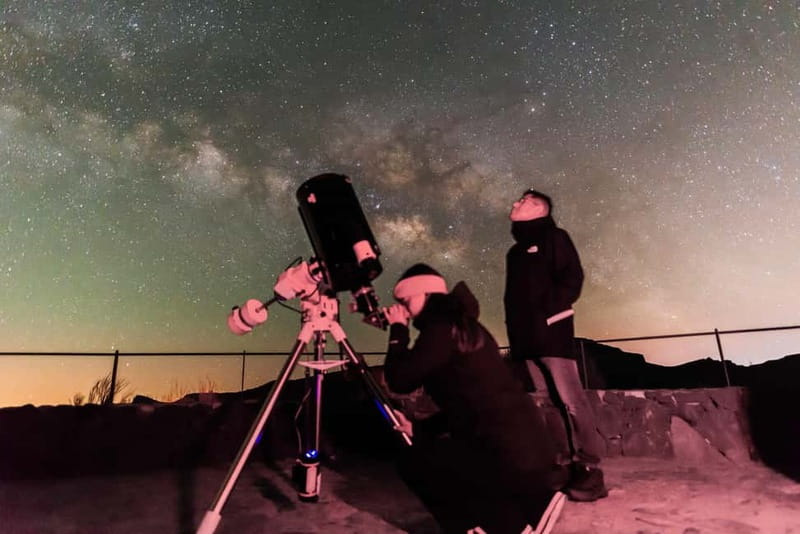
I would choose this experience for:
- Couples who want a calm evening activity with something to talk about afterward
- Families with children around 8 and older who are interested in space
- First-time stargazers who want friendly explanations rather than a technical lecture
- Amateur astronomy fans who appreciate access to a proper telescope
- Visitors already planning to spend time in Teide National Park
- Solo participants who prefer a small group to a large coach excursion
It is also a good choice if you enjoy learning how things work. The telescope setup, the explanation of celestial objects, and the astronomy stories give the evening more substance than a simple scenic stop.
I would be cautious if you dislike cold weather, cannot arrange transport, or need a guaranteed schedule. You should also avoid booking if you want an indoor activity or a long observatory visit. This is a short outdoor session, and the sky decides what can be seen.
Practical tips for a better evening
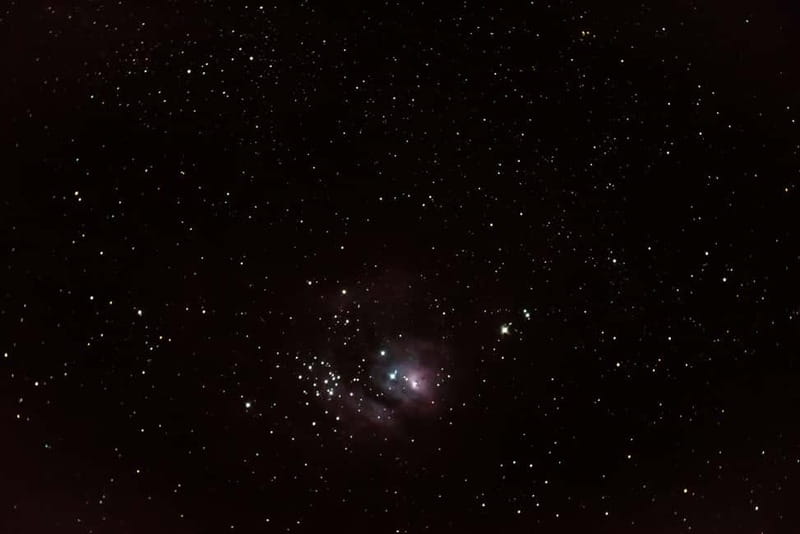
Arrive with your warmest sensible layers already on. Do not rely on buying food or drinks at the meeting point, since they are not included.
Keep your expectations realistic. You may see remarkable objects through the telescope, but the exact selection depends on the night. Clouds and moonlight can change the focus, and the guide cannot control either.
Ask questions. Adal’s teaching style is one of the main reasons this session earns such strong praise. You do not need a science background, and you should not worry that a basic question is too simple.
If darkness matters most to you, take the suggestion to move away from nearby road or patio lighting when possible. The Parador meeting point is convenient, but not every position around it will provide the same level of darkness.
Finally, leave room in your schedule for a weather change. The full refund policy is helpful, but the best practical protection is having another evening available.
Should you book the Teide stargazing session?
Yes, if you want a friendly, well-explained introduction to astronomy in one of Tenerife’s best-known mountain settings. The strongest reasons are the small group, the professional 8-inch telescope, and Adal’s ability to make astrophysics clear without flattening it into a basic tourist talk.
At $47, it offers good value for a focused 90-minute activity, especially for couples, families with older children, and anyone curious about the night sky. The main drawbacks are the lack of transport, the cold, the fixed meeting point, and the possibility of weather cancellation.
Book it when you can arrange a car or taxi, pack proper warm clothing, and keep your expectations flexible. If you do, this can become one of the most memorable evenings of a Tenerife visit, not because every target is guaranteed, but because you leave with a better sense of what you were looking at.
FAQ
Where does the stargazing experience start?
It starts at the entrance and outdoor patio of the Parador de Cañadas del Teide in Las Cañadas del Teide, Tenerife.
How long does the activity last?
The guided stargazing session lasts 1.5 hours, or 90 minutes, and returns to the Parador de Cañadas del Teide.
Is transport included?
No. You need your own vehicle or must arrange a taxi to reach the meeting point.
What languages are available?
The live guide is available in English and Spanish. Group sessions are single-language.
What equipment is provided?
The experience includes an 8-inch telescope, a laser-guided experience, and a lantern.
Can the activity be canceled because of weather?
Yes. High-mountain weather can lead to cancellation. If the operator cancels, you receive a 100 percent refund. You can also cancel up to 24 hours before the activity for a full refund.
Just added around Tenerife
- VIP Sunset & Stargazing experience★ 4.5 · 44 reviews
- Skip the Line: Teide Observatory Entrance Ticket★ 3.0 · 33 reviews
- Small Group Teide Stargazing Tour with Picnic at Sunset★ 5.0 · 3 reviews
- Sunset and stargazing from Teide★ 3.5 · 51 reviews
- Tenerife Exclusive & Private Gastronomic, Sunset-Stargazing★ 5.0 · 3 reviews
- TEIDE NIGHT Astronomy Stargazing Bus Tour, Meal & Drinks included!★ 4.0 · 15 reviews
- PRIVATE TOUR Teide National Park: Hiking and Stargazing★ 5.0 · 38 reviews
- Sunset & Stargazing Experience from Teide★ 4.0 · 31 reviews
Stargazing Tours, compared.
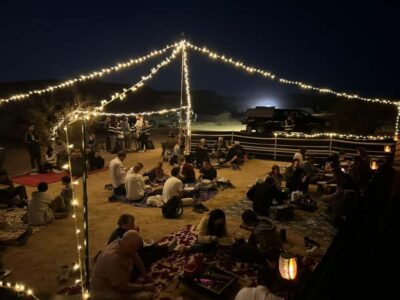
Dubai Red Dunes ATV, Camels, Stargazing & 5* BBQ Al Khayma Camp
Read our review →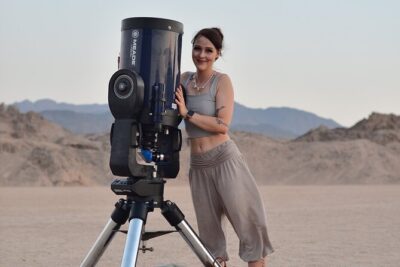
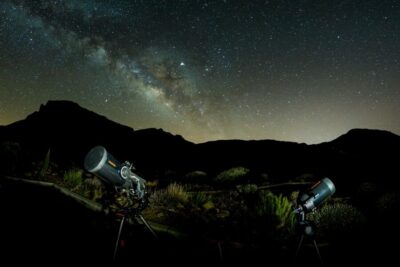
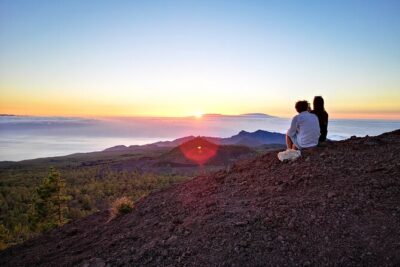
Teide National Park Sunset & Stargazing with Dinner (Star Safari)
Read our review →
Sunset Camel Trek, Al Khayma Camp, Stargazing & BBQ
Read our review →
Overnight Safari, Dinner, Stargazing & Al Khayma Camp
Read our review →
Dubai Overnight Desert Safari, BBQ & Stargazing at Al Khayma Camp
Read our review →Browse the lists this tour appears in