
Review · LAS VEGAS
Las Vegas: Death Valley Sunset and Stargazing Day Tour
Death Valley saves its best show for dark. This 12-hour trip from Las Vegas packs salt flats, rainbow-colored hills, grand overlooks, sunset at Zabriskie Point, and stargazing in Amargosa Valley into one long but rewarding day. I especially like the mix of famous viewpoints and gentle walks, plus the chance to see Death Valley after most day visitors have gone.
I also like the small-group size, limited to 14 people, and the practical hotel pickup and drop-off from the Las Vegas Strip. Guides named Andrew, Jason, Steve, and Justin have been praised for keeping the day comfortable, choosing good photo spots, and helping with night photography. The main drawback is simple: 12 hours is a serious time commitment, and the late return can feel tiring after a full day in the desert.
Key Points Before You Book
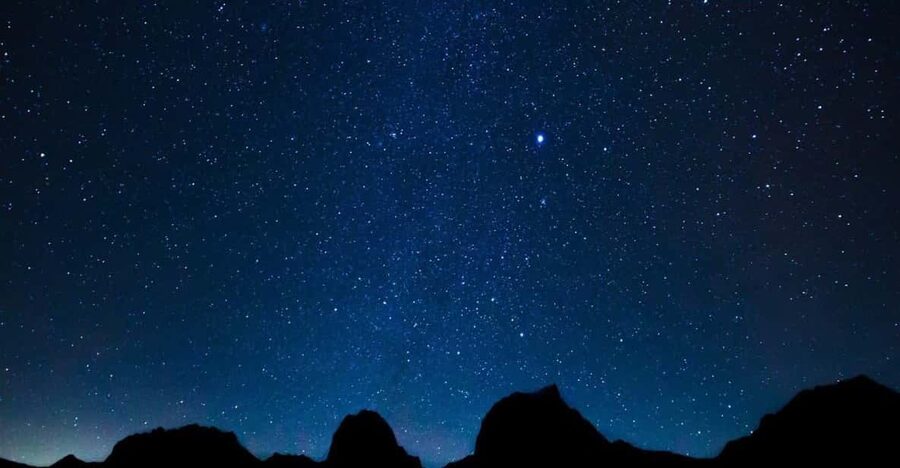
- Sunset and stars in one trip: You visit Zabriskie Point near sunset, then wait about 90 minutes after sunset for stargazing.
- A wide range of Death Valley scenery: Dante’s View, Badwater Basin, Artist’s Palette, and the welcome sign each show a different side of the park.
- Small-group travel: The vehicle carries no more than 14 participants, with a minimum of two required for the tour to operate.
- Hotel pickup on the Strip: Pickup and drop-off are available at 24 listed Las Vegas hotels, but not from hotels outside the Strip.
- Bring your own food: Bottled water, park fees, transport, and a guide are included. Meals and other drinks are not.
- Moon phase matters: Bright moonlight can reduce the number of visible stars, so the darkest nights offer the best sky show.
Why the Long Day Works
This is not a quick Death Valley sampler. It is a full sweep through the park, followed by sunset and a late-night sky watch. That makes the tour useful if you have only one day for Death Valley and want more than a single viewpoint.
The long schedule also gives the guide room to include several types of scenery. You move from broad desert views to salt flats, colored rock, badlands, and dark skies. The short walks are spread through the day, so you can enjoy the scenery without racing from one stop to the next.
Still, you should know what you are signing up for. Pickup can happen anywhere from 8 AM to 1 PM, depending on the date and sunset time. The exact time comes from your guide the day before. You need to be in the hotel lobby 10 minutes early, since there is no refund for a late arrival.
The ride between Las Vegas, Pahrump, and Death Valley adds to the total time. That is part of the price of reaching one of the most remote national parks in the United States. If you dislike long drives, this may feel like too much. If you want one packed desert day, the mileage is worthwhile.
More Sunset and Stargazing Tours in the USA:
- Small Group Big Island Twilight Volcano and Stargazing Tour
★ 5.0 · 1,619 reviews - Death Valley Day & Night Tour – Scenic Stops, Sunset & Stargazing
★ 5.0 · 124 reviews - Sedona Dark Sky Sunset & Night Hike With a Private Guide
★ 5.0 · 86 reviews
From Las Vegas to Pahrump
The tour begins with pickup at one of 24 Las Vegas Strip hotels. Listed pickup points include the Bellagio, Venetian, MGM Grand, Luxor, Mandalay Bay, Wynn, Paris, Excalibur, and several other large resorts. You wait in the lobby for your driver, then head west toward Pahrump.
Pahrump is used as a stop in both directions, with about 20 minutes on the way out and again later in the day. It gives you a break before and after the Death Valley portion. Do not think of it as a major sightseeing stop, but it helps break up a long ride.
Since food is not included, this is a useful place to manage your snacks if the guide allows time for it. The supplied information does not promise a meal stop, so you should bring food and not depend on buying lunch during the trip.
First Views at Death Valley National Park
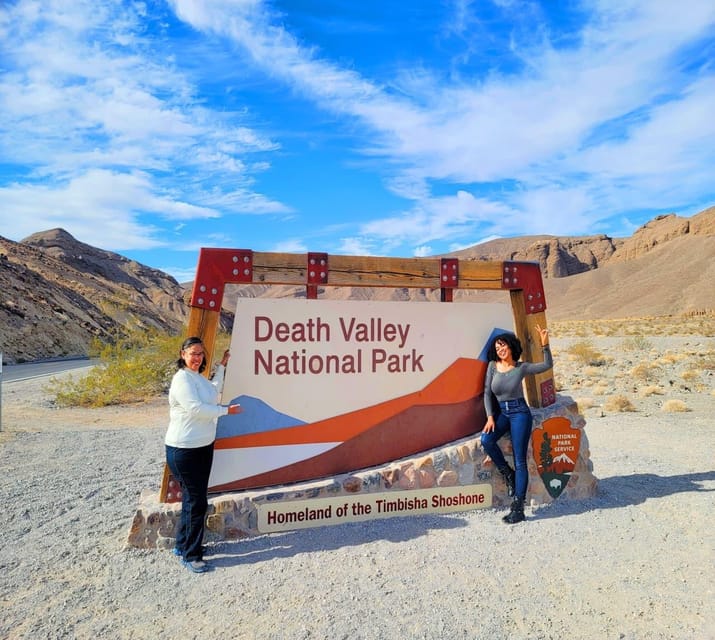
The day includes a photo stop at the Death Valley National Park welcome sign, followed by time inside the park. This is a small stop, but it gives you the classic arrival photograph and marks the shift from city lights to open desert.
Death Valley is famous for extreme heat, very low elevation, and broad, stark scenery. The appeal is not one single sight. It is the sharp change between salt, rock, distant mountains, and dry valley floor. You will want sunglasses and sunscreen even on a cooler date, since there is little shade at many stops.
Comfortable shoes matter more than fancy clothes. Several stops include free time and light walking, and the ground can be uneven or bright underfoot.
Dante’s View: The Big Picture
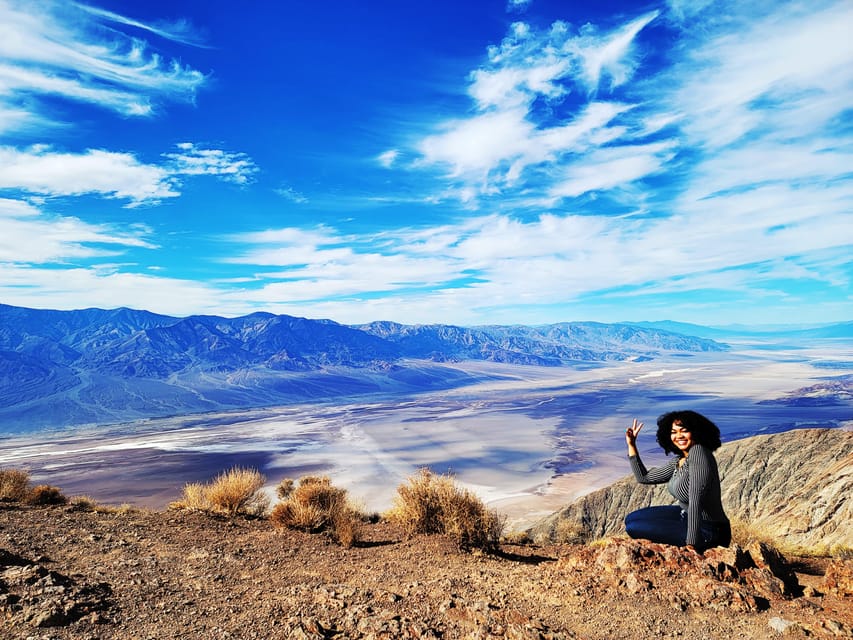
Dante’s View is one of the strongest early stops. From this high overlook, you get a wide view across Death Valley, including the valley floor far below and the surrounding mountain ranges. The tour allows about 30 minutes here for photos, walking, and sightseeing.
I would use this stop to understand the park before seeing its details. Badwater Basin can look abstract when you are standing on the salt flats. From Dante’s View, the scale becomes clear. You see how low the basin sits and how much dry country surrounds it.
One useful tip comes from the way the stop has been described by past participants: take time to walk the trail rather than stopping only at the first viewpoint. The extra steps can give you a better angle and a quieter moment away from the main photo point.
More Stargazing Tours in the USA:
- Sedona Stargazing Tours LLC
★ 4.5 · 881 reviews - The Original Sedona UFO and Stargazing Night Tour
★ 4.5 · 269 reviews - Mauna Kea Stargazing Experience + Photos
★ 5.0 · 261 reviews - The Night Sky Star Story, Galaxy, and Sedona Story Tour
★ 4.5 · 243 reviews
Furnace Creek and the Midday Break
Furnace Creek appears twice in the schedule. The first visit is a 20-minute break, while a later stop allows about an hour. These pauses are important on a day with heat, dry air, and long drives.
Use the breaks to drink water, stretch your legs, and eat something you brought. Unlimited bottled water is included, which is welcome in this environment, but it does not replace a meal. If you need regular food, pack it before departure.
The one-hour Furnace Creek stop gives the day a slower center. It may also be the easiest time to reset before the afternoon viewpoints and evening schedule. The exact use of this time can vary with traffic, weather, and park conditions.
Badwater Basin at the Lowest Point
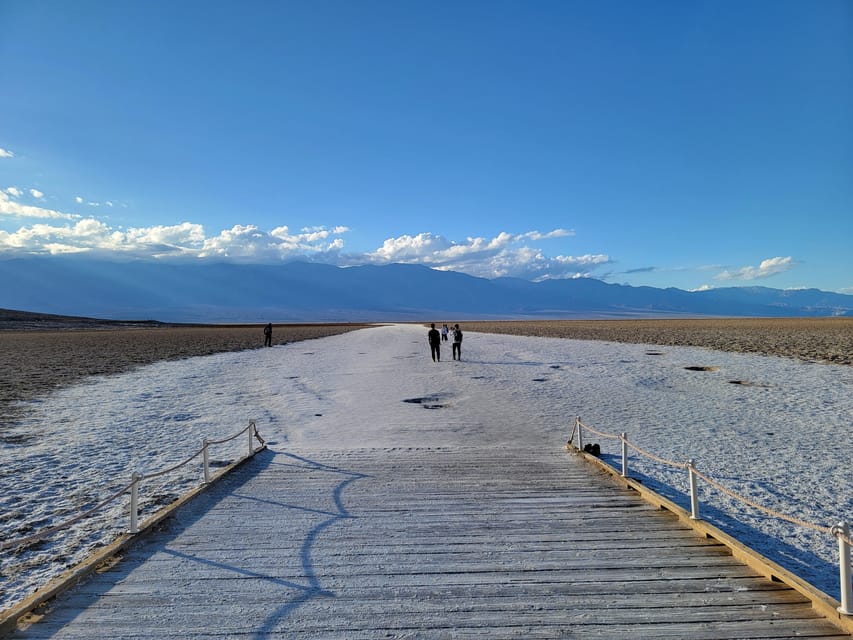
Badwater Basin is one of the tour’s signature stops. You get about 30 minutes to walk across the broad salt flats and take photographs. The basin is known for its extremely low elevation, and the flat white surface creates a striking contrast with the mountains around it.
The surface can look plain from a distance, but walking onto it changes the experience. The open space makes you feel the scale of Death Valley. Keep your sunglasses handy because the pale ground can be hard on your eyes.
Conditions can vary. One participant described finding a temporary salt flat lake and even walking barefoot in it, calling it an unusual sight. That is not something you should expect every day, but it shows why the basin can look different from one visit to the next. Follow your guide’s instructions and use care around any wet or delicate area.
Thirty minutes is enough for a taste, not a long expedition. You will want to stay aware of the meeting time because the tour has several later stops to reach before sunset.
Artist’s Palette and the Colorful Hills
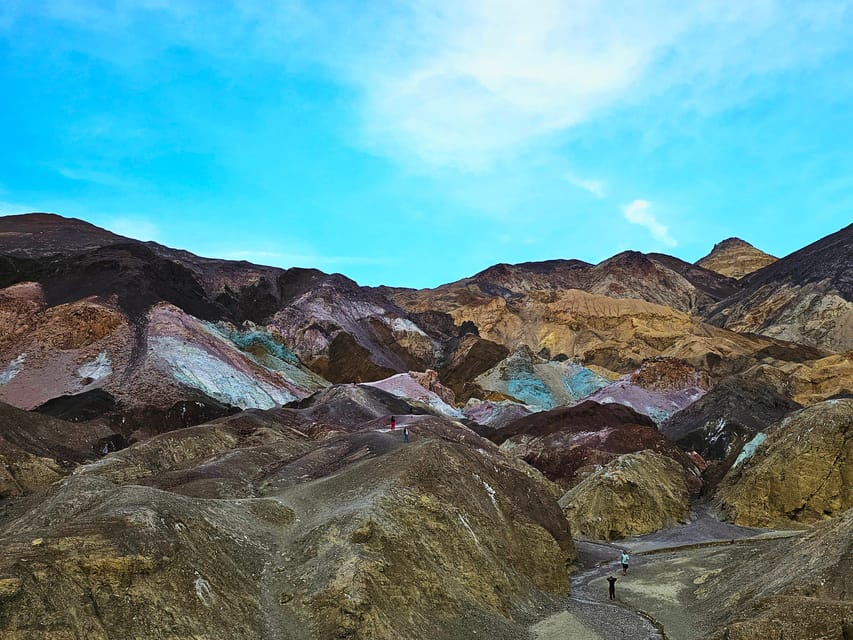
Artist’s Palette gives the tour a welcome change from the white salt flats. The hills here show bands of mineral color, including pink, yellow, green, and other muted shades. You have about 30 minutes for photographs, sightseeing, and a short walk.
This is one of the easiest places to appreciate how varied Death Valley can be. The park is not only beige and brown. The colored slopes look especially good in angled light, though the exact effect depends on the time of day and weather.
The stop is also a good reason to bring a camera or keep your phone ready. The tour gives you enough time to frame several pictures without turning the visit into a rushed roadside pause.
Zabriskie Point at Sunset
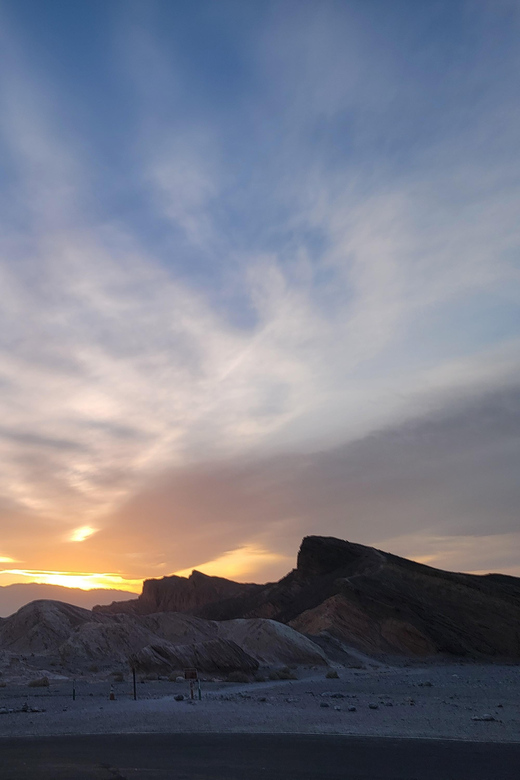
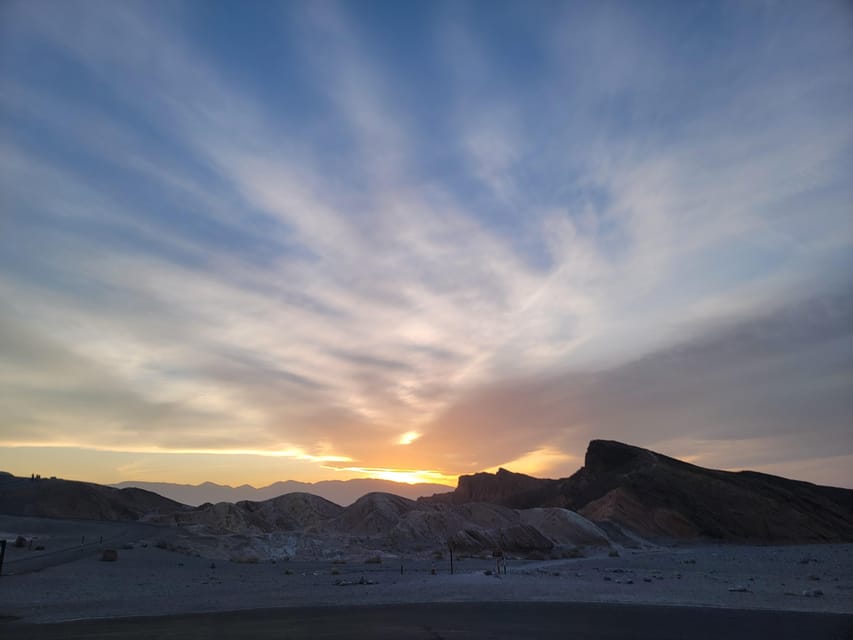
Zabriskie Point is the emotional center of the trip. The golden badlands fold into one another below the viewpoint, and late light brings out the ridges and gullies. The scheduled visit lasts about 40 minutes and includes sunset, photos, and free time.
I would pay attention to the timing here. Sunset is the advertised highlight, but traffic, weather, park rules, or delays can affect arrival. One booking reached Zabriskie Point after the sun had gone down but still had beautiful views and a memorable evening. That is a fair warning not to treat the sunset minute as guaranteed.
If you arrive in time, stay focused on the changing light rather than taking one picture and leaving. Zabriskie Point is best when you watch the shadows move across the folds of the rock. A light walk can help you find a better view, but you should return promptly when the guide calls the group together.
Waiting for the Stars in Amargosa Valley
After sunset, the group travels to Amargosa Valley in Nevada for the final major experience. Stargazing takes place about one hour and 30 minutes after sunset, so this is not an immediate stop after the last orange light fades.
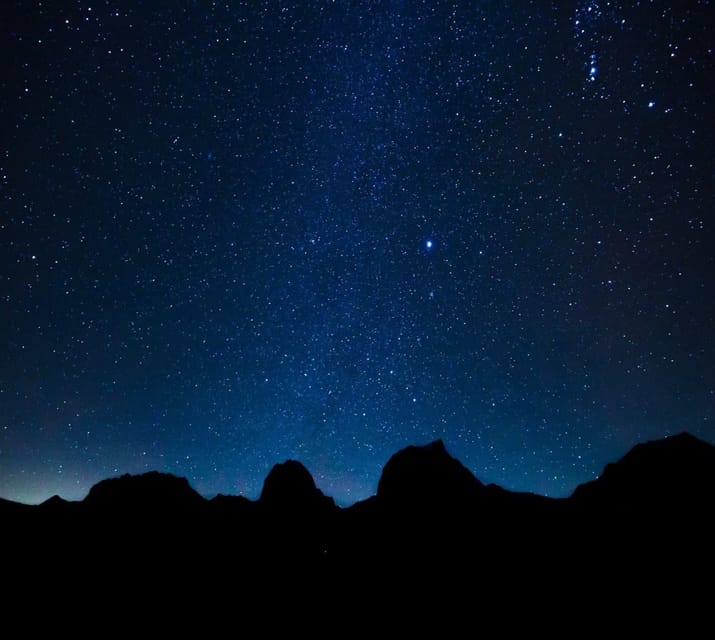
That waiting period explains why the tour runs so late. You are giving the sky time to darken properly. On a clear, dark night, the stars can be the strongest part of the entire day. Guides have helped with night photography, including Milky Way images, and some have taken candid and posed photographs during the trip.
The quality of the sky depends heavily on the moon. A full moon or bright moon can make the setting feel beautiful but reduce the number of visible stars. If stargazing is your main reason for booking, check the moon phase before choosing a date. The tour still runs on bright-moon nights, but expectations should be different.
The Amargosa Valley stop lasts about 30 minutes. That is enough for a focused look at the sky and some photographs, but it is not an overnight astronomy session. Bring comfortable clothes because desert temperatures can change after dark, even following a hot day.
Guides, Photos, and the Small-Group Feel
A guide can make or break a day this long. The strongest feedback for this experience centers on guides who keep the schedule moving while still making time for photographs and comfort breaks.
Andrew has been praised for being attentive throughout the long day. Jason was noted for knowing the park’s viewpoints, taking candid and posed photos, and sending a short video afterward. Steve has helped with night photography, including Milky Way techniques, while Justin has been praised for a private-feeling stargazing spot and attractive night images.
You should not assume every guide will offer exactly the same photography service. Still, these details show the kind of personal attention the small group can allow. With a maximum of 14 people, the day should feel more manageable than a large coach trip, and it is easier to ask questions or request help with a photograph.
The guide also decides how to adjust the route if an attraction closes because of National Park regulations. Alternative stops may be used, and the tour does not promise a refund for those changes.
What the $249 Price Really Covers
At $249 per person, this is not a bargain-priced scenic drive. It is a full-day guided outing with hotel transport, park fees, taxes, unlimited bottled water, sunset viewing, and a night-sky stop.
The value improves if you would otherwise need to rent a car, pay for fuel, navigate a huge national park, and plan a safe return after dark. You are also paying for a guide who manages the timing between widely separated viewpoints. That matters when the itinerary must line up with sunset and a later stargazing window.
The price is less attractive if you want only Badwater Basin or a short Death Valley visit. It also does not include food or drinks beyond bottled water, so add the cost and effort of packing meals and snacks.
Free cancellation is available up to 24 hours before departure, and you can reserve now and pay later. Those terms help if your Las Vegas schedule is still changing, but the main decision remains the duration. You need to genuinely want a long day in the desert.
Who Should Book This Tour
I would recommend this for adults who want the broadest possible Death Valley day without driving themselves. It suits photographers, first-time visitors, couples, solo visitors who appreciate help with photos, and anyone excited by dark skies.
It is less suitable for children under five, pregnant women, wheelchair users, people with back problems, people over 75, and anyone with a pre-existing medical condition. The tour also may not suit anyone who needs a fully accessible vehicle or frequent control over the schedule.
Pack sturdy comfortable shoes, sunglasses, sunscreen, comfortable clothing, snacks, and a phone or camera with spare battery power. You should also bring an extra layer for the night, although the supplied information does not promise a specific temperature or clothing service.
Final Verdict: A Strong Choice for One Big Desert Day
Book this tour if you want Death Valley’s major visual contrasts, a sunset at Zabriskie Point, and a real attempt at stargazing in one outing. The small group, hotel transport, bottled water, and photo-friendly guides give the $249 price solid value for visitors who would rather not drive.
Skip it if you want a relaxed half-day, dislike long vehicle rides, or need a guaranteed sunset. The itinerary can change with traffic, weather, moonlight, and park rules. For the right person, though, this is a memorable way to see Death Valley transform from a sun-blasted park into a dark, star-filled desert.
FAQ
How long does the Death Valley tour last?
The tour lasts 12 hours, including hotel pickup and drop-off, stops in Death Valley, sunset at Zabriskie Point, and stargazing in Amargosa Valley.
Where is hotel pickup available?
Pickup is available from the listed hotels on the Las Vegas Strip. The exact meeting location and pickup time are provided by the guide the day before the tour.
What time does pickup happen?
Pickup can take place between 8 AM and 1 PM, depending on the sunset time for the date of your tour.
Is food included?
No. Food and drinks are not included, although unlimited bottled water is provided. You should bring food and snacks for the long day.
How many people are in the group?
The tour is limited to 14 participants. At least two participants are required for the tour to operate.
When does stargazing take place?
Stargazing takes place about one hour and 30 minutes after sunset in Amargosa Valley.
Will I see many stars on a full-moon night?
Fewer stars may be visible when the moon is bright or full. Darker nights offer better conditions for seeing stars.
What should I bring?
Bring comfortable shoes, sunglasses, sunscreen, and comfortable clothing. Extra clothing for the evening is sensible because the tour continues after sunset.
Just added around the USA
- Stargazing and Milky Way Portrait in Capitol Reef National Park★ 4.5 · 13 reviews
- Temecula Wine Country Stargazing Tour★ 5.0 · 2 reviews
- Astronomy and Stargazing Tour in Utah★ 5.0 · 8 reviews
- Private Stargazing – Sequoia National Park★ 4.5 · 14 reviews
- Sedona Night Hike and Stargazing★ 5.0 · 7 reviews
- Stargazing Tour with Telescopes and Video Astronomy in Sedona★ 5.0 · 40 reviews
- Sunset Sedona Sacred Places -gourmet picnic dinner and stargazing★ 5.0 · 12 reviews
- PRIVATE Sedona Jeep Tour 4X4 Stargazing Tour at Night★ 4.5 · 11 reviews
Sunset and Stargazing Tours, compared.
Teide National Park Sunset & Stargazing with Dinner (Star Safari)
Read our review →
Sunset Camel Trek, Al Khayma Camp, Stargazing & BBQ
Read our review →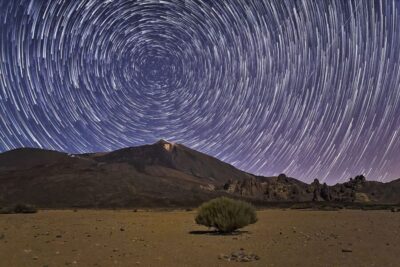
Teide National Park: Sunset & Stargazing Safari with Dinner
Read our review →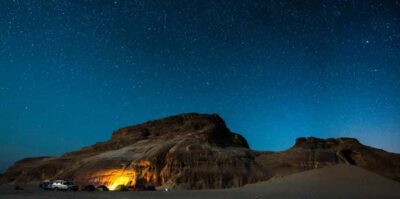
Sunset Quad Bike, Camel w/ Opt Stargazing and BBQ
Read our review →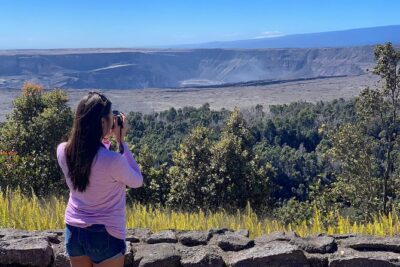
Small Group Big Island Twilight Volcano and Stargazing Tour
Read our review →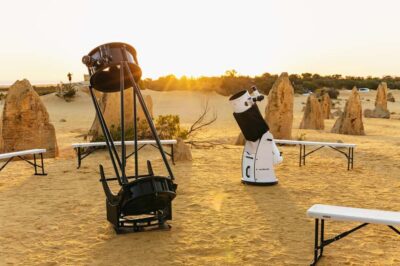
Pinnacles Desert: Sunset BBQ & Stargazing Tour +Sandboarding
Read our review →Browse the lists this tour appears in