
Review · SEDONA
The Night Sky Star Story, Galaxy, and Sedona Story Tour
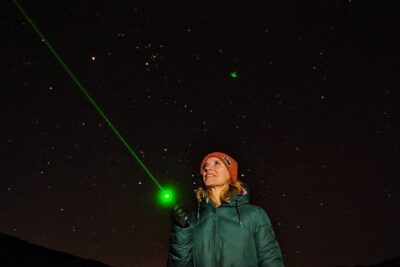
Look up, and Sedona gets bigger. This two-hour-five-minute evening program combines Greek constellation myths with local Indigenous star associations, then places them inside a plain-English explanation of our solar system and galaxy. I like the hands-on teaching tools, especially the play-doh Milky Way, planisphere, star app, and laser pointer. I also like the care taken with comfort: chairs, blankets, and hand warmers are provided.
The main consideration is simple: this is a story and teaching session under the stars, not a telescope outing. Chad is energetic, funny, and very talkative. That works beautifully for people who enjoy audience participation and big ideas, but the presentation may feel long or repetitive if you mainly want quiet stargazing.
Key points to know before booking
- The tour stays in one location: You sit in chairs rather than walk from viewpoint to viewpoint.
- Chad leads the evening: He has guided professionally in Sedona since 2005 and has run night-sky tours for more than six years.
- You use your eyes, not telescopes: A laser pointer and star app help you locate constellations, planets, and star groups.
- The content mixes science and story: Expect Greek and Roman mythology, local Indigenous connections, and broad astronomy concepts.
- Cold-weather gear matters: Blankets and hand warmers are supplied, but gloves, a warm hat, and layers are wise.
- Clouds come with a generous safety net: If the night is cloudy, you can request a full refund, even after staying for the program.
What kind of night sky tour is this?
Sedona is famous for red-rock sunsets, but its dark evening sky offers a different kind of show. This experience begins at 7:30 p.m. at 77 Cultural Park Place and ends at the same spot. You do not hike between sites or spend the evening peering through a telescope. Instead, you settle into a chair and let the guide build a picture of the sky above you.
That format is important. The tour is closer to an outdoor astronomy talk than a formal observatory session. You may see Orion, Sirius, Cassiopeia, Leo, Gemini, Taurus, the Pleiades, Jupiter, Saturn, the Big Dipper, and the Little Dipper, depending on the date, time, and weather.
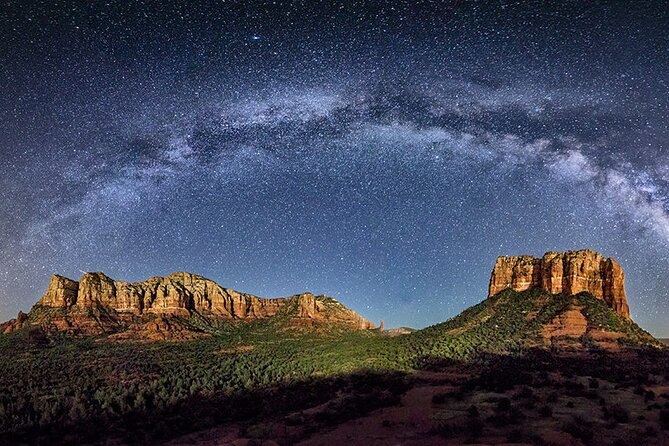
The exact sky changes through the year. A clear August night may offer a strong view of the Milky Way, while a winter evening brings its own impressive collection of stars and constellations. The tour’s advertised highlights change weekly, so you should not expect every named object on every visit.
I like this approach because you leave with skills you can use later. You are not dependent on a telescope or a phone screen. Once you understand where to look and how the stars appear to move, you can keep watching from a campsite, backyard, or quiet roadside pullout.
More Stargazing Tours in Sedona:
- Sedona Stargazing Tours LLC
★ 4.5 · 881 reviews - The Original Sedona UFO and Stargazing Night Tour
★ 4.5 · 269 reviews - Sedona: Nighttime UFO & Stargazing Tour
★ 4.4 · 148 reviews
Chad’s energetic way of teaching
The guide, Chad, has lived in the Sedona area since 1996 and began professional guiding in 2005. He says he has led thousands of tours and has trained other guides, and that background comes through in the structure of the evening. He is not a quiet lecturer. He uses humor, physical animation, questions, stories, and audience participation to keep the group involved.
His interests also range well beyond astronomy. He describes himself as a musician, actor, dancer, athlete, climber, swimmer, and runner. You can expect that lively personality to shape the presentation. Some people will find it wonderfully warm and entertaining. Others may prefer a guide who speaks less and leaves more silent time for looking upward.
The small-group format helps. The maximum is 15 people, and some evenings are much smaller. A little participation feels easier when you are not one voice among dozens. Solo participants can also fit in comfortably, since the activity does not depend on arriving with a large group.
Chad’s passion is one of the strongest reasons to book. He clearly enjoys connecting big cosmic ideas with ordinary human life. Pop-culture references, music, mythology, and stories about Sedona may appear alongside the astronomy. The result is personal and theatrical rather than dry.
The stories behind Orion, Cassiopeia, and the rest
The first part of the evening focuses on constellation stories. Greek and Roman myths provide much of the familiar material, but the program also brings in Indigenous associations with the stars. That wider view matters because the constellations are not simply fixed pictures waiting to be recognized. Different cultures have looked at the same sky and created different meanings from it.
You may hear about familiar figures such as Orion, Taurus, Gemini, Leo, and Cassiopeia. The guide connects these shapes to the stories that gave them their names. A laser pointer helps you follow the patterns, which is useful when a constellation seems obvious in a diagram but less clear against a real night sky.
There is a playful side to the storytelling. One evening’s running joke compared Cassiopeia to Dairy Queen, while another program included references to films, songs, and even a chicken and rooster. That may sound unusual, but it shows the tone. This is not a solemn planetarium script. It is an animated, sometimes silly lesson designed to help the names stick in your memory.
The local Indigenous material adds an important Sedona connection. You should expect cultural references and star associations rather than a full course in regional Indigenous history. The value is in hearing that the night sky has been read in more than one way, and that Western mythology is only part of the story.
Big-picture astronomy without a telescope
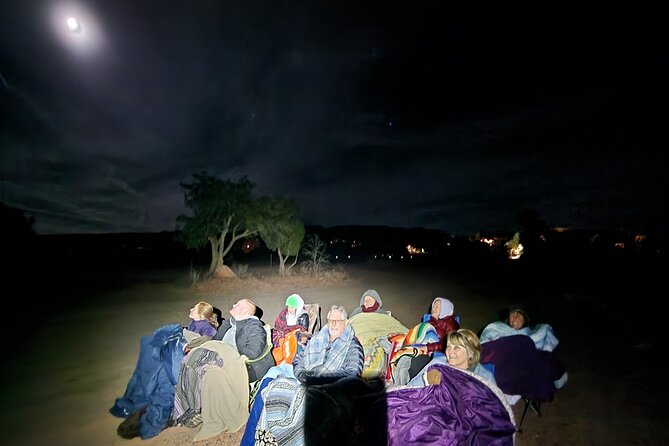
The second major part of the program explains the cosmos from the viewpoint of Earth. Chad calls this big-picture astronomy, with our planet treated as a kind of spaceship moving through the solar system and galaxy.
That phrase is more than a catchy idea. It gives you a way to understand why the sky appears to change. The stars seem to move across the night, but not all movement happens at the same speed or for the same reason. One particularly useful explanation deals with the fast and slow motion of stars, an idea that helped one participant finally make sense of the sky’s changing patterns.
The play-doh Milky Way is another memorable teaching aid. A physical model can make the shape and scale of our galaxy easier to grasp than a string of spoken facts. A planisphere, which helps match the date and time to the visible stars, adds another practical tool.
A star app is also used during the program. This point deserves attention because two separate criticisms concerned the order in which visual aids were presented. If you want to identify constellations quickly, you may find it easier when the app or star map is shown before the stories begin. The tour does not always follow that learning sequence, so be ready to listen first and locate the stars as the evening develops.
Same dark sky, a different way to spend it:
- Sedona Dark Sky Sunset & Night Hike With a Private Guide
★ 5.0 · 86 reviews - Sedona UFO/Stargazing Tour (price per goggle not per person)
★ 4.5 · 47 reviews - Stargazing Tour with Telescopes and Video Astronomy in Sedona
★ 5.0 · 40 reviews - Sunset Sedona Sacred Places -gourmet picnic dinner and stargazing
★ 5.0 · 12 reviews
What you actually see in the sky
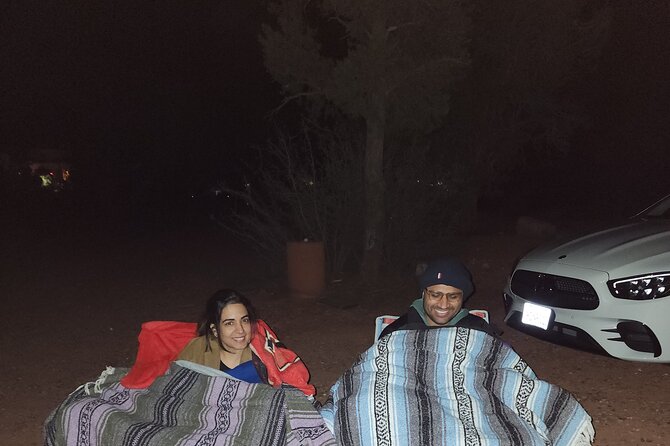
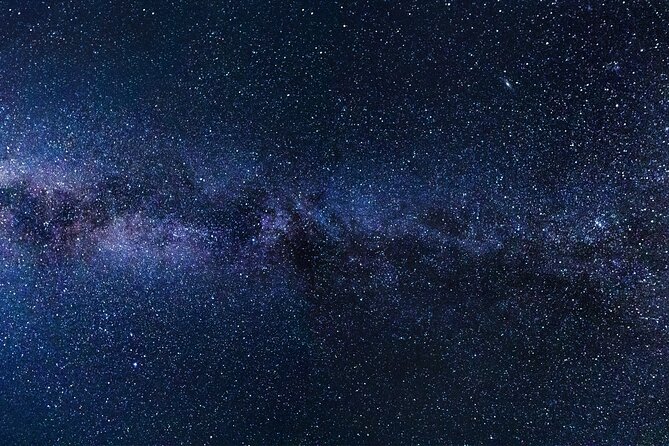
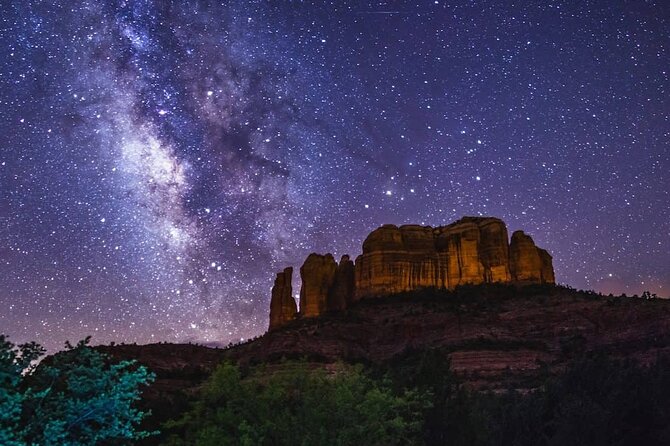
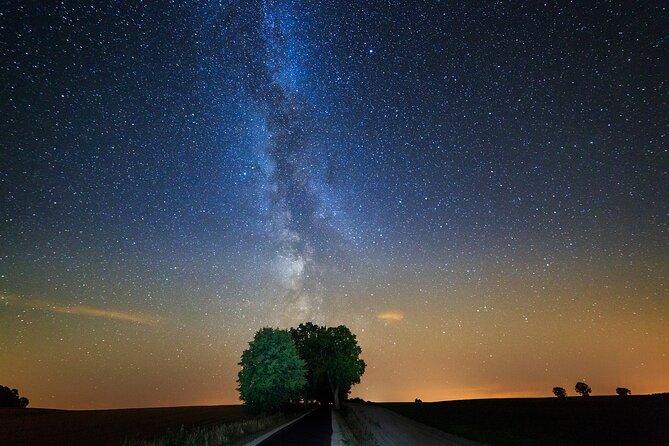
This is a naked-eye experience. You might see the Milky Way, planets, shooting stars, and a large number of constellations on a clear night. One particularly successful evening included 11 shooting stars, while other clear nights offered a vivid view crowded with stars.
Still, sky conditions control the visual payoff. Clouds, light conditions, and the season all matter. A cloudy night can reduce the number of stars you see, and the presence of a bright moon can change the mood and visibility. The schedule notes one period with no moon during the tour hours, which should make the stars easier to see, but you should check the date-specific sky conditions before booking if stargazing is your main goal.
Clouds do not automatically ruin the evening. Sedona receives relatively little rain, and the guide notes that local canyon winds can sometimes clear clouds shortly before the start. That said, you should not count on a last-minute opening in the sky.
The weather policy is unusually reassuring. If it is cloudy, you can ask for a full refund at your discretion, including after staying for the entire program. The standard cancellation rule allows a full refund when you cancel at least 24 hours ahead, while poor weather may lead to a new date or a full refund.
Comfort, location, and the practical side
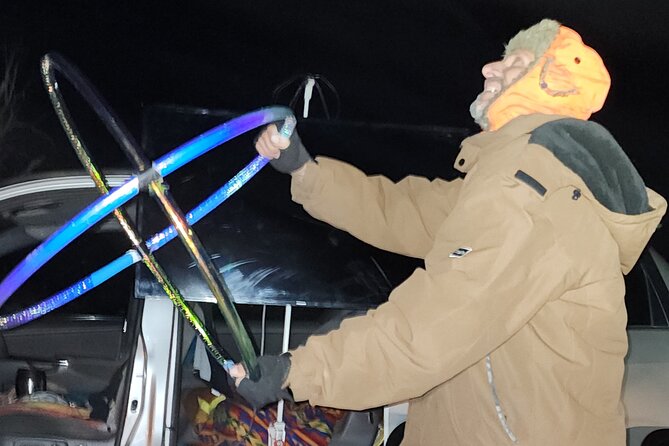
You remain in one place for about two hours, with chairs supplied. That makes the activity accessible to most people who can sit through an evening presentation. Service animals are allowed, and the site is near public transportation. Pets other than service animals and alcohol should be left behind.
The most repeated practical praise concerns warmth. Blankets and hand warmers are provided, but do not treat them as a substitute for proper clothing. Northern Arizona can feel sharply cold after sunset, even when the afternoon was mild. Bring a coat, gloves, and a stocking cap in winter. Layers also help in spring and fall.
The meeting point is 77 Cultural Park Place in Sedona, and the experience returns there. The supplied information does not describe transportation from hotels, so you should plan your own way to the meeting point. With a maximum of 15 people, the group should remain small enough for the guide to point out stars and respond to questions.
The stated duration is approximately two hours and five minutes. That is a long sitting period for a program with substantial talking. If you want a short introduction to the stars followed by silence, this may test your patience. If you enjoy a full evening lesson, the length gives the stories and astronomy room to develop.
Is the $100 price good value?
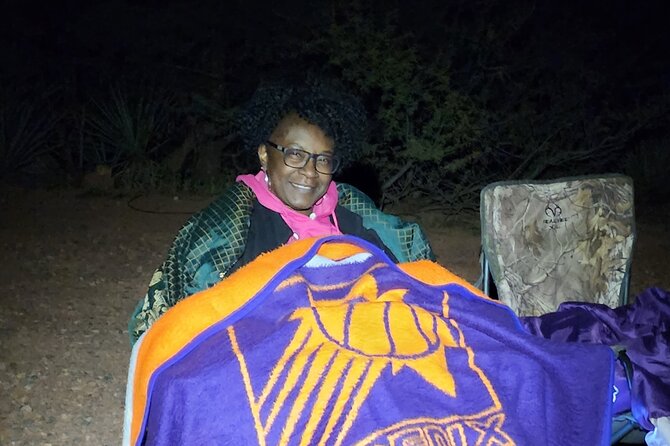
At $100 per person, this is not the cheapest way to look at the night sky. You are paying for a guided presentation, equipment, chairs, blankets, hand warmers, and the guide’s long experience in Sedona. There is no telescope, meal, transportation package, or multi-stop sightseeing route included.
The value depends on what you want to take home. If your goal is a quick look at a few bright stars, you can do that without paying for a tour. If you want help understanding what you see, plus mythology, cultural context, and a framework for watching the sky on your own, the price is easier to justify.
I would be especially comfortable booking it for a family, a couple with a strong interest in astronomy, or someone who wants a different kind of Sedona evening. The guide’s ability to explain ideas at several levels can work for children and adults together, although younger children still need to sit quietly and stay engaged for roughly two hours.
The refund option also reduces the weather risk. A cloudy forecast does not force you to gamble the full price, but you should still read the description carefully. A refund cannot change the fact that the program is built around stories and explanation, not constant star viewing.
Who will enjoy it, and who may not
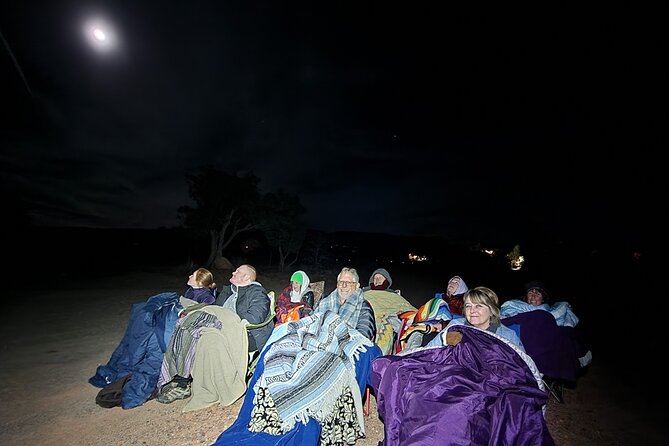
You are likely to enjoy this tour if you:
- Like mythology, astronomy, local culture, or all three
- Enjoy a guide with a strong personality and a comic streak
- Want to learn how to identify stars without special equipment
- Appreciate audience participation and questions
- Are happy to sit in one place for most of the evening
- Want a warm, organized outdoor activity after a day in Sedona
You may want a different experience if you:
- Mainly want telescope views of planets or distant objects
- Prefer quiet observation to a spoken presentation
- Already know the myths and want advanced astronomy
- Dislike repeated explanations or extended personal interaction
- Expect every minute to be devoted to looking through the sky
The negative feedback is useful here. One participant felt the program contained too much information and too much getting-to-know-you conversation. Another wanted the star app and constellation guide shown earlier. A separate assessment found the presentation more like a lecture than hands-on stargazing.
Those are not minor details. They describe the central tradeoff. The same enthusiasm that makes the tour memorable for many people can feel excessive if you came for a calm, equipment-based astronomy session.
Should you book the Night Sky Star Story Tour?
Book it if you want an animated astronomy lesson with myth, humor, Indigenous star connections, and Sedona context. Chad’s energy, the laser pointer, the physical models, and the comfort setup give the evening a clear personality. A small group and a refund option for cloudy conditions make the decision easier.
Skip it if your priority is a telescope, a remote dark-sky drive, or long stretches of silent viewing. You will get more talking than equipment, and the presentation may feel too full if you prefer a short, technical program.
For the best chance of enjoying it, check the moon and weather forecast, dress more warmly than you think necessary, and arrive ready to participate. Treat the stars as the classroom, but understand that the guide’s stories are the main event.
FAQ
Where does the tour meet?
It begins at 77 Cultural Park Place in Sedona, Arizona, and ends back at the same meeting point.
What time does the tour start?
The listed start time is 7:30 p.m.
How long does the experience last?
It lasts approximately two hours and five minutes.
Does the tour use a telescope?
No. The program focuses on what you can see with your own eyes. A laser pointer, star app, planisphere, play-doh Milky Way, and other visual aids help explain the sky.
What happens if the night is cloudy?
If the weather is cloudy, you can request a full refund at your discretion, even if you stay for the whole tour. Poor weather may also lead to a different date or a full refund.
What should I bring?
Dress warmly, especially in winter. Blankets and hand warmers are provided, but gloves, a warm hat, and extra layers are still recommended. Pets and alcohol are not permitted, though service animals are allowed.
Just added around Sedona
- Sunset Sedona Sacred Places -gourmet picnic dinner and stargazing★ 5.0 · 12 reviews
- Sedona Night Hike and Stargazing★ 5.0 · 7 reviews
- Stargazing Tour with Telescopes and Video Astronomy in Sedona★ 5.0 · 40 reviews
- PRIVATE Sedona Jeep Tour 4X4 Stargazing Tour at Night★ 4.5 · 11 reviews
- Sedona UFO/Stargazing Tour (price per goggle not per person)★ 4.5 · 47 reviews
- Sedona: Private Stargazing Tour with a Local Guide★ 4.8 · 8 reviews
- Sedona Night Hike and Stargazing Tour★ 5.0 · 4 reviews
- Sedona: Stargazing Tour with Telescopes and Video Astronomy★ 4.8 · 9 reviews
Stargazing Tours, compared.
Dubai Red Dunes ATV, Camels, Stargazing & 5* BBQ Al Khayma Camp
Read our review →
Teide National Park Sunset & Stargazing with Dinner (Star Safari)
Read our review →
Sunset Camel Trek, Al Khayma Camp, Stargazing & BBQ
Read our review →
Overnight Safari, Dinner, Stargazing & Al Khayma Camp
Read our review →
Dubai Overnight Desert Safari, BBQ & Stargazing at Al Khayma Camp
Read our review →Browse the lists this tour appears in