
Review · SEDONA
Sedona: Stargazing Tour with Telescopes and Video Astronomy
The desert sky puts on a serious show. This 90-minute Sedona stargazing tour combines a guided constellation lesson with large telescopes and live video astronomy, giving you much more than a quick look at the Moon. I especially like the 4K OLED screen, which reveals color and detail that your eyes cannot always see through a telescope. I also like the relaxed setup, with padded chairs and blankets for a cold night outside.
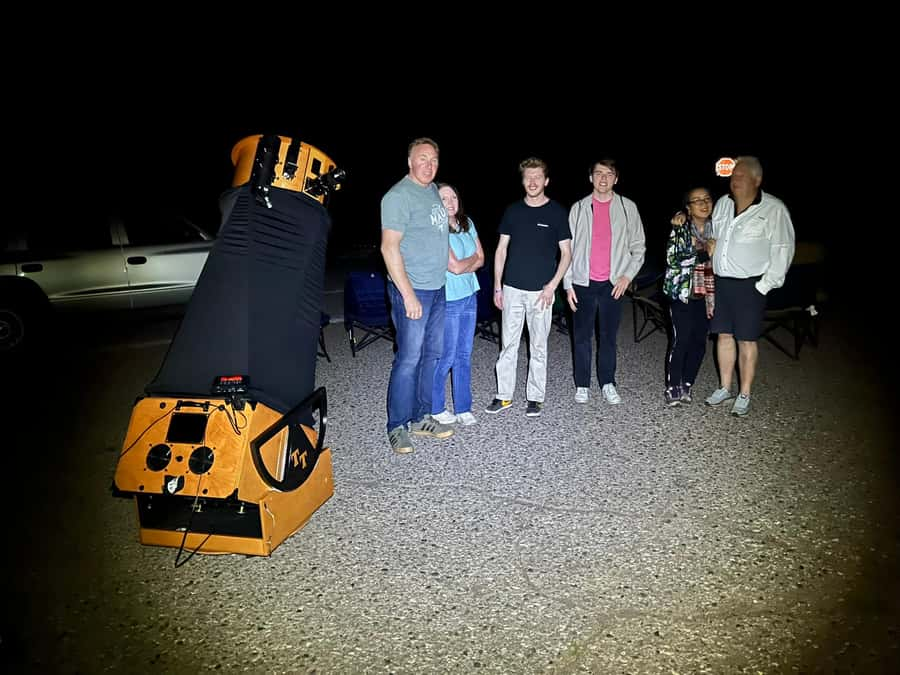
Chris, the astronomer who leads many of these outings, earns high marks for making astronomy clear, funny, and easy to follow. He has answered obscure questions, kept the mood light, and shared photographs of objects viewed during the session. The main drawback is logistics: you must reach the dark-sky site yourself, and GPS can be unreliable near the final turn.
- Live 4K astronomy: Special cameras show galaxies, nebulae, star clusters, and dust lanes on a large screen.
- Two ways to observe: Look through high-quality eyepieces for the Moon and planets, then switch to video astronomy for faint deep-sky objects.
- Seasonal forest sites: The meeting place changes, but every permitted site is within 30 minutes of Uptown Sedona.
- A real sky tour: A laser-guided constellation lesson covers stars, Zodiac signs, planets, meteors, satellites, and the Milky Way.
- Comfort matters: Padded chairs and blankets help you stay outside during cold desert nights.
- Good for first-timers: You do not need prior astronomy experience, but children must be at least 7 years old.
Why This Sedona Stargazing Tour Is Different
Many astronomy outings depend almost entirely on looking through a telescope. That can be thrilling, but it also has limits. A faint galaxy may appear as a small gray smudge, and some nebulae are difficult for the human eye to see at all.
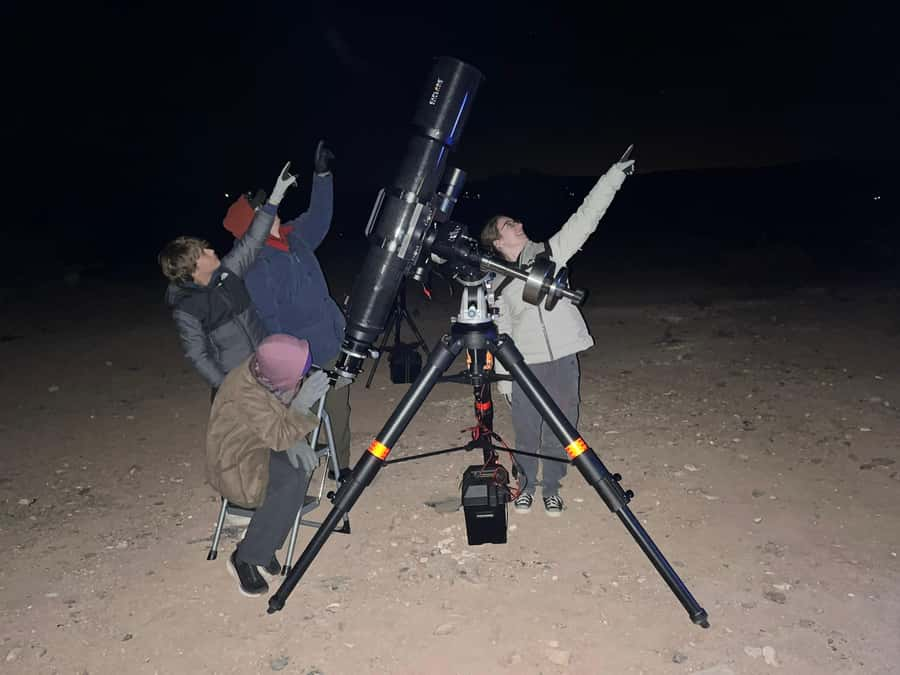
Night Owl Tours uses a more flexible approach. Part of the session uses traditional visual telescopes with premium eyepieces. The rest uses electronically assisted astronomy, or EAA, in which sensitive astronomy cameras send a live image to a 4K OLED screen.
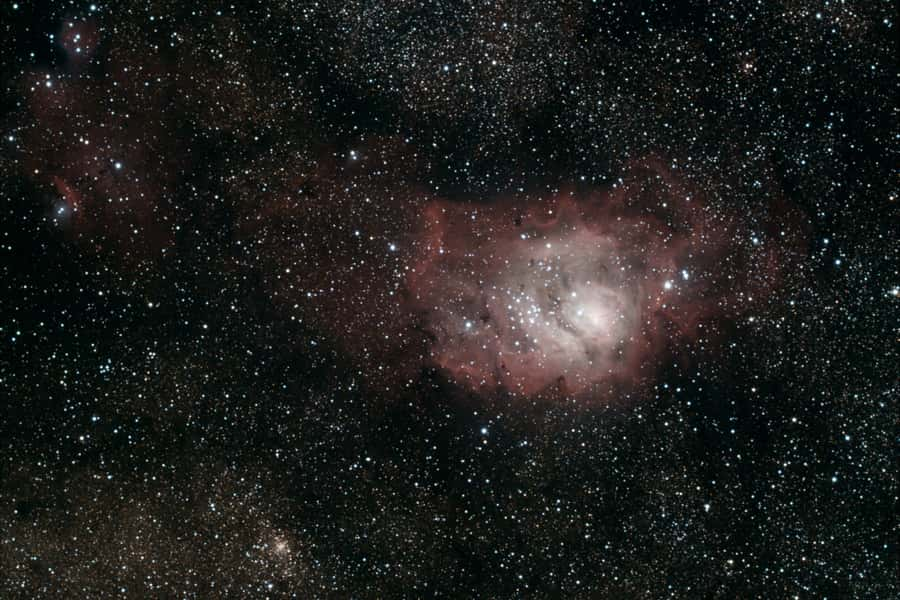
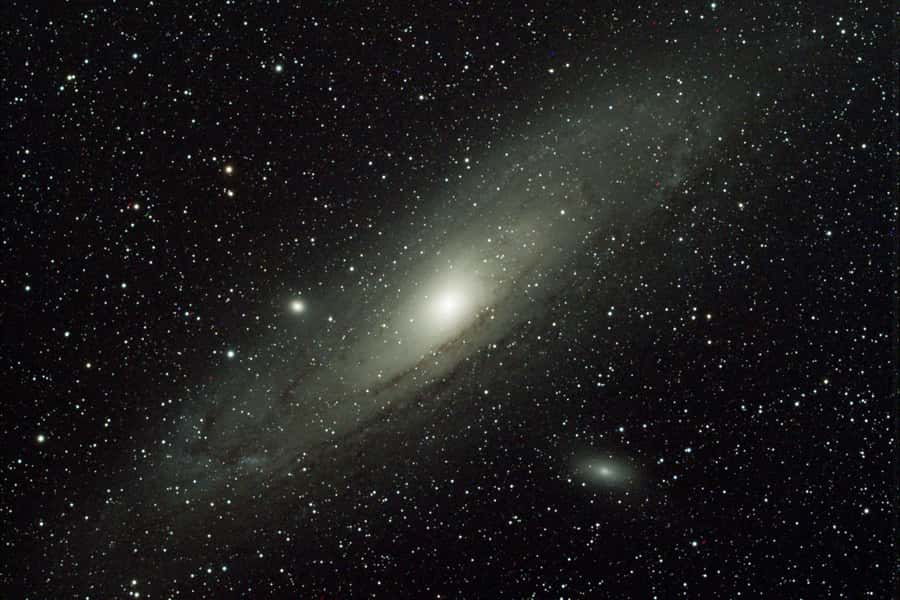
That difference matters. You can still have the personal experience of placing your eye at a telescope and seeing the Moon, planets, double stars, or bright star clusters. Then you can watch the screen reveal pinkish hydrogen clouds, colorful remains of dead stars, the blue haze around the Pleiades, and dark dust lanes in distant galaxies.
I like this balance because it serves two kinds of curiosity. You get the simple pleasure of seeing Saturn or a bright star through glass, but you also get a better sense of what faint objects actually look like in space. The screen is not a recorded planetarium film. It shows live views captured during your session.
Meeting the Astronomer Near Uptown Sedona
You meet the guide at a prearranged dark-sky site rather than at a fixed shop or visitor center. The exact location changes with the season because access to forest sites depends on the US Forest Service permit. You receive the specific directions after booking.
Every available site is within a half-hour drive of Uptown Sedona. That keeps the outing practical for most people staying in town, but you need to plan the final drive carefully. Transportation is not included, so you need your own vehicle or a taxi or ride-share service.
GPS may be spotty near the last turn. I would download or write down the instructions before leaving town and allow extra time. If you plan to use a ride-share service, arrange the return ride in advance. Finding a driver late at night can be difficult, and the tour does not provide transportation back to your accommodation.
This is a small but important part of the experience. The dark sky is the point, so the site is not placed beside a busy commercial area. The trade-off is that you must handle the last stretch yourself.
More Telescope Stargazing in Sedona:
- Stargazing Tour with Telescopes and Video Astronomy in Sedona
★ 5.0 · 40 reviews - Teide by Night: Sunset & Stargazing with Telescopes Experience
★ 4.5 · 1,492 reviews - Uluru: National Park Astronomy Tour with Telescope and Photo
★ 4.4 · 357 reviews
The First 20 Minutes: Finding Constellations With a Laser
The session begins with the sky above you, not with a telescope. Your astronomer uses a laser to trace star patterns and explain the names, shapes, and myths connected to the constellations.
This opening gives you a useful map. Instead of staring at an enormous field of stars, you learn where to look and what you are seeing. The guide also points out the Zodiac signs when they are visible, along with bright planets, the Milky Way, meteors, and passing artificial satellites.
The storytelling adds an important human touch. Constellations are not random collections of stars in the cultural imagination. They carry old stories and patterns that people have used for centuries to make sense of the night. Chris is especially good at mixing those stories with practical astronomy, according to the comments shared about his tours.
This portion should suit families and first-time observers. You do not need to know the difference between a nebula and a galaxy before arriving. The explanations are designed to help you get your bearings fast.
The sky changes with the date and weather, so no two sessions can show exactly the same set of objects. A planet visible in winter may not be available during a summer visit. Meteors and satellites also appear on their own schedule. That uncertainty is part of stargazing, but it means you should not book with one exact object in mind unless the provider has confirmed it.
Large Telescopes for the Moon, Planets, and Stars
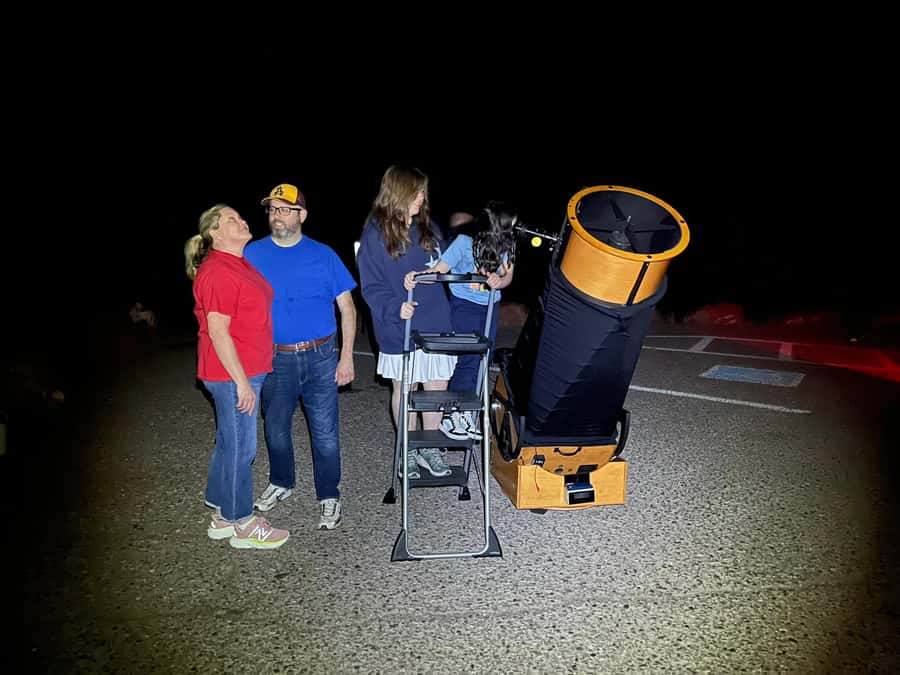
After the sky tour, the group turns to the large telescopes. The visual instruments use high-quality astronomy eyepieces, giving you a direct view rather than a screen image.
The Moon is usually a strong target when its position and phase allow it. Craters, ridges, and shadows can look crisp through a good telescope. Planets offer a different kind of reward. The session may include planets such as Saturn, depending on the season and conditions, and one recent outing included two planets.
Double stars are another worthwhile target. Two stars that appear close together with the naked eye can separate into distinct points through a telescope, sometimes with different colors. Brighter deep-sky objects may also look good through the eyepiece.
The guide changes eyepieces and targets during the session. Chris’s dry humor helps keep that waiting time pleasant, especially on a cold night. This is not a rapid-fire attraction where you are pushed away after one glance. The guide explains what you are seeing and takes questions as the equipment changes.
Still, you should set realistic expectations. A telescope cannot make every object look like a glossy space photograph. The visual view of a distant galaxy may be subtle, and what you see depends on cloud cover, atmospheric conditions, the Moon, and the season. That is precisely why the video portion adds real value.
Live Video Astronomy on a 4K Screen
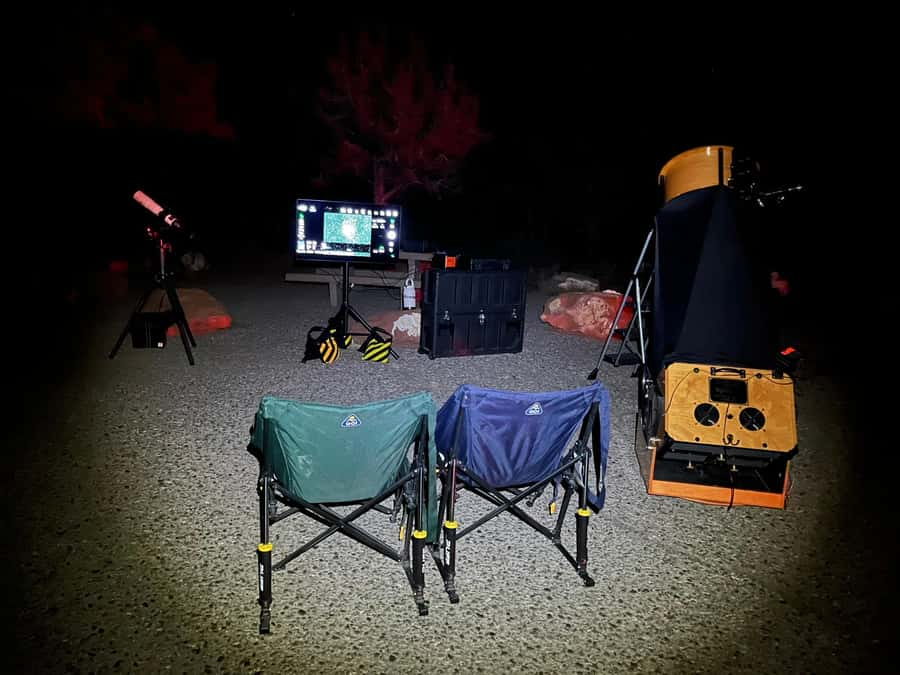
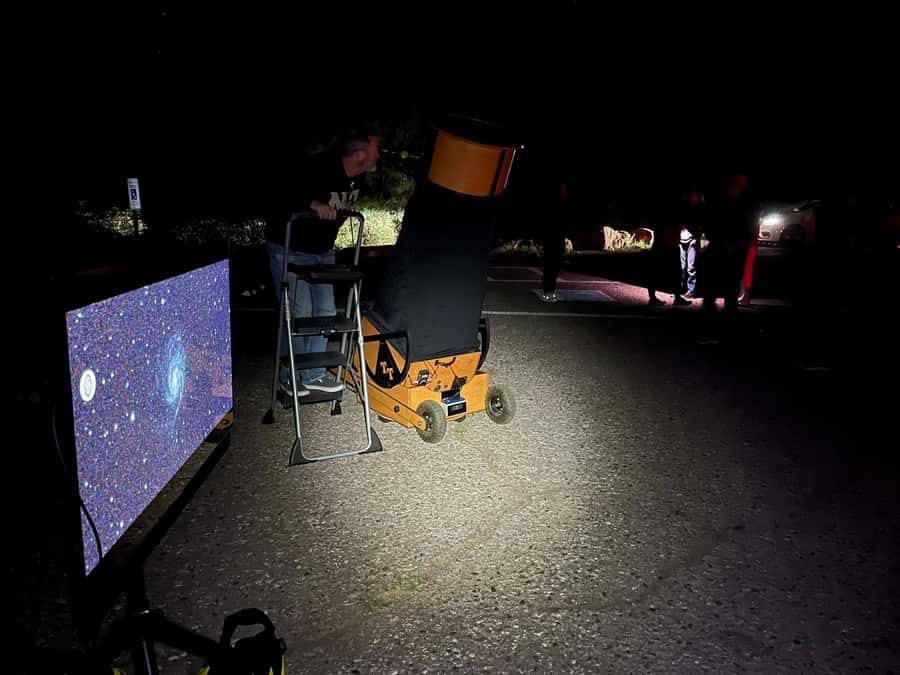
The most unusual part of this experience is the switch from eyepieces to astronomy cameras. These cameras are more sensitive to light than the human eye. They collect enough information to show faint objects in much greater detail and send the image live to a 4K OLED television.
This makes the session easier for a group. With a normal telescope, only one person can look at a time, and each person may see a slightly different view. The screen lets everyone watch together while the guide explains the object.
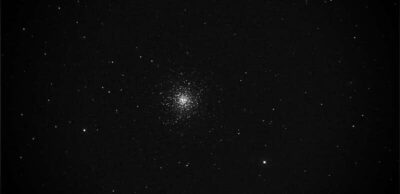
You might see the red glow of hydrogen in a star-forming region, the colored remains of an exploded star, the blue dust around the Pleiades, or dark lanes cutting through a faraway galaxy. Those details help you understand why astronomers use cameras and long exposures to study space.
The image is live, not a stock picture selected in advance. The guide can discuss what appears on the screen and answer questions while the image is being created. One useful bonus is the possibility of requesting a photograph of something viewed during the session. That gives you a way to remember the object afterward, though you should confirm the current photo policy when booking.
For someone who has only seen astronomy images online, this part can be eye-opening. You are not simply being shown a finished picture. You can watch the equipment bring a faint object into view during your own visit.
More Stargazing Tours in Sedona:
- Sedona Stargazing Tours LLC
★ 4.5 · 881 reviews - The Original Sedona UFO and Stargazing Night Tour
★ 4.5 · 269 reviews - The Night Sky Star Story, Galaxy, and Sedona Story Tour
★ 4.5 · 243 reviews - Sedona: Nighttime UFO & Stargazing Tour
★ 4.4 · 148 reviews
Staying Warm During a 90-Minute Night Outdoors
Ninety minutes is long enough to feel substantial without taking over an entire evening in Sedona. The session is outdoors at night, and desert temperatures can drop quickly once the sun is gone.
Padded chairs and blankets are provided. Those touches matter because standing in one place while looking upward can become uncomfortable, especially in winter. The blankets make the setup feel more inviting for couples and families.
You should still arrive dressed for the cold. Bring a jacket, long-sleeved shirt, long pants, closed-toe shoes, and warm shoes. Do not count on the provided blanket as your only insulation. A thermos of hot chocolate would fit the mood nicely, but it is not part of the included service.
Smoking, vaping, alcohol, and drugs are not allowed. The restrictions are sensible for a forest site and for an activity involving dark conditions, equipment, and a group sitting outdoors.
The ground may be uneven, and the tour takes place at night. It is not recommended for people with limited mobility, wheelchair users, or anyone who has difficulty walking outside in low light. Children under 7 cannot join, and the listed limit is 300 pounds, or 136 kilograms.
Weather, Timing, and the Limits of Stargazing
Clear skies are essential. The tour may be cancelled for cloud cover or dangerous conditions such as storms, flood warnings, or strong winds. That is frustrating if you have built the evening around it, but it is the right call. Telescopes cannot solve cloudy skies, and exposed forest sites are no place to take risks during severe weather.
Check the forecast before you leave your hotel, but remember that weather decisions can change close to the start time. The activity page allows free cancellation up to 24 hours in advance, and you can reserve now and pay later, which gives you some flexibility when building a Sedona itinerary.
The start time varies, so check availability for your date. Night arrives at different times throughout the year, and the exact schedule must also fit the accessible forest site.
I would avoid pairing this outing with a tight dinner reservation afterward. The session lasts 90 minutes, but driving to and from the site adds time, and weather or equipment changes can affect the pace. Let the evening breathe.
Is $125 a Good Value?
At $125 per person, this is not the cheapest way to look at stars. You can step outside in Sedona for free, and many visitors do exactly that. The price makes more sense when you consider what you are paying for: a permitted dark-sky site, an astronomer-led lesson, large telescopes, premium eyepieces, live video astronomy, a 4K screen, chairs, and blankets.
The value is strongest if you want help understanding what you see. A free viewpoint can give you a wonderful sky, but it cannot point out the constellation stories, explain why a galaxy is faint, change from visual viewing to a sensitive camera, or answer your questions as the night unfolds.
The equipment is also a major part of the calculation. This is not just a guide with a small backyard telescope. The large-aperture instruments and astronomy cameras let you see targets that casual naked-eye stargazing cannot provide.
I would consider the price reasonable for couples, families, and curious adults who want a structured astronomy night. It may feel high if you only want to lie back and watch the stars or if you already own serious astronomy gear.
Who Will Enjoy This Most?
This outing suits first-time telescope users especially well. You can arrive with no technical background and still follow the constellation tour, ask questions, and see planets and distant objects through professional equipment.
Families with children aged 7 and older should find the format approachable, though very young children may struggle with the late hour and cold. Couples get a quiet evening under the stars, with enough explanation to keep the night interesting without turning it into a classroom lecture.
It also works for people from cities who rarely see a dark sky. The contrast can be dramatic. Instead of a few bright stars through city glare, you may see the Milky Way, a larger field of stars, and objects that have never been visible from home.
You should choose a different activity if you need wheelchair access, have trouble walking over uneven ground at night, or do not have dependable transportation. You should also skip it if you dislike cold outdoor settings or want a guaranteed view of one particular planet or galaxy.
My Verdict: Book It If You Want More Than a Telescope Glance
I recommend this Sedona stargazing tour if you want a guided, equipment-heavy night rather than a simple lookout stop. The combination of constellation stories, direct telescope viewing, and live 4K astronomy gives the 90 minutes a clear rhythm.
Chris’s teaching style is another reason to book. He mixes solid astronomy with humor and welcomes detailed questions, which helps the experience feel personal instead of scripted.
Before booking, make three checks: confirm the forecast, plan your drive to the seasonal site, and pack warmer clothing than you think you need. If you handle those details, the $125 price buys a polished and memorable way to meet Sedona’s night sky.
FAQ
Where does the Sedona stargazing tour meet?
The meeting site changes seasonally because access to permitted forest locations varies. You receive full meetup directions after your booking is confirmed. Each available site is within 30 minutes of Uptown Sedona.
Is transportation included?
No. You are responsible for reaching the dark-sky site and returning afterward. You need access to a vehicle or must arrange a taxi or ride-share service.
How long does the stargazing experience last?
The tour lasts 90 minutes.
What can I see through the telescopes?
Depending on the season and conditions, you may see the Moon, planets, double stars, bright deep-sky objects, constellations, the Milky Way, meteors, and passing artificial satellites.
What is video astronomy?
Video astronomy uses sensitive astronomy cameras instead of standard eyepieces. Live images are streamed to a 4K OLED screen, allowing you to see faint objects such as galaxies, nebulae, star clusters, and dust lanes with more detail.
What should I wear?
Bring warm clothing, a jacket, a long-sleeved shirt, long pants, closed-toe shoes, and warm shoes. The tour takes place outdoors at night, and temperatures can fall quickly.
Can the tour be cancelled because of weather?
Yes. The tour may be cancelled because of cloudy skies or dangerous conditions such as storms, flood warnings, or dangerously high winds. You can cancel up to 24 hours in advance for a full refund.
Just added around Sedona
- Sunset Sedona Sacred Places -gourmet picnic dinner and stargazing★ 5.0 · 12 reviews
- Sedona Night Hike and Stargazing★ 5.0 · 7 reviews
- Stargazing Tour with Telescopes and Video Astronomy in Sedona★ 5.0 · 40 reviews
- PRIVATE Sedona Jeep Tour 4X4 Stargazing Tour at Night★ 4.5 · 11 reviews
- Sedona UFO/Stargazing Tour (price per goggle not per person)★ 4.5 · 47 reviews
- Sedona: Private Stargazing Tour with a Local Guide★ 4.8 · 8 reviews
- Sedona Night Hike and Stargazing Tour★ 5.0 · 4 reviews
- Sedona Dark Sky Sunset & Night Hike With a Private Guide★ 5.0 · 86 reviews
Telescope Stargazing, compared.
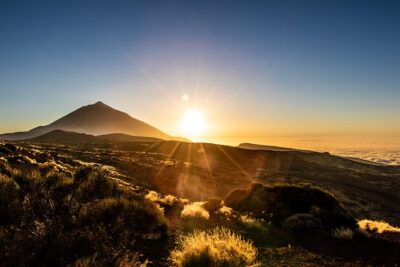
Teide by Night: Sunset & Stargazing with Telescopes Experience
Read our review →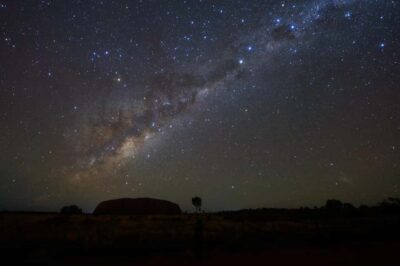
Uluru: National Park Astronomy Tour with Telescope and Photo
Read our review →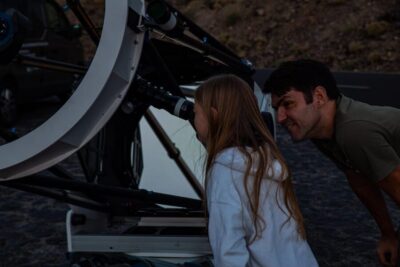
Teide National Park: Guided Large Telescope Stargazing Tour
Read our review →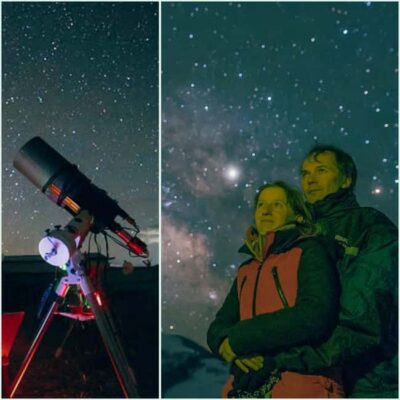
Northern Lights Tour and Stargazing by Telescope
Read our review →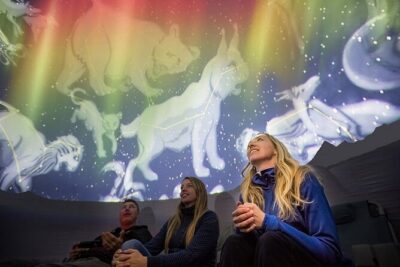
Jasper Planetarium and Telescope Combo Tour Tickets
Read our review →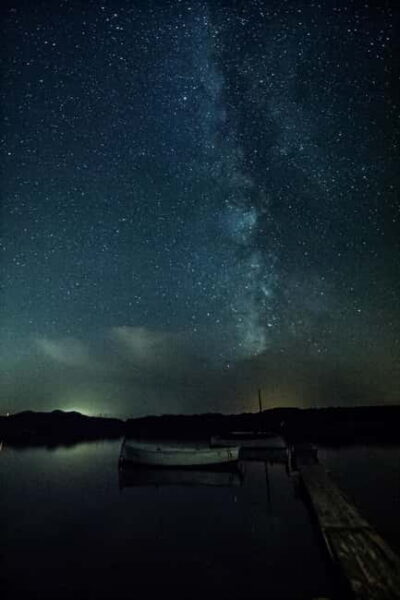
Cavalleria: Guided Stargazing at the Beach with Telescope
Read our review →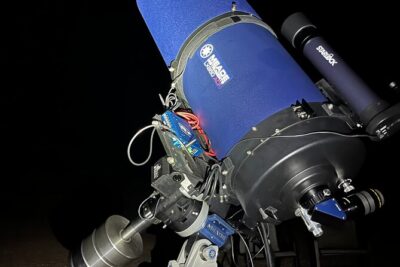
Stargazing Tour with Telescopes and Video Astronomy in Sedona
Read our review →Browse the lists this tour appears in