
Review · THE USA
Ultimate Flagstaff Stargazing Experience
The best show in Flagstaff starts after dark. This two-hour outing pairs a computerized telescope with live images of galaxies and nebulas, giving you more than a quick look at bright stars. You can also see planets and the moon, depending on what is visible that night.
I like the small group limit of 10 people and the simple comforts of chairs, hot chocolate, and tea. The main thing to consider is the weather: clouds can cancel the experience, and the $85 price does not include all fees and taxes.
Key Things To Know Before You Go
- Professional-style equipment: Use an 8-inch Celestron 8SE telescope and a Stellina mobile astrophotography machine.
- Live views of deep space: The equipment can show galaxies and nebulas on a screen, not just pinpricks of light overhead.
- Small-group format: A maximum of 10 people allows more time for questions and easier access to the telescopes.
- Comfortable night viewing: Chairs and hot drinks make the two-hour session easier on your back and hands.
- Personal photos included: The guide takes photos of you and your group beneath the stars.
- Weather matters: Poor conditions can lead to a new date or a full refund.
Why This Flagstaff Stargazing Tour Is Different
Flagstaff is a natural place for a night-sky experience, but a dark sky alone does not guarantee a good astronomy outing. You need someone who can explain what you are seeing, equipment that brings distant objects into view, and enough time to look without feeling rushed.
This tour aims to cover all three. It combines ordinary sky watching with computerized equipment and live astrophotography. You will not simply point at a few constellations and head home. The experience is built around looking at the sky directly, then using technology to reveal objects that are far too faint to see clearly with your eyes alone.
The tour lasts about two hours. That is long enough for the night to feel worthwhile, but short enough to fit into an evening in Flagstaff. The start time is 8:00 pm, and the outing begins and ends at 2900 N Fort Valley Road.
The small size matters. With no more than 10 people, you should have a better chance to ask questions and spend time at the equipment. A large crowd can turn astronomy into a queue. Here, the format is more personal, which suits anyone who wants explanations rather than a silent look through a telescope.
More Stargazing Tours in the USA:
- Small Group Big Island Twilight Volcano and Stargazing Tour
★ 5.0 · 1,619 reviews - Sedona Stargazing Tours LLC
★ 4.5 · 881 reviews - The Original Sedona UFO and Stargazing Night Tour
★ 4.5 · 269 reviews
Meeting Evan and Getting Ready After Dark
The provider is Evan Thibodeau, and the strongest praise focuses on his teaching style. One review describes Evan as engaging and enthusiastic about stars, planets, galaxies, zodiac subjects, and constellations. That enthusiasm is useful because astronomy can feel technical at first. A guide who enjoys explaining the sky can help you connect the equipment to what you are actually seeing.
You meet at 2900 N Fort Valley Road in Flagstaff at 8:00 pm. The activity ends at the same location, so you do not need to arrange a separate return point. A mobile ticket is provided, which keeps the booking process simple.
The supplied details do not specify transportation to the meeting point, so plan to make your own way there. They also do not list a detailed stop-by-stop route. This is a stationary stargazing session rather than a sightseeing drive, and the value comes from the sky session itself.
Once the group is gathered, the chairs and drinks help set the right pace. Hot chocolate and tea may seem like small touches, but cold air changes how long you want to stand outside. A chair also lets you look upward without spending the whole evening shifting from one foot to another.
Using the Celestron 8SE Telescope
The main telescope is an 8-inch Celestron 8SE. The computerized system is important for beginners because finding celestial objects by hand can be difficult. Instead of guessing where a galaxy or planet is located, the guide can use the telescope to locate targets with greater precision.
An 8-inch telescope gathers much more light than your eyes do. That does not mean every object will look like a colorful space photograph. It does mean the telescope can bring planets, the moon, and distant objects into a more useful view than ordinary stargazing allows.
The exact objects depend on the night. The tour promises opportunities to see deep space objects, planets, and the moon, but no fixed list of targets is provided. That is normal for astronomy. The moon may be prominent on one date and absent or less useful on another. Planets also rise and set at different times, and galaxies or nebulas can be easier to view at certain points in the year.
You should arrive ready for some flexibility. The guide will work with what is visible, rather than forcing a set list that may not suit the night. That changing quality is part of the appeal, though it also means you should not book expecting one particular planet or galaxy unless the provider confirms it in advance.
Seeing Galaxies and Nebulas Through Stellina
The tour also uses Stellina, described as a mobile astrophotography machine. This is not just another telescope. It can create live images of deep-space objects, allowing you to see galaxies and nebulas in a way that is difficult with the naked eye.
This feature gives the experience a useful two-part rhythm. First, you can look up and take in the open sky. Then the equipment gives you a closer, brighter view of a distant object. The contrast helps explain why astronomy relies on both direct observation and imaging technology.
Live imaging can be especially helpful if you are new to stargazing. A faint gray patch seen through a traditional eyepiece may be hard to interpret. A displayed image can make the shape and structure easier to recognize. You may find that the screen view feels more like the astronomy images you have seen before, while still being produced during your session.
Keep your expectations sensible. The provided information promises live imaging, not a professional observatory session or polished color photographs of every target. The point is to see more than your eyes can pick out on their own and to understand how the equipment reveals it.
Same dark sky, a different way to spend it:
- Griffith Observatory Hike: Guided Tour through Griffith Park
★ 5.0 · 1,020 reviews - Los Angeles: Hollywood Night Tour with Griffith Observatory
★ 4.2 · 531 reviews - Miami: Frost Museum of Science and Planetarium Entry Ticket
★ 4.5 · 429 reviews - Griffith Observatory Insider Tour
★ 4.5 · 306 reviews
The Night Sky Beyond the Equipment
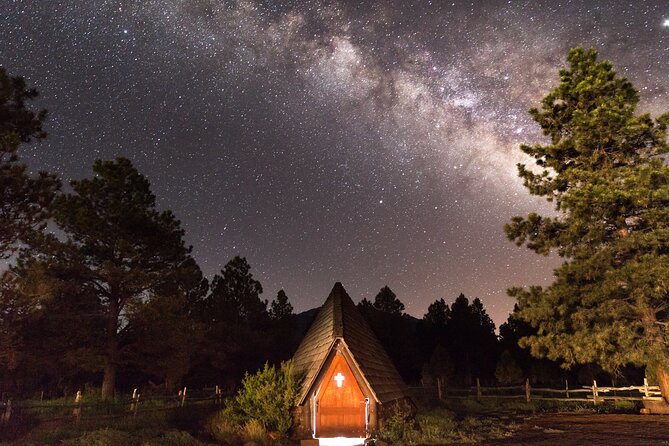
The technology is useful, but the sky itself remains the reason to book. You will have a chance to see stars and the Milky Way above Flagstaff, conditions permitting. Looking upward between telescope sessions keeps the experience from becoming a purely mechanical exercise.
A guide can also help connect individual points of light. Constellations, zodiac subjects, planets, and galaxies all become easier to remember when you have a person explaining how they relate. The review praise for Evan centers on this enthusiasm, and that is likely to matter as much as the telescope for first-time stargazers.
The experience suits several kinds of people. Astronomy fans will appreciate access to dedicated equipment without having to own or set up a telescope. Beginners get a gentle introduction. Families and couples can share the night without needing prior knowledge of star charts or camera settings.
The tour may be less suitable if you want a private session or a long photographic workshop. The group can include up to 10 people, so the experience is personal but not necessarily one-on-one. The description also does not promise a technical lesson in astrophotography, so book it for guided viewing rather than camera training.
Hot Drinks, Chairs, and Photos Under the Stars
Comfort can decide whether a night outdoors feels memorable or merely cold. Chairs are included, and tea or hot chocolate is provided. You can settle in, listen to the guide, and look upward without treating the session like a standing queue.
The drinks also create a relaxed break between views. Astronomy requires patience. A faint object may take a moment to find, and your eyes need time to adjust to the darkness. A hot drink gives you something pleasant to do while the guide prepares the next view.
The provider also takes photos of you and your group under the stars. This is a nice extra because night photography is tricky, even for people who take good daytime pictures. You can leave with a record of the evening rather than relying only on memory.
The details do not explain how many photos are taken or how they are delivered. I would treat the photography as a welcome bonus, not the main reason to pay $85. The telescope work, guide, small group, and two-hour session are the core of the experience.
Is $85 a Fair Price?
At $85 per person, this is not the cheapest way to look at the night sky. You can see stars for free in many places, and Flagstaff itself offers plenty of open sky. The price makes more sense if you value instruction, access to specialized equipment, live images, comfortable seating, hot drinks, and a group capped at 10.
The Celestron telescope and Stellina system are the strongest reasons the cost goes beyond a basic guided walk. You are paying for equipment that can locate and display objects most people would not find on their own. You are also paying for the guide’s time and for a structured two-hour session.
The value is best for someone who wants help understanding the sky. If you already own a good telescope and regularly use astrophotography equipment, the session may feel less essential. For a first astronomy experience, though, it avoids the cost and learning curve of buying equipment before you know how much you enjoy the hobby.
Remember that all fees and taxes are not included in the stated price. Check the final booking total before you commit. Since the experience is popular well ahead of time, with bookings often made about 190 days in advance, planning early is sensible.
Weather, Timing, and What You Should Expect
This activity requires good weather. If poor conditions force a cancellation, you can choose a different date or receive a full refund. The tour also requires a minimum number of participants, and if that minimum is not reached, you will be offered another date or experience, or a full refund.
That policy is fair for an astronomy outing. Clouds can erase the main attraction, and the provider cannot control the sky. Still, keep some flexibility in your Flagstaff schedule if seeing the Milky Way is important to you.
You can cancel for a full refund if you do so at least 24 hours before the 8:00 pm start time. Changes or cancellations made less than 24 hours before the start are not accepted for a refund. The cut-off follows local time.
The supplied information says most people can participate, and service animals are allowed. No special fitness level is stated. The chairs make the session easier, but you are still spending time outdoors at night, so dress for the conditions you encounter.
Who Will Get the Most From This Experience?
I would recommend this tour to you if you want a guided introduction to astronomy without buying equipment. It is also a good fit for couples, families, and small groups who want a calm evening activity with something more memorable than a standard night walk.
You will likely enjoy it most if you are curious about how galaxies, planets, constellations, and nebulas appear through real equipment. The live images give beginners a clear reason to look through the telescope, while the open-sky views keep the outing connected to the natural night above you.
The maximum group size of 10 is a useful middle ground. You get more personal attention than on a large coach-style activity, but you do not pay the higher cost of a private booking. The small group also makes it easier to hear explanations and share the telescope without too much waiting.
I would hesitate only if your schedule cannot handle weather changes, if you want a guaranteed view of one exact object, or if you are mainly interested in professional photography instruction. The tour offers guided viewing and group photos, not a promise of a fixed celestial program.
Final Verdict: Book It If You Want More Than Stars
Book the Ultimate Flagstaff Stargazing Experience if you want the night sky explained and brought closer with serious equipment. The combination of an 8-inch Celestron telescope, Stellina live imaging, small groups, chairs, hot drinks, and photos gives the $85 price a reasonable purpose.
The strongest reason to choose it is Evan’s enthusiastic teaching style. A good guide can turn a dark sky into a story you understand, and this experience appears built around that kind of personal connection.
Give yourself schedule flexibility for weather, check the final price with fees and taxes, and book early if your Flagstaff dates are fixed. If you do, this should be a comfortable, focused way to meet the stars without needing to know a constellation from a comet before you arrive.
FAQ
Where does the stargazing experience begin?
It begins at 2900 N Fort Valley Road, Flagstaff, Arizona 86001.
What time does the tour start?
The stated start time is 8:00 pm.
How long does the experience last?
The stargazing session lasts approximately two hours.
Where does the activity end?
The activity ends back at the meeting point on North Fort Valley Road.
How many people can join the tour?
The maximum group size is 10 people.
What equipment is provided?
The experience includes tripods, telescopes, an 8-inch Celestron 8SE telescope, and a Stellina mobile astrophotography machine.
Can I see galaxies and nebulas?
The experience includes live imaging of deep-space objects such as galaxies and nebulas, along with opportunities to view planets and the moon.
Are drinks and chairs included?
Yes. Hot chocolate, tea, and chairs are included.
What happens if the weather is poor?
If poor weather cancels the experience, you will be offered a different date or a full refund.
Just added around the USA
- Stargazing and Milky Way Portrait in Capitol Reef National Park★ 4.5 · 13 reviews
- Temecula Wine Country Stargazing Tour★ 5.0 · 2 reviews
- Astronomy and Stargazing Tour in Utah★ 5.0 · 8 reviews
- Private Stargazing – Sequoia National Park★ 4.5 · 14 reviews
- Sedona Night Hike and Stargazing★ 5.0 · 7 reviews
- Stargazing Tour with Telescopes and Video Astronomy in Sedona★ 5.0 · 40 reviews
- Sunset Sedona Sacred Places -gourmet picnic dinner and stargazing★ 5.0 · 12 reviews
- PRIVATE Sedona Jeep Tour 4X4 Stargazing Tour at Night★ 4.5 · 11 reviews
Stargazing Tours, compared.
Dubai Red Dunes ATV, Camels, Stargazing & 5* BBQ Al Khayma Camp
Read our review →
Teide National Park Sunset & Stargazing with Dinner (Star Safari)
Read our review →
Sunset Camel Trek, Al Khayma Camp, Stargazing & BBQ
Read our review →
Overnight Safari, Dinner, Stargazing & Al Khayma Camp
Read our review →
Dubai Overnight Desert Safari, BBQ & Stargazing at Al Khayma Camp
Read our review →Browse the lists this tour appears in