
Review · THE USA
Miami: Frost Museum of Science and Planetarium Entry Ticket
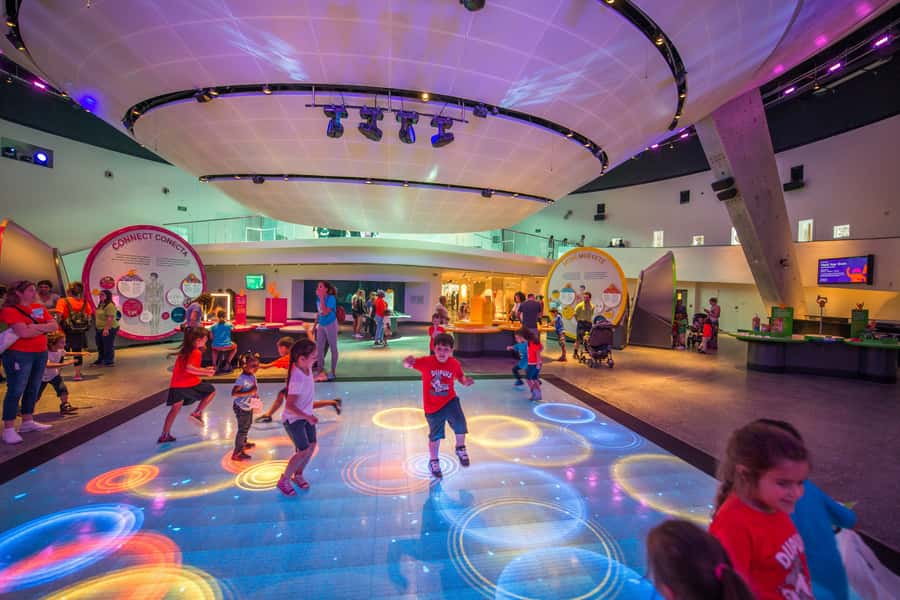
Science gets wonderfully hands-on here. The Phillip and Patricia Frost Museum of Science brings together a three-level aquarium, Miami’s only planetarium, and more than 250,000 square feet of exhibits under one roof. I like the mix of big visual thrills, such as hammerhead sharks and a 30-foot dinosaur, with simple stations where you can test an idea for yourself. The $30 admission is fair if you stay for three or four hours, though it can feel pricey if you only see a few galleries.
I also like that the ticket includes both the aquarium and one planetarium show. That makes the museum a useful choice on a hot or rainy Miami day, especially for families. The main catch is that planetarium seating is first come, first served, so you need to plan around the show rather than assume you can walk in at any time.
Key Points Before You Go
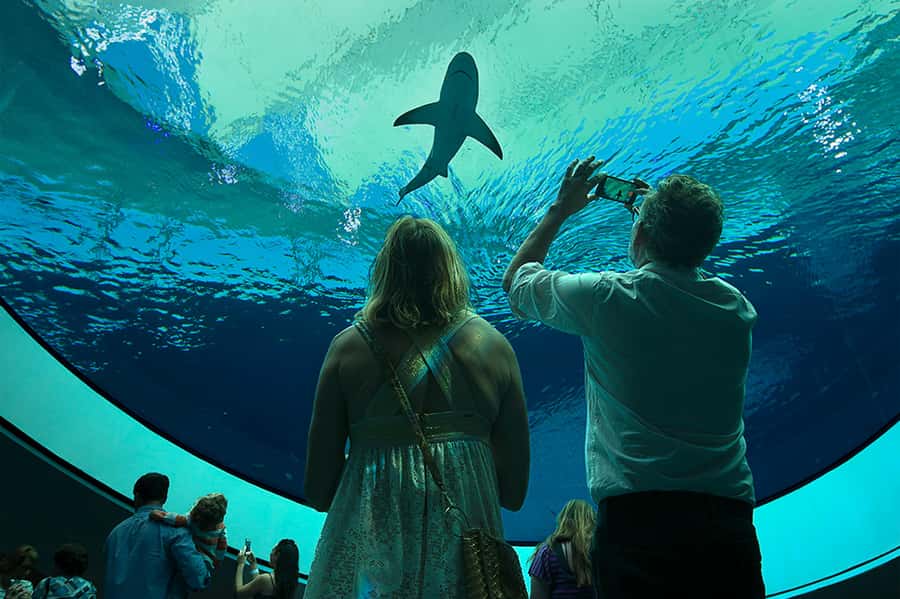
- Three-level aquarium: See jellyfish, hammerhead sharks, stingrays, and other marine life, with a chance to touch a stingray.
- One planetarium show included: Choose between Dynamic Earth and Black Holes, subject to seating availability.
- About three to four hours needed: You can move quickly, but the hands-on exhibits reward a slower visit.
- Strong family appeal: Bugs, sharks, touch stations, and space displays work for several age groups.
- Large science collection: Explore Feathers to the Stars, Power of Science, aviation inventors, Mars missions, and more.
- Easy booking terms: You can cancel up to 24 hours ahead for a full refund, and reserve now while paying later.
Getting Started at Frost Science
You begin at the Phillip and Patricia Frost Museum of Science in downtown Miami, on the waterfront. There is no hotel pickup or drop-off, so you arrange your own way there and return to the same museum after exploring.
The entry ticket lets you skip the ticket line, which matters when you arrive during a busy family period. The ticket is valid for one day, and the available start time can look confusing during booking. Some people have found a 6 PM time displayed even though the ticket can be used from the point of entry during the valid day. Check the current booking details, but the practical advice is simple: go to the museum with your ticket and confirm the day’s access at the entrance.
You can reserve now and pay later, which helps if your Miami schedule is still shifting. Free cancellation is available up to 24 hours before the visit. Food and drinks are not included, so plan around that if you expect to spend most of the afternoon inside.
More Planetarium Visits in the USA:
- Houston Museum of Natural Sciences: Planetarium Ticket
★ 4.5 · 139 reviews - Planetarium and Telescope Combo Tour
★ 4.0 · 144 reviews - Jasper: Jasper Planetarium and Telescope Combo Tour Tickets
★ 3.8 · 118 reviews
Three Aquarium Levels, Stingrays, and Hammerhead Sharks
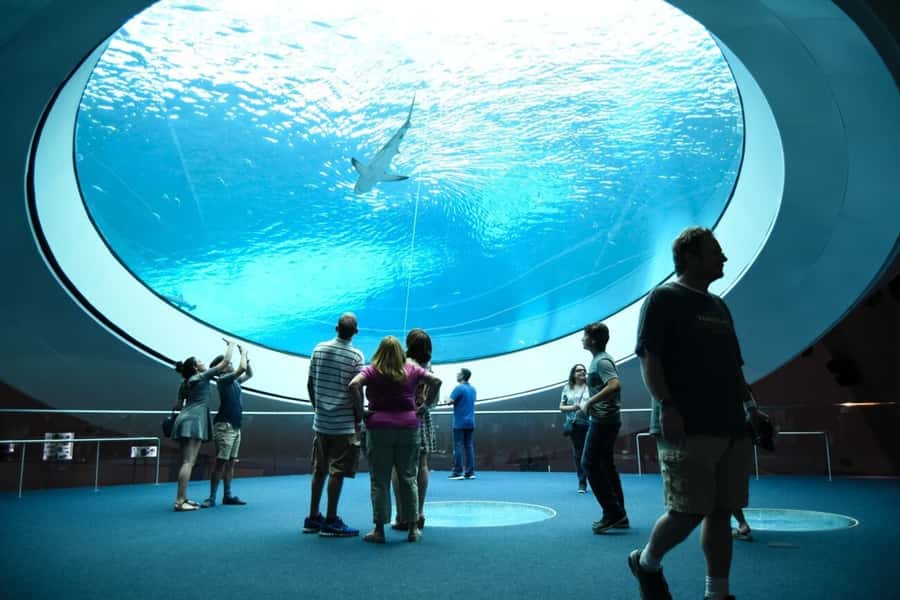
The aquarium is the first major reason to buy this ticket. It occupies three levels, giving you different views of underwater life rather than one long row of tanks. The layout lets you move down through the collection and change your perspective as you go.
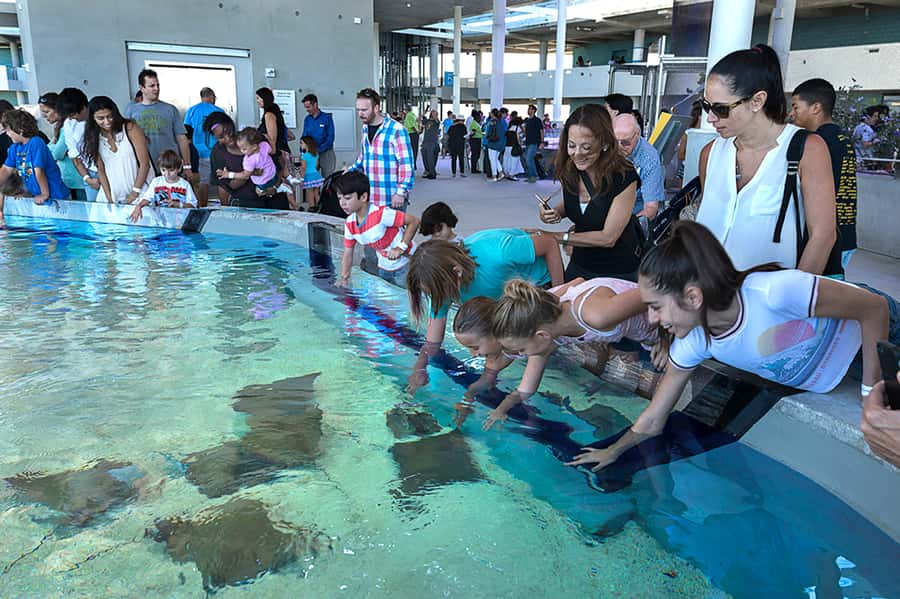
The most memorable feature for many families is the stingray touch area. You get a chance to make contact with a stingray, which turns a familiar aquarium visit into a direct sensory experience. I like this kind of station because it gives children a clear connection between the animal on display and the science behind it.
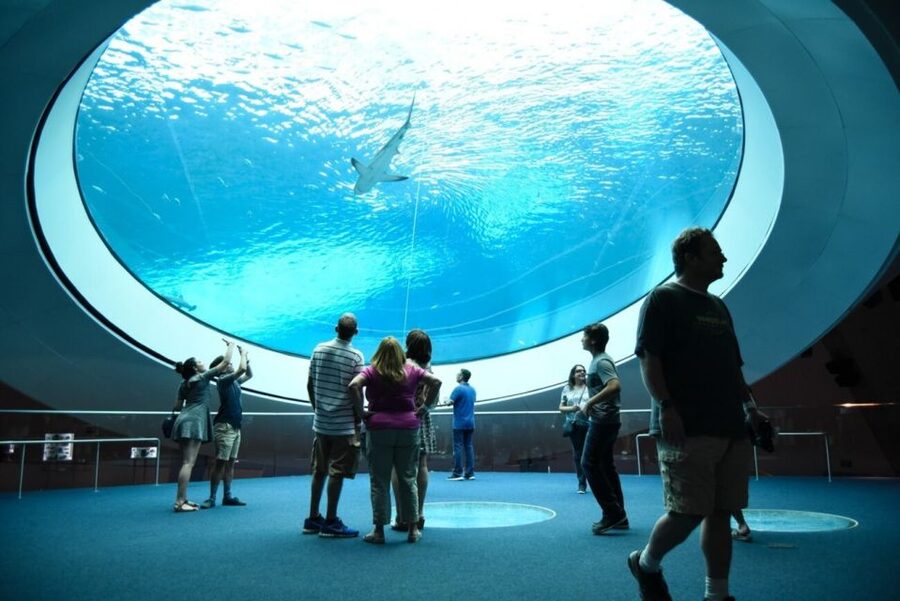
The larger tanks bring hammerhead sharks into view, along with jellyfish and other fish. The sharks provide the drama, while the jellyfish offer a slower, more delicate display. If you have young children, allow extra time here. One small child was especially taken with the aquarium, even before being old enough to use every interactive station.
The aquarium is also a good break from reading exhibit panels. You can watch animals move, compare shapes and textures, and let children set the pace. The downside is that the aquarium can take up a large part of your visit, leaving less time for the science galleries if you arrive late.
Bugs, Touch Stations, and Science Gadgets
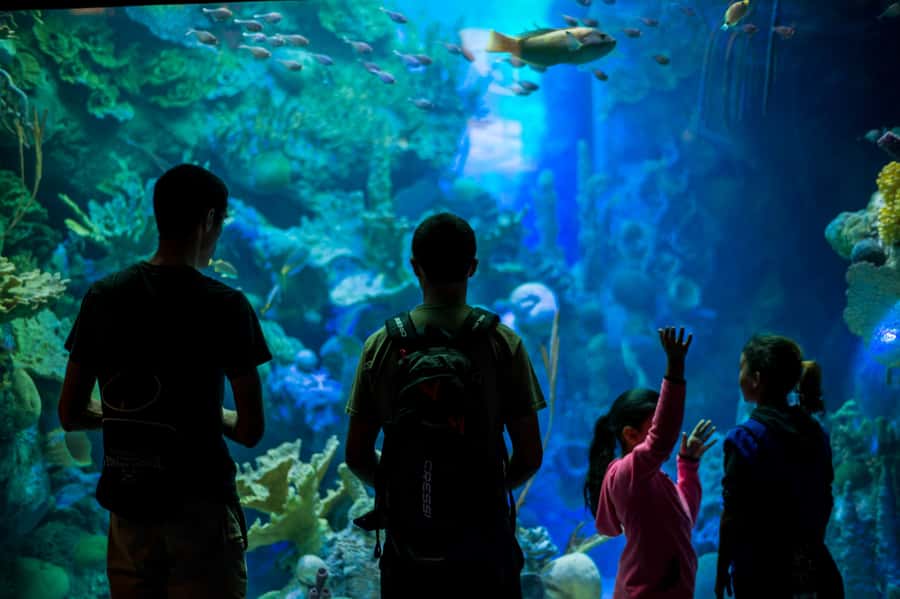
The museum works best when you treat it as a place to test, touch, and look closely. The bug area on Level 1 is a strong example. The insects are shown in close-up detail, with colors and patterns that become much more striking than they would in a quick glance outdoors.
I especially like the way this section can appeal to children who are not yet ready for more abstract science displays. A giant insect view is immediate. You do not need a long explanation before the shapes, colors, and movement start a conversation.
The museum also includes hands-on science gadgets on Level R. These stations give you a chance to see a principle in action instead of only reading about it. The exact pace depends on crowd levels and the ages in your group, but this is the part to protect time for if your children enjoy pressing buttons, testing objects, and asking why something happened.
Not every station will work equally well for every age. A toddler may enjoy the colors and movement but be too young to grasp the point of an activity. Older children can spend much longer testing the controls and comparing results. That mix makes Frost Science useful for families with children at different stages, though you should not expect every exhibit to hold everyone’s attention.
A 30-Foot Dinosaur and the Road to Space
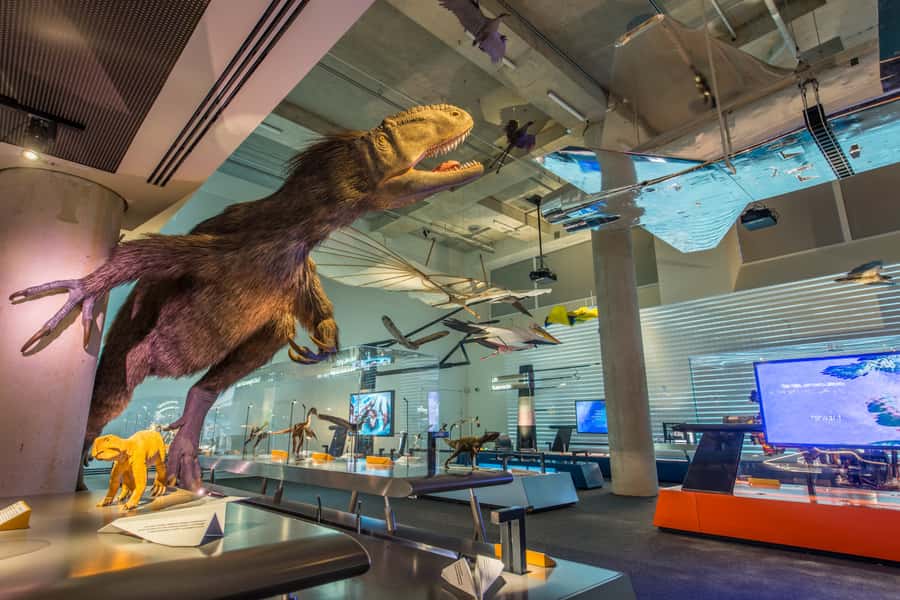
The Feathers to the Stars exhibit connects dinosaurs with modern space travel. Its centerpiece is a towering 30-foot Yutyrannus Huali, a feathered dinosaur that helps explain the link between ancient life and later developments in flight.
That connection gives the exhibit more shape than a simple dinosaur display. You move from feathers and prehistoric animals toward aviation and space exploration. The museum also introduces inventors who helped pioneer aviation and includes the chance to land a spacecraft on Mars, giving you an active role in the story.
This is one of the better stops for visitors who like a clear sequence. You can see how the museum moves from natural history to human invention, then from aircraft to spacecraft. It is also a useful section for adults who want a little more context than a basic animal exhibit provides.
The dinosaur is a major visual landmark, but the surrounding material is what makes the stop worthwhile. Give yourself time to read and try the activities rather than taking a quick photo and moving on.
Same dark sky, a different way to spend it:
- Small Group Big Island Twilight Volcano and Stargazing Tour
★ 5.0 · 1,619 reviews - Griffith Observatory Hike: Guided Tour through Griffith Park
★ 5.0 · 1,020 reviews - Sedona Stargazing Tours LLC
★ 4.5 · 881 reviews - Los Angeles: Hollywood Night Tour with Griffith Observatory
★ 4.2 · 531 reviews
Power of Science and the Museum’s Big Questions
Power of Science looks at the way scientific work expands what people think is possible. The focus is on discoveries by scientists and on the process of testing ideas, not only on finished answers.
I appreciate that approach because it keeps the museum from feeling like a collection of disconnected objects. You see science as something people do: ask a question, try a method, get an unexpected result, and revise the next step. The interactive format makes that idea easier to grasp, especially for children who may think science is just a list of facts.
You will also find exhibits tied to aviation, Earth systems, and space. They give the museum range, but the size can make it hard to see everything in a single pass. If you have only two hours, choose the aquarium, planetarium, and one or two galleries. If you can stay for three to four hours, you can explore at a comfortable pace.
The facility is clean and designed for a broad age range. That matters when you are traveling with a group that includes adults, school-age children, and younger kids. The main limitation is not quality but energy. By the later galleries, younger children may be ready for food or a rest.
Choosing Between Dynamic Earth and Black Holes
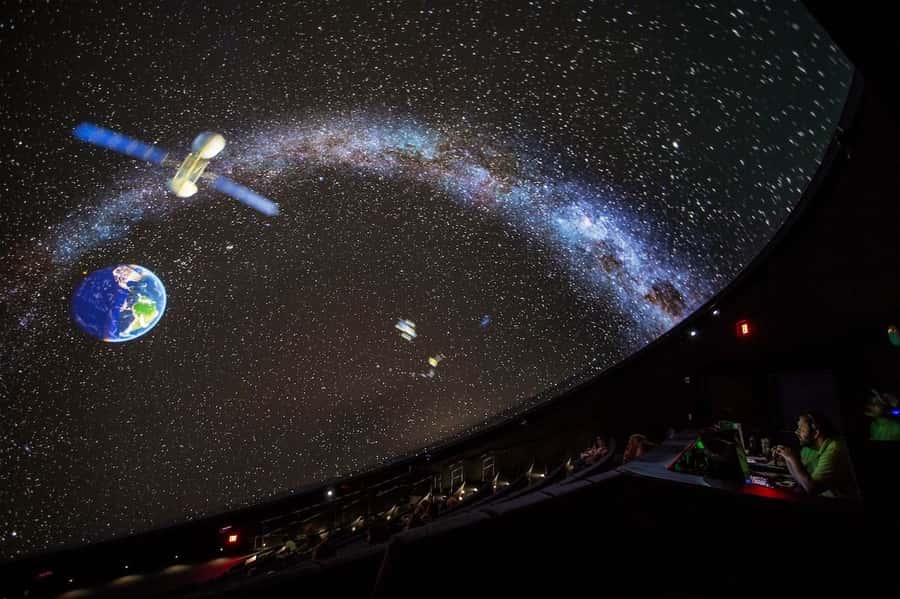
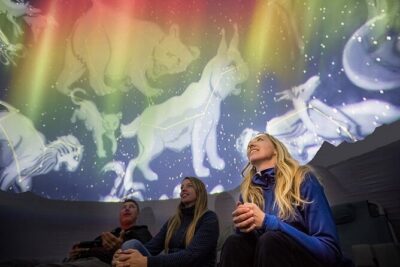
Your ticket includes one show in the nearly 360-degree Frost Planetarium. This is not a small room with a simple star projector. The full-dome format fills your field of view, so you should expect a highly visual presentation.
Dynamic Earth examines the workings of Earth’s climate system. The production is narrated by Liam Neeson, and the subject gives you a clear look at how Earth operates as a connected system. This is the better pick if you want a planet-focused show with a direct link to life on our own planet.
Black Holes takes you farther out. It explores wormholes, the creation of the Milky Way Galaxy, the violent death of a star, and the formation of a black hole. The scale is much larger and more dramatic, making it a strong choice if your group is most excited by outer space.
Planetarium shows are available on a first-come, first-served basis. This is the key planning issue of the entire visit. The show is included, but your preferred presentation is not guaranteed unless you arrive in time for available seats. Check the schedule when you enter and build your museum route around that time.
The show itself can be the emotional high point of the day. Children may respond to the colors and movement, while adults can enjoy the science and the sense of scale. One practical caution: if someone in your group dislikes intense visual effects or prefers quiet exhibits, the planetarium may feel more forceful than expected.
How Much Time Should You Allow?
The museum advises allowing three to four hours if you want to see all the exhibitions. I agree with that estimate. The aquarium alone can take a while if you stop for the stingrays, sharks, jellyfish, and different viewing levels.
A sensible visit might look like this:
- Start with the planetarium schedule and choose your preferred show.
- Visit the aquarium while keeping an eye on the show time.
- Spend focused time with the bugs, hands-on science stations, and the Yutyrannus Huali.
- See Feathers to the Stars and Power of Science.
- Finish with any remaining displays before leaving through the same meeting point.
Do not treat the ticket as a quick attraction you can squeeze between two other downtown plans. You may be able to see the highlights in less time, but the $30 price makes more sense when you use the aquarium, a planetarium show, and several galleries.
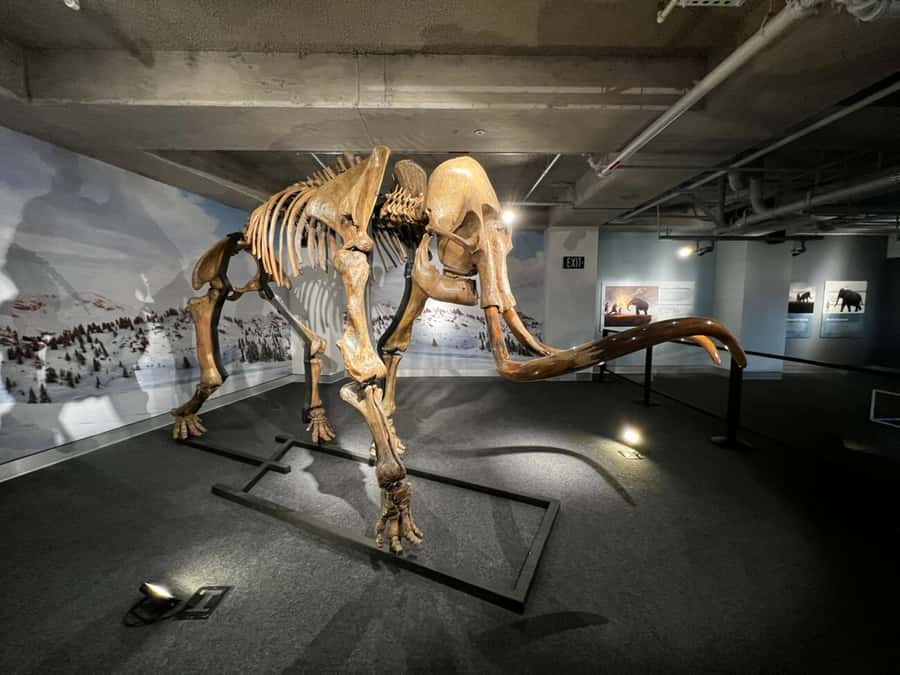
A few displays can also cause confusion if you rely only on signs. A mammoth display was expected on the top floor, but the floor information did not make its location clear. If you are looking for a particular exhibit, ask museum staff rather than spending time wandering around.
Is the $30 Ticket Good Value?
At $30 per person, this is not a bargain attraction in the narrow sense. It becomes good value when you stay long enough to use the full package: aquarium access, interactive exhibits, and one planetarium show.
The strongest value comes from variety. You are not paying only for a tank or only for a film. You can see marine animals, handle an activity, study a huge dinosaur, learn about aviation and Mars, and finish beneath a full-dome space presentation.
I would be more cautious if you have only an hour or if your group is interested in just one feature. A visitor who wants only the aquarium may feel the cost is high. A family spending most of a day indoors will likely find the ticket easier to justify.
There is no food or drink included, and the ticket cannot be applied toward an annual membership. If you already planned to become a member, this admission does not reduce that future cost. For a single Miami visit, though, the one-day ticket keeps things simple.
Who Will Enjoy Frost Science Most?
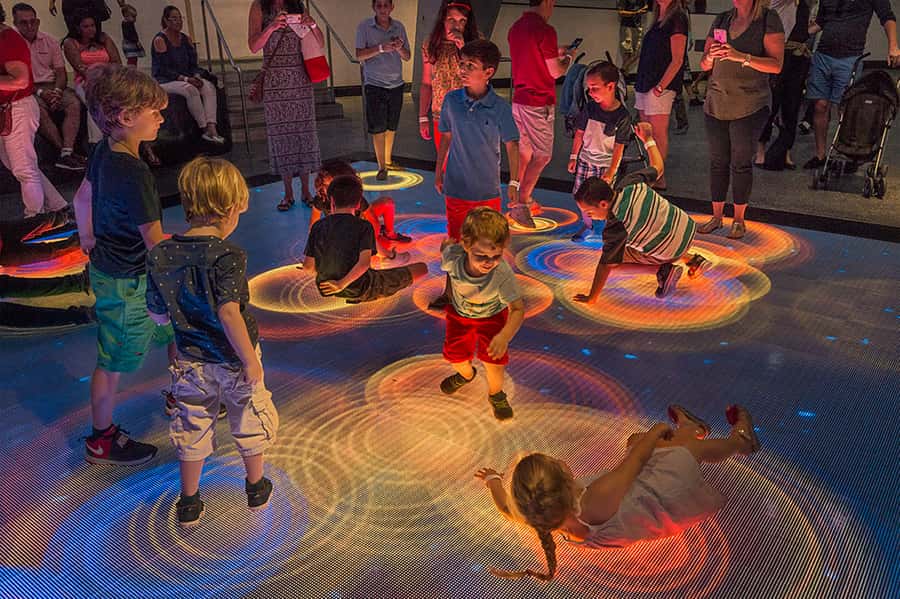
This experience suits families particularly well. The bugs, stingrays, sharks, touch stations, colorful planetarium show, and large dinosaur give children several different ways to stay interested. The facility is also wheelchair accessible, which makes it easier to include people with different mobility needs.
Adults without children can enjoy it too, especially if you like aquariums, space science, or interactive displays. The two planetarium choices give the visit a stronger focus than a standard science museum outing.
I would recommend it for:
- Families looking for a three to four-hour indoor activity
- Anyone interested in aquariums and marine animals
- Space fans choosing between Earth science and black holes
- Visitors who prefer hands-on displays to long text panels
- People wanting a weather-proof stop in downtown Miami
I would hesitate only if your schedule is tight, your group dislikes interactive exhibits, or you are unwilling to plan around the planetarium seating.
My Booking Advice
Book Frost Science if you can give it most of an afternoon. Arrive ready to check the planetarium schedule first, then work the aquarium and exhibits around your selected show. That small bit of planning prevents the most common disappointment, missing the presentation you wanted.
The museum earns its strong 4.5 rating through its combination of clean facilities, family-friendly activities, beautiful aquariums, and a planetarium that feels genuinely different from the rest of the visit. The best moments are not limited to one gallery. You might start with a stingray, stop beneath a giant dinosaur, test a science gadget, and end with a black hole filling the ceiling.
Book it if you want variety and have three or four hours to spare. Skip it if you need a short, low-cost stop or want only one narrowly focused exhibit.
FAQ
How much does admission cost?
The entry ticket costs $30 per person.
What does the ticket include?
It includes entry to the Frost Science Museum, access to the aquarium, and one planetarium show.
How long is the ticket valid?
The ticket is valid for one day. Check the available booking information for starting times.
Are planetarium shows guaranteed with admission?
A planetarium show is included, but seating is first come, first served. Arrive early enough to find available seats for your preferred show.
Which planetarium shows can I choose from?
The available choices include Dynamic Earth, which explores Earth’s climate system and is narrated by Liam Neeson, and Black Holes, which covers wormholes, the Milky Way, dying stars, and black hole formation.
Is the museum wheelchair accessible?
Yes, the museum is wheelchair accessible.
Can I cancel the booking?
Yes. You can cancel up to 24 hours in advance for a full refund. You can also reserve now and pay later.
Just added around the USA
- Stargazing and Milky Way Portrait in Capitol Reef National Park★ 4.5 · 13 reviews
- Temecula Wine Country Stargazing Tour★ 5.0 · 2 reviews
- Astronomy and Stargazing Tour in Utah★ 5.0 · 8 reviews
- Private Stargazing – Sequoia National Park★ 4.5 · 14 reviews
- Sunset Sedona Sacred Places -gourmet picnic dinner and stargazing★ 5.0 · 12 reviews
- Sedona Night Hike and Stargazing★ 5.0 · 7 reviews
- Stargazing Tour with Telescopes and Video Astronomy in Sedona★ 5.0 · 40 reviews
- PRIVATE Sedona Jeep Tour 4X4 Stargazing Tour at Night★ 4.5 · 11 reviews
Planetarium Visits, compared.
Houston Museum of Natural Sciences: Planetarium Ticket
Read our review →
Jasper Planetarium and Telescope Combo Tour Tickets
Read our review →

Cusco by Night: Planetarium Cusco, Dinner, and Pisco Sour
Read our review →
Planetarium Cusco OFFICIAL SITE: Andean Astronomy experience
Read our review →

Planetarium and Night Tour with Dinner and Pisco Sour
Read our review →Browse the lists this tour appears in