
Review · SPAIN
Madrid: Night sky observation with an expert astronomer
Look up, and Madrid gets much bigger. This two-hour night-sky outing combines a clear introduction to stars and constellations with viewing through a 30 cm aperture telescope, guided by an astronomer who can explain what you are seeing in simple terms. I especially like the small groups and the chance to look through the telescope several times, rather than getting one rushed turn. The guide Rober has also earned warm praise for making astronomy easy to follow.
The main catch is the weather. Clouds can spoil the view, and even on a scheduled night conditions may be less than ideal. The tour still has value as an introduction, but you should bring warm clothing, expect a Spanish-language guide, and keep your plans flexible enough for a possible date change.
Key points at a glance
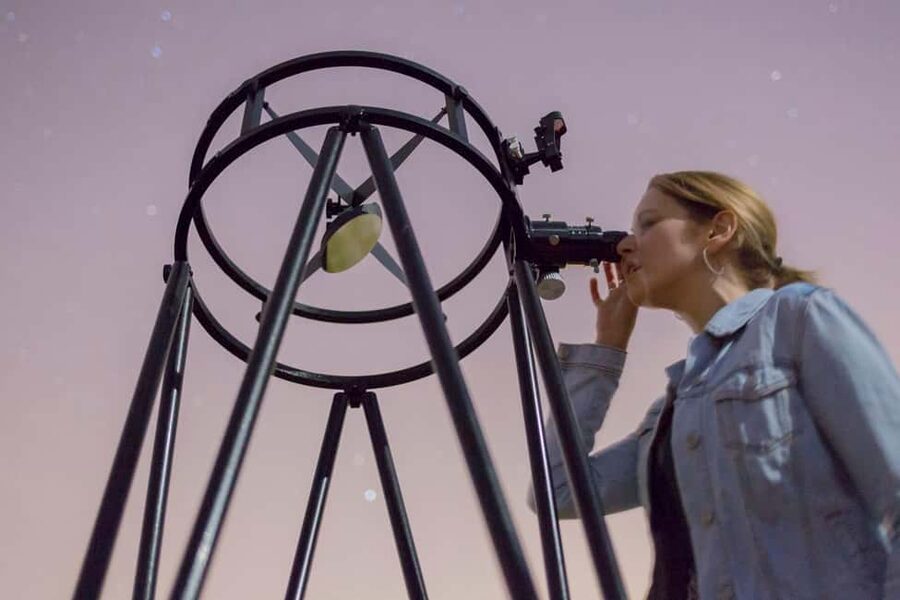
- A 30 cm telescope does the heavy lifting: The large aperture may reveal the Moon, planets, double stars, galaxies, nebulae, and dense star clusters.
- The tour begins with sky orientation: You learn to find the North Star, identify Zodiac constellations, and tell stars from planets.
- Small groups mean more telescope time: You can look through the eyepiece several times during the session.
- Rober is a praised guide: His explanations have been described as simple, friendly, and easy to understand.
- The meeting point is not the observing site: You meet the AstroAfición monitor in a blue uniform, then walk about 200 meters.
- Weather controls the evening: AstroAfición may cancel around 48 hours ahead, or wait until 24 hours before the start if the forecast remains uncertain.
Why this Madrid astronomy evening is worth your time
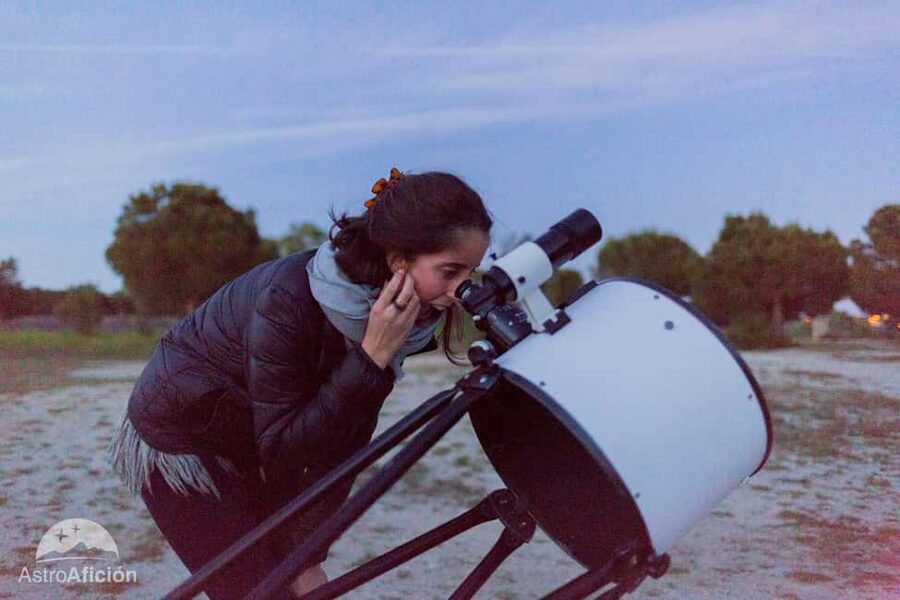
Madrid is famous for its museums, plazas, food, and late nights. This experience gives you a different way to spend an evening in the Community of Madrid. Instead of moving from one indoor attraction to another, you spend two hours learning how to read the sky and then using a serious telescope to see distant objects.
That combination matters. A telescope can show you something remarkable, but without an explanation, it may be hard to understand what you are looking at. Here, the astronomer first gives you a map of the sky. You learn basic reference points, then use that knowledge during the observation.
I like this approach because it works for beginners. You do not need to arrive knowing the names of stars or understanding astronomy. The activity is designed to help you get your bearings fast, then build curiosity from there.
The experience costs $47 per person. That is not a bargain-basement evening activity, but the price includes the telescope, the astronomer, and a small-group format. If you are interested in science or want something more memorable than another bar or restaurant, the cost is reasonable. Its value depends heavily on the sky conditions, so it is best viewed as both a guided lesson and a chance to see celestial objects, not as a guaranteed list of sights.
More Observation Decks in Spain:
- Menorca Astronomical Observation with Telescopes, Night Sky
★ 5.0 · 19 reviews - Night Sky observation and photography (Small Group)
★ 5.0 · 2 reviews
Meeting the astronomer and walking to the observing site
You meet the AstroAfición monitor at the designated location. Look for the blue company uniform. From there, the group walks about 200 meters to the place where the telescope is set up.
That short walk is worth noting when planning your evening. The meeting point is not the exact observation site, so do not assume you can arrive late and head directly to the telescope. You will want to be at the meeting location on time and ready to walk outside.
There is no food or drink included. One January booking included warm broth, which was especially welcome in low temperatures, but you should not treat that as a guaranteed part of the experience. Bring your own expectations and, most important, wear warm clothing.
Night observation can feel colder than a normal evening outdoors because you spend time standing still. Even if Madrid feels mild during the day, temperatures can drop after dark. A warm jacket is the minimum sensible choice.
Learning the sky before looking through the telescope
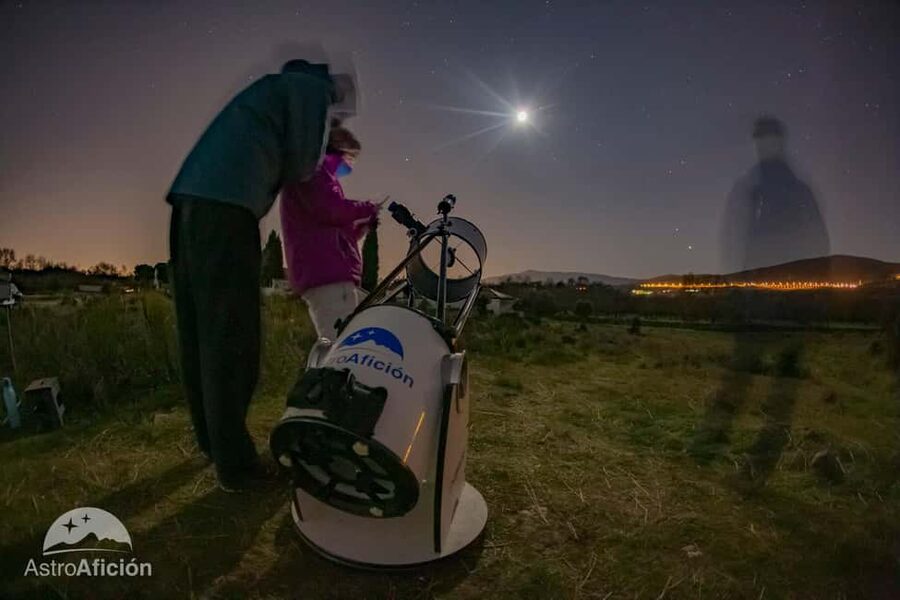
The first part of the evening is a tour of the constellations and the stories connected with their stars. This is not just a list of names. The astronomer shows you how to use visible patterns and reference points to find your way around the sky.
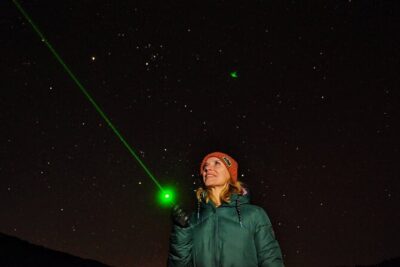
You learn to locate the North Star, recognize the constellations of the Zodiac, and distinguish stars from planets. Those are simple skills, but they change the way you look upward. After this introduction, the sky becomes less like a random scattering of lights and more like a chart you can begin to read.
Finding the North Star is especially useful because it gives you a fixed point for orientation. The Zodiac constellations add another familiar frame, linking the evening sky with names you may already know from astrology, even though astronomy and astrology are different subjects.
The explanation is intended to be clear and accessible. That is good news if you are bringing children, friends who know little about astronomy, or anyone who tends to lose interest when a guide uses too much technical language. Rober has been praised for explaining things in an easy way, and that quality matters here. You want an astronomer who can answer basic questions without making you feel behind.
The live guide speaks Spanish, and some content is presented in its original language. If you do not understand Spanish, this may be the single biggest limitation of the experience. The telescope itself is universal, but the storytelling, instructions, and explanations are not.
What the 30 cm telescope can show you
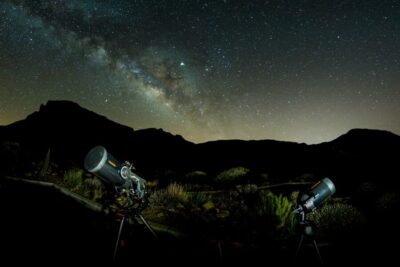
After the constellation tour, the focus shifts to the telescope. The 30 cm aperture is the main reason to book this activity instead of simply looking at the sky from a city viewpoint.
The exact viewing list changes every night. You might see:
- The Moon
- Planets in our Solar System
- Double stars
- Galaxies
- Star clusters in the Milky Way
- Nebulae, where stars are born or die
That variety is part of the appeal. You are not being promised one fixed object that may be hidden behind clouds or below the horizon. The astronomer works with the conditions of that particular night and chooses objects that can be observed.
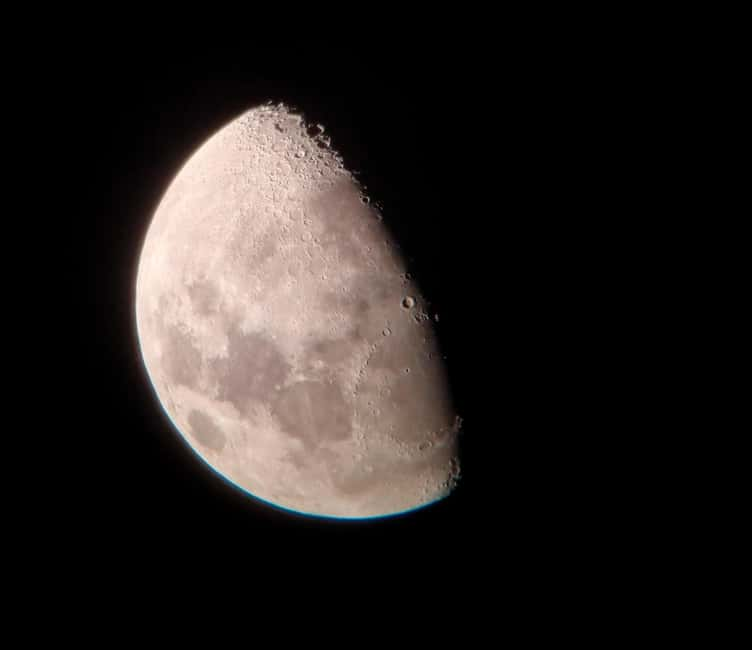
The Moon can be a striking first target when it is visible, with bright and shadowed areas that give the surface depth. Planets may appear as small but clearly distinct objects rather than ordinary points of light. Double stars can offer a different kind of surprise, especially when two stars appear close together through the eyepiece.
Galaxies and nebulae are less predictable and may appear faint, depending on conditions. You should not expect every object to look like a bright space photograph. Telescope viewing is often more subtle than images from observatories or space missions. The reward is that you are seeing the object through an actual telescope at that moment.
The Milky Way is another highlight. Its clusters can contain thousands of stars, and a telescope helps separate details that the naked eye cannot easily pick out. Nebulae add another layer because they are connected with the birth and death of stars. The astronomer’s explanation gives those pale patches meaning.
More Stargazing Tours in Spain:
- Tenerife: Teide National Park Sunset & Stargazing Tour
★ 4.2 · 3,812 reviews - Tenerife: Sunset and Stargazing at Teide National Park
★ 4.7 · 2,826 reviews - Teide National Park Sunset & Stargazing with Dinner (Star Safari)
★ 5.0 · 2,601 reviews - Teide National Park: Sunset & Stargazing Safari with Dinner
★ 4.6 · 2,115 reviews
Small groups and repeated turns at the eyepiece
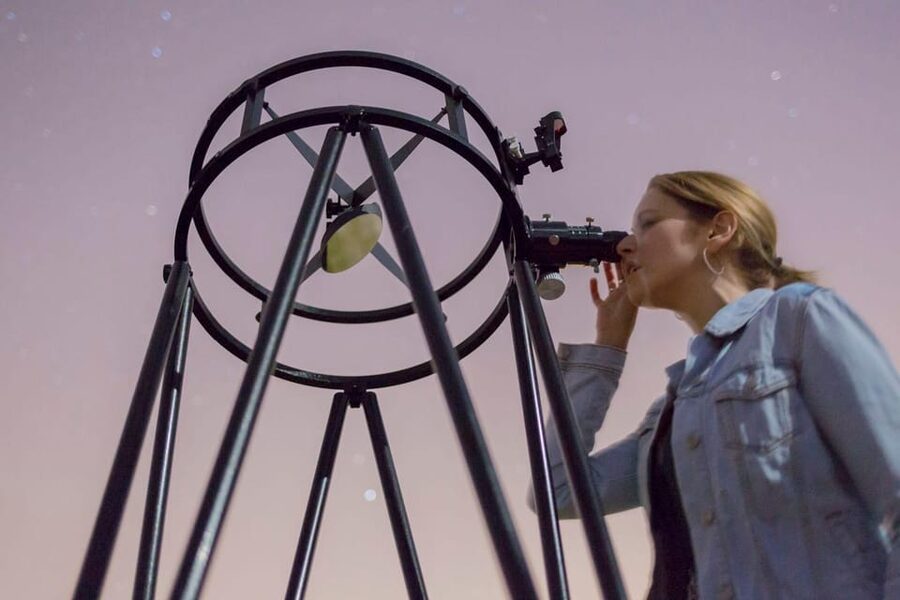
The small-group format is one of the strongest parts of this experience. With a large group, telescope sessions can become a queue: take one quick look, step away, and let the next person move in. Here, you should have the chance to look through the telescope many times.
That repeated access makes a difference. Your first view may be brief because you are learning how to position your eye. A second or third look lets you notice more detail and compare different objects. You can also listen to the explanation, ask a question, then return to the eyepiece with a better idea of what to look for.
The group size is described as small, but no exact number is given. I would not assume a private tour. Still, the format is more personal than a large public astronomy talk, and the guide is present throughout the observation.
The astronomer guides the viewing from start to finish. That means you are not left to guess whether a faint point is a star, planet, or something farther away. The expert can explain the object, point out details, and connect what you see through the telescope with the earlier constellation lesson.
Weather is part of the deal
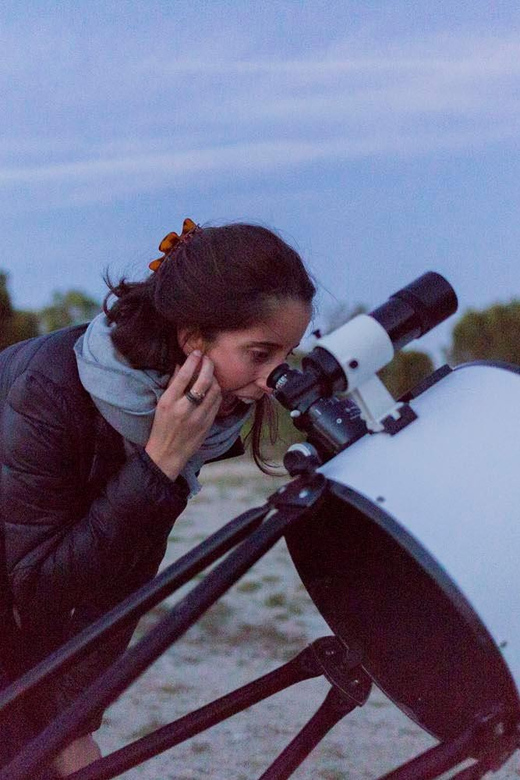
A clear sky is essential, and AstroAfición monitors the forecast closely. If bad weather is expected and the activity cannot take place in good conditions, the company may notify you about a cancellation.
The usual notice is around 48 hours before the activity, though uncertain forecasts can force a decision closer to the start. In some cases, the company may wait until 24 hours beforehand. That delay can be inconvenient if you are arranging other plans, but it is also understandable. A forecast can change, and cancelling too early would mean giving up a night that might turn out to be usable.
You can choose a different date or receive a refund if the activity is cancelled. You can also cancel your own booking up to 24 hours in advance for a full refund. The reserve-now-and-pay-later option gives you some flexibility while you plan your Madrid schedule.
One January booking noted that the weather was not ideal, yet the astronomer still explained many things and showed multiple objects. That is a useful expectation to carry with you. A less-than-perfect sky does not always mean a wasted evening, but it can reduce the quality and number of observations.
Do not book this activity on the assumption that you will definitely see a galaxy, a planet, or a dramatic nebula. Book it because you want to learn the sky and take your chance with the conditions.
Who will enjoy this experience most
This is a good fit for first-time stargazers. You will get the most from it if you like asking questions, enjoy science, or want an evening activity with a clear sense of purpose.
Families may also appreciate the short two-hour length, though the cold and late timing could test younger children. The simple explanations help, especially if your group includes people who have never used a telescope.
Couples and friends looking for a quiet evening activity may like the change of pace. There is no food component, no sightseeing bus, and no fast schedule. The focus stays on the sky.
You should think twice if:
- You need an English-language guide.
- You dislike standing outdoors in cold weather.
- You want a guaranteed view of a particular planet or galaxy.
- You prefer a busy evening with food, music, and several stops.
- Your schedule cannot handle a weather-related date change.
The Spanish-only format is not a small detail. Astronomy terms can be difficult even in your own language, so check your comfort level before booking. If you understand Spanish well enough to follow a spoken explanation, the language may add to the local character of the experience. If not, much of the value will be lost.
Is $47 a fair price?
At $47, this is best judged against the quality of the instruction and the telescope access, not against the cost of a free walk through Madrid. The fee covers a two-hour activity, a large-aperture telescope, an astronomer, and a small-group setting.
You are paying for interpretation as much as equipment. A telescope on its own does not teach you how to find the North Star or explain why a faint patch of light matters. The guide turns the equipment into an experience you can understand.
The price feels fair for someone who is genuinely interested in astronomy. It is less compelling if you are only looking for a casual nighttime outing and would be satisfied with a quick look at the stars. Weather also affects the value, since clouds can limit the telescope portion.
I would consider it a worthwhile addition to a Madrid itinerary if you have already covered the city’s major sights and want something quieter and more unusual. The small groups and repeated viewing opportunities help justify the cost.
Practical details before you book
The activity lasts about two hours. Starting times vary, so check availability for your date. The guide is live and speaks Spanish.
Bring warm clothes. Do not bring pets, although assistance dogs are allowed. Food and drink are not included, and the meeting point requires a 200-meter walk to the observation site.
Keep your booking flexible during unsettled weather. If the forecast looks poor, AstroAfición may cancel and offer either a new date or a refund. You can also cancel up to 24 hours ahead for a full refund, and the reserve-now-and-pay-later option lets you hold a place without paying immediately.
The experience has a 4.5 rating from three verified bookings. The strongest praise goes to the guide, especially Rober, whose relaxed explanations helped make the subject easy to understand. That is important because a good astronomy evening depends on communication just as much as on clear skies.
Should you book this Madrid night-sky tour?
Book it if you want a guided introduction to astronomy, appreciate small groups, and are happy to let the night’s conditions shape what you see. The 30 cm telescope and repeated viewing opportunities give the evening real substance, while the constellation lesson helps you understand the sky beyond this one outing.
Skip it if you need English, cannot tolerate cold outdoor conditions, or want a guaranteed list of celestial sights. For everyone else, this is a thoughtful, focused way to spend two hours outside Madrid, with an astronomer helping you make sense of the stars rather than simply pointing at them.
FAQ
Where does the Madrid night-sky observation take place?
The experience takes place in the Community of Madrid. You meet the AstroAfición monitor at a designated location, then walk about 200 meters to the observation site.
How long does the astronomy experience last?
The activity lasts about two hours.
What telescope is used?
The observation uses a large-aperture telescope with a 30 cm aperture.
What might I see through the telescope?
Depending on the night, you might see the Moon, planets, double stars, galaxies, Milky Way star clusters, or nebulae.
Will the guide explain the constellations?
Yes. The tour begins with a guide to the constellations, including how to find the North Star, recognize Zodiac constellations, and distinguish stars from planets.
What language is the tour in?
The live tour guide speaks Spanish. Some content is shown in its original language.
Is the activity suitable for beginners?
Yes. The astronomer explains the sky in a clear and simple way, making it suitable as a first introduction to observation.
Are food and drinks included?
No. Food and drinks are not included. One January booking included warm broth, but this should not be treated as a guaranteed inclusion.
What should I bring?
Bring warm clothing because the observation takes place outdoors at night.
What happens if the weather is bad?
AstroAfición may cancel if the forecast does not allow good observing conditions. You may then choose a different date or receive a refund.
Just added around Spain
- VIP Sunset & Stargazing experience★ 4.5 · 44 reviews
- Skip the Line: Teide Observatory Entrance Ticket★ 3.0 · 33 reviews
- Small Group Teide Stargazing Tour with Picnic at Sunset★ 5.0 · 3 reviews
- TEIDE NIGHT Astronomy Stargazing Bus Tour, Meal & Drinks included!★ 4.0 · 15 reviews
- Sunset and stargazing from Teide★ 3.5 · 51 reviews
- Tenerife Exclusive & Private Gastronomic, Sunset-Stargazing★ 5.0 · 3 reviews
- PRIVATE TOUR Teide National Park: Hiking and Stargazing★ 5.0 · 38 reviews
- Sunset & Stargazing Experience from Teide★ 4.0 · 31 reviews
Stargazing Tours, compared.
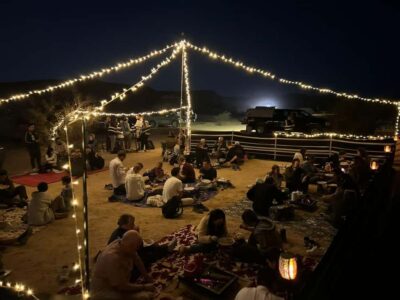
Dubai Red Dunes ATV, Camels, Stargazing & 5* BBQ Al Khayma Camp
Read our review →
Teide National Park Sunset & Stargazing with Dinner (Star Safari)
Read our review →
Sunset Camel Trek, Al Khayma Camp, Stargazing & BBQ
Read our review →
Overnight Safari, Dinner, Stargazing & Al Khayma Camp
Read our review →
Dubai Overnight Desert Safari, BBQ & Stargazing at Al Khayma Camp
Read our review →Browse the lists this tour appears in