
Review · THE USA
Professional Stargazing Tour in Joshua Tree
The desert sky puts on a serious show. This two-hour Joshua Tree stargazing experience combines a short solar-system walk, comfortable Yogibo loungers, hot drinks, laser-guided constellations, and powerful telescopes under officially recognized dark skies. I especially like the thoughtful comfort setup and the way guides such as Matt, Devon, Amanda, and Ben make astronomy easy to follow. The main catch is simple: weather controls the evening, and the desert gets cold fast.
You drive yourself to a rural meeting point in Yucca Valley, then settle in for an astronomy program limited to 18 people. I like that the evening is more than a quick look through one telescope. You get a guided explanation of the sky, astro-binoculars, several telescopes, blankets, and time to ask questions.
At $200 per person, this is not a casual after-dinner activity. It makes the most sense if astronomy is a real interest, or if you want a special Joshua Tree memory rather than a standard sightseeing stop. Bring serious warm layers, arrive before darkness, and keep your expectations tied to the forecast.
Key points at a glance
- A scale solar system starts the evening: A short walk introduces the planets before the stars take over.
- Comfort is part of the plan: Yogibo loungers, blankets, hand warmers, and hot drinks help during a cold desert night.
- You use more than one kind of viewing tool: Telescopes, astro-binoculars, and laser pointers help you see both the broad sky and specific objects.
- The program suits beginners: Guides explain planets, stars, galaxies, nebulae, and constellations in plain language.
- You must provide your own ride: The meeting point is at 54490 Skyline Ranch Road in Yucca Valley, and transportation is not included.
- Clear skies matter most: The company may reschedule or issue a full refund when weather prevents a proper experience.
Starting at 54490 Skyline Ranch Road
The tour begins at 54490 Skyline Ranch Road, Yucca Valley, outside Palm Springs. You are responsible for getting there, so this is not a hotel pickup or a guided ride into Joshua Tree National Park. Directions and signs have been described as clear, but you should still allow time to arrive before the sky turns fully dark.
That timing matters. Some of the access roads and surrounding area can feel remote, and one of the practical tips from the experience is to make the drive while there is still some dusk. You will have an easier time reading signs and finding the meeting point before the night closes in.
Do not count on a strong phone signal. One party specifically warned about no cell service, so save directions before leaving town. This is basic desert planning, but it can prevent a stressful start to an otherwise calm evening.
The activity ends back at the same meeting point. Since there is no transportation included, arrange your own return drive and avoid assuming that a rideshare will be easy to find in this rural setting.
More Stargazing Tours in the USA:
- Small Group Big Island Twilight Volcano and Stargazing Tour
★ 5.0 · 1,619 reviews - Sedona Stargazing Tours LLC
★ 4.5 · 881 reviews - The Original Sedona UFO and Stargazing Night Tour
★ 4.5 · 269 reviews
Walking through a model of the solar system
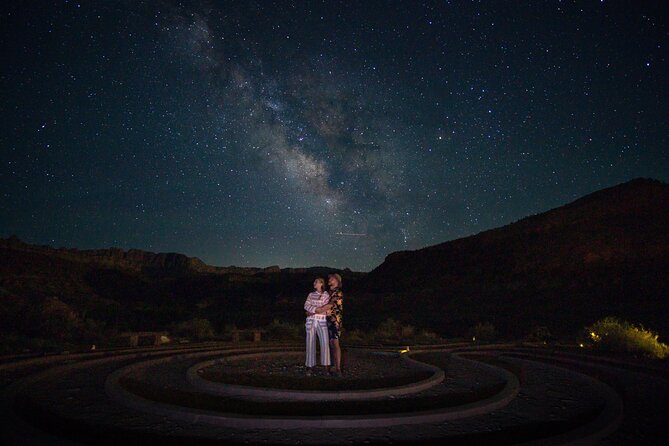
The first part is a short walk through a scale model of the solar system. It is a smart opening because it gives you a physical sense of the huge distances between planets before you begin looking upward.
This is not a strenuous outing. The route is on flat ground, according to the practical details provided, but you should be able to stand for about 30 minutes. The activity is not recommended for anyone who cannot comfortably remain standing that long.
The model also helps families. Younger visitors can grasp the order of the planets more easily when they are moving from one point to the next, while adults get a useful reset from the familiar but often confusing picture of our solar system. The guide then connects that simple model to the actual night sky.
If you already know basic astronomy, this introduction may feel familiar. Still, it gives the evening a clear structure rather than dropping you straight into a field of stars with no context.
Settling into a Yogibo lounger
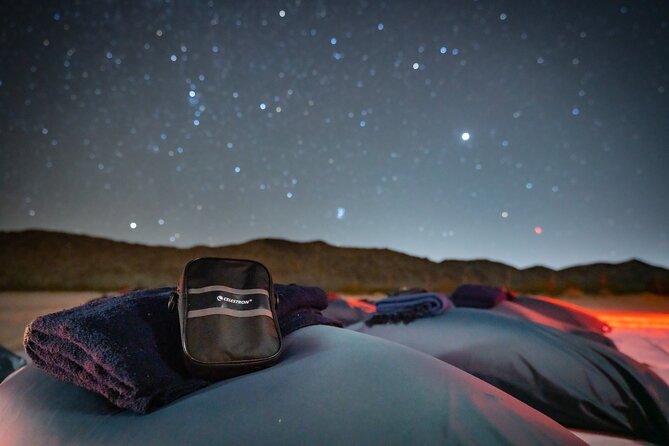
After the opening walk, each person gets a Yogibo lounger. These large beanbag-style seats conform to your body and remove much of the neck strain that comes from lying on the ground or craning upward in a regular chair.
This is one of the experience’s best practical touches. Stargazing requires patience. You may spend several minutes waiting for your turn at a telescope or listening while the guide explains a constellation. A comfortable seat makes that waiting part pleasant instead of tiring.
Blankets are provided, and several parties also received hand warmers. Hot chocolate, coffee, and tea are available from a hot beverage station. Some evenings have included chocolate or small snacks as well, though the listed inclusions specifically guarantee the drinks, blankets, and seating.
Still, do not treat the blankets as a substitute for proper clothing. The desert can feel mild in the afternoon and sharply cold after sunset. A jacket is the bare minimum. In winter, add warm layers, closed shoes, and anything else you use for sitting outdoors at night.
There is no restroom listed for the activity. Plan accordingly before you arrive, especially if you are traveling with children or expect cold drinks and hot chocolate to catch up with you.
Learning the constellations under dark skies
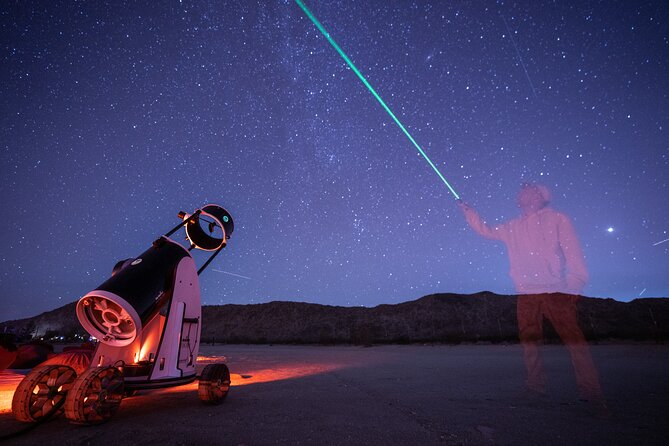
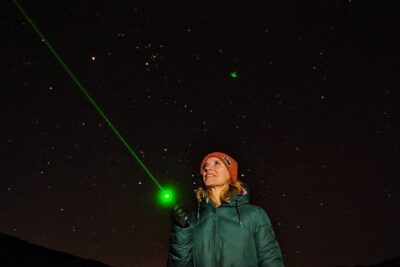
The main program lasts about two hours and uses laser pointers to connect what you see overhead with the stories and patterns behind the constellations. This is where the guides make the experience accessible to people who do not usually know Orion from Andromeda.
Matt has been praised for encouraging questions and explaining difficult ideas in a friendly way. Devon has been especially effective with mixed-age groups, using humor and stories to keep both adults and children involved. Amanda and Ben have also led evenings praised for clear explanations and strong command of the subject.
The program is not only about naming stars. It covers planets, constellations, galaxies, nebulae, and clusters, along with the larger question of where Earth fits in the universe. The best part is the conversation. You can ask questions as the evening develops instead of simply listening to a fixed script.
That said, every guide has a different style, and the exact objects visible will change with the date, season, moon, and clouds. A night in one month will not be a copy of a night later in the year. That variation is part of the appeal, but it also means you should not book expecting a specific planet or galaxy unless the operator confirms it.
Same dark sky, a different way to spend it:
- Griffith Observatory Hike: Guided Tour through Griffith Park
★ 5.0 · 1,020 reviews - Los Angeles: Hollywood Night Tour with Griffith Observatory
★ 4.2 · 531 reviews - Miami: Frost Museum of Science and Planetarium Entry Ticket
★ 4.5 · 429 reviews - Griffith Observatory Insider Tour
★ 4.5 · 306 reviews
Telescopes, astro-binoculars, and close views
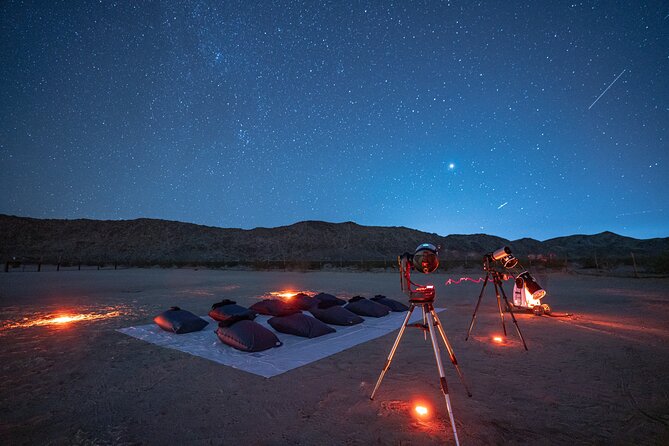
The viewing equipment is a major reason the $200 price can make sense. The experience includes state-of-the-art telescopes and astro-binoculars, with multiple telescopes sometimes set on different stars, nebulae, or other objects.
A single telescope can create a bottleneck. Here, the setup has been described as using more than half a dozen telescopes on some evenings, which gives the group more chances to see different parts of the sky. The exact number and targets can vary, so think of that figure as an example rather than a promise.
Astro-binoculars are useful between telescope turns. They give you a wider view and help bridge the gap between simply looking at the sky and viewing a magnified object. For children, the combination of digital and optical telescopes can be helpful because digital displays are often easier to see than a small eyepiece.
The telescope portion is also where the dark location pays off. From Palm Springs or another bright town, you may see some stars, but light pollution washes out many of the fainter ones. At this site, the difference can be striking. The sky feels fuller, and objects that are hard to pick out in town become much easier to locate.
Do keep the word close in perspective. You are not physically approaching a galaxy or nebula. You are seeing it through optical equipment, and the view may look different from the polished photographs associated with space science. The reward is seeing real celestial objects with your own eyes, guided by someone who can explain what you are looking at.
Why the dark-sky setting matters
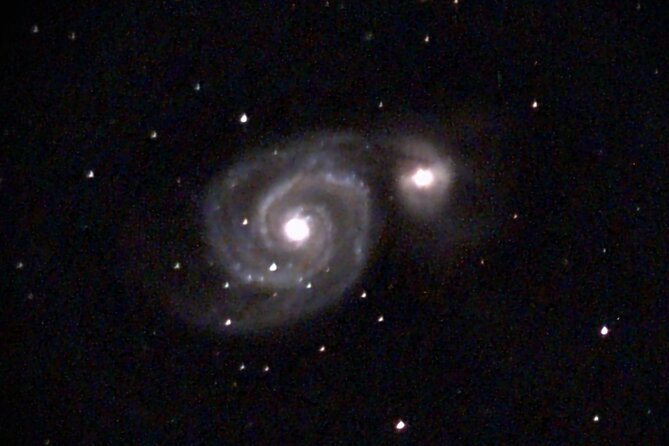
Joshua Tree is internationally recognized for its dark skies, and that is the foundation of the experience. Darkness is not just a pretty backdrop. It determines how many stars you can see, how clearly constellations take shape, and how much detail a telescope can reveal.
This is also why the location sits away from the main urban glow. You give up convenience and phone service in exchange for a darker sky. I consider that a fair trade for this particular activity, but it means you should not plan it like a quick attraction near a hotel.
On especially clear nights, you might see a shooting star or a dramatic moonrise. A moon rising over the mountains is not guaranteed, and it occurs during the tour hours only a few nights each month. If the moon is bright, it can add a beautiful focal point, but it can also make some faint objects harder to see.
The best experience depends on a mix of clear weather, low cloud cover, and the night’s moon phase. The guides can explain the sky well, but they cannot control what appears above the horizon.
Cold weather and the art of staying comfortable
Nearly every practical warning comes back to temperature. A family on a clear night found the experience unforgettable but urged people to dress warmly. Another evening ended early when clouds moved in, and a different group found that the cold distracted from the program.
The provided blankets, Yogibo seats, hot drinks, and hand warmers make a real difference. They show that the operator understands the basic problem with desert stargazing: sitting still outdoors after dark is colder than many people expect.
I would dress as if the evening were colder than the forecast suggests. Bring a warm coat, extra layers, and comfortable shoes. You will get more from the explanations and telescope views if you are not thinking about your fingers and toes.
The setup is gentle enough for many ages and does not involve strenuous hiking. Still, the ability to stand for roughly 30 minutes matters, and the outdoor setting may not suit anyone who struggles with cold or has limited mobility. Service animals are allowed.
Is $200 per person good value?
At $200 each, this is a premium evening. You are paying for an astronomer-led program, specialized equipment, a small maximum group of 18 people, and a comfort setup that includes seating, blankets, astro-binoculars, and hot drinks.
I would not recommend the price to someone who simply wants to lie outside and look at stars for a few minutes. You can do that in many dark areas with a blanket and patience. The value here comes from the guidance, the equipment, the explanations, and the chance to view specific objects through powerful telescopes.
For families, the price can add up quickly. The educational structure and comfortable seating help justify it, especially if your children are curious about space, but parents should decide if a two-hour astronomy program suits their attention span and bedtime.
For couples, solo visitors, small groups, and astronomy fans, the cost is easier to defend. The setting is special, the evening has a clear program, and the guides make the subject approachable. Company groups can also use it as a shared activity, though the value depends on how much the group enjoys science and outdoor time.
A full refund or rescheduling option when weather prevents the activity also reduces some of the financial risk. The company is not responsible for unrelated costs, so do not build expensive nonrefundable plans around the assumption that the sky will cooperate.
Weather, clouds, and changing plans
Stargazing is one of the few tours where a cancellation can be the right decision. Clouds can block the stars, rain can make the equipment unusable, and poor conditions can turn a promising evening into a cold wait.
The operator may make a final call close to the activity time. One delayed start worked well because the team stayed in contact and waited for better conditions. Another cloud-covered evening ended early, but the party received a full refund and planned to return.
You should keep some flexibility around the booking. If clear skies are essential to your plans, avoid scheduling this on the final night of a tightly packed trip. The company may try to reschedule or issue a 100 percent refund, but you are responsible for costs outside the tour.
You can cancel up to 24 hours ahead for a full refund. That policy helps if your plans change before the weather becomes the main concern.
Who will enjoy this most?
I would choose this experience for:
- Families who want astronomy explained in a lively, understandable way
- Couples seeking a quiet evening with a memorable setting
- Solo visitors who enjoy asking questions and learning at their own pace
- Friends who want something different from hiking and daytime park visits
- Work groups looking for a shared activity with a clear theme
- Anyone who has never looked through a serious telescope
It is less suitable if you dislike cold weather, cannot stand for about 30 minutes, need an on-site restroom, or want guaranteed views of a particular object. It also may not be the right choice for a tightly timed itinerary because weather can force a later start, early finish, or rescheduled date.
Should you book the Joshua Tree stargazing tour?
Book it if you want more than a dark sky and a blanket. The combination of a solar-system introduction, friendly astronomy instruction, multiple viewing tools, comfortable loungers, and hot drinks gives the night real substance.
The strongest case for booking is a clear forecast and genuine interest in the sky. Wear warmer clothes than you think you need, download your directions, arrive while there is still some light, and leave room in your schedule for weather changes.
Skip it if the $200 price feels high for an outdoor activity, or if you are hoping for guaranteed photographs and specific celestial targets. Professional photos may be sent afterward, but you may need to provide an email address directly, particularly when booking through a third party.
For the right person, this is a memorable Joshua Tree evening. You are not only looking upward. You are learning how to look.
FAQ
Where does the stargazing tour begin?
It begins at 54490 Skyline Ranch Road, Yucca Valley, California 92284.
Is transportation included?
No. You must provide your own transportation to and from the meeting point.
How long does the experience last?
The astronomy program lasts approximately two hours, not counting any personal travel time to the meeting point.
What is included in the price?
The experience includes an astronomer, telescopes, astro-binoculars, Yogibo loungers, blankets, and a hot beverage station with coffee, tea, and hot chocolate.
Is there a restroom at the meeting point?
A restroom is not included with the activity.
How many people can join the tour?
The maximum group size is 18 people.
What happens if the weather is bad?
The operator will try to reschedule the experience or provide a 100 percent refund if the weather prevents the activity. The operator is not responsible for outside expenses.
Can I cancel before the tour?
Yes. You can cancel up to 24 hours in advance for a full refund.
Is the experience suitable for people with limited mobility?
The activity is not recommended for anyone who cannot stand for about 30 minutes. The walking portions are described as taking place on flat ground, and service animals are allowed.
Just added around the USA
- Stargazing and Milky Way Portrait in Capitol Reef National Park★ 4.5 · 13 reviews
- Temecula Wine Country Stargazing Tour★ 5.0 · 2 reviews
- Astronomy and Stargazing Tour in Utah★ 5.0 · 8 reviews
- Private Stargazing – Sequoia National Park★ 4.5 · 14 reviews
- Sunset Sedona Sacred Places -gourmet picnic dinner and stargazing★ 5.0 · 12 reviews
- Sedona Night Hike and Stargazing★ 5.0 · 7 reviews
- Stargazing Tour with Telescopes and Video Astronomy in Sedona★ 5.0 · 40 reviews
- PRIVATE Sedona Jeep Tour 4X4 Stargazing Tour at Night★ 4.5 · 11 reviews
Stargazing Tours, compared.
Dubai Red Dunes ATV, Camels, Stargazing & 5* BBQ Al Khayma Camp
Read our review →
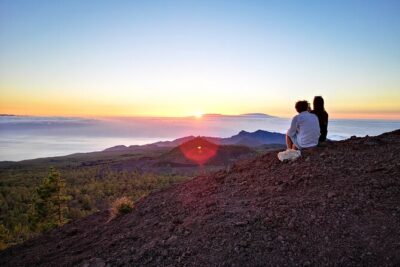
Teide National Park Sunset & Stargazing with Dinner (Star Safari)
Read our review →
Sunset Camel Trek, Al Khayma Camp, Stargazing & BBQ
Read our review →
Overnight Safari, Dinner, Stargazing & Al Khayma Camp
Read our review →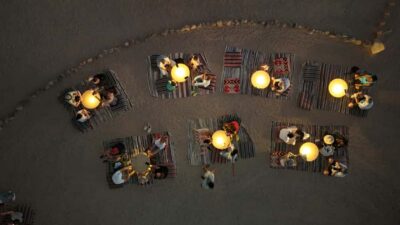
Dubai Overnight Desert Safari, BBQ & Stargazing at Al Khayma Camp
Read our review →Browse the lists this tour appears in