
Review · TENERIFE
Tenerife: Mount Teide Observatory Astronomical Tour
Stars look different from a volcano. This eight-hour Mount Teide tour combines a guided observatory visit, sunset, and night-time stargazing at one of the world’s top three places for viewing the sky. I like the rare chance to see working solar equipment in the afternoon, then use powerful telescopes after dark. I also like the small-group format and the strong astronomy focus, with guides such as Lucas and Micaela praised for making technical subjects easy to follow.
The main drawback is the cold. Tenerife may be warm at your hotel, but Mount Teide can be windy and around 7°C near the cable-car station. You must wear long trousers, closed-toe shoes, a long-sleeved shirt, and warm clothing, or you may not be allowed to join.
Key points to know before booking
- Two kinds of astronomy in one day: See solar research in the afternoon, then study stars and planets after sunset.
- The guides make the difference: Lucas, Micaela, and other astronomy staff are praised for clear explanations and an easygoing manner.
- Expect real mountain cold: Warm layers are essential, even when the coast is enjoying summer temperatures.
- The sky is the star: Clear conditions can reveal a striking number of stars, shooting stars, and even a comet.
- Small-group transport saves effort: Pickup is available from selected hotels in north Tenerife by minibus.
- Bad weather changes the program: You may receive a virtual sky presentation or visit two nocturnal telescopes instead of one.
Why this Teide tour is different
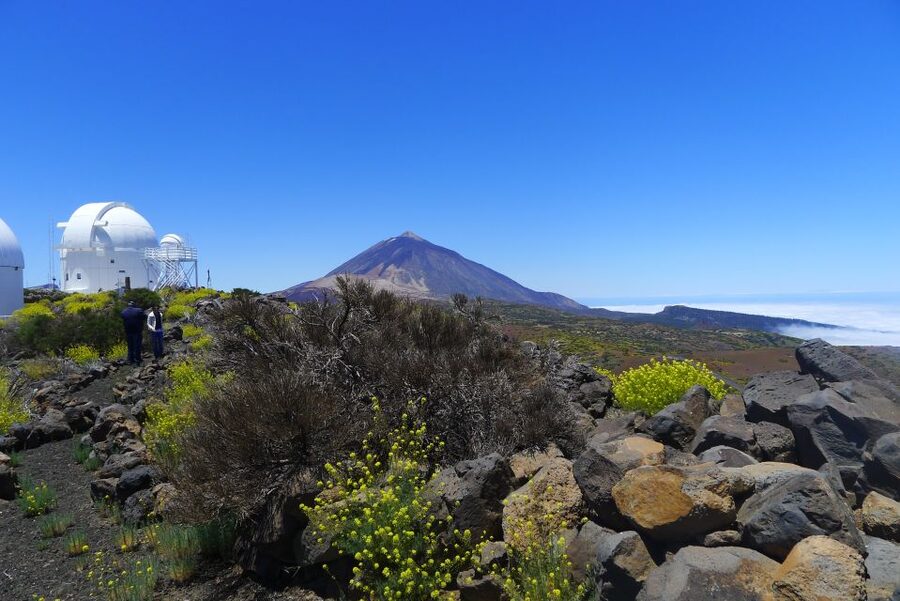
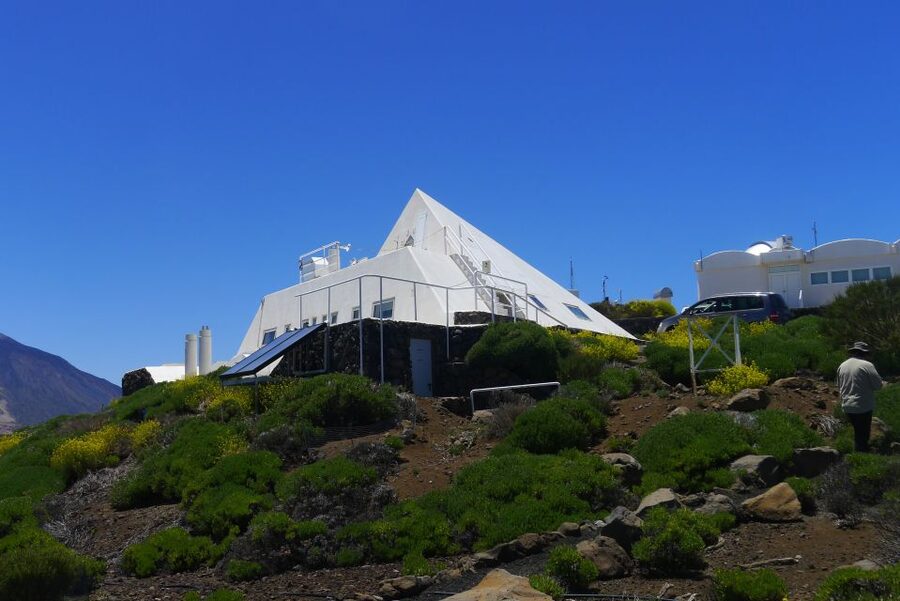
Many Mount Teide outings focus on volcano views, cable-car scenery, or a sunset stop. This one is built around astronomy. You spend the afternoon at Teide Observatory, described as the world’s largest solar observatory, then stay on the mountain for an evening under the stars.
That combination gives the day a good rhythm. The observatory explains how scientists study the Sun and other objects. The sunset adds a visual pause. Night viewing then turns the sky into the main event.
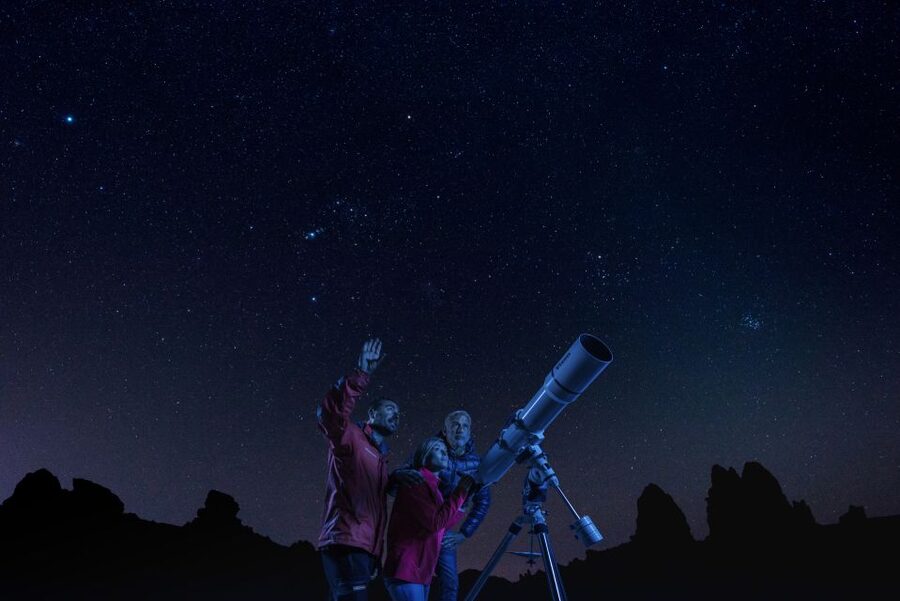
I especially like that the tour is not just a drive to a dark viewpoint followed by a quick look through one telescope. A guide introduces the constellations with the unaided eye, explains what you are seeing, and uses long-range equipment to bring distant objects closer.
The tour costs $121 per person. That is not a cheap sightseeing bus ride, but it covers small-group transportation, a guide, entry to the observatory, and astronomical observation with a long-range telescope. For someone who would otherwise need to arrange transport up the mountain and find a separate astronomy program, the price can make sense.
The value depends on your interest. If you mainly want a Mount Teide sunset, a shorter sightseeing trip may suit you better. If you want solar science, telescopes, and a guided explanation of the night sky, this is one of the more focused choices available in Tenerife.
More Observatory Visits in Tenerife:
- Tenerife: Mount Teide Observatory Guided Tour
★ 4.6 · 818 reviews - Astronomic Small-Group Tour on Tenerife Teide Observatory
★ 4.0 · 34 reviews - Skip the Line: Teide Observatory Entrance Ticket
★ 3.0 · 33 reviews
The minibus ride into Teide National Park
Pickup is available from selected hotels in north Tenerife, including Parque San Antonio, GF Noelia, Hotel Magec, Hotel Concordia, Tucán, Coral Teide Mar, Riu Garoé, CC La Cúpula, and Kiosko Paragüitas. The exact pickup time changes with the season because the evening schedule must match sunset.
Transport is provided for small groups. That matters on a long eight-hour outing. You avoid driving unfamiliar mountain roads after dark, and the guide can add information during the journey. One especially scenic route described by a past participant went up the west coast, with views toward the cliffs of Los Gigantes.
The trip can also take time because several hotel pickups may be needed. One person suggested that a central meeting point could reduce the journey. I would keep this in mind if you dislike long collection rounds, though the small minibus remains more personal than a large coach.
The drive is part of the experience, not just a transfer. One guide added explanations about Tenerife’s natural surroundings along the way. Still, bring patience. With transport, observatory time, sunset, and stargazing all included, this is a full afternoon and evening rather than a quick excursion.
Inside the world’s largest solar observatory
The observatory visit is the tour’s strongest daytime feature. You receive a guided visit led by observatory staff, including professional astronomy guides. The focus is on solar observation and on how the telescopes help scientists study the Sun.
A typical visit includes a walk through the observatory area, explanations of telescope design and operation, and the chance to look inside a telescope. One account also described a presentation with images and visuals in the visitor center.
The most memorable detail may be seeing solar flares in real time. That gives the afternoon a direct connection to the Sun instead of leaving you with abstract diagrams. You are not only hearing about solar activity, you are watching it through scientific equipment.
Keep expectations sensible. The solar telescope used on the day may be smaller than the one shown in promotional photographs. That does not remove the value of the visit, but it is worth knowing if you expect a giant instrument at every stop.
The guides are a major part of this section. Lucas was praised for explaining how telescopes work and for answering questions. Micaela was described as professional and especially good for people with a serious interest in astronomy. The tour is available in Spanish and English, so check that your chosen language suits you when booking.
Sunset above Tenerife
After the observatory, the schedule includes a sunset from one of Teide’s volcanic viewpoints. This is a smart part of the day. You get to see the mountain in daylight before darkness removes most of the surrounding detail.
The sunset also marks the change from solar astronomy to night astronomy. The same high-altitude setting that gives you broad views during the day later helps create a darker sky for stargazing.
Bring your jacket before sunset, not after. Temperatures can drop sharply, and wind can make the mountain feel colder than the thermometer suggests. A report of 30°C at a hotel and only 7°C near the cable-car station is a useful warning. Tenerife’s beach weather tells you almost nothing about conditions on Teide.
There may be time for food around the cable-car base, but you should not rely on a fully stocked cafe. One past participant advised bringing food because supplies can be limited when the area is busy. Food and drinks are not included in the tour price.
More Stargazing Tours in Tenerife:
- Tenerife: Teide National Park Sunset & Stargazing Tour
★ 4.2 · 3,812 reviews - Tenerife: Sunset and Stargazing at Teide National Park
★ 4.7 · 2,826 reviews - Teide National Park Sunset & Stargazing with Dinner (Star Safari)
★ 5.0 · 2,601 reviews - Teide National Park: Sunset & Stargazing Safari with Dinner
★ 4.6 · 2,115 reviews
Learning the night sky without equipment
The night session begins with the unaided eye. This is important. A good astronomy outing should not turn the sky into a queue for a telescope. Your guide helps you identify constellations and prominent objects before the equipment comes out.
That basic orientation makes the later viewing more rewarding. You can connect the bright points above you with the stories and patterns the guide has explained. The tour may also cover how to navigate using the stars, the life cycle of a star, and how scientists identify elements in distant stars and planets.
This is where the tour seems to work best for both beginners and serious hobbyists. You do not need a technical background to follow the explanations, but there is enough substance to keep an astronomy enthusiast interested.
The strongest guide feedback centers on clarity and enthusiasm. Lucas was praised for explaining complex ideas in an easy way, while another guide was appreciated for answering plenty of questions. The astronomy staff are professional and willing to talk, rather than simply pointing a telescope and moving on.
One practical weakness is that the sequence of activities may not always be explained far enough in advance. If you like to know exactly what comes next, ask your guide during the day.
Telescopes, planets, and a changing sky
The tour includes astronomical observation with a long-range telescope. Depending on conditions and the evening setup, you may look at several different sights through large telescopes. One account described viewing six different targets through two telescopes, while the advertised program refers to observation through one long-range telescope.
That difference reflects an important point: the exact viewing plan can change. Astronomy depends on visibility, equipment, and the objects available in the sky that night. You might see the Moon, planets, star clusters, or other prominent objects, but no fixed list of targets is promised.
On a clear evening, the sky can be exceptional. One person saw a comet and shooting stars. Another described the stars as unlike anything they had seen before. Those moments cannot be guaranteed, but they show why the mountain setting matters.
The telescopes are not the whole show. You will spend time outdoors, looking up without magnification, listening to explanations, and waiting for your eyes to adjust. That makes the evening feel more like a guided science outing than a staged spectacle.
If clouds or poor visibility prevent proper stargazing, the guides use audio-visual equipment for a virtual tour of the night sky, constellations, and objects that might otherwise have been visible. This is a useful backup, though it cannot replace a clear sky.
What happens when conditions change
Weather has two possible effects on the program. If conditions prevent proper visibility through the solar telescopes, or if the weather threatens the tour, you may visit two nocturnal telescopes instead of one.
If the stars cannot be seen clearly, the guides use audio-visual material to explain the sky. This protects the educational part of the outing, but you should book with realistic expectations. No astronomy tour can promise a comet, perfect stars, or even a fully clear night.
The program’s flexibility is a strength, but the weather risk remains the central uncertainty. I would choose this experience when the observatory and astronomy lessons matter as much as the views. If your only goal is a perfect night sky, you are placing more weight on conditions you cannot control.
Clothing, food, and physical demands
The dress rules are strict. Bring:
- Warm clothing
- A long-sleeved shirt
- Long trousers
- Closed-toe shoes
- Comfortable clothing
Sandals, flip flops, shorts, short skirts, and sleeveless shirts are not allowed. Children must also carry a passport or ID card to confirm their age. People without the required clothing may be refused entry to the excursion.
This is not a place for light holiday clothes, even in July or August. Wear layers so you can adjust during the warmer drive and colder evening stops. Closed shoes also make sense on volcanic ground and during the observatory visit.
Food and drinks are not included. Bring something to eat and drink, particularly because the cafe near the cable-car base may not have much available. The long duration means a snack is not a minor extra.
The activity is not recommended for children under eight. It is also not suitable for people with mobility impairments. Anyone with a health condition should ask a doctor before undertaking the tour, since the mountain setting and cold may be demanding.
Who will get the most from the $121 price
I would recommend this tour first to adults, older children, and teenagers who genuinely enjoy asking why and how. The observatory visit gives the outing substance, and the night session rewards patience.
It also suits you if you want someone else to handle mountain transport. The small-group minibus, guide, observatory visit, sunset, and telescope session create a full day without separate bookings.
The price is harder to justify if you only want a scenic trip. You will spend many hours on the mountain, and some of that time is spent waiting, walking, or standing outside in the cold. People who dislike astronomy lectures may find the afternoon too specialized.
The score of 4.4 from 126 ratings suggests a strong overall experience, though it is not a promise of perfect weather or a fixed telescope program. The most praised features are consistent: friendly guides, clear explanations, beautiful stars, and a well-organized day.
Should you book the Mount Teide Observatory tour?
Book it if you want the scientific side of Teide as much as the scenery. The combination of solar observation, sunset, constellation guidance, and telescope viewing gives you more than a standard mountain outing.
Skip it if you want a short excursion, guaranteed clear skies, or a relaxed evening in warm clothes. The strict dress code and long duration require planning.
For the best chance of enjoying it, bring serious cold-weather layers, closed shoes, food, and an open mind about the exact objects you will see. With a clear sky, this can be one of Tenerife’s most memorable nights. With poor weather, the program still has useful science and visual teaching, but the magic depends on how much you value the explanation as well as the view.
FAQ
How long does the Mount Teide Observatory tour last?
The tour lasts eight hours, including transportation, the observatory visit, sunset, and night-time astronomy.
How much does the experience cost?
The listed price is $121 per person.
Is transportation included?
Yes. Transportation for small groups is included, with pickup available from selected hotels in north Tenerife.
Which languages are available?
The live tour guide service is available in Spanish and English.
What does the observatory visit include?
It includes a guided visit to Teide Observatory, with explanations of the solar observatory and its telescopes.
Is telescope stargazing included?
Yes. The experience includes astronomical observation using a long-range telescope.
What should I wear?
Wear warm clothing, a long-sleeved shirt, long trousers, and closed-toe shoes. Comfortable clothing is recommended.
Are sandals, shorts, or sleeveless shirts allowed?
No. Sandals, flip flops, shorts, short skirts, and sleeveless shirts are not allowed.
Can children join the tour?
Children under eight cannot join. Children who do participate must confirm their age with a passport or ID card.
What happens if the stars cannot be seen?
The guides may use audio-visual equipment to provide a virtual tour of the night sky. If conditions affect the solar telescope visit, the program may include two nocturnal telescopes instead of one.
Just added around Tenerife
- VIP Sunset & Stargazing experience★ 4.5 · 44 reviews
- Skip the Line: Teide Observatory Entrance Ticket★ 3.0 · 33 reviews
- Small Group Teide Stargazing Tour with Picnic at Sunset★ 5.0 · 3 reviews
- TEIDE NIGHT Astronomy Stargazing Bus Tour, Meal & Drinks included!★ 4.0 · 15 reviews
- Sunset and stargazing from Teide★ 3.5 · 51 reviews
- Tenerife Exclusive & Private Gastronomic, Sunset-Stargazing★ 5.0 · 3 reviews
- PRIVATE TOUR Teide National Park: Hiking and Stargazing★ 5.0 · 38 reviews
- Sunset & Stargazing Experience from Teide★ 4.0 · 31 reviews
Observatory Visits, compared.
Royal Observatory Greenwich & Prime Meridian Entrance Ticket
Read our review →
Griffith Observatory Hike: Guided Tour through Griffith Park
Read our review →
Royal Observatory Greenwich & Prime Meridian Entry Ticket London
Read our review →
Browse the lists this tour appears in