
Review · ITALY
Florence: Private Astronomical Tour of the Museo Galileo
Galileo’s telescope changed how we see the sky. This private 90-minute tour gives you a focused introduction to Florence’s Museo Galileo, with access to original instruments, celestial globes, astrolabes, clocks, thermometers, and scientific tools collected by generations of Medici and Lorraine rulers. I especially like the chance to see Galileo’s original telescopes and the useful historical background supplied by a private guide.
I also like the small private format, which lets you ask questions and set the pace more easily than you can with a large group. The main consideration is that this tour may favor history, art, and cultural context over technical science. If you want detailed explanations of how every device works, you may need extra time with the museum’s app and videos after the guided visit.
Key points to know before booking
- Galileo’s actual instruments: See original telescopes connected with his astronomical work, along with historic scientific equipment.
- A 90-minute private visit: The short format is efficient, but science fans may want more time afterward to study the displays.
- Space, time, and temperature: Explore how earlier scientists measured the heavens, hours, heat, and distance.
- Medici scientific collections: Learn how Cosimo I de’ Medici and later rulers built one of the world’s important collections of scientific instruments.
- Useful for families: Antique devices, optical experiments, and old-fashioned scientific games can keep children interested.
- Practical access details: Meet inside the City Florence Tours office, exchange your voucher at the ticket desk, and arrive 15 minutes early.
Why the Museo Galileo belongs on your Florence list
Florence is full of paintings, chapels, and Renaissance sculpture. The Museo Galileo offers a different way to understand the city. Here, Florence’s ruling families appear not only as patrons of painters but also as supporters of mathematics, astronomy, engineering, physics, and navigation.
The museum occupies the former Institute and Museum of the History of Science and holds instruments gathered over centuries. The collection began under Cosimo I de’ Medici in the 16th century. It grew after the founding of the Academy of Assay in 1657, then continued under Grand Duke Leopoldo and the Lorraine family.
That background matters. You are not simply looking at old gadgets in glass cases. You are seeing how power, curiosity, trade, navigation, military needs, and courtly ambition helped shape scientific study in Florence.
A private guide can connect those pieces quickly. Instead of wandering past an astrolabe without knowing what it did, you can learn how it helped measure the position of stars. Instead of treating a globe as decoration, you can see it as a working model of a changing world.
More Private Stargazing Tours in the world:
- Stargazing Experience at Cowan’s Private Observatory
★ 4.0 · 85 reviews - Private astronomy tour with sunset toast, picnic, and astrophotography
★ 4.8 · 83 reviews - Private Night Vintage Land Rover Desert Safari & Stargazing
★ 5.0 · 52 reviews
Entering the museum and meeting your guide
Your meeting point is the City Florence Tours office. Plan to arrive at least 15 minutes before the scheduled start. You must exchange your voucher at the ticket office before the tour begins, so do not cut this part close.
The experience includes fast-track admission through an express security check. That is useful in Florence, where time lost in ticket lines can eat into a carefully planned day. The tour does not include hotel pickup or drop-off, so you need to make your own way to the museum and office.
Once inside, your guide leads the private group through the collection. Headsets are included, which should make explanations easier to follow in the museum galleries. The tour is offered in English, Spanish, German, Italian, and French.
Because the group is private, you have more room to ask about the things that catch your eye. If you are traveling with children, this can be helpful. A guide can adjust the explanation when a young visitor is more interested in a strange-looking instrument than in a long account of Galileo’s career.
Galileo’s telescopes and the story of observation
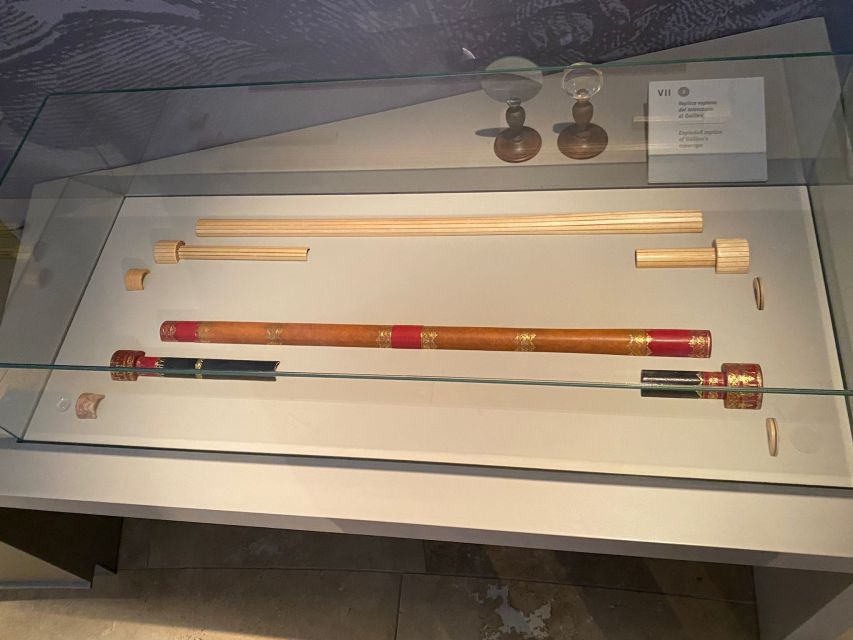
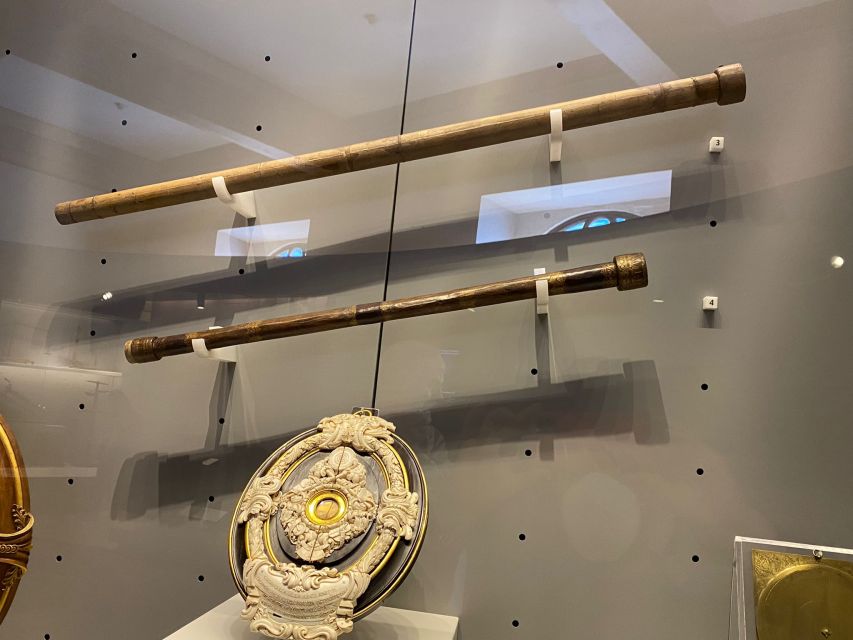
The emotional center of the visit is Galileo’s original telescope. It is a modest-looking object compared with a modern telescope, but its importance is enormous. Galileo used instruments like this to make observations that challenged the old picture of the universe.
The guide explains Galileo’s connection with the Medici court under Cosimo II de’ Medici. Galileo served at the court of the Grand Dukes of Florence, and his work was tied to the intellectual and political life of the city.
You will learn about his life, discoveries, and the setting in which he worked. That context is valuable because scientific breakthroughs do not happen in a vacuum. Galileo’s observations depended on improved lenses, patient measurement, mathematical reasoning, and patrons willing to support ambitious research.
Do not expect a modern planetarium show. This is a museum of original objects, and the display cases ask you to look closely. The telescope may not appear dramatic at first. Its meaning comes from understanding what Galileo saw through it and how those observations changed astronomy.
The short guided format has a trade-off. A guide can tell you why the telescope matters, but may not have time to explain every technical detail of its construction. If you are strongly interested in optics or astronomy, plan to spend additional time with the museum’s own materials after the private tour.
Astrolabes, armillary spheres, and measuring the sky
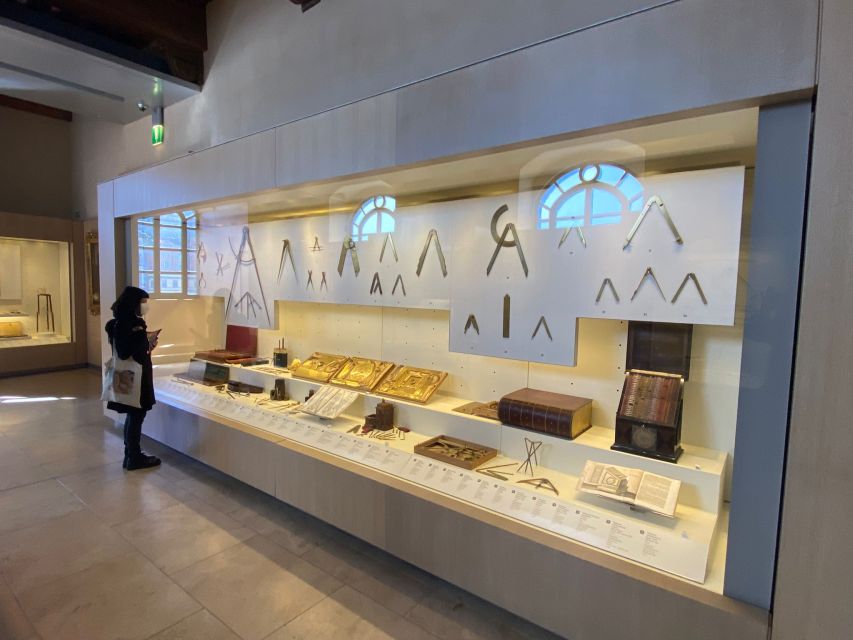
The museum’s astrolabes and celestial globes show how people represented and measured the heavens before modern electronic tools. These instruments combine mathematics, craft, and practical use in a way that makes them rewarding to examine closely.
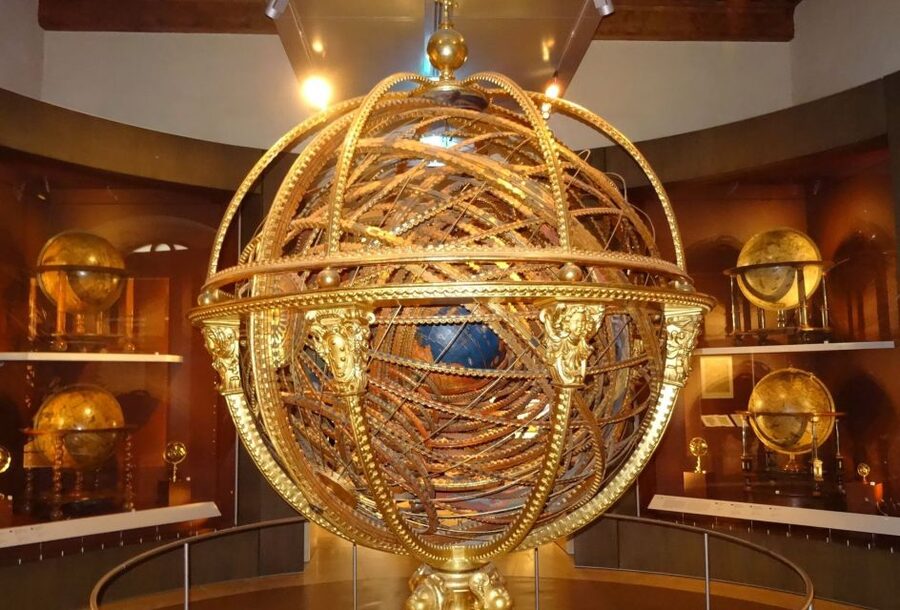
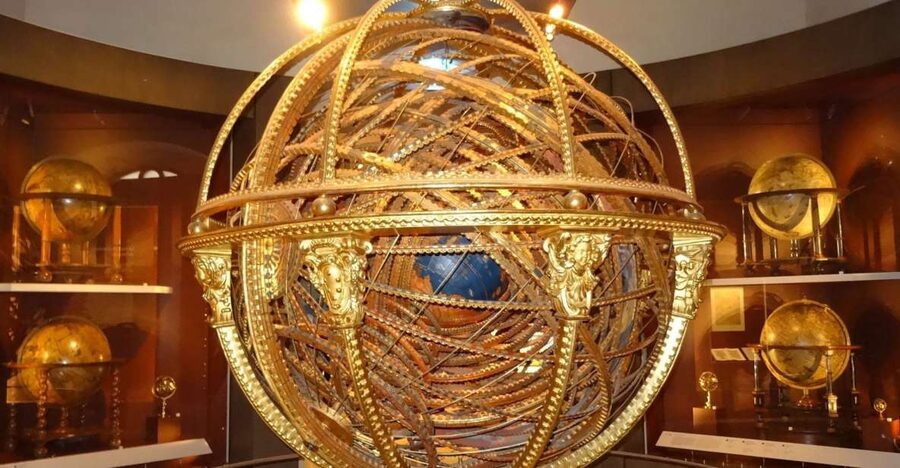
You will also see Santucci’s Armillary Sphere from 1593. An armillary sphere uses rings to represent celestial circles and the movement of heavenly bodies. It is both a scientific model and a finely made object, which helps explain why the museum feels connected to Florence’s artistic traditions as well as its scientific ones.
The original Nocturnal by Girolamo della Volpaia, dated 1568, is another unusual item. A nocturnal helped determine the time at night by using the position of stars. It is a good example of how astronomy once served ordinary needs such as keeping time, navigation, and planning journeys.
This is where the tour’s historical approach works well. The objects become easier to understand when you see them as answers to practical problems. How do you tell the hour after dark? How do you chart the stars? How do you represent the universe when maps and measurements are still changing?
You will encounter maps and globes as well. They show how ideas about space developed over time and how scientific measurement affected the way people pictured the world. I would pay close attention to the guide here, since the meaning of the objects is not always obvious from their appearance.
More Stargazing Tours in the world:
- Dubai Red Dunes ATV, Camels, Stargazing & 5* BBQ Al Khayma Camp
★ 5.0 · 21,620 reviews - Sharm El-Sheikh: Ultimate ATV Quad, Stargazing & BBQ Dinner
★ 4.7 · 4,084 reviews - Tenerife: Teide National Park Sunset & Stargazing Tour
★ 4.2 · 3,812 reviews - Tenerife: Sunset and Stargazing at Teide National Park
★ 4.7 · 2,826 reviews
Clocks, thermometers, and the measurement of daily life
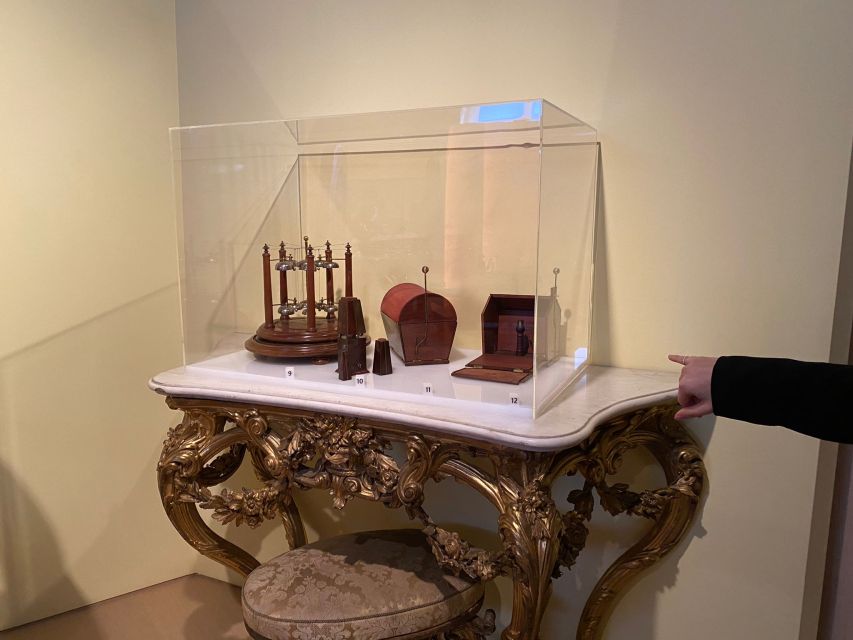
The museum also traces the history of timekeeping and temperature. Antique clocks, thermometers, and related instruments show how measurement gradually became part of everyday life and scientific work.
A clock is more than a decorative object in this setting. Reliable timekeeping affected astronomy, navigation, experiments, and the running of a court. The museum gives you a chance to see the physical tools behind those developments rather than only reading about them in a textbook.
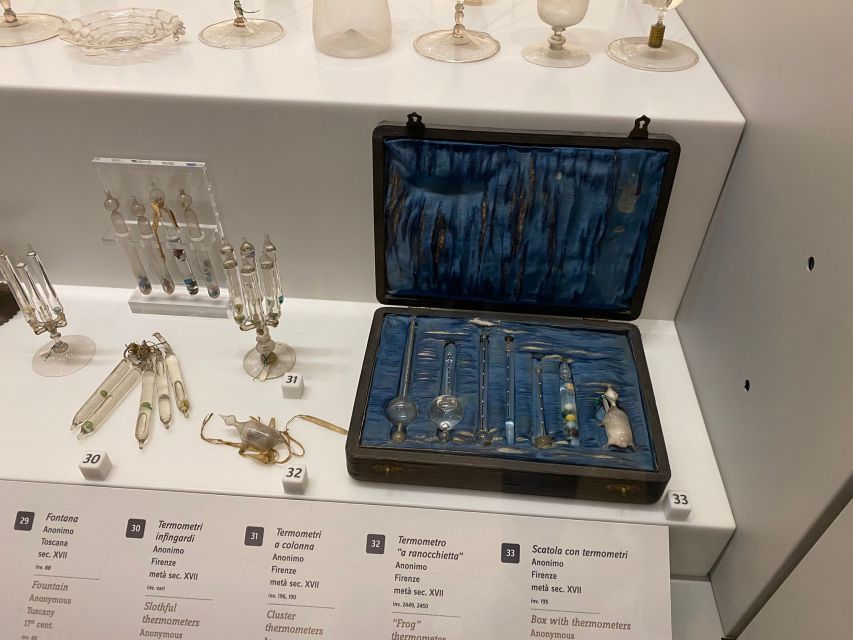
The thermometers are equally useful for understanding how scientists moved toward repeatable measurement. Earlier observers had to find ways to compare heat and cold using instruments that were less standardized than those in use today.
The guide can help you notice the design choices and explain what each instrument was intended to measure. Still, you should expect a brisk overview rather than a full technical lesson. The entire experience lasts only 1.5 hours, and the museum contains far more material than one short visit can cover.
If you want to examine every clock, globe, and thermometer, the private tour will feel like an introduction. That is not a flaw, but it is important to know what you are buying. You are paying for a focused route and interpretation, not unlimited time with each display.
Optics, electrostatics, and scientific games
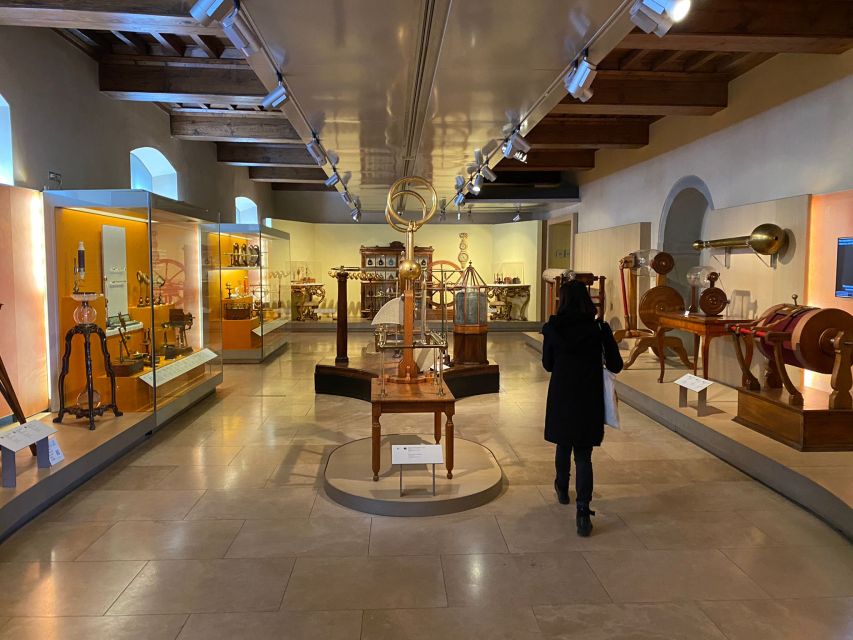
The collection extends beyond astronomy. Your guide may introduce you to optics and electrostatics, showing how scientists investigated light, vision, attraction, and electrical effects.
These sections can be a good change of pace, especially for families. Children may connect more easily with a demonstration or scientific game than with a long explanation of a 16th-century court. The museum also includes games from the past, offering a lighter look at how people entertained themselves and explored ideas.
I like this mix because it keeps the visit from becoming a single-note lecture about Galileo. You see astronomy within a broader story of physics, measurement, experimentation, and curiosity.
However, science enthusiasts should manage expectations. The guided visit may explain the historical and artistic setting more fully than the exact mechanics behind each device. The museum app contains detailed video explanations of the main displays, and using it after the tour can give you the working principles that a 90-minute visit cannot cover.
A practical plan is to use the guide for orientation, then return independently to the displays that interest you most. That approach gives you both the human story and the technical information.
What the private format is worth at $159
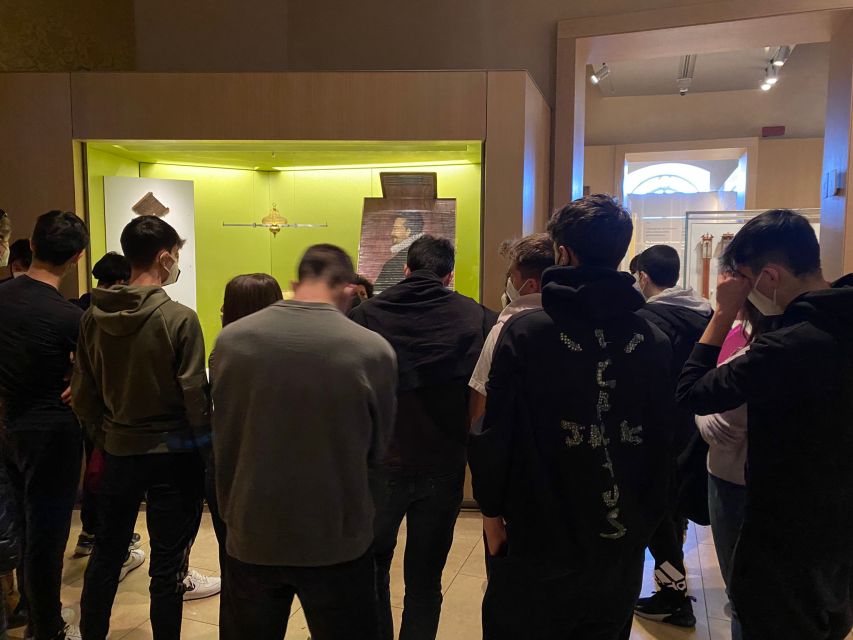
At $159 per person, this is not a low-cost museum visit. The price includes fast-track entrance, reservation fees, a professional guide, and headsets. The main value comes from private attention and saved time, not from the ticket alone.
I think the price makes the most sense for people who want a structured introduction and prefer to ask questions as they go. It can also work for a family or group with mixed interests. A guide can keep the visit moving while explaining why certain objects matter.
The value is less clear if you already know Galileo’s story or prefer to read labels and watch museum videos at your own pace. In that case, you may find the guided portion too brief for the cost, especially if you want a technical explanation of the instruments.
The private format also helps when you have only a short window in Florence. You can see important objects without spending hours trying to work out which displays deserve priority. For a first visit, that focus can be worth paying for.
The strongest use of this tour is as an introduction, followed by independent time in the museum. A science-focused visitor should not assume that 90 minutes with a guide will answer every question about optics, astronomy, and instrument design.
Who will enjoy this Florence museum tour
This experience suits adults who enjoy the history of science, Renaissance Florence, astronomy, or the connection between politics and research. It is also a good choice for families looking for something beyond churches and art museums.
Children can enjoy the old scientific games and unusual instruments, but the tour still includes historical explanation. Younger visitors may need help staying engaged during the sections on court life, measurement, and scientific development.
It is especially useful for first-time visitors to the Museo Galileo. You get a clear route through a large collection and a guide who can point out the most important pieces, including Galileo’s telescope, the astrolabes, the armillary sphere, and the Nocturnal.
The tour may disappoint visitors who want a laboratory-style experience. You should not expect a long series of hands-on demonstrations or a technical lecture about every device. Use the guided tour to understand the collection, then take advantage of the museum app if you want more science.
Comfortable shoes are sensible because you will be on your feet while exploring the museum. Photography is allowed without flash, and large bags or backpacks may need to go in the cloakroom.
The information provided about mobility needs is mixed. The museum is described as fully wheelchair accessible, but the activity is also marked as unsuitable for people with mobility impairments. If this affects your plans, confirm the current arrangements before paying.
Timing, languages, and cancellation flexibility
The tour lasts 1.5 hours, with starting times available according to the date you choose. That makes it easy to fit around a morning museum visit, an afternoon walk, or another Florence booking.
A private group can be more comfortable than a large scheduled tour, especially when you have specific questions. You will also receive a live guide in English, Spanish, German, Italian, or French.
Booking ahead is sensible during busy periods. The experience allows cancellation up to 24 hours before the start for a full refund, and you can reserve now while paying later. Those terms are useful when your Florence schedule is still shifting.
Remember that the price does not cover food, drinks, transportation, or hotel transfers. The meeting instructions are simple, but the voucher exchange means you should allow extra time before the official start.
Should you book the Museo Galileo tour?
Book it if you want to see Galileo’s original telescope, understand the Medici connection to science, and get a clear introduction to astrolabes, globes, clocks, thermometers, and early measuring tools. The private format is helpful when you value questions, a planned route, and historical context.
Think twice if your main goal is detailed scientific instruction. The guide can explain the importance of the objects, but the 90-minute schedule may not leave enough time for the museum’s videos and technical material. In that case, add independent time with the museum app.
For most first-time visitors with an interest in astronomy or Florence’s intellectual past, this is a worthwhile and unusual museum visit. Just see it for what it is: a focused guided introduction, not a complete study of Galileo’s instruments.
FAQ
How long does the Museo Galileo tour last?
The tour lasts 1.5 hours.
What is included in the price?
The price includes fast-track entrance tickets, reservation fees, a professional tour guide, and headsets.
What languages are available?
The live guide is available in English, Spanish, German, Italian, and French.
Is this a private tour?
Yes. The activity is arranged for a private group.
Where do I meet the guide?
Meet inside the City Florence Tours office. Arrive 15 minutes before the activity begins and exchange your voucher at the ticket office first.
Can I take photographs inside the museum?
Yes. Photography is allowed, but flash photography is not permitted because it can harm the artifacts.
Is the museum wheelchair accessible?
The museum is described as fully wheelchair accessible. However, the activity information also says it is not suitable for people with mobility impairments, so confirm the arrangements before booking if you have access concerns.
Can I cancel the tour?
Yes. You can cancel up to 24 hours before the activity for a full refund. The booking also offers a reserve-now, pay-later option.
Just added around the world
- ( canyon hurghada & stargazing )★ 4.9 · 16 reviews
- Vincentia: Jervis Bay Beach Stargazing with an Expert★ 4.9 · 19 reviews
- Twizel Stargazing Experience with a Guide (Carbon Positive)★ 4.7 · 26 reviews
- Twizel: Stargazing Tour with an Astronomer and Telescope★ 4.9 · 36 reviews
- Blue Mountains: Stargazing with a Telescope and Astronomer★ 4.4 · 21 reviews
- Star Safari Stargazing Experience, Martinborough★ 5.0 · 6 reviews
- Klein Karoo “High 5” Stargazing Experience in Oudtshoorn★ 5.0 · 7 reviews
- Private Stargazing at Star Safari near Martinborough★ 5.0 · 3 reviews
Private Stargazing Tours, compared.
Private Getty Center to Griffith Observatory Guided Tour
Read our review →
Sedona Dark Sky Sunset & Night Hike With a Private Guide
Read our review →
Stargazing Experience at Cowan’s Private Observatory
Read our review →Private astronomy tour with sunset toast, picnic, and astrophotography
Read our review →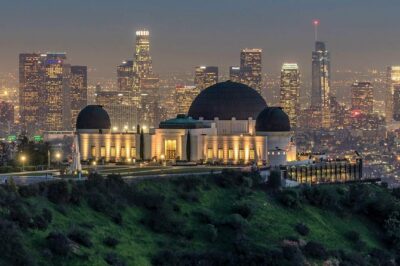

Private Night Vintage Land Rover Desert Safari & Stargazing
Read our review →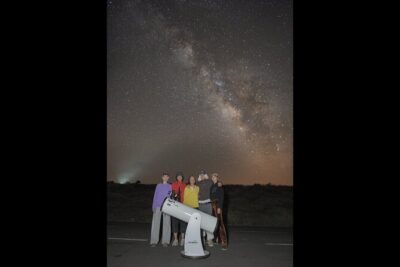
Stargazing Private Tour at Roque De Los Muchachos in La Palma
Read our review →
PRIVATE TOUR Teide National Park: Hiking and Stargazing
Read our review →Browse the lists this tour appears in