
Review · NEW ZEALAND
Star Safari Stargazing Experience, Martinborough
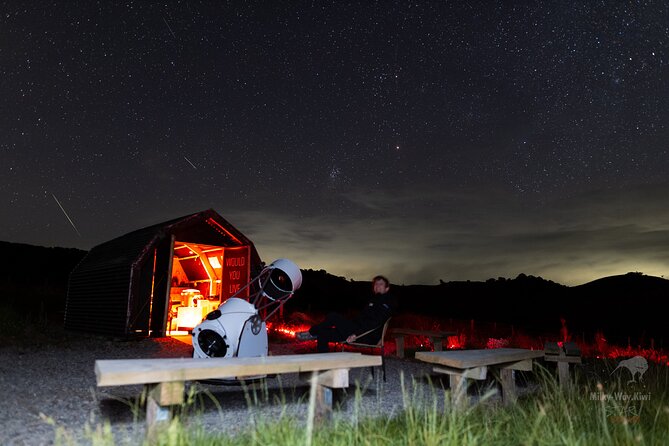
Look up, and New Zealand gets bigger. Star Safari pairs the dark skies of the Wairarapa with personal guidance from astrophysicist Sam and astrobiologist Hari. I like the small groups, the serious telescopes, and the fact that the evening still has a useful plan when clouds block the stars. The main catch is simple: this is an outdoor night activity, and clear skies are never guaranteed.
I also like that you are not expected to know your Orion from your elbow. Beginners get help finding their bearings, while experienced stargazers can bring an observing list. At $62.06 per person for about 90 minutes, the price feels fair for specialist instruction and access to several large telescopes, though the value depends on how much the weather allows you to see.
Five things to know before you book
- The Wairarapa sky is the main attraction: Star Safari operates near Martinborough, in an area known for very dark, clear skies.
- Sam and Hari lead the session: You get direct access to an astrophysicist and an astrobiologist, with plenty of time for questions.
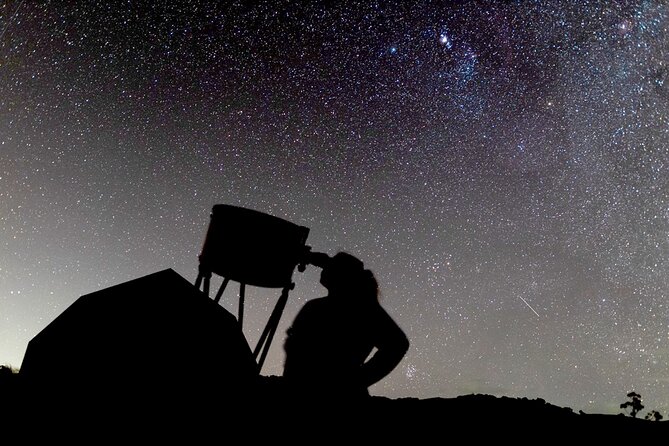
- Two 16-inch manual telescopes anchor the experience: The equipment is powerful, but the manual setup also lets you learn how objects are found.
- The group stays small: The maximum is 10 people, with three or four telescopes available during a clear-night session.
- Cloud does not end the evening: The backup includes planetarium software, virtual reality, and astrobiology-related rocks from New Zealand.
- Warm clothes are essential: The viewing area is outside, and the temperature can drop sharply after sunset.
Why Martinborough is a fine place for stargazing
Star Safari meets at VG48+C6 in Ponatahi, within the Wellington Region and close to Martinborough. The site is about 80 kilometres from Wellington Airport, making this a practical add-on if you are exploring the Wairarapa or planning a night away from the capital.
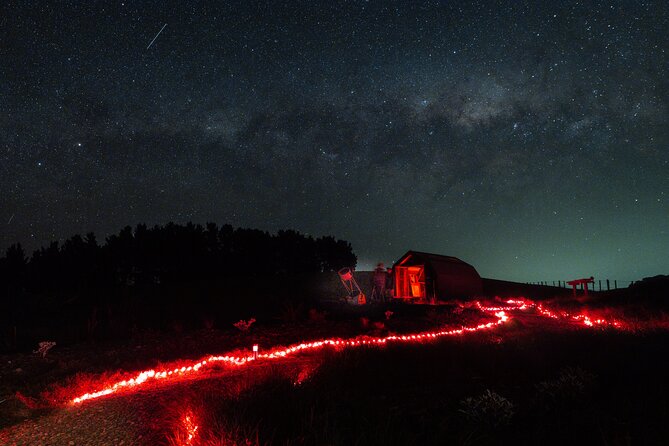
The reason to come here is the sky itself. The Wairarapa International Dark Sky Reserve is known for low light pollution and clear viewing conditions. That matters because city light can wash out faint stars, nebulae, and galaxies before you even put your eye to a telescope.
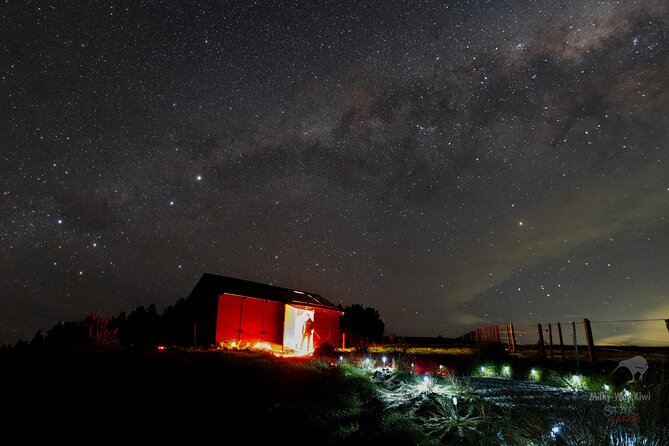
The darkness also changes the experience before the formal viewing begins. As daylight fades, the first bright objects appear. Then the Milky Way begins to show itself. You are not simply being handed a telescope and told to look. Sam and Hari help you understand what is above you and how to orient yourself among the stars.
That teaching element gives the evening lasting value. You may leave with more than a few striking images in your memory. You may also know how to begin reading the sky on your own.
More Stargazing Tours in New Zealand:
- Lake Tekapo: Alpine Stargazing Experience with a Guide
★ 4.5 · 626 reviews - Lake Tekapo: Stargazing Experience
★ 4.9 · 607 reviews - Chameleon Stargazing Shared Tour
★ 5.0 · 181 reviews
The first 30 minutes: arrival, warmth, and orientation
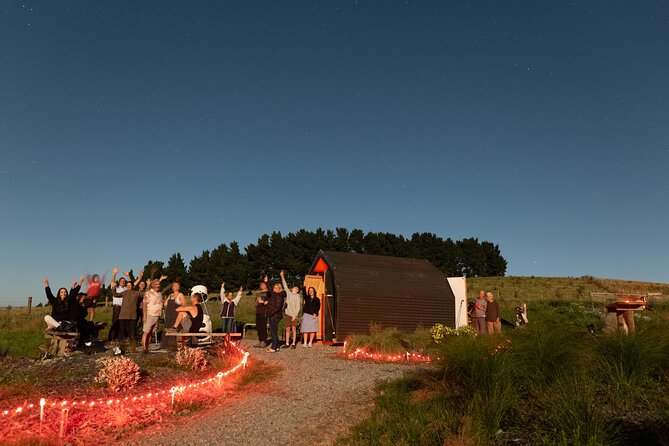
On arrival, you meet Sam and Hari before heading to the viewing area. The telescopes are about 25 metres from the reception area, inside the Moon Garden. You can pick up a blanket or jacket before walking out, but you should still arrive dressed for cold conditions.
The advice to dress as if you were going hiking is worth taking seriously. Wear warm layers and sturdy clothing. The experience lasts 60 to 90 minutes outside, and standing still while looking through a telescope can feel much colder than walking around town.
The evening is not designed as a rushed telescope queue. With a maximum of 10 people and three or four telescopes in use, you should get repeated turns at the eyepiece. That is a strong point for families and first-time stargazers, since you can ask for help instead of feeling hurried.
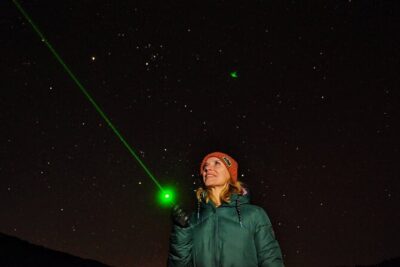
Sam and Hari are both licensed to operate a laser pointer. A laser-guided explanation can make a large difference when you are trying to connect individual points of light into a constellation or understand where a planet sits in relation to the wider sky.
The telescope session and the southern sky
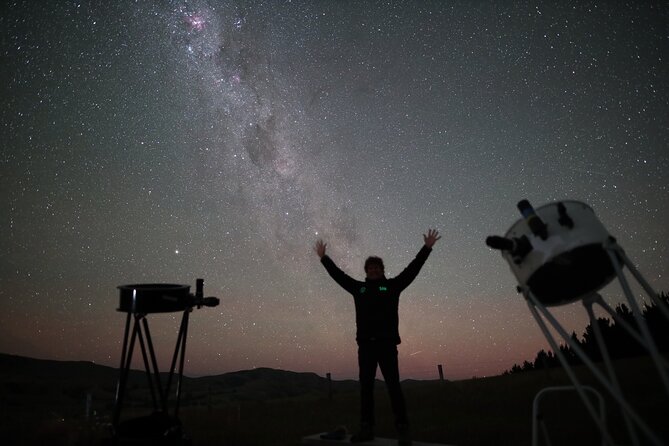
The clear-weather program runs for roughly 60 to 90 minutes. The exact viewing time depends on conditions and the evening’s pace, but the focus is the same: exploring objects visible in the southern sky.
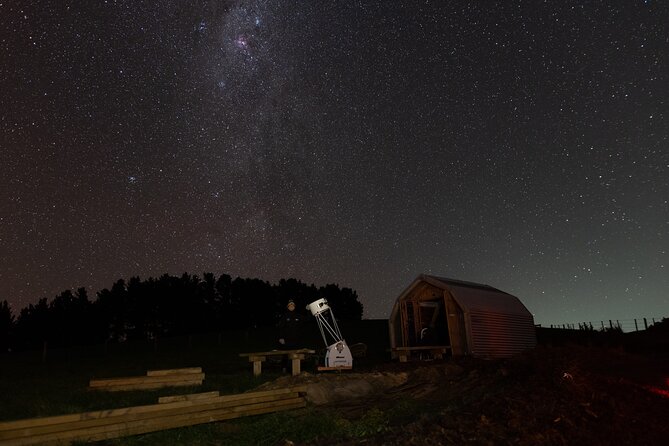
The two 16-inch telescopes are manual. That detail is important. Automated telescopes can locate objects quickly, but a manual telescope gives you a better sense of the work involved in finding them. You can learn how the sky is read rather than simply waiting for a machine to point in the right direction.
The equipment is suited to a wide range of targets. Depending on the night, you may look at planets, star clusters, nebulae, galaxies, and different colored stars. Saturn is a particular highlight when it is visible, since its rings and moons can turn a distant point of light into a clear, memorable object.
You may also see the Milky Way, a shooting star, satellites, or the International Space Station if timing and conditions cooperate. These sightings are never guaranteed, so think of them as welcome bonuses rather than promises.
Astronomy binoculars are also available. That gives you a different way to view the sky and helps show how much can be seen without the narrow field of a telescope.
One particularly appealing feature is the open question time. Sam, the astrophysicist, and Hari, the astrobiologist, do not just deliver a fixed talk and send you home. You can ask about what you are seeing, the search for life, planets, stars, or the mechanics of the night sky.
A personal lesson rather than a fixed lecture
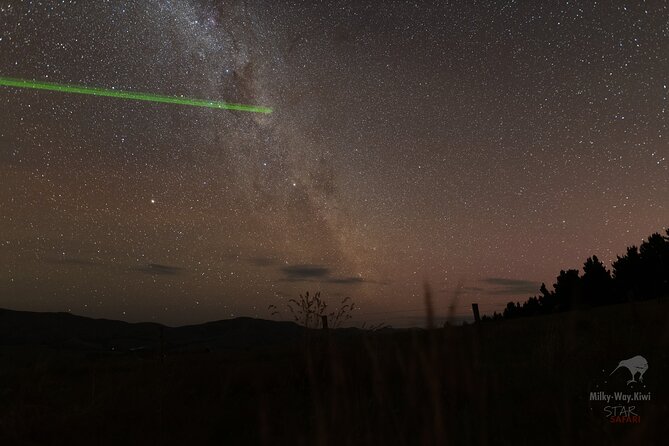
Star Safari is best understood as a small teaching session with telescopes, not as a passive show. Beginners can ask basic questions without needing prior astronomy knowledge. More experienced visitors can bring an observing list and request particular targets.
That flexibility helps explain the strong response to the experience. The most praised part is not just the equipment. It is the enthusiasm Sam and Hari bring to explaining space. Their shared interest makes the session feel personal rather than formal.
The guides use the sky in front of you as the lesson plan. On a clear evening, that may mean moving from a planet to a cluster, then to a nebula or distant galaxy. Each object gives you a reason to ask a new question.
For children, the format can work well because the evening combines real objects, movement between telescopes, and short bursts of explanation. Families have also appreciated that children were free in at least one booking arrangement. The supplied price is listed per person, so check the exact child pricing shown when you book.
Very young children may find the cold and the waiting between telescope turns difficult. The experience lasts around an hour and a half, and it takes place at night. A six-year-old may be fascinated, while a tired two-year-old may be happier with a shorter outing. That is not a fault in the program, but it is worth considering before booking a family group.
Same dark sky, a different way to spend it:
- Lake Tekapo: Mountaintop Stargazing at Mount John Summit
★ 4.5 · 176 reviews - Mount John Observatory Stargazing Experience, Tekapo
★ 4.5 · 160 reviews - Tekapo Star Gazing Tour – Soak in the Stars
★ 4.5 · 109 reviews - Silver River Stargazing Experience in Lake Tekapo
★ 4.5 · 106 reviews
What happens when clouds roll in
Weather is the main uncertainty. Stargazing requires suitable conditions, and the company can cancel for poor weather, offering another date or a full refund.
Star Safari also has a cloudy-weather program, which makes the booking less fragile than a simple outdoor telescope session. Instead of waiting for the sky to clear, you can use planetarium software to tour the Universe and explore the Solar System in virtual reality.
There is also a collection of rocks from around New Zealand connected to astrobiology and the search for life on Mars. This gives the indoor program a clear scientific focus. It is not merely a filler activity while everyone waits for better weather.
The virtual reality element may not suit every person. One account of the experience noted mild 3D sickness, so you should be aware that VR can cause discomfort for some people. If that happens, the astronomy explanations and rock collection still provide useful alternatives.
The cloudy program cannot fully replace a dark sky and a view through a 16-inch telescope. If your main goal is to see Saturn, the Milky Way, or faint deep-sky objects, you should choose your date with the forecast in mind. Still, the backup plan gives you a better chance of enjoying the evening even when nature does not cooperate.
The hot drink at the end
A complimentary hot drink is included, and it is more important than it may sound. After standing outside in the cold, hot chocolate or another warm drink gives the evening a comfortable finish.
The drink has become part of the experience’s tradition. It also creates a natural pause after the technical side of the session, when you can talk over what you have seen and warm up before leaving.
Do not treat this as a meal or a substitute for dinner. The activity is about 90 minutes, and you should plan your evening around it if you need a full meal. A warm drink is a pleasant extra, not a dining option.
Price, group size, and overall value
At $62.06 per person, Star Safari sits in a reasonable range for a specialist astronomy session. You are paying for access to a dark-sky site, two experienced science hosts, several telescopes, astronomy binoculars, a small group, and a weather backup.
The group limit of 10 is one of the strongest value points. A larger crowd would make telescope time less personal and questions harder to manage. With three or four telescopes, the setup should keep people moving and reduce long waits.
The price is easiest to justify if you value explanation as much as the view. If you only want a quick look through a telescope, the session may feel longer than necessary. If you want to understand what you are looking at, learn how to find objects, and ask detailed questions, the cost makes more sense.
The experience has a 4.8 rating from six submitted ratings, which suggests a strong early response, though the sample is small. The most consistent praise centers on the hosts, the clear explanations, the chance to see planets and clusters, and the ability to enjoy the session even under cloudy skies.
Who should book Star Safari
I would recommend this for:
- First-time stargazers who want clear guidance
- Couples looking for a quiet evening activity near Martinborough
- Families with children interested in space
- Amateur astronomers who want access to large manual telescopes
- Anyone staying in the Wairarapa who wants an evening beyond food and wine
- Visitors who enjoy science, questions, and hands-on learning
You should think twice if you dislike cold outdoor activities or want a guaranteed list of celestial sights. You should also be realistic about young children staying comfortable for 90 minutes at night.
The experience suits curious people best. You do not need to know the names of stars before you arrive, but you should want to learn.
Practical tips for a better night
Arrive ready for cold weather. Bring warm layers and dress as though you were heading out for a short hike. The reception area provides blankets or jackets, but your own warm clothing remains the safest plan.
Check the forecast close to the date. Poor weather may lead to a rescheduled session or a full refund, while partial cloud may mean you receive the indoor astronomy program instead.
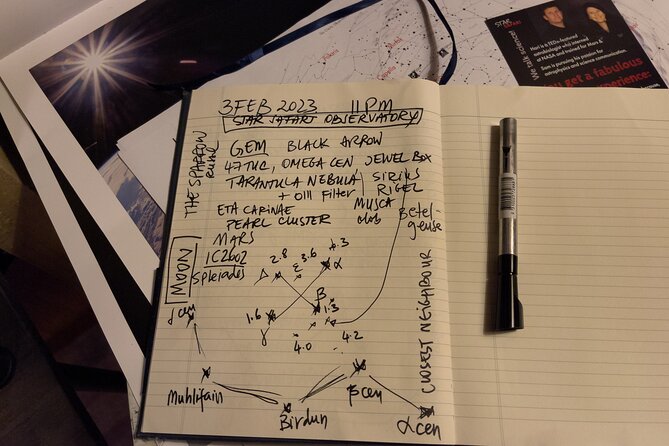
If you already know what you want to see, bring an observing list. Advanced stargazers can use the session to pursue specific targets, while beginners can simply ask Sam and Hari where to start.
Keep expectations flexible. A clear sky may bring Saturn, clusters, nebulae, galaxies, the Milky Way, or even the International Space Station. No single sight is promised, and astronomy always involves some patience.
Cancellation is free up to 24 hours before the start time for a full refund. Changes made within 24 hours are not accepted, and the cut-off uses local time.
Should you book Star Safari?
Yes, if you want more than a quick look at the stars. Star Safari offers a rare mix of a dark-sky setting, serious equipment, small groups, and direct access to two science specialists. The manual telescopes and open questions make the experience feel like a real introduction to astronomy, not a staged photo stop.
Book it with sensible expectations. The cold is real, clear skies are not guaranteed, and the virtual reality backup cannot provide the same feeling as seeing Saturn through a telescope. But the careful weather policy, indoor program, and warm drink soften those risks.
For an evening near Martinborough, this is a strong choice for curious adults, families with older children, and anyone who wants to understand the southern sky instead of simply pointing at it.
FAQ
Where does Star Safari meet?
The meeting point is VG48+C6 in Ponatahi, within the Wellington Region of New Zealand.
Where does the experience finish?
The activity ends back at the meeting point.
How long does Star Safari last?
The experience lasts about 1 hour and 30 minutes. The telescope portion may run for 60 to 90 minutes when conditions allow.
How many people can join?
The maximum group size is 10 people.
Who leads the experience?
The session is led by Sam, an astrophysicist, and Hari, an astrobiologist.
What happens if the weather is poor?
If the weather is unsuitable for stargazing, the experience moves to an e-astronomy program using planetarium software and virtual reality. If the company cancels because of poor weather, you can receive a different date or a full refund.
What equipment is available?
Star Safari has two 16-inch manual telescopes, three or four telescopes available during sessions, astronomy binoculars, and licensed laser pointers.
What might I see?
Depending on the conditions and the sky at the time, you might see the Milky Way, planets, galaxies, nebulae, star clusters, colored stars, shooting stars, satellites, or the International Space Station.
What should I wear?
Dress warmly and as if you were going hiking. The viewing area is outdoors, and it can become very cold at night.
Is a hot drink included?
Yes. A complimentary hot drink is provided.
Can I cancel for a refund?
You can cancel up to 24 hours before the start time for a full refund. Cancellations or changes made less than 24 hours before the start time are not accepted for a refund.
Just added around New Zealand
- Twizel Stargazing Experience with a Guide (Carbon Positive)★ 4.7 · 26 reviews
- Twizel: Stargazing Tour with an Astronomer and Telescope★ 4.9 · 36 reviews
- Private Stargazing at Star Safari near Martinborough★ 5.0 · 3 reviews
- Twizel Stargazing Experience with a Guide (Carbon Positive)★ 4.0 · 2 reviews
- Virtual Stargazing & Astronomy Experience in Lake Tekapo★ 3.0 · 2 reviews
- Lake Tekapo Ultimate Stargazing Experience★ 5.0 · 3 reviews
- Southern Skies Stargazing Tour in Dunedin★ 5.0 · 62 reviews
- Lake Tekapo Stargazing & Mount Cook 2-Day Tour from Christchurch★ 5.0 · 4 reviews
Stargazing Tours, compared.
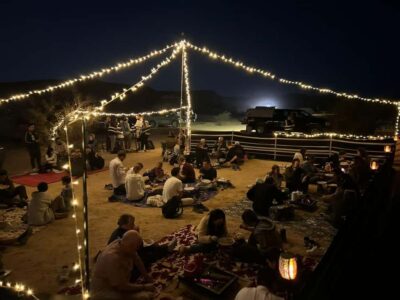
Dubai Red Dunes ATV, Camels, Stargazing & 5* BBQ Al Khayma Camp
Read our review →
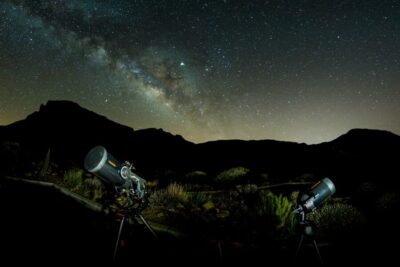
Teide National Park Sunset & Stargazing with Dinner (Star Safari)
Read our review →
Sunset Camel Trek, Al Khayma Camp, Stargazing & BBQ
Read our review →
Overnight Safari, Dinner, Stargazing & Al Khayma Camp
Read our review →
Dubai Overnight Desert Safari, BBQ & Stargazing at Al Khayma Camp
Read our review →Browse the lists this tour appears in