Review · FRANCE
Astronomy Evening “Rando Astro Fréjus”
Stars look different when someone shows you where to look. This small astronomy evening near Fréjus offers a clear, friendly introduction to the night sky, with a quality telescope trained on Saturn’s rings, Jupiter’s moons, and the Moon’s craters. I like the mix of simple explanations and real observation, and I also like that the group is limited to 10 people. The main drawback is the short 90-minute format, which means the evening cannot cover every object in the sky.
I especially like the family-friendly approach. Children can enjoy the sight of planets through the telescope while adults get a useful introduction to constellations, the solar system, and the zodiac. You should also prepare for the setting: bring warm clothing and water, since you will be outside and the activity does not provide drinks.
Key points before you book
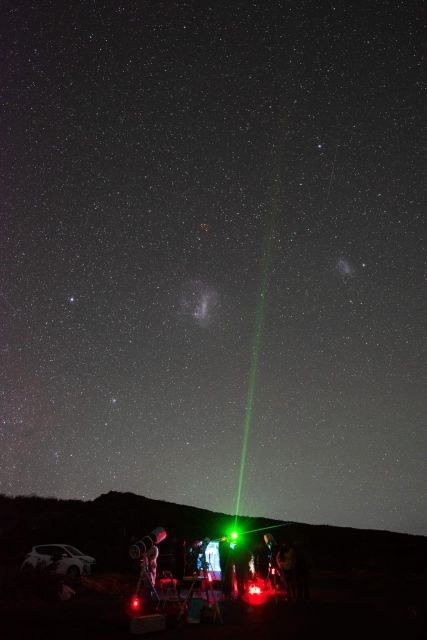
- Saturn through a telescope: The rings are one of the most memorable sights in beginner astronomy, and this is a featured stop.
- Jupiter and its moons: You get a chance to see Jupiter along with some of the moons orbiting it.
- A five-minute walk to the observation spot: There is no shop or dedicated storefront. You meet in front of La Table d’Elena restaurant by the beach, then walk to the activity area.
- A small group of no more than 10: This gives the session a more personal feel and makes it easier to follow the astronomer’s explanations.
- French, Italian, and English instruction: The activity works for an international group, with explanations available in three languages.
- A practical family activity: The subject is educational, but the tone is meant to be simple and fun rather than technical.
A quiet night between Cannes and Saint-Tropez
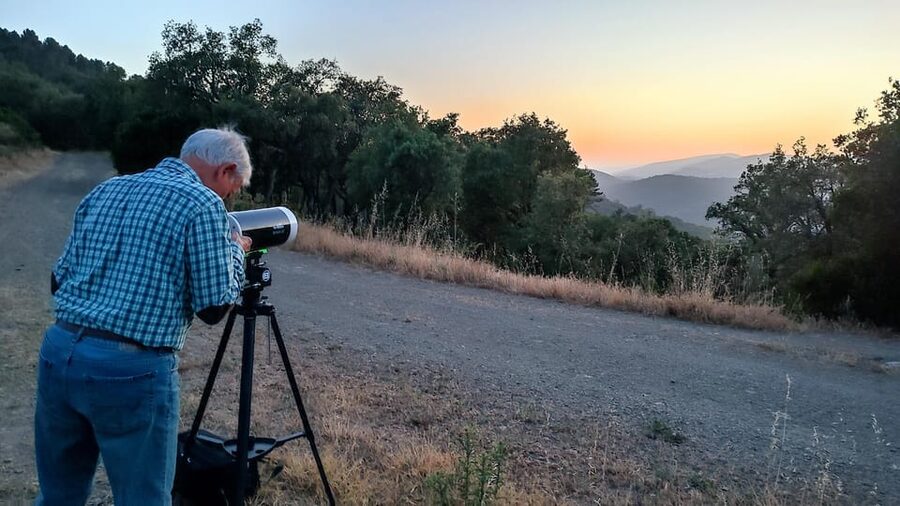
Rando Astro Fréjus takes place in Provence, between Cannes and Saint-Tropez. That location makes it an easy evening add-on if you are staying along this part of the French Riviera and want something different from restaurants, beaches, and old-town walks.
The appeal is not just the telescope. You are given a way to make sense of what you see overhead. A field of stars can be beautiful, but it can also feel like a jumble of bright points. An astronomer can point out constellations, explain the solar system, and connect the zodiac signs to the night sky.
That basic orientation matters, especially if you are new to astronomy. You do not need to know the names of stars or understand complicated science before arriving. The activity is designed for everybody, including children, parents, solo visitors, and friends looking for an unusual evening.
The setting also gives the session a change of pace. You are not sitting in a classroom or looking at a screen. You are outside, looking up, then checking the telescope as the group moves from one object to another. That simple rhythm makes the activity feel more like a shared discovery than a formal lesson.
More Stargazing Tours in the world:
- Dubai Red Dunes ATV, Camels, Stargazing & 5* BBQ Al Khayma Camp
★ 5.0 · 21,620 reviews - Sharm El-Sheikh: Ultimate ATV Quad, Stargazing & BBQ Dinner
★ 4.7 · 4,084 reviews - Tenerife: Teide National Park Sunset & Stargazing Tour
★ 4.2 · 3,812 reviews
Meeting at La Table d’Elena, then walking five minutes
The meeting point is in front of the beach and restaurant La Table d’Elena. This detail is important because there is no shop or office with a large sign where you can check in. You should go directly to the stated meeting place and allow enough time to identify the group.
From there, the activity includes a walk of about five minutes. The walk is short, but comfortable shoes still make sense. You are not meeting at the exact observation point, so do not expect to arrive at the beach and immediately find the telescope.
The activity ends back at the same meeting point. That makes the evening easier to plan. You do not need to arrange a second pickup location or work out where the session finishes.
Starting times vary, so you need to check availability for the date you want. The 90-minute duration is fixed, but the exact time is not stated in advance. This matters in summer, when the sky must be dark enough for the best viewing.
What happens during the 90-minute session
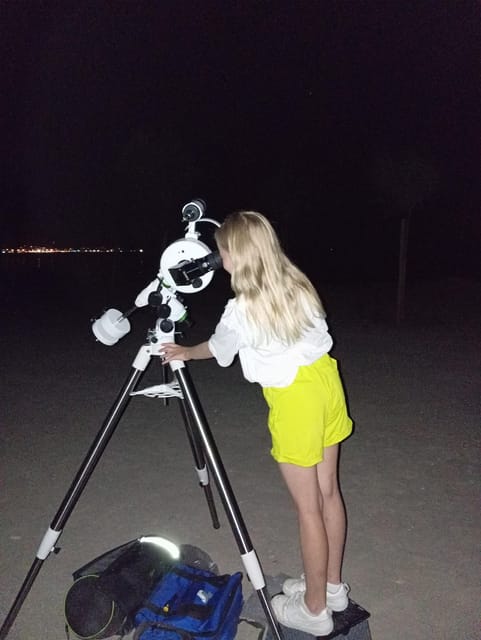
The activity lasts 1.5 hours and is led by a friendly astronomer. The available information names Edmond as a guide associated with the experience, and the tone appears to be relaxed and approachable rather than stiff or academic.
A typical session begins with an introduction to what is visible above you. The astronomer explains constellations, the solar system, and the zodiac, helping you connect the broad ideas to the actual sky. This first part is useful for children because it gives them a simple framework before they look through the telescope.
The telescope then becomes the focus. The exact order can change, since observation depends on what is visible on the night and when the activity begins. Still, the featured objects include Saturn, Jupiter, the Moon, and other points of interest.
The telescope is supplied as part of the activity, so you do not need to bring astronomy equipment. The value comes from having someone direct the viewing and explain what appears in front of you. You can simply look at the object, ask questions, and then return to the sky with a better sense of what you are seeing.
This is not presented as an advanced astronomy course. That is a benefit for most people, but serious hobby astronomers may find the content introductory. The session is built to be accessible, educational, and enjoyable for a mixed group.
Saturn’s rings are the headline sight
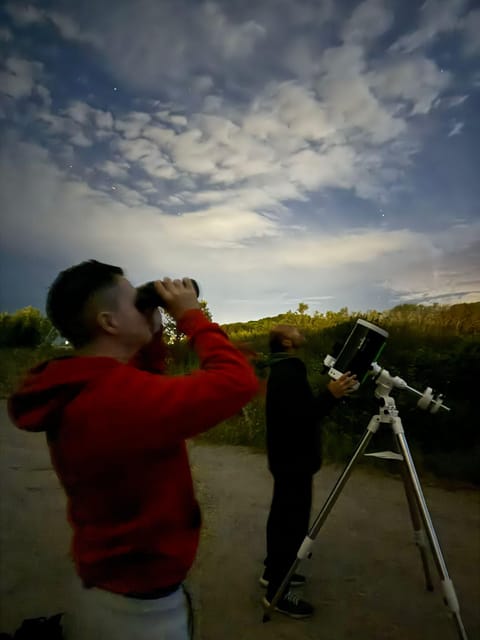
Saturn is the object most likely to make this evening memorable. Seeing the planet’s rings through a telescope gives you a direct connection to something you may have only seen in photographs.
The experience specifically highlights Saturn’s rings, so they are a central part of the session rather than a minor possibility. For children, the sight can turn an abstract lesson about planets into something immediate. For adults, it is a reminder that the points in the night sky are actual worlds, not just lights.
The telescope view will be small compared with an image from a space agency or planetarium screen. That is part of the charm. You are looking through equipment at a real object in the sky, not at a polished digital display.
The timing of Saturn’s visibility can change, so you should treat the listed object as a featured target rather than an absolute guarantee for every date. The activity description identifies it as a key highlight, but astronomical viewing always depends on what is above the horizon at the scheduled time.
Same dark sky, a different way to spend it:
- Tenerife: Sunset and Stargazing at Teide National Park
★ 4.7 · 2,826 reviews - Teide National Park Sunset & Stargazing with Dinner (Star Safari)
★ 5.0 · 2,601 reviews - Dubai: Sunset Camel Trek, Al Khayma Camp, Stargazing & BBQ
★ 4.8 · 2,588 reviews - Dubai: Overnight Safari, Dinner, Stargazing & Al Khayma Camp
★ 4.8 · 2,562 reviews
Jupiter, the Moon, and a closer look at familiar sights
Jupiter provides a different kind of view. Instead of focusing on rings, the telescope can show Jupiter with its moons. The sight of smaller bodies near a large planet gives you a quick lesson in motion and scale.
The Moon is another main target, with attention to its craters. Many people have seen the Moon countless times, but telescope magnification changes how familiar it feels. Craters become visible features rather than a vague pattern of light and shade.
These objects help keep the session interesting for a group with different interests. One person may be excited by Saturn, another by Jupiter, and a child may simply want to see the Moon up close. The astronomer can move between them and explain what makes each one different.
The phrase and many others leaves room for additional objects, but no fixed list is provided. You should not expect a guaranteed catalog of planets, stars, and galaxies. The useful point is that the session has several main targets, with the night sky itself shaping the final program.
Simple explanations make this work for families
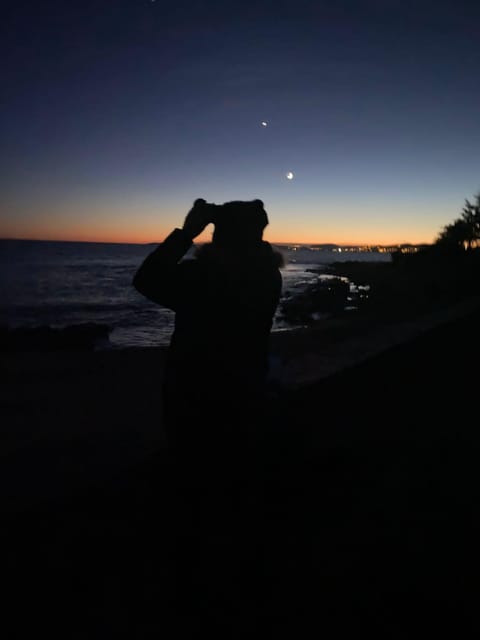
The strongest feature of this experience is its plain, welcoming approach. The activity is suitable for children and adults, and the explanations are intended to be easy to follow. One particularly positive impression is that the session is educational without losing its sense of fun.
That balance can be hard to get right. Too much technical language loses children and beginners. Too little information turns telescope viewing into a quick look with no context. Here, the combination of constellations, the solar system, zodiac signs, and telescope observation gives the evening enough substance without making it feel like homework.
If you have children, prepare them for a slower activity than a theme-park attraction. There may be moments of waiting while the telescope is adjusted or another person is viewing. The small group helps, since there are no more than 10 participants, but patience is still part of the evening.
Solo visitors can also fit in easily. The shared subject gives people a natural reason to talk, while the small group keeps the experience from feeling anonymous. Friends and couples get an unusual alternative to another meal or bar visit.
What the small group changes
A maximum of 10 participants is a useful limit for telescope viewing. Everyone needs a turn, and a smaller group gives the astronomer more room to answer questions or repeat an explanation.
A large group can make astronomy feel like a queue. You look briefly, move aside, and hear only fragments of the talk. With 10 people or fewer, you have a better chance to follow the full explanation and see the main objects without feeling rushed at every step.
The small size does not guarantee perfect viewing conditions. The telescope still has to be shared, and the session is only 90 minutes. If several objects are visible and the guide takes questions, the schedule may feel full.
Still, for a first astronomy experience, the group size is a clear advantage. I would choose this format over a large public demonstration if your priority is asking questions and understanding what you see.
The practical value of the $33 price
At $33 per person, the activity is priced as an accessible evening experience rather than a major excursion. The necessary astronomy equipment is included, and you receive 90 minutes with an astronomer in a group capped at 10 people.
The value depends on what you want. If you already own a telescope and regularly follow the night sky, you may not need a guided introduction. If you are visiting Provence without astronomy equipment, the price covers access to a quality telescope, instruction, and a planned observation session.
I think the price makes the most sense for families and first-time observers. You avoid buying or carrying equipment, and children get a focused activity with real educational value. The experience is also long enough to feel like a proper evening plan, but short enough to combine with dinner or another local activity.
The main limitation is that weather and visibility can affect what you see. The supplied details do not describe a weather guarantee or a backup program, so you should keep that uncertainty in mind before treating this as the only important plan for the evening.
What to bring for a more comfortable evening
The provider specifically advises you to bring warm clothing and water. Take that advice seriously. Even in Provence, an outdoor evening can feel cool once you are standing still and looking through a telescope.
Wear layers rather than relying on daytime temperatures. A warm top is particularly useful because telescope viewing is not a fast-moving activity. You may spend part of the session standing outside while the astronomer explains a constellation or prepares the next object.
Bring your own drink, since water is not included. There is no need for specialized astronomy gear. The activity provides the required equipment, so your preparation is mainly about comfort and arriving at the correct meeting point.
The five-minute walk from La Table d’Elena should not require serious hiking equipment. Comfortable footwear is enough for most people, though the activity information does not describe the exact walking surface.
Language and accessibility
The astronomer can provide the activity in French, Italian, or English. This is helpful in a region where groups may include people from several countries. If you are booking with family or friends who have different language preferences, check the available language details when reserving.
The experience is listed as wheelchair accessible. The information does not give a detailed description of the route or observation surface, so you may want to confirm any specific mobility needs before booking. The short walk is part of the access route, and the meeting point is outdoors by the beach and restaurant.
No special astronomy background is required. The activity is described as available for everybody, which makes it suitable for beginners rather than only for people already familiar with the night sky.
Booking flexibility and timing
You can cancel up to 24 hours in advance for a full refund. You can also reserve now and pay later, which is useful if your Provence schedule may change.
Those policies matter for an outdoor activity. You may want to wait until you know your evening plans, especially since the exact starting time depends on availability. The 90-minute length makes it easier to fit into a holiday schedule, but you still need to check the time before committing to dinner or transportation afterward.
The experience has an overall rating of 4.5 from 10 reviews, with especially strong praise for the friendly teaching style, the unusual subject, and the way children respond to it. One family-focused comment describes the children as loving the activity, while another highlights clear explanations that work for adults and children. Edmond is also singled out as a strong guide who showed the group several appealing sights.
Is Rando Astro Fréjus worth booking?
I would book this astronomy evening if you want a calm, unusual activity that gives children and adults something to share. It is especially suitable if you are curious about Saturn, Jupiter, the Moon, and constellations but do not own a telescope or know where to begin.
The small group, three-language instruction, included equipment, and simple teaching style give the $33 price fair value. The experience is not designed for advanced astronomers, and the 90-minute schedule cannot promise every planet or star. You also need to dress warmly, carry water, and accept that outdoor viewing depends on the night sky.
Book it if you want a friendly introduction and a chance to see famous solar system objects through a telescope. Skip it if you need a long technical session, a fixed list of guaranteed targets, or an indoor activity. For families, curious beginners, and anyone seeking a different evening between Cannes and Saint-Tropez, it is a sensible choice.
FAQ
Where does the astronomy evening meet?
You meet in front of La Table d’Elena restaurant by the beach. There is no shop or dedicated storefront.
How far is the walk to the observation point?
After meeting at La Table d’Elena, you walk for about five minutes to the activity location.
Where does the activity finish?
The experience ends back at the same meeting point.
How long does the astronomy session last?
The activity lasts 1.5 hours, or 90 minutes. Starting times vary, so you need to check availability.
What can I see through the telescope?
The featured sights include Saturn’s rings, Jupiter with its moons, and craters on the Moon. The session may also include other visible objects.
What languages are available?
Instruction is available in French, Italian, and English.
Is the activity suitable for children and wheelchair users?
The activity is described as suitable for everybody, including children, and it is listed as wheelchair accessible.
Just added around the world
- ( canyon hurghada & stargazing )★ 4.9 · 16 reviews
- Vincentia: Jervis Bay Beach Stargazing with an Expert★ 4.9 · 19 reviews
- Twizel Stargazing Experience with a Guide (Carbon Positive)★ 4.7 · 26 reviews
- Twizel: Stargazing Tour with an Astronomer and Telescope★ 4.9 · 36 reviews
- Blue Mountains: Stargazing with a Telescope and Astronomer★ 4.4 · 21 reviews
- Star Safari Stargazing Experience, Martinborough★ 5.0 · 6 reviews
- Klein Karoo “High 5” Stargazing Experience in Oudtshoorn★ 5.0 · 7 reviews
- Private Stargazing at Star Safari near Martinborough★ 5.0 · 3 reviews
Stargazing Tours, compared.
Dubai Red Dunes ATV, Camels, Stargazing & 5* BBQ Al Khayma Camp
Read our review →
Teide National Park Sunset & Stargazing with Dinner (Star Safari)
Read our review →
Sunset Camel Trek, Al Khayma Camp, Stargazing & BBQ
Read our review →
Overnight Safari, Dinner, Stargazing & Al Khayma Camp
Read our review →