Review · QUINTANA ROO, MEXICO
Holbox: Bioluminescence by Kayak and Stargazing.
The sea lights up when you move.
This two-hour night trip takes you by golf cart and kayak toward the sandbanks near Punta Mosquito, where plankton can glow blue, green, or white in the water. I like the small price of $49 and the way the trip combines kayaking, a sandbar walk, swimming, and stargazing without taking up an entire evening. I also like that guides explain the natural process instead of treating the glow as a simple photo stop. The main drawback is that bioluminescence is never guaranteed, and the short outing may feel expensive if the water shows little light.
The best conditions usually come from May through September, when visibility may reach 70 to 100 percent intensity. During the rest of the year, it can range from 30 to 80 percent. That is a useful promise because it is honest: nature controls the show, not the tour company.
Key points to know before you book
- The glow comes from movement: Your paddle strokes, footsteps, and swimming can stir the microorganisms and create blue-green sparks.
- The kayak trip is short: You paddle about 15 to 20 minutes each way, with roughly 50 minutes set aside for the guided kayak and sandbank visit.
- You do not enter Punta Mosquito itself: The protected area is closed to access, so the tour stops near the sandbanks.
- May through September offers the best odds: The glow may be weaker at other times, and clear skies also affect the stargazing.
- Victor has earned special praise: His friendly guiding and explanation of the phenomenon are a strong part of the experience.
- Bring swimwear and insect repellent: You may walk into the sea and swim, while mosquitoes are a practical concern around Holbox at night.
From your hotel to the edge of Holbox
Pickup is scheduled about 15 minutes before the agreed starting time. Wait at your hotel reception or outside where a taxi can stop. The driver arrives with your details, but you should confirm that you are boarding for the bioluminescence outing.
The ride uses an all-terrain vehicle or golf cart and takes about 15 minutes. Road conditions can cause a short delay, so do not wander off to buy snacks or visit an ATM before pickup. The taxi will not wait more than five minutes, and the instructions specifically warn that road conditions sometimes slow the vehicle.
The transport arrangement deserves a close look. The trip description says you are collected from your hotel and later returned by golf cart, but the included services describe a one-way hotel transfer. Ask the operator exactly what is covered for your hotel and return journey before you set out. One recent group of five also had two people ride in the trailer area of a golf cart. That was fine for them, but it would not suit everyone, especially if you want a more sheltered or comfortable ride.
You are taken to the last hotel in the hotel zone, Las Nubes. This is the practical launch point because it gets you away from more of Holbox’s artificial light. From there, the kayaks are prepared and the guide gives basic instructions.
More Kayak and Canoe Trips in the world:
- Pula: Night Tour in Transparent Kayak with Stargazing
★ 4.3 · 111 reviews - Nighttime LED Stargazing Clear Kayak Tour on Lake Tahoe
★ 5.0 · 4 reviews
Launching from Las Nubes into the dark
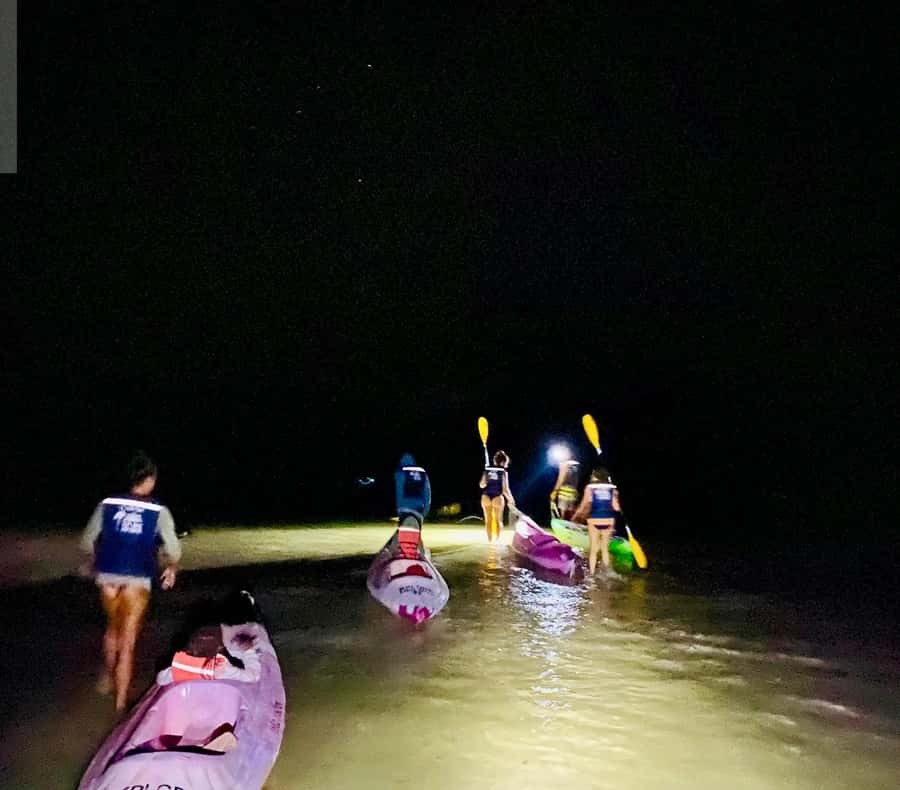
You can choose a single or double kayak. If you are new to kayaking, a double boat may make the first part easier, since you and another person can share the paddling. The water is described as calm, but nighttime paddling still calls for attention. You need to follow the guide and stay within the group’s navigation limits.
The first paddle lasts around 15 to 20 minutes. This is not a long kayaking workout. It is just enough time to leave the brighter shoreline behind and let your eyes adjust to the dark.
The darkness is part of the point. Light from hotels and streets can wash out both stars and faint plankton. The guide moves as far from light pollution as allowed while respecting the protected area and the navigation boundary. You will not paddle all the way to Punta Mosquito itself. Access there is prohibited, so the experience takes place near the sandbanks.
Depending on the season and water conditions, you may begin seeing tiny flashes during the paddle. Each stroke can disturb the water and create a brief spark. This is one of the best parts of kayaking here because you are not only watching the phenomenon from a boat. You are helping reveal it.
Walking on a sandbar where footprints glow
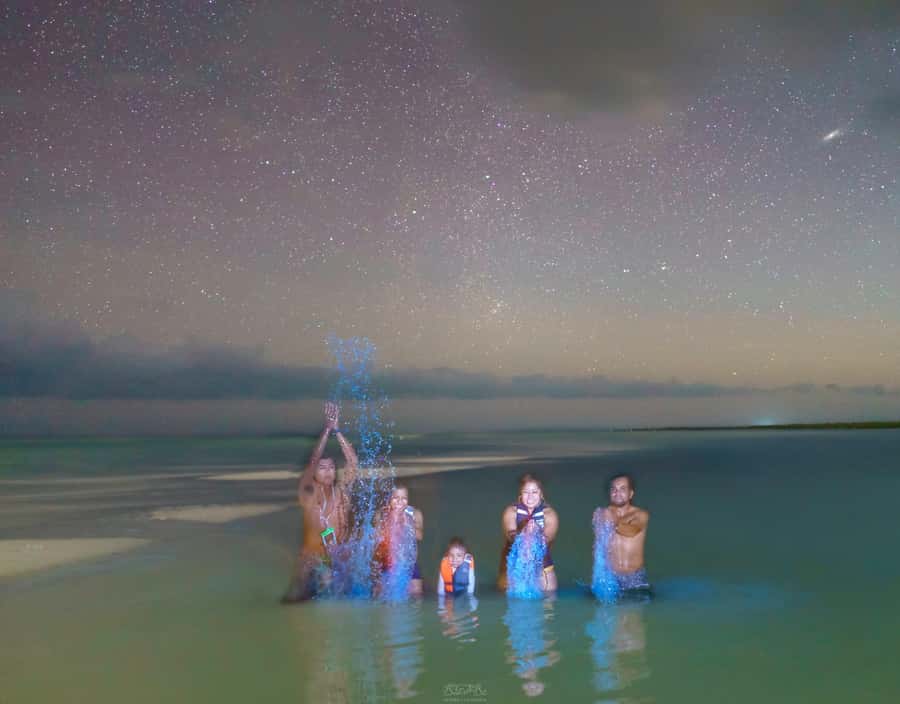
Once the group reaches the area with the highest concentration of plankton, you leave the kayaks and walk across the sandbanks. This changes the experience from a simple paddle into something more hands-on.
Look down as you step. Footprints may appear as blue-green points of light after your feet disturb the shallow water. The effect is delicate and brief, not a bright neon display. You need darkness and patience to notice it.
A sandbar in the middle of the sea also gives the group a chance to pause. The kayaks are no longer moving, and the guide can explain what causes the glow and how conditions such as plankton levels, water temperature, and ocean currents affect visibility.
That explanation matters. Bioluminescence is a natural event, not a light installation that runs on schedule. The exact color can change too. You might see green, white, or blue, and nobody can promise which shade will appear.
Swimming with glowing microorganisms
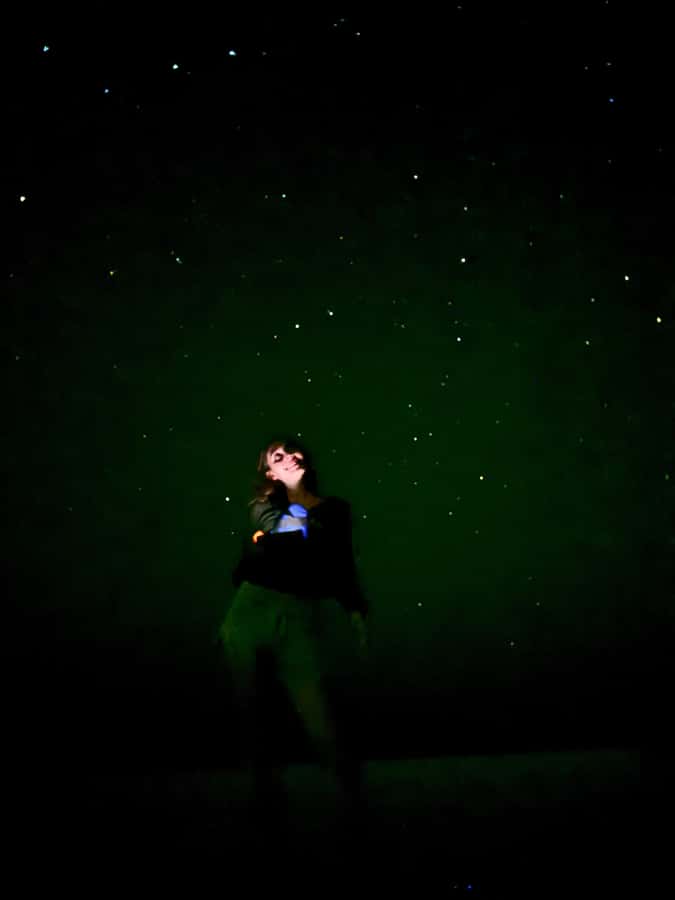
The most memorable part for many people will be walking farther into the sea and swimming. The guide chooses a reasonable depth, then explains how movement makes the microorganisms light up around your body.
You will need swimwear, a towel, and dry clothes. Water shoes are also recommended because you are walking over a sandbank and into shallow water. Bring biodegradable insect repellent, since mosquitoes can be an issue near the shore. The packing instructions list insect repellent twice in practical terms, and you should take that seriously.
Do not expect your whole body to glow like a movie special effect. The light appears as small points or streaks when you move your arms, legs, or hands through the water. The darker the conditions, the easier it is to notice.
Swimming is optional in the sense that the program describes it as the next activity after the sandbank walk, but you should decide your comfort level before booking. People with heart problems, back problems, recent surgeries, epilepsy, mobility impairments, or pregnancy are advised not to take this outing. Wheelchair users cannot be accommodated. The activity is also not suitable for children under two or for people over 70, with the information also listing over 75 as unsuitable, so older participants should confirm the age rule directly.
More Stargazing Tours in the world:
- Dubai Red Dunes ATV, Camels, Stargazing & 5* BBQ Al Khayma Camp
★ 5.0 · 21,620 reviews - Sharm El-Sheikh: Ultimate ATV Quad, Stargazing & BBQ Dinner
★ 4.7 · 4,084 reviews - Tenerife: Teide National Park Sunset & Stargazing Tour
★ 4.2 · 3,812 reviews - Tenerife: Sunset and Stargazing at Teide National Park
★ 4.7 · 2,826 reviews
Stargazing without the city lights
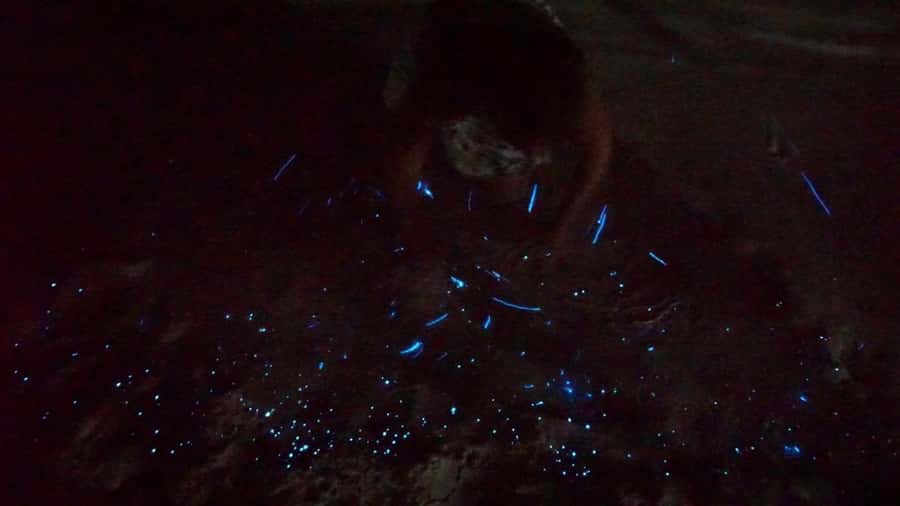
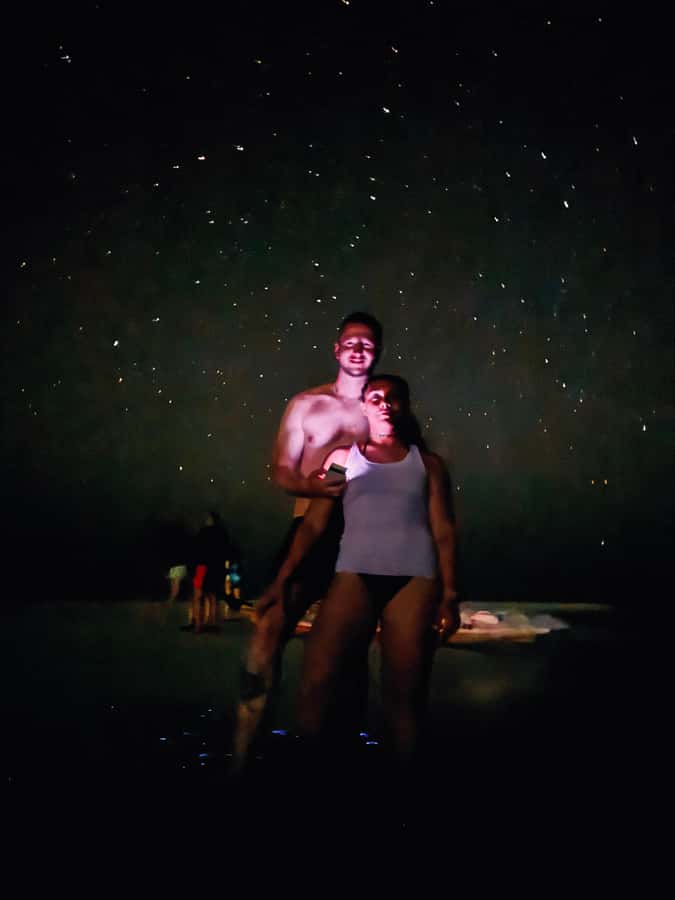
The sky can provide a second show. If conditions are clear, the group pauses to look at the stars while standing or swimming away from Holbox’s brighter areas.
Cloud cover can change the stargazing, just as water conditions change the plankton display. You may get a star-filled sky, a strong glow in the water, both, or a less dramatic night. That uncertainty is not a flaw in the idea of the trip, but it should shape your expectations.
I like the pairing of stars above and plankton below. It gives the evening a quiet rhythm: paddle, pause, walk, swim, and look up. It also makes the short duration feel fuller than a simple kayak transfer to one viewing point.
Flash photography is not allowed. That rule protects everyone’s night vision and helps preserve the dark conditions needed for the glow. Drones are also prohibited. Leave valuables at the hotel, and do not bring large bags or luggage.
What the guide adds to the evening
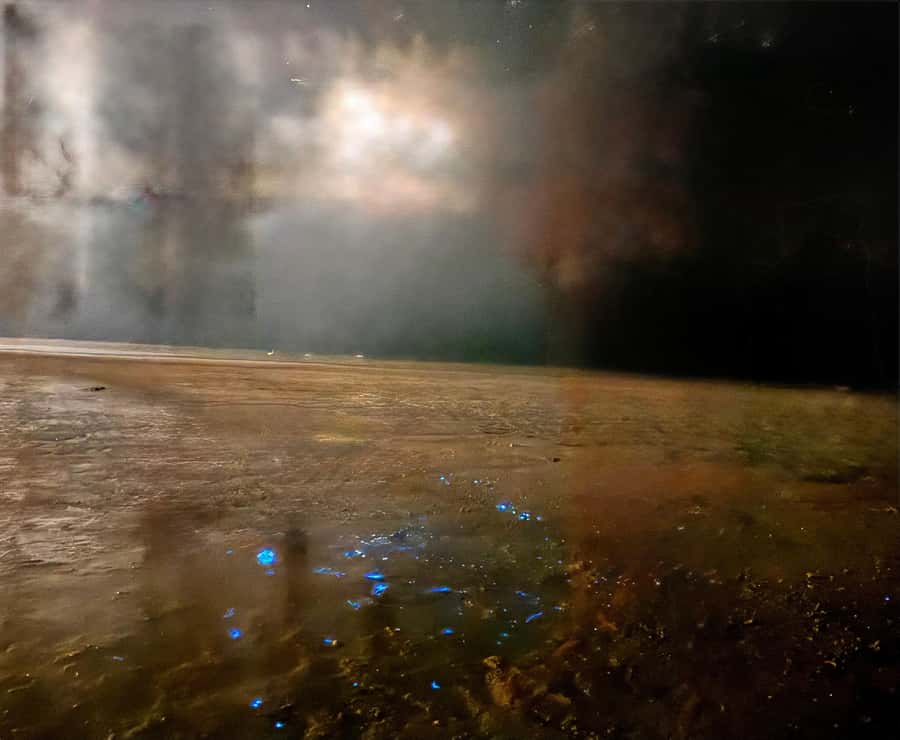
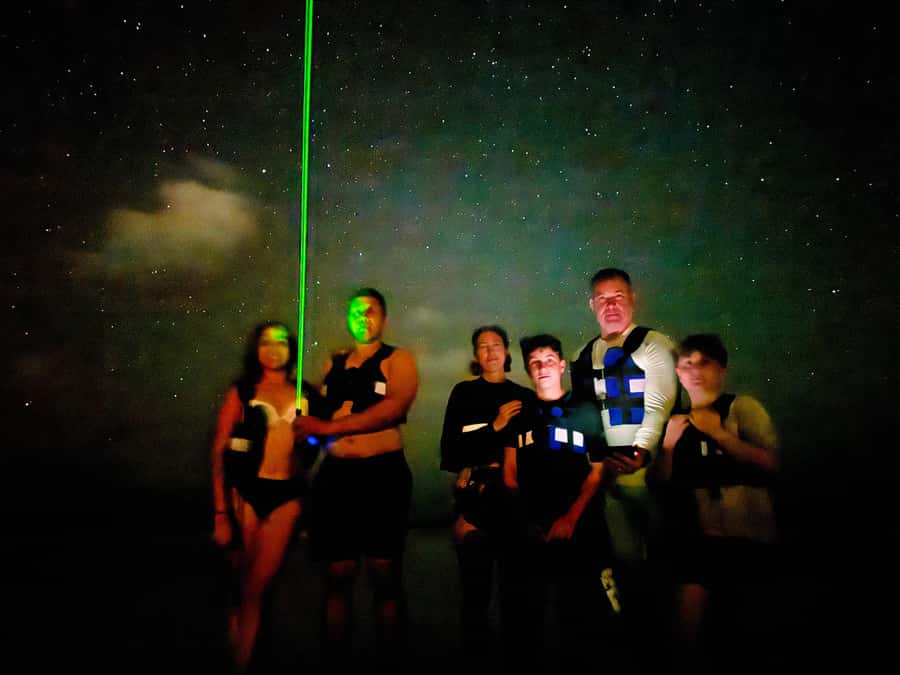
The guide is an important part of this activity. The most praised aspect of the trip is the guiding, with Victor receiving particular approval for his friendly manner and clear explanation. Other feedback also highlights the guide’s attitude and says the overall outing felt very pleasant.
That matters because the natural display can be subtle. A good guide helps you know when to look, where to move your hand or foot, and why the light changes. Without that help, you might mistake a faint flash for a reflection or miss it altogether.
The guides speak Spanish and English. The experience is not only about taking you to the water. It includes an explanation of the phenomenon and information about the nature reserve and the protected area near Punta Mosquito.
You should still keep your expectations realistic. Even an excellent guide cannot create plankton, clear clouds, warm water, or calm currents. The operator says it will search for the area with the highest concentration and work within the permitted navigation limits, but nature gets the final vote.
Is $49 a fair price for two hours?
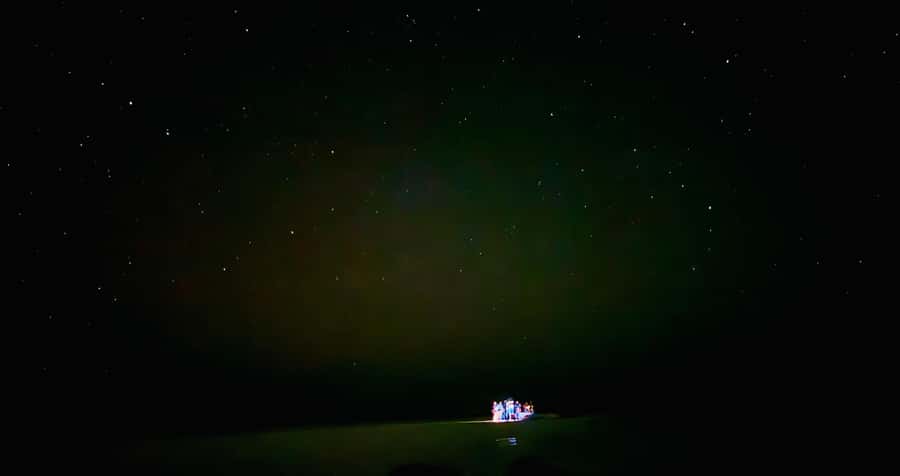
At $49 per person, this sits in a reasonable range for a short, focused evening activity in Holbox. You get hotel pickup arrangements, the golf cart transfer to the launch area, a single or double kayak, guiding in Spanish or English, and access to the sandbank and swimming portion.
The value depends heavily on the night you receive. When the plankton glows well and the sky is clear, the combination of kayaking, swimming, and stargazing gives you several connected experiences for the money. When the water is faint and the sky is cloudy, two hours can feel brief for the price.
One limitation is what you do not get. Food, drinks, and shopping stops are not included. Tips are optional, while mosquito repellent is your responsibility. If you need cash or want to stop at a shop during pickup, you may need to pay an extra taxi fare.
The short length can also be a benefit. You do not lose a whole day, and you can fit this into an evening after exploring Holbox. People who want a longer outing with meals or extra stops may find better value in a full-day or longer water tour, but those options serve a different purpose.
Timing, weather, and the best season
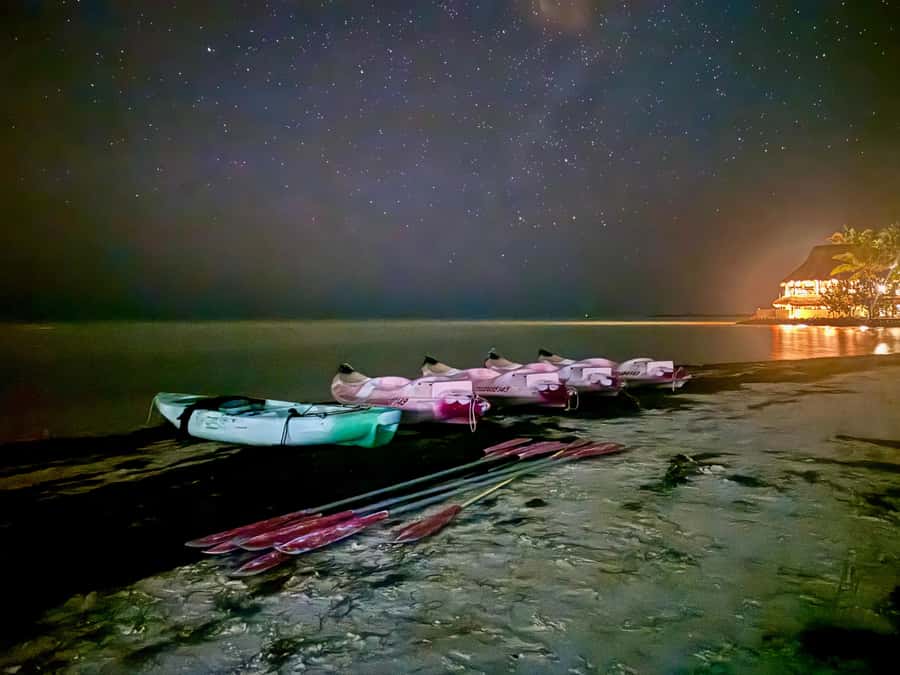
Starting times vary, so check availability for your date. The important point is that this is a night activity, and the group needs darkness to see the plankton.
May through September generally offers the strongest visibility, listed at around 70 to 100 percent intensity. From October through April, visibility may range from 30 to 80 percent. These numbers are guides, not guarantees.
Water temperature, plankton levels, currents, cloud cover, and light pollution can all affect what you see. A moonlit or cloudy night may change the contrast between sky and water, though the supplied information does not promise a particular moon phase. If the glow is your main reason for booking, choose the season with the better odds and keep your plans flexible.
The activity offers free cancellation up to 24 hours in advance, and you can reserve now and pay later. Those terms are useful here because weather and natural conditions matter more than they do on a standard museum visit.
What to pack and what to leave behind
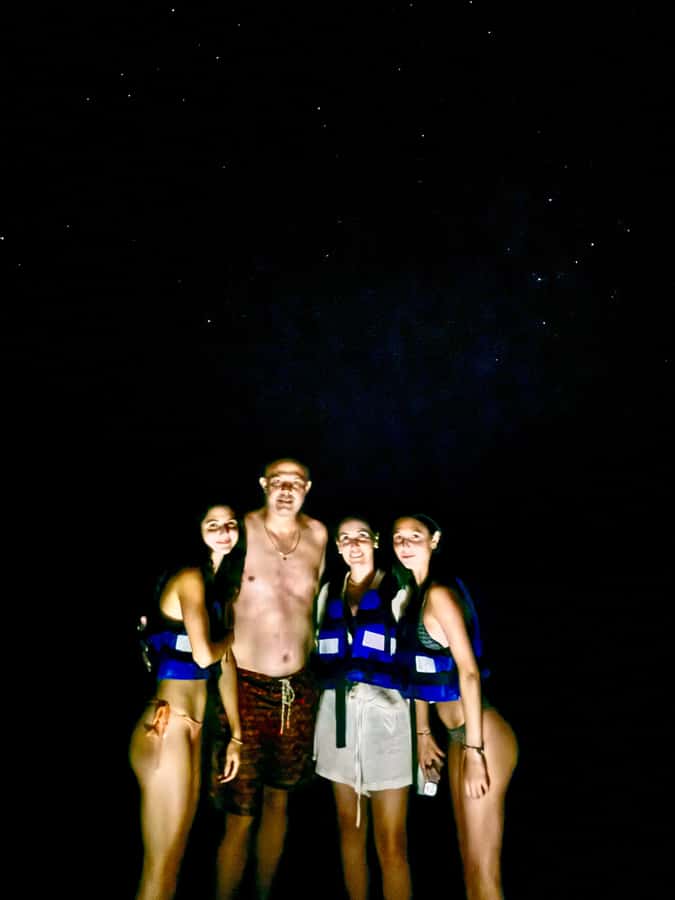
Bring:
- Swimwear
- A towel
- A complete change of clothes
- Water shoes
- Biodegradable insect repellent
Wear or pack only what you need. Large bags, luggage, and valuables are not allowed. Alcohol and drugs are prohibited, and alcoholic drinks cannot be carried in the vehicle. Intoxicated participants cannot take part.
A phone or camera may be useful, but flash photography is forbidden. In very dark conditions, photographs may not capture the glow well anyway. Treat the outing as something you watch with your eyes rather than a guaranteed photo session.
Be ready 15 minutes before pickup. That small bit of discipline can prevent the whole group from losing time, since the taxi will not wait more than five minutes.
Who should book this Holbox night tour?
This trip suits you if you want a short natural experience rather than a long party boat outing. It is especially good for couples, friends, and active adults who are comfortable paddling, walking on a sandbank, and entering the sea at night.
It also suits first-time kayakers who prefer a short route. The paddle is only about 15 to 20 minutes each way, and the guide provides instructions before departure.
You should think twice if you dislike insects, cannot swim comfortably, do not want wet clothes, or expect a bright and guaranteed light show. People with the listed medical, mobility, pregnancy, age, or recent surgery restrictions should not book without direct confirmation from the operator.
Should you book the Holbox bioluminescence kayak tour?
Book it if you want a compact evening built around a real natural event, and you can accept that the glow may be faint. The combination of a short kayak ride, glowing footprints, a possible swim, and stars overhead gives the $49 price a fair chance of feeling worthwhile.
For the best odds, choose May through September, pack insect repellent and dry clothes, and ask about the exact return transfer. If you need meals, drinks, a longer route, or a more comfortable vehicle, choose another water excursion.
The strong guiding, especially the praise for Victor, is a real advantage. Still, the plankton decides how much you see. Book this for the quiet adventure and the chance to watch nature respond to your movement, not for a guaranteed underwater light show.
FAQ
How long does the Holbox bioluminescence kayak tour last?
The activity lasts about two hours, including the golf cart transfers, kayaking, sandbank walk, swimming opportunity, and explanation of the phenomenon.
How far do you paddle?
You paddle approximately 15 to 20 minutes to the sandbanks near Punta Mosquito. The full guided kayak portion is listed at about 50 minutes.
Does the tour enter Punta Mosquito?
No. The group does not enter Punta Mosquito itself because it is a protected area with access completely prohibited. The tour visits nearby sandbanks.
Can I swim during the tour?
Yes. The activity includes walking into the sea to a reasonable depth and swimming while watching the microorganisms glow with your movements.
What colors can the bioluminescence be?
The glow may appear green, white, or blue. The color is unpredictable.
When is bioluminescence most visible?
Visibility is normally strongest from May through September, when it may reach 70 to 100 percent intensity. During the rest of the year, visibility may range from 30 to 80 percent.
What languages does the guide speak?
The tour is offered with a live guide in Spanish and English.
What should I bring?
Bring swimwear, a change of clothes, a towel, water shoes, and biodegradable insect repellent. Large bags, luggage, valuables, drones, flash photography, alcohol, and drugs are not allowed.
Just added around the world
- ( canyon hurghada & stargazing )★ 4.9 · 16 reviews
- Vincentia: Jervis Bay Beach Stargazing with an Expert★ 4.9 · 19 reviews
- Twizel Stargazing Experience with a Guide (Carbon Positive)★ 4.7 · 26 reviews
- Twizel: Stargazing Tour with an Astronomer and Telescope★ 4.9 · 36 reviews
- Blue Mountains: Stargazing with a Telescope and Astronomer★ 4.4 · 21 reviews
- Star Safari Stargazing Experience, Martinborough★ 5.0 · 6 reviews
- Klein Karoo “High 5” Stargazing Experience in Oudtshoorn★ 5.0 · 7 reviews
- VIP Sunset & Stargazing experience★ 4.5 · 44 reviews
Stargazing Tours, compared.
Dubai Red Dunes ATV, Camels, Stargazing & 5* BBQ Al Khayma Camp
Read our review →
Teide National Park Sunset & Stargazing with Dinner (Star Safari)
Read our review →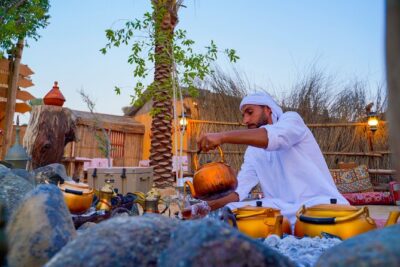
Sunset Camel Trek, Al Khayma Camp, Stargazing & BBQ
Read our review →
Overnight Safari, Dinner, Stargazing & Al Khayma Camp
Read our review →