
Review · CHILE
Rapa Nui Stargazing
Look up, and Easter Island changes completely. Rapa Nui Stargazing pairs dark southern skies with telescope viewing, Polynesian navigation stories, and a late-night visit to Anakena Beach. I like the small groups, capped at 12, and the thoughtful touch of hot chocolate and local cake. I also like that hotel drop-off is included, a welcome comfort after returning around 1:00 a.m.
The main catch is the weather policy. Cloud, wind, minimum group numbers, and even a bright full moon can cancel the outing, sometimes close to departure. Book early in your stay, keep another night free, and bring a jacket and flashlight.
Key points before you book
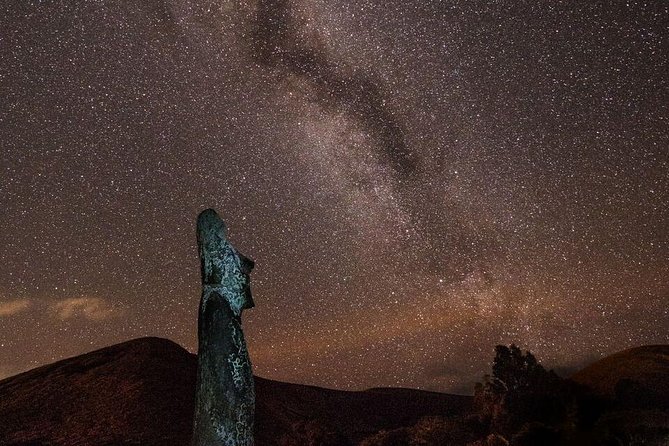
- Anakena after dark: You receive special nighttime access to Ahu Nau, with a photo opportunity beside the moai.
- Small-group setting: The maximum is 12 people, though the tour may not operate if too few people sign up.
- Polynesian navigation: Guides explain how the Rapa Nui people used stars to cross the Pacific.
- Real telescope time: Depending on the sky, you may view the Moon, Jupiter, Saturn, star clusters, and other southern-sky objects.
- Weather matters: The company checks conditions near Anakena, not only in Hanga Roa, and may confirm the tour shortly before departure.
- Plan for cold and darkness: Bring warm layers and a flashlight or headlamp. Hotel pickup is not included, but drop-off is.
Why stargazing makes sense on Rapa Nui
Rapa Nui is far from the bright city glow that washes out much of the night sky. That gives this outing a strong sense of place. You are not simply looking at stars from a hotel courtyard. You are heading toward Anakena, one of the island’s important cultural sites, and connecting the sky above you with the ocean journeys that shaped Polynesian settlement.
The astronomy talk is a major part of the experience. Guides explain how stars helped Polynesian navigators find their way across the Pacific, giving the night sky a human story rather than turning it into a list of hard-to-remember star names.
That context helps even if you know little about astronomy. You do not need to arrive with a working knowledge of planets, constellations, or celestial navigation. The guide-led presentation makes the subject approachable, and the small group gives you a better chance to ask questions.
More Stargazing Tours in Chile:
- San Pedro de Atacama: Etno-Stargazing Tour with Transfer
★ 4.8 · 629 reviews - San Pedro de Atacama: Stargazing Experience
★ 4.7 · 489 reviews - Astronomical Tour with Guide and Pick Up San Pedro de Atacama
★ 4.5 · 145 reviews
Meeting in Hanga Roa, then heading into the dark
The tour begins in front of the Katipare library, also called Centro Lector Katipare, in Hanga Roa. The published start time is 8:00 p.m., but the operating information gives seasonal variations, including about 7:30 p.m. in winter and between 8:30 and 9:00 p.m. from September through April.
For that reason, check the exact meeting time on your confirmation. Do not wait for a hotel pickup. You make your own way to the library, while the company arranges drop-off at your lodging after the tour.
The drive takes you away from the lights of town. Before Anakena, the team sets up telescopes at a remote site. This first stop is the main observing session, so expect the focus to be on the sky rather than on sightseeing below it.
The small group is useful here. With 12 people or fewer, telescope viewing is less crowded than it would be on a large bus outing. One drawback is that the experience can feel less polished when the group is bigger or when several people want repeated looks through the same telescope. One account also found the guide’s small iPad presentation hard to see from the back.
The remote telescope session
This is where the tour earns its price, provided the sky cooperates. Guides bring telescopes and binoculars, then point out objects that are difficult to see with the naked eye.
Depending on the conditions and the night’s targets, you might see the Moon’s craters, Jupiter, Saturn and its rings, Sirius, the Pleiades, the Milky Way, and other star clusters. One outing included a view of the Horsehead Nebula. These sightings are not guaranteed, since clouds, wind, moonlight, and visibility all affect the program.
The telescope portion has received the strongest praise. Visitors have described seeing Saturn’s rings and Jupiter as a memorable surprise, especially for people who normally look at stars without optical equipment. You may also appreciate the chance to ask for a particular star or object rather than simply follow a fixed script.
The presentation about Polynesian navigation gives the viewing a clear purpose. You learn how the stars helped guide ocean crossings and how the night sky formed part of a practical navigation system. That is far more meaningful than a generic astronomy lecture detached from Rapa Nui.
The guides named in the feedback include Mark, who led the star presentation and has also played guitar during the photo portion, and Tuhii, who was singled out for the hot chocolate. Guide quality can vary by departure, but the strongest accounts describe the staff as friendly, well prepared, and able to explain complex ideas in plain language.
Hot chocolate, cake, and the practical side of night viewing
A hot drink and local cake are included. This is not a grand meal, but it is exactly the right kind of refreshment for an outdoor stop late at night. Several accounts praised the hot chocolate, with one calling it the best they had tasted.
Do not underestimate the temperature change. Rapa Nui can feel warm during the day, then chilly once you are sitting outside after dark. Pack at least one long-sleeved layer, even if you leave your lodging in summer clothes.
You should also bring a flashlight or headlamp. The remote observing area and beach are dark by design. That is good for the stars, but it makes walking and finding your footing harder. A phone light may work in a pinch, but a small flashlight is more practical and less likely to drain your battery.
The tour lasts about three and a half hours. With a start around 8:00 or 9:00 p.m., you may not return to your lodging until close to 1:00 a.m. That late finish suits night owls and astronomy fans. It is less appealing if you have an early morning visit to another archaeological site.
Same dark sky, a different way to spend it:
- “Astronomical Adventure in San Pedro de Atacama”
★ 4.5 · 96 reviews - San Pedro de Atacama: Guided Atacama Desert Stargazing Tour
★ 3.9 · 93 reviews - Stargazing Hiking Valle de Elqui
★ 5.0 · 46 reviews - Pisco Elqui: Mountaintop Stargazing and Night Portrait
★ 4.6 · 20 reviews
Anakena Beach and Ahu Nau after dark
Anakena is the final stop. The beach is known for its moai and ahu, and the tour has special nighttime access to Ahu Nau. Seeing the statues in darkness gives the site a very different mood from a daytime visit.
The photo session is an important part of the ending. The team can take long-exposure images of you near the moai, with the dark sky behind you. The result can be a more distinctive souvenir than an ordinary beach snapshot, though photo delivery requires your email details and the process has not always felt perfectly organized.
Some outings include music during the photos, including guitar and singing. That is a pleasant cultural touch, but the length of the photo session can vary. If you mainly came for astronomy, you may find the final photography portion a little long. If you want a memorable image from Rapa Nui, it may be exactly the right finish.
Admission is listed separately from the tour price, so check what access arrangements apply to your booking. The experience includes the nighttime entry arrangement described above, but the published details do not say that a general park admission fee is included.
Is the $140 price fair?
At $140 per person, this is not a cheap night out. You are paying for transport during the evening, a local driver-guide, live commentary, equipment, a small group, the special access at Ahu Nau, refreshments, and hotel drop-off.
The value depends on your priorities. If you only want to stand outside and see the Milky Way, you can find a less costly way to look at the sky. If you want telescopes, an explanation of Polynesian navigation, a remote viewing site, and a moai photo session, the price is easier to justify.
The maximum group size of 12 matters. You are not paying for a private tour, but you are also not joining a large coach party. A small group makes it easier to hear the guide and take turns at the equipment.
The main value risk is cancellation. A clear sky over Hanga Roa does not guarantee a clear or calm sky at Anakena. Strong wind can make telescope work difficult and sitting outside unpleasant. The company may also cancel when the full moon makes the sky too bright for the intended experience.
The weather gamble needs careful planning
This is the most important practical issue. The tour requires favorable weather, and final decisions may come only about an hour before departure. That can feel frustrating when the sky above your hotel looks clear, because the operating site is farther away and may have different conditions.
If poor weather cancels the outing completely, you can choose another date or receive a full refund. The company may also try to take you out on another night after conditions change, subject to availability. That flexibility is useful, but it does not help much if you have only one night left on the island.
The best strategy is simple: schedule this on your first night or early in your stay. That leaves room to move the booking if clouds or wind intervene. Keep the next evening as open as your itinerary allows.
Full moon timing also deserves attention. The company does not operate the stargazing experience around full moon dates because moonlight hides many stars. A full moon hike may be offered as an alternative, but it is a different activity, not a substitute for telescope stargazing.
The company can also cancel if the minimum number of participants is not reached. If that happens, you should be offered another date, another experience, or a refund. The published cancellation terms allow you to cancel for a full refund up to 24 hours before departure, but cancellations inside that window are normally nonrefundable unless the operator cancels.
Who will enjoy this night most?
I would recommend Rapa Nui Stargazing to anyone who wants more than a standard archaeological tour. It works especially well for:
- People curious about Polynesian navigation and astronomy
- Families with older children who can handle a late night
- Couples wanting a memorable photo beside the moai
- Amateur astronomy fans who value telescope access
- Visitors with enough flexibility to move the booking if weather changes
It may not suit you if you dislike late nights, outdoor sitting, or uncertain plans. It is also a poor fit if you have only one available evening and cannot tolerate the possibility of a last-minute cancellation.
The experience is not just about counting constellations. Its strongest moments connect the stars, the ocean, the moai, and the island’s Polynesian identity. That combination gives the evening a clear sense of purpose.
My recommendation for booking Rapa Nui Stargazing
I would book this experience, but I would do it early in my Rapa Nui stay and treat it as weather-dependent. The telescope views, Polynesian navigation talk, hot chocolate, and nighttime moai photos make the $140 worthwhile for many visitors.
Before paying, check the exact seasonal start time, confirm the meeting point at Katipare library, and ask about the moon phase if your dates are close to full moon. Pack warm clothing, a flashlight, and patience. If the sky is clear and the tour runs, this can become one of the most memorable nights on Easter Island. If conditions fail, make sure you still have enough time for a rescheduled departure or a refund.
FAQ
Where does Rapa Nui Stargazing begin?
You meet in front of Katipare library, also called Centro Lector Katipare, in Hanga Roa, Easter Island.
Is hotel pickup included?
No. Hotel pickup is not included. You must reach the Katipare library meeting point yourself.
Is hotel drop-off included?
Yes. Hotel drop-off is included after the tour.
How long does the experience last?
The tour lasts approximately three hours and 30 minutes. Some departures may return close to 1:00 a.m., depending on the start time and conditions.
Can the tour be canceled because of weather?
Yes. The experience requires favorable weather. If the operator cancels because of poor conditions, you can receive a full refund or choose another date, subject to availability.
What happens if there is a full moon?
The stargazing outing does not operate around full moon dates because the bright moon reduces visibility of the stars. A full moon hike may be offered as an alternative, or you can choose a refund.
Just added around Chile
- Stargazing Hiking Valle de Elqui★ 5.0 · 46 reviews
- San Pedro de Atacama: Astronomical Tour★ 3.9 · 3 reviews
- San Pedro de Atacama: Stargazing Tour in the Atacama Desert★ 3.0 · 5 reviews
- San Pedro de Atacama: Stargazing Experience with Transfer★ 3.5 · 8 reviews
- San Pedro de Atacama: Astro Tour with big telescopes★ 5.0 · 6 reviews
- SAN PEDRO DE ATACAMA: ASTRONOMICAL TOUR★ 3.6 · 3 reviews
- San Pedro de Atacama: Etno-Stargazing Tour with Transfer★ 3.5 · 5 reviews
- Pisco Elqui: Mountaintop Stargazing and Night Portrait★ 4.6 · 20 reviews
Stargazing Tours, compared.
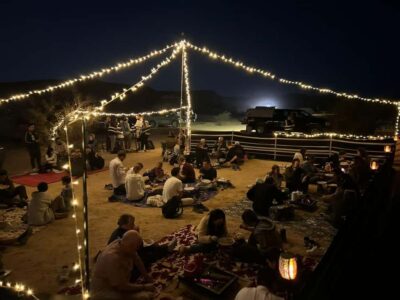
Dubai Red Dunes ATV, Camels, Stargazing & 5* BBQ Al Khayma Camp
Read our review →
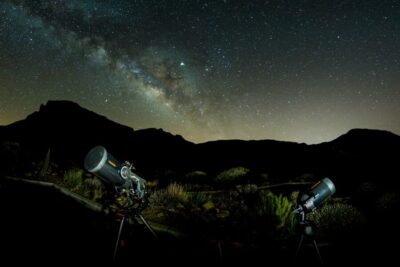
Teide National Park Sunset & Stargazing with Dinner (Star Safari)
Read our review →
Sunset Camel Trek, Al Khayma Camp, Stargazing & BBQ
Read our review →
Overnight Safari, Dinner, Stargazing & Al Khayma Camp
Read our review →
Dubai Overnight Desert Safari, BBQ & Stargazing at Al Khayma Camp
Read our review →Browse the lists this tour appears in