
Review · CHILE
Stargazing Hiking Valle de Elqui
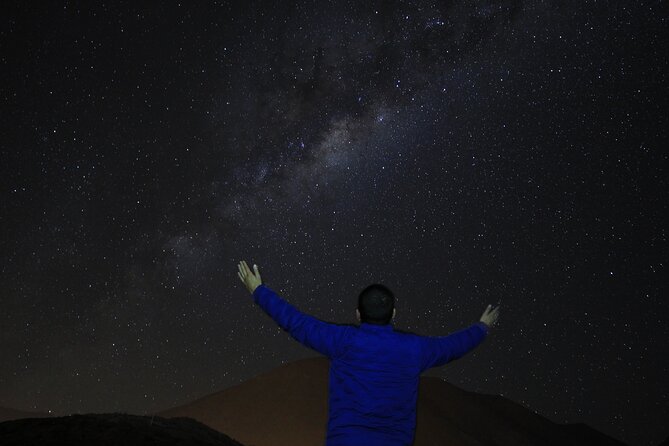
The night begins before the stars. In the Elqui Valley, this private evening outing combines a mountain sunset, gentle hiking, indigenous astronomy, and a close look at the sky through powerful binoculars. I like the way the experience links the natural setting with Andean cultural ideas instead of treating stargazing as a simple checklist of constellations. I also like that astronomical photography gives you a lasting record of the night.
The tour is led by Loreto, whose passion comes through clearly in the experience and in her warm personal reply to a recent guest. The main consideration is the physical side: you need a moderate fitness level, proper hiking shoes, and punctuality. Anyone arriving more than 10 minutes late can be excluded, so this is not an outing to approach casually.
Key Points Before You Book
- Sunset comes first: You begin at a mountain viewpoint, where the changing colors over the Elqui Valley set the mood for the night.
- Andean astronomy adds meaning: Loreto explains indigenous views of the sky and the links between ancestral cultures and astronomy.
- The stargazing uses Celestron 20×80 binoculars: Mounted on a tripod, these provide a steadier and more detailed view than ordinary handheld binoculars.
- Meditation and sound therapy are part of the evening: Singing bowls help you slow down before the astronomy begins.
- The tour is private: Only your own group takes part, making the pace more personal and allowing more room for questions.
- The price includes useful extras: Transport from Vicuña to Villaseca, trekking poles, a chair, snacks, hot drinks, and astronomical photography are included.
From Vicuña to a Mountain Sunset
The experience begins at Navarino in Peralillo, part of Vicuña, and ends back at the same meeting point. Private transport is provided from the city of Vicuña to Villaseca, where the activity takes place. That transfer matters because you do not have to arrange your own ride between the town and the evening’s outdoor setting.
The total experience lasts about four and a half hours. Exact departure times change with the season. During January, the listed hours run from 8:00 PM to 9:00 PM. In February, they shift earlier, from 7:30 PM to 9:00 PM. In March, departures are listed from 7:00 PM to 9:00 PM, Monday through Saturday.
Those times reflect the changing sunset and darkness in the Elqui Valley. You should confirm the exact departure time when booking, then arrive at least 15 minutes early. The 10-minute late-arrival rule is strict, and for good reason: this is an outdoor outing with a set sequence rather than a venue where you can simply catch up later.
The first scenic stop is a viewpoint above the valley. Here, you watch the sun drop behind the mountains and the colors shift across the evening sky. It is a simple pleasure, but a useful one. You are not rushed straight into technical astronomy. Instead, the evening begins with the changing light that makes the valley feel open and spacious.
I especially like this order. The sunset gives you time to settle into the setting before the sky turns dark. It also creates a natural contrast between the warm colors of dusk and the cooler, darker hours that follow.
More Hiking Trips in Chile:
- Dubai: Sunset Camel Trek, Al Khayma Camp, Stargazing & BBQ
★ 4.8 · 2,588 reviews - Griffith Observatory Hike: Guided Tour through Griffith Park
★ 5.0 · 1,020 reviews - Dubai: Sunset Camel Trek, Al Khayma Camp, Stargazing & BBQ
★ 5.0 · 605 reviews
A Moderate Hike With Practical Support
This is a hiking experience, not a drive-up stargazing session. The tour is designed for people with a moderate level of physical fitness, and hiking shoes are required. Trekking poles are supplied, which can be helpful on uneven ground or for anyone who prefers extra balance.
A portable chair is also included. That small detail can make a real difference during the astronomy portion, when you may spend time looking upward and listening. Standing for hours is tiring, especially after a walk. The chair gives you a more comfortable way to take in the sky.
The available information does not describe the exact distance, elevation gain, trail surface, or difficulty rating. You should ask for those details if they matter to you. The requirement for hiking shoes and moderate fitness tells you enough to prepare seriously, but not enough to assume this is an easy stroll.
Wear sturdy footwear and arrive ready for an outdoor evening. The activity is not suitable for children under 14, and the minimum age is important because the program includes hiking, meditation, cultural discussion, and extended time outdoors after dark.
Meditation, Singing Bowls, and a Quieter Pace
Before the astronomy begins, the evening includes meditation and sound therapy with bowls. This part gives the experience a slower rhythm than a standard nighttime excursion. You are invited to pay attention to the surroundings, settle your thoughts, and connect with the setting before looking through the binoculars.
You should know what this means in practical terms. If you want a fast-moving program packed with facts, this section may feel too quiet. If you enjoy reflective activities and want the evening to have a calm center, it adds something worthwhile.
The sound therapy also helps explain the character of the experience. This is not only about identifying stars. It combines outdoor activity, cultural interpretation, and personal reflection. The approach will appeal most to you if you like astronomy with a human and cultural side.
There is no need to treat the meditation as a test. You can simply take part respectfully and enjoy a few quiet minutes before the sky becomes the main subject.
Understanding the Sky Through Andean Eyes
Loreto introduces the indigenous worldview connected with the night sky. She explains ancestral links between cultures and astronomy, then guides your attention toward Andean constellations.
That cultural layer is one of the strongest reasons to choose this outing. Many stargazing programs focus on names, distances, and scientific facts. Those details can be fascinating, but they are only one way to understand the heavens. Indigenous cultures have long read meaning and patterns in the sky, connecting celestial observations with life on Earth.
The experience presents astronomy as both observation and culture. You are not simply looking upward to spot a bright object. You are learning how the sky can be understood through a different frame of reference.
The supplied information does not name the specific Andean constellations covered or give a full outline of the cultural presentation. If one particular tradition or topic matters to you, ask Loreto about the evening’s focus before booking. Still, the promise of indigenous astronomy is clear enough to distinguish this from a basic sunset walk followed by casual star viewing.
Loreto receives particularly strong praise for her passion and for creating a memorable experience. Her reply to a guest also highlights the importance of respect for the cultural content. That is a useful signal for you: come ready to listen, not just to take photographs.
More Stargazing Tours in Chile:
- San Pedro de Atacama: Etno-Stargazing Tour with Transfer
★ 4.8 · 629 reviews - San Pedro de Atacama: Stargazing Experience
★ 4.7 · 489 reviews - Astronomical Tour with Guide and Pick Up San Pedro de Atacama
★ 4.5 · 145 reviews - “Astronomical Adventure in San Pedro de Atacama”
★ 4.5 · 96 reviews
Looking Through Celestron 20×80 Binoculars
The main astronomy tool is a Celestron 20×80 binocular set mounted on a tripod. The numbers matter. Twenty-times magnification brings distant objects much closer than ordinary binoculars, while the tripod helps keep the view stable.
That combination is more accessible than a telescope for many people. You can look through both eyes, and Loreto can guide your gaze toward the same area of the sky without asking you to manage complicated equipment. The tripod also reduces the shaking that comes with hand-held viewing at high magnification.
You should keep expectations sensible. Binoculars are not the same as a large observatory telescope, and the exact objects visible will depend on the date, conditions, and weather. Still, the equipment is well suited to a guided outdoor session where the goal is to connect your own sight with an explanation of what you are seeing.
The private format improves this part of the evening. Only your group participates, so the viewing can be adjusted to your pace. You can ask questions without competing with a large crowd, and you are less likely to feel hurried from one person to the next.
A Photograph to Take Home
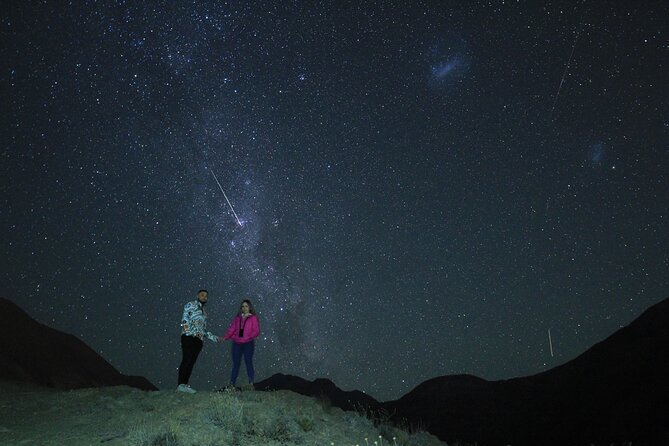
Astronomical photography is included in the price. This gives you more than a pleasant memory in your head, especially because night-sky photography can be difficult without suitable equipment and technique.
You should not assume the photograph will look like a professional observatory image or that it will include every person in the group. The details of the photography service are not specified. Ask how and when the image is delivered if that is important to you.
Even with that uncertainty, including photography adds value. You can enjoy the evening without spending the entire time trying to operate a phone camera in the dark. The sky remains the focus, while the guide handles the task of creating a visual reminder.
Coffee, Herbal Tea, and Simple Snacks
Coffee, tea, herbal tea, and a snack are included. These are modest additions, but they make sense during an evening spent outdoors. A warm drink can be welcome once the sun has disappeared, and a small snack helps keep the outing comfortable after walking.
The information does not specify the snack, drink selection, or whether dietary needs can be accommodated. If you have allergies or strict food requirements, ask before the tour. Do not count on a full meal. Think of this as a light refreshment during the activity.
These inclusions also mean you do not need to carry quite as much for a four-and-a-half-hour program. You should still bring whatever personal water, clothing, and outdoor items you normally need, since the tour details do not state that additional supplies are provided.
What the $100 Price Really Covers
At $100 per person, this is not the cheapest way to spend an evening in the Elqui Valley. The value depends on how much of the package you would otherwise need to arrange yourself.
The price includes private transport from Vicuña to Villaseca, a personal guide, trekking poles, a portable chair, astronomy binoculars, snacks, hot drinks, and astronomical photography. You are also paying for the interpretation of the Andean sky and the private setting, not merely for access to a viewpoint.
For someone already staying in Vicuña and looking only for a quick look at the stars, the price may feel high. For you, if arranging transport, equipment, cultural interpretation, and photography separately would be difficult, the package becomes easier to justify.
The private format is a major part of the calculation. A large shared group can reduce the cost, but it also limits questions and flexibility. Here, the experience is reserved for your own group. That makes the price more reasonable for couples, families with older teenagers, or small groups of friends who want an evening shaped around their interests.
The record of 100 percent recommendation and a 5 out of 5 rating from 46 reviews also suggests strong satisfaction. The most praised feature is not a single piece of equipment. It is Loreto’s passion and her ability to make the outing feel personal and memorable.
Weather, Timing, and Other Practical Concerns
Good weather is required. If conditions force a cancellation, you are offered another date or a full refund. That is sensible for an activity built around sunset and clear skies, but it means you should avoid placing it on the only free night of a tightly packed visit.
Free cancellation is available up to 24 hours before the start time. Cancellations made less than 24 hours before the activity are not refunded, and changes within that period are not accepted. The cut-off follows local time.
The meeting point is near public transportation, and service animals are allowed. The tour is private, but the supplied information does not say that the vehicle is air-conditioned. In fact, air-conditioned transport is specifically not included as a separate feature, so you should not assume that comfort.
Alcohol is not permitted before or during participation. Admission can be refused if you arrive under the influence. This is a fair rule for a hike after dark and for the care of the equipment.
Who Will Enjoy This Evening Most
I would recommend this experience to you if you like several interests working together:
- Outdoor walks and mountain sunset views
- Astronomy presented in an approachable way
- Indigenous cultural ideas and Andean traditions
- Meditation or sound therapy
- Small private activities rather than large group outings
- A calm evening with time for questions and reflection
It is also a good fit if you are staying in Vicuña and want an organized night activity without arranging your own transport to Villaseca.
I would hesitate if you want a long, demanding hike, a full meal, or a formal observatory session with advanced telescopes. The program is built around a moderate hike, cultural interpretation, binocular viewing, and a reflective pace.
Age matters too. Nobody under 14 can take part, and everyone needs hiking shoes. Your group should also be comfortable with the strict arrival rule and with spending several hours outdoors after sunset.
Should You Book Stargazing Hiking Valle de Elqui?
Book it if you want more than a quick look at stars. The sunset, meditation, sound therapy, Andean astronomy, private transport, and guided binocular viewing create a full evening rather than one isolated activity.
The best reason to choose it is Loreto’s personal approach. Her passion is the part most strongly praised, and the cultural content rewards a respectful, curious attitude. The main reasons to pause are the $100 price, the moderate physical requirement, and the uncertainty that comes with any weather-dependent plan.
If those points fit your plans, this is a thoughtful way to experience the Elqui Valley after dark. Arrive early, wear proper hiking shoes, confirm the seasonal departure time, and keep your schedule flexible enough to accept a weather change.
FAQ
How long does the stargazing hiking experience last?
The activity lasts approximately four hours and 30 minutes.
Where does the experience begin?
It begins at Navarino, Peralillo, in Vicuña, Coquimbo, Chile.
Where does the activity end?
The activity ends back at the meeting point in Vicuña.
Is transportation included?
Private transportation from the city of Vicuña to Villaseca, where the activity takes place, is included. Transfers from other places are not included.
What age is required to participate?
The experience is designed for people aged 14 and older. Children under 14 are not permitted to participate.
What should I wear?
You must wear hiking shoes. Participants should also have a moderate level of physical fitness.
What astronomy equipment is provided?
Astronomical binoculars are provided. The equipment is a Celestron 20×80 binocular set mounted on a tripod.
Is food or drink included?
Coffee, tea, herbal tea, and a snack are included.
What happens if bad weather cancels the activity?
You will be offered another date or a full refund if poor weather causes the activity to be canceled. Free cancellation by you is available up to 24 hours before the start time.
Just added around Chile
- Rapa Nui Stargazing★ 4.5 · 62 reviews
- San Pedro de Atacama: Astronomical Tour★ 3.9 · 3 reviews
- San Pedro de Atacama: Stargazing Tour in the Atacama Desert★ 3.0 · 5 reviews
- San Pedro de Atacama: Stargazing Experience with Transfer★ 3.5 · 8 reviews
- SAN PEDRO DE ATACAMA: ASTRONOMICAL TOUR★ 3.6 · 3 reviews
- San Pedro de Atacama: Etno-Stargazing Tour with Transfer★ 3.5 · 5 reviews
- San Pedro de Atacama: Astro Tour with big telescopes★ 5.0 · 6 reviews
- Pisco Elqui: Mountaintop Stargazing and Night Portrait★ 4.6 · 20 reviews
Stargazing Tours, compared.
Dubai Red Dunes ATV, Camels, Stargazing & 5* BBQ Al Khayma Camp
Read our review →
Teide National Park Sunset & Stargazing with Dinner (Star Safari)
Read our review →
Sunset Camel Trek, Al Khayma Camp, Stargazing & BBQ
Read our review →
Overnight Safari, Dinner, Stargazing & Al Khayma Camp
Read our review →
Dubai Overnight Desert Safari, BBQ & Stargazing at Al Khayma Camp
Read our review →Browse the lists this tour appears in