
Review · NATIONAL PARK
Stargazing in Zion National Park’s International Dark Sky
The sky gets the last word. This two-hour evening outing near Zion pairs powerful telescopes with an unusually comfortable way to stargaze: you recline in a Yogibo pod, use provided binoculars, and follow constellations with laser pointers. I especially like the small-group format, capped at 18 people, and the chance to see galaxies, nebulae, clusters, planets, and the Milky Way rather than simply admiring a dark sky from a parking lot. The main catch is practical: you need clear weather, warm clothes, and your own way to the meeting point in La Verkin.
I also like that the astronomy is presented as a guided story instead of a silent equipment demonstration. Guides such as Devin, Macie, Matt, Chris, and Hannah have been praised for making the science easy to follow and for handling clouds or questions with good humor. A mellow ten-minute walk gets you to the viewing field, but cold wind, cloud cover, or a bright moon can change what you see.
At a glance
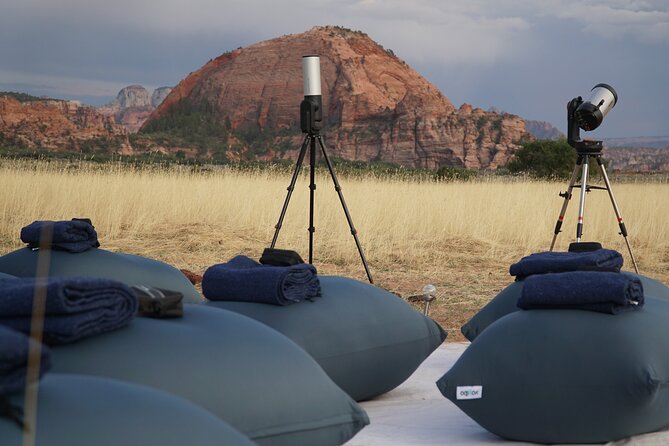
- Recline under Zion’s stars: Each person gets a Yogibo lounger, blanket, and Celestron Outland X binoculars.
- See more than pinpoints of light: Telescopes are used for close views of galaxies, nebulae, clusters, planets, and other celestial objects.
- Keep the group personal: The maximum is 18 people, which gives you a better chance at telescope time and questions.
- Start with a short walk: The viewing site is reached by an easy ten-minute walk from the meeting area near La Verkin.
- Warm up between explanations: Hot chocolate, coffee, and tea are provided.
- Plan around the sky: The outing depends on good weather and can be rescheduled or refunded if conditions are poor.
Why stargazing near Zion feels different
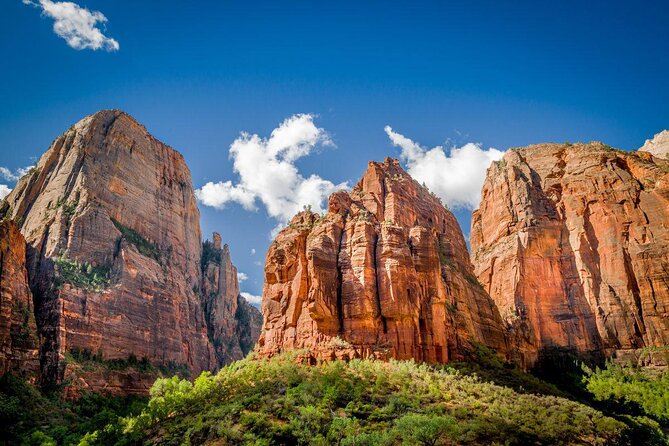
Zion is famous for its red cliffs and narrow canyon, but the park’s night sky offers a completely different show. Away from city lights, the sky can reveal far more stars than most people see at home. One of the most striking parts of the evening is simply realizing how much of the Milky Way disappears in ordinary city light.
That change in scale is a big reason I think this outing works well after a day of hiking. You are not climbing another trail or racing between viewpoints. You are lying back, looking upward, and letting someone else handle the equipment and orientation. A few people have described seeing Saturn and its rings for the first time, while others have been surprised by how clearly the Milky Way appears.
The setting is a field beside the newly dedicated International Dark Sky Park associated with Zion National Park. The activity is not a transportation tour through the park, and no shuttle or hotel pickup is provided. You make your own way to the meeting point at 8V7R+CJ La Verkin, then return there at the end.
That arrangement keeps the price focused on the astronomy program, but it also means you need to plan the drive yourself. Exact directions to the site are supplied through the message center after you provide an email address.
More Dark Sky Tours in the USA:
- East Zion Dark Sky Stargazing Tour
★ 4.5 · 94 reviews - Sedona Dark Sky Sunset & Night Hike With a Private Guide
★ 5.0 · 86 reviews - Greater Zion: Dark Sky UTV Tour with Stargazing
★ 4.9 · 40 reviews
The ten-minute walk to the viewing field
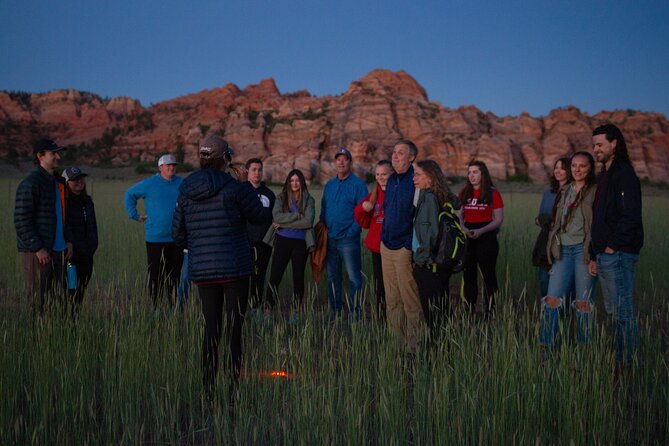
The evening begins with a short walk of about ten minutes to the dark-sky location. This is not presented as a strenuous hike. Its purpose is to move you away from the meeting area and into a darker setting before astronomical twilight fades.
The walk is worth noting if you are bringing children, older family members, or anyone who prefers to know what physical activity is involved. The available information says most people can participate, but it does not promise a fully accessible path or describe the surface in detail. I would ask the operator directly if you have specific mobility concerns.
The location has a deliberately simple feel. You are not entering a planetarium with a polished indoor presentation. You are outside, under the actual sky, with open space around you and the chance of cold or wind. That makes the evening feel more real, but it also means the weather matters.
Settling into a Yogibo pod at twilight
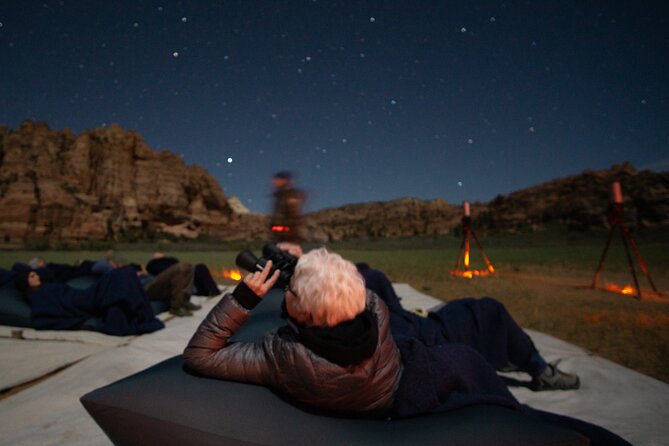
Once you reach the viewing area, the guides help you get familiar with the sky as twilight begins to disappear. Each person has a Yogibo lounger, a soft pod designed to conform to your body and reduce pressure points. This may sound like a small comfort, but it makes a major difference during a long period of looking upward.
Standing with your neck tilted back gets tiring quickly. Reclining in the pod lets you scan the sky without constantly shifting your feet or shoulders. A blanket is also provided, which is useful even after a warm day. One September outing was described as cold despite daytime temperatures reaching 89 degrees, and another was affected by strong wind.
You also receive a pair of Celestron Outland X binoculars, described here as astro-binoculars. They give you something to use while the telescope is being adjusted or while another person is taking a turn. Binoculars are also useful for getting a wider view of the sky, while a telescope gives a tighter look at a particular object.
The hot drinks add a welcome touch. Hot chocolate, coffee, and tea are available, giving you a way to warm your hands and settle into the slower rhythm of the evening.
Following constellations with laser pointers
The two-hour program combines explanation with hands-on viewing. Guides use laser pointers to trace constellations and help you understand how the stars relate to one another. This matters because a dark sky can be overwhelming at first. There are so many stars that it can be hard to know where to look.
The guides also talk about galaxies, nebulae, clusters, planets, and the way astronomers study the universe. The strongest praise has gone to the staff’s ability to explain difficult ideas in a friendly way. Devin has been singled out for her passion for astronomy, while Macie has been praised as a good storyteller. Matt has been noted for staying flexible when clouds interrupted the planned viewing.
You do not need a background in astronomy. The format is built around questions, guided pointing, and explanations that connect the objects overhead to larger ideas. If you already know the basics, you can use the question period to ask about specific objects or how astronomers think about them.
The relaxed tone is one of the best reasons to choose this over simply downloading a stargazing app. An app can name a constellation, but it cannot decide what is worth seeing that night, adjust a telescope, or explain why an object looks the way it does.
More National Park Stargazing in the USA:
- Astro-Photo, Hiking and Stargazing Tour in Arches National Park
★ 5.0 · 63 reviews - Private Stargazing – Sequoia National Park
★ 4.5 · 14 reviews - Stargazing and Milky Way Portrait in Capitol Reef National Park
★ 4.5 · 13 reviews - Sequoia National Park: Group Stargazing Program
★ 4.7 · 10 reviews
What you see through the telescopes
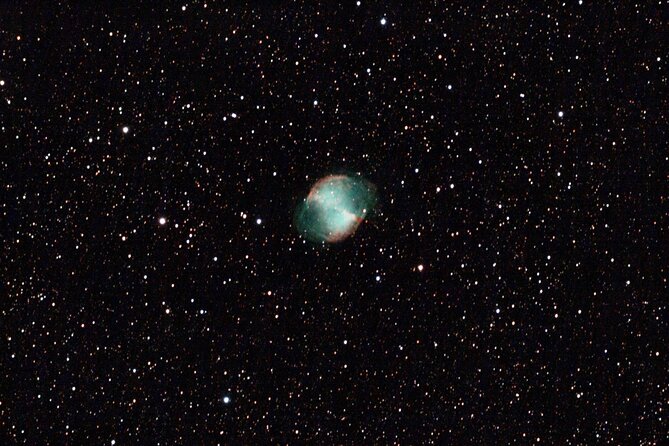
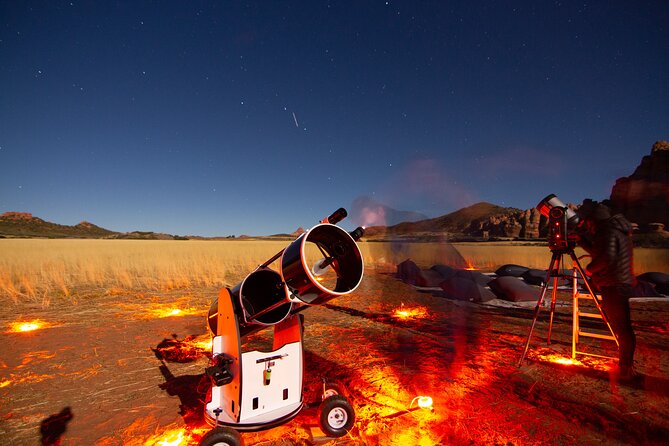
The telescopes are the centerpiece of the program. They provide close views of celestial objects that are difficult or impossible to see clearly with the naked eye. Depending on the date and conditions, the targets may include planets, galaxies, nebulae, and star clusters.
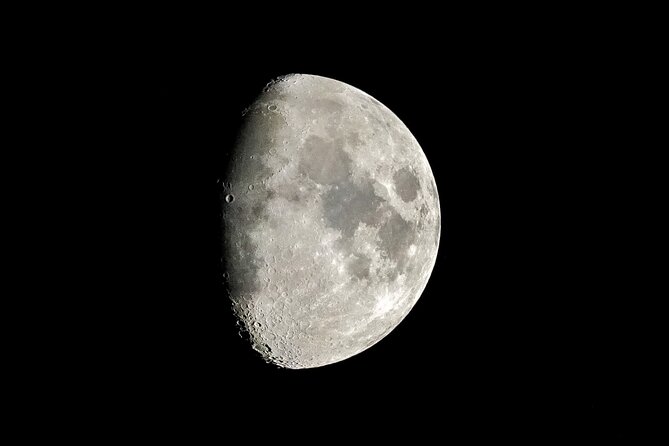
The exact objects are not guaranteed. The moon, clouds, season, and position of the planets all affect the program. That uncertainty is normal in astronomy, not a flaw in the tour. You should book this as a guided look at the night sky, not as a promise that one particular planet will appear.
A bright moon can make the evening beautiful while washing out some fainter stars. Cloud cover can block the view entirely. Guides have adapted to those conditions by answering questions, shifting the focus, and keeping the program enjoyable even when the sky does not cooperate.
The small group helps here. With no more than 18 people, you have a better chance to look through the telescope more than once and to ask questions without fighting through a huge crowd. You should still expect some waiting while the equipment is repositioned, but the provided binoculars and reclining pods keep that time comfortable.
A complimentary night-sky photograph
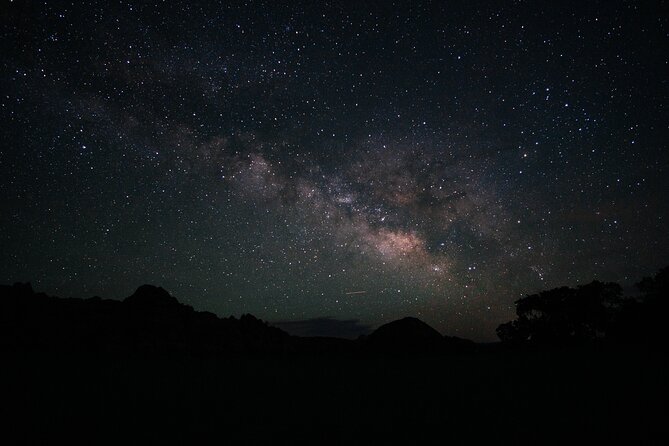
Some sessions have included photographs of the group or individual visitors with the Milky Way behind them. One particularly nice detail is that these images, along with photographs taken through the telescopes, have been emailed without an extra charge.
This is not listed among the formal inclusions in the basic tour details, so I would treat the photo as a possible bonus rather than a guaranteed product. Still, it can be a meaningful souvenir. Night photography is difficult to manage on your own, especially after a long day in Zion, and a clear image gives you something more lasting than a quick phone snapshot.
Bring your phone if you want your own casual pictures, but do not expect it to capture what your eyes see. The point of the provided equipment is to make the sky visible in ways a standard phone camera usually cannot.
Is $199 a fair price?
At $199 per person, this is not a budget evening activity. The value depends on what you want from your Zion visit.
If you only want to lie outside and look at stars, you can do that for free in a suitable dark area. The price here pays for the guides, telescopes, binoculars, loungers, blankets, hot drinks, and a structured two-hour program. It also saves you from trying to identify objects or operate unfamiliar equipment in the dark.
I think the cost makes the most sense for couples, families, and solo visitors who want the science explained. It is also a good choice after several demanding hikes because the activity is calm and seated for most of the program. The expense is harder to justify if you are highly weather-sensitive, dislike sitting outside at night, or already own astronomy equipment and know how to use it.
The 18-person limit adds value. A much larger crowd could turn the telescope into a quick pass-by experience. Here, the format is intended to leave room for personal questions and repeated viewing.
Who will enjoy this most?
I would recommend it to:
- First-time stargazers who want help finding constellations and understanding what they see.
- Families with curious older children who can enjoy the science, the equipment, and the novelty of lying in a zero-gravity-style pod.
- Couples looking for a quiet evening that feels different from another restaurant or sunset viewpoint.
- Hikers needing a slower activity after a packed day in Zion.
- Solo visitors who enjoy learning and do not want to figure out the night sky alone.
It may be less suitable if you want a fast-moving activity, dislike cold evenings, or need guaranteed clear views of one specific planet. The program is in English, and most people can participate, but the short walk and outdoor setting should be part of your decision.
Timing, weather, and cancellation details
The outing lasts about two hours, with the short walk included in the start of the evening. The exact start time changes with the season because the sky must become dark enough for the program.
Bring warm layers even if the daytime forecast looks hot. A blanket is supplied, but personal clothing remains important, especially in wind. The experience requires good weather. If poor conditions force a cancellation, you can receive a different date or a full refund.
You can cancel for a full refund up to 24 hours before the start time. Changes or cancellations made inside that 24-hour window are not accepted for a refund. The experience also requires a minimum number of people, so a cancellation for that reason comes with the choice of another date, another experience, or a full refund.
The activity is often booked well ahead, with an average advance booking time of 59 days. That does not guarantee every date will sell out, but it is a useful sign to reserve early if your Zion schedule is fixed.
Should you book Stargazing Zion?
Book it if you want Zion after dark explained, not just admired. The best parts are the small group, the reclining pods, the strong telescope setup, and guides who make astronomy approachable. The evening can remain worthwhile even when clouds interrupt the view, though clear skies are the real prize.
I would choose this for a special night during a Zion visit, especially after a day of strenuous hiking. Pack warm clothes, arrange your own transport to La Verkin, and keep your expectations flexible about exactly what appears overhead. If the forecast is clear and you have room in the budget, this is one of the more memorable ways to see the region.
FAQ
How long does the stargazing experience last?
The program lasts approximately two hours. It begins with a brief walk of about ten minutes to the dark-sky viewing location.
What is included in the price?
The experience includes telescopes, astro-binoculars, Yogibo loungers, a blanket, and hot beverages such as hot chocolate, coffee, and tea.
Is transportation provided?
No. Transportation services are not provided. You must make your own way to the meeting point at 8V7R+CJ La Verkin, Utah.
Where does the experience end?
The activity ends back at the meeting point.
How many people can join the activity?
The maximum group size is 18 people.
Is the experience offered in English?
Yes. The activity is offered in English.
What happens if the weather is poor?
The experience requires good weather. If it is canceled because of poor conditions, you can choose a different date or receive a full refund.
Just added around the USA
- Stargazing and Milky Way Portrait in Capitol Reef National Park★ 4.5 · 13 reviews
- Temecula Wine Country Stargazing Tour★ 5.0 · 2 reviews
- Astronomy and Stargazing Tour in Utah★ 5.0 · 8 reviews
- Private Stargazing – Sequoia National Park★ 4.5 · 14 reviews
- Sedona Night Hike and Stargazing★ 5.0 · 7 reviews
- Stargazing Tour with Telescopes and Video Astronomy in Sedona★ 5.0 · 40 reviews
- Sunset Sedona Sacred Places -gourmet picnic dinner and stargazing★ 5.0 · 12 reviews
- PRIVATE Sedona Jeep Tour 4X4 Stargazing Tour at Night★ 4.5 · 11 reviews
Dark Sky Tours, compared.
Sedona Dark Sky Sunset & Night Hike With a Private Guide
Read our review →
Small-Group River Murray Dark Sky and Sunset Tour with Dinner
Read our review →
Dark Sky Indoor Maori Cultural Astronomy Experience
Read our review →
Greater Zion: Dark Sky UTV Tour with Stargazing
Read our review →
Browse the lists this tour appears in