
Review · LAKE TEKAPO
Lake Tekapo: Mountaintop Stargazing at Mount John Summit
The Southern sky rewards patience. This 105-minute Mount John stargazing tour takes you above Lake Tekapo to the 1,029-meter summit, where low light pollution and expert guides make the stars easier to see and understand. I especially like the summit setting beside the University of Canterbury research centre and the way the guides first teach you the sky with the naked eye before bringing out the telescopes. The main drawback is simple: clouds, wind, and moonlight can change the experience dramatically.
I also like the practical touches. Warm extreme-cold-weather jackets are provided, and a bus carries you from the Dark Sky Project base to the summit, saving you the trouble of driving a dark mountain road. Still, at $130 per person, you should book this for the setting, guidance, and access to the mountain, not only for a close-up telescope view.
Key points to know before you book
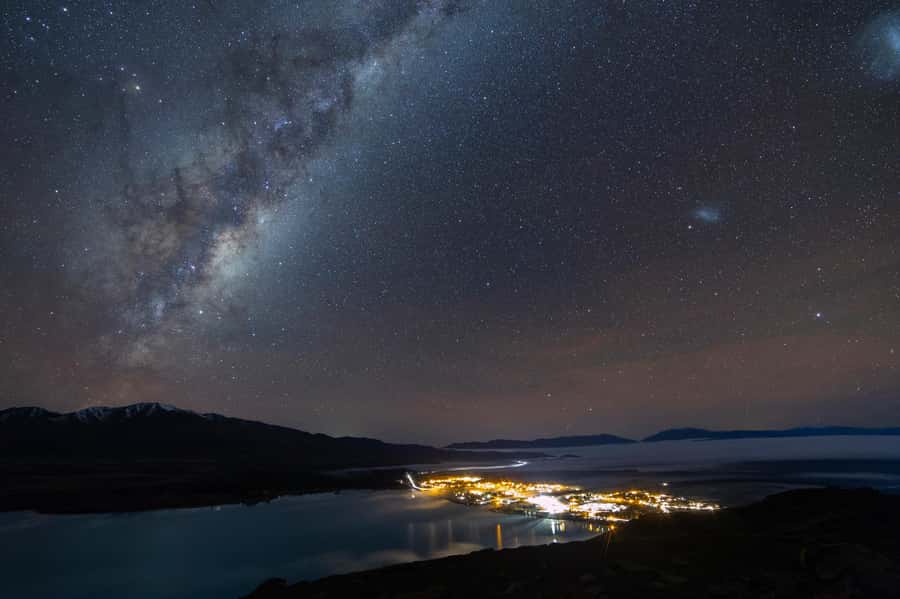
- The summit reaches 1,029 meters above Lake Tekapo, giving you a dark, open setting for viewing the Southern Hemisphere sky.
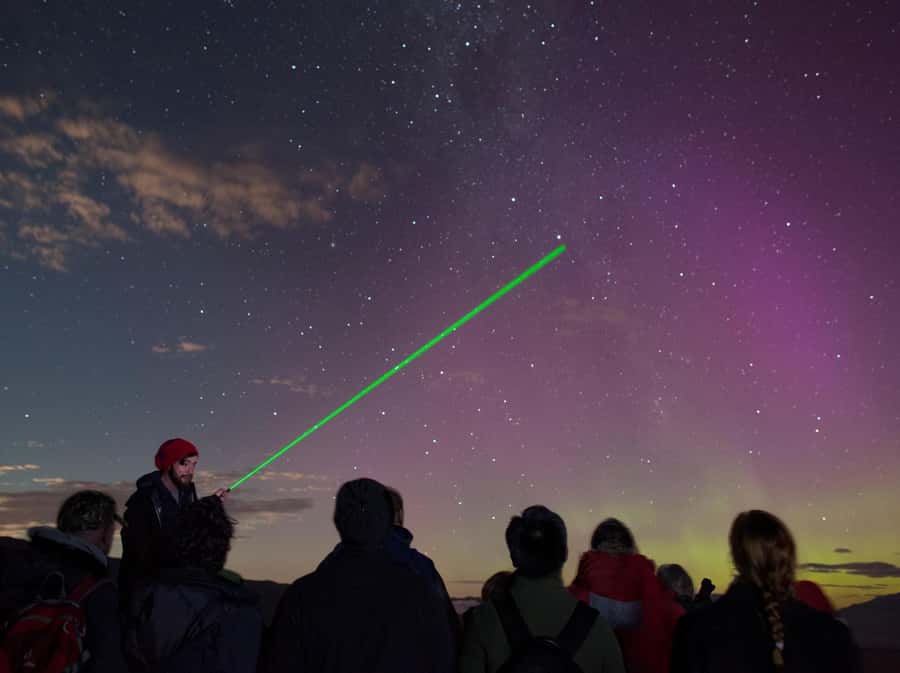
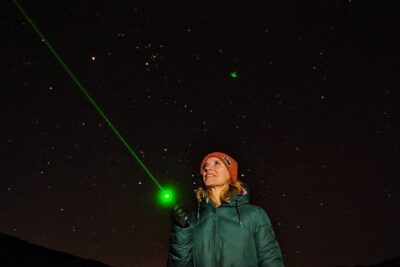
- The tour begins with naked-eye stargazing, using handheld lasers to identify stars and celestial markers before telescope viewing.
- Transport and warm jackets are included, but food, drinks, and hotel transfers are not.
- Moon phase and cloud cover matter, so a clear, darker night may show the Milky Way better than a bright moonlit evening.
- The tour suits people aged 10 and older who can walk 100 meters up a gravel incline and manage a few steps in the dark.
- The guides are the real strength, with astronomy staff who explain the sky clearly and answer questions in English, Japanese, or Chinese.
Why Mount John is the right place to see the Southern sky
Lake Tekapo sits inside the Aoraki Mackenzie International Dark Sky Reserve, described here as the world’s largest Gold Standard International Dark Sky Reserve. That designation matters because artificial light is kept low across the region, giving the sky a darker background for stars and the Milky Way.
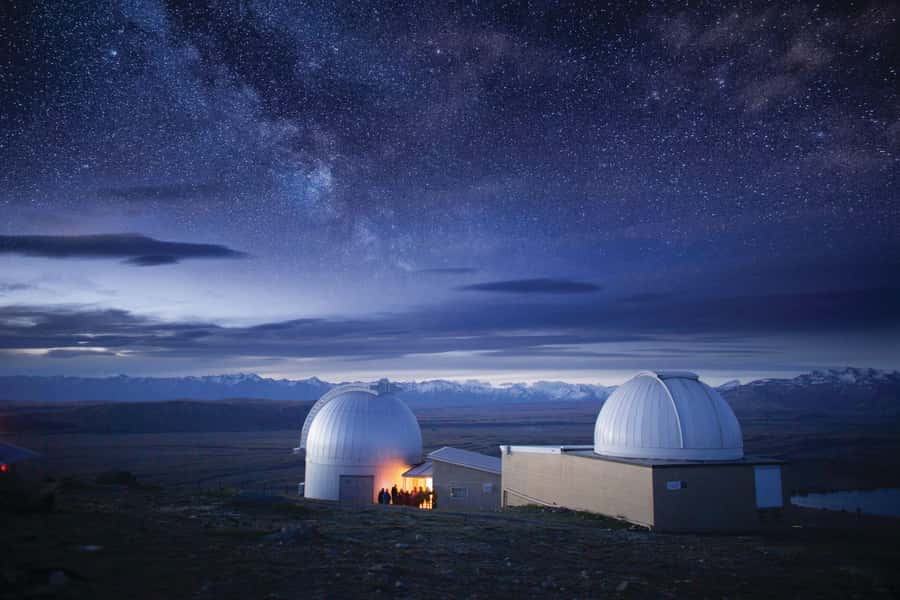
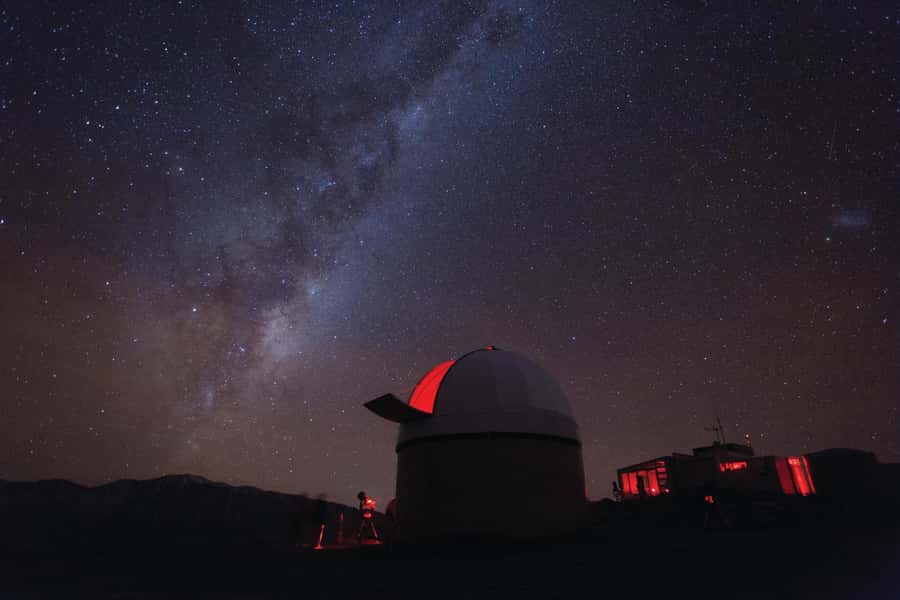
You are not simply looking up from the lakeshore. The tour takes you to the summit of Mount John, 1,029 meters above the lake, where the University of Canterbury research centre provides a fitting setting for an astronomy program. You get a sense that this is an active place of scientific study, not just a scenic lookout with a telescope placed outside.
The mountain setting also gives the evening a sense of occasion. The ride up is part of the fun. One driver jokingly called it the only nightclub in Tekapo, a good description of the dark bus journey toward a night of stars rather than flashing lights.
More Stargazing Tours in Lake Tekapo:
- Lake Tekapo: Alpine Stargazing Experience with a Guide
★ 4.5 · 626 reviews - Lake Tekapo: Stargazing Experience
★ 4.9 · 607 reviews - Chameleon Stargazing Shared Tour
★ 5.0 · 181 reviews
Meeting at the Dark Sky Project base
You need to check in at least 20 minutes before departure at the Dark Sky Project base on the Takapō, or Tekapo, lakefront. This extra time is useful because the tour does not begin at the summit. The base is where you meet the team, prepare for the cold, and board the return transport.
Hotel pickup and drop-off are not included, so plan your own way to the lakefront base. Food and drinks are also not included. One visitor appreciated receiving hot chocolate on arrival, but you should treat that as a possible extra touch rather than something guaranteed by the published inclusions.
Do not cut the arrival time too close. Once the group is checked in, the bus heads up Mount John, and late arrivals may not be able to join after departure.
The ride up Mount John after dark
The return transport removes one of the tour’s biggest practical worries. You do not need to find your own way to the summit, and you can focus on the sky rather than on a dark road or mountain route.
The ride also helps create a clear change from ordinary sightseeing to an evening outdoors. Down at the lakefront, Tekapo is a small settlement with normal lights and movement. At the summit, the darkness becomes part of the program.
Bring warm clothing even if the evening feels mild at lake level. The summit can be cold at any time of year, and the tour specifically recommends weather-appropriate clothing. The supplied extreme-cold-weather jacket adds welcome insulation, but it does not replace warm layers, closed shoes, and sensible outdoor clothing.
Naked-eye stargazing comes first
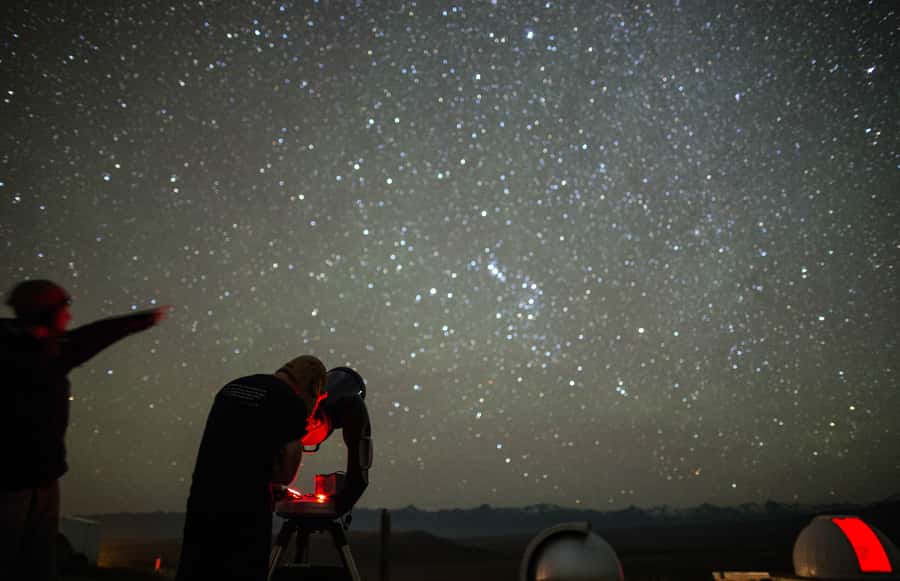
The first part of the astronomy session uses no telescope. Your guide points handheld lasers into the sky and explains what you are seeing. This is an important choice because it teaches you how to find celestial features for yourself instead of making you wait for an object to appear in a telescope.
You may learn how to locate the Southern Celestial Pole and identify bright stars such as Alpha Centauri. Depending on the date and conditions, you might also see planets or other striking objects. One clear evening included Mercury, Jupiter, and several groups of stars. Another session focused on the stars and the Milky Way under a moonless sky.
The guide-led approach helps you get your bearings fast. The Southern sky is different from what many northern-hemisphere visitors know, and the explanations give the view a sense of order. You are not just looking at a scatter of bright points. You are learning which stars matter, how to find them, and why the Southern Hemisphere offers sights you may not see at home.
The guides receive particularly strong praise for their enthusiasm and clarity. Oscar was singled out for his energy and astronomy knowledge, while other guides were described as passionate and engaging. That matters on a night tour because the quality of the explanation can decide whether a cold wait feels worthwhile.
Same dark sky, a different way to spend it:
- Mount John Observatory Stargazing Experience, Tekapo
★ 4.5 · 160 reviews - Tekapo Star Gazing Tour – Soak in the Stars
★ 4.5 · 109 reviews - Silver River Stargazing Experience in Lake Tekapo
★ 4.5 · 106 reviews - Stargazing Experience at Cowan’s Private Observatory
★ 4.0 · 85 reviews
Telescopes and realistic expectations
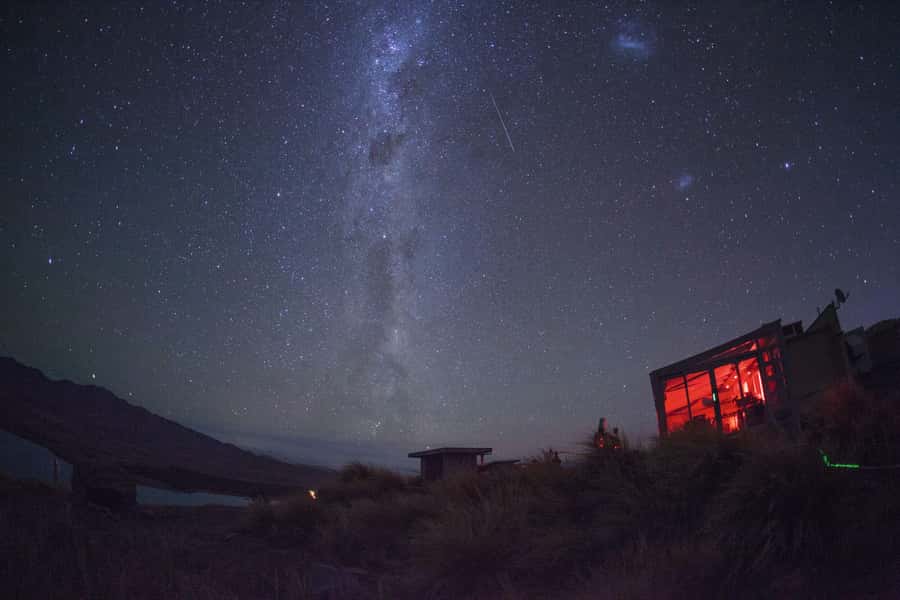
After the naked-eye session, you get a closer look through high-powered telescopes. This is where the tour can produce its most memorable moments, especially when conditions allow a planet or another bright object to be seen clearly.
You might view Jupiter, Mercury, or other celestial objects, but the exact selection depends on the time of year, the weather, and what is above the horizon during your visit. No guide can promise Saturn, Venus, the Moon, or a particular star cluster on a specific night.
It is also worth setting your telescope expectations correctly. One visitor felt the stars looked only slightly larger through the telescope than they did with the naked eye and had expected a larger instrument. That is a fair caution. This is not designed as a giant-observatory viewing session with a long list of guaranteed targets.
The telescope portion works best when you value the combination of guided explanation and a chance to inspect selected objects. If your main goal is a dramatic, enlarged view of a familiar planet, you may find the price harder to justify. If you want help understanding the entire sky, the telescope is one part of a broader evening.
Moon phase and weather can make or break the view
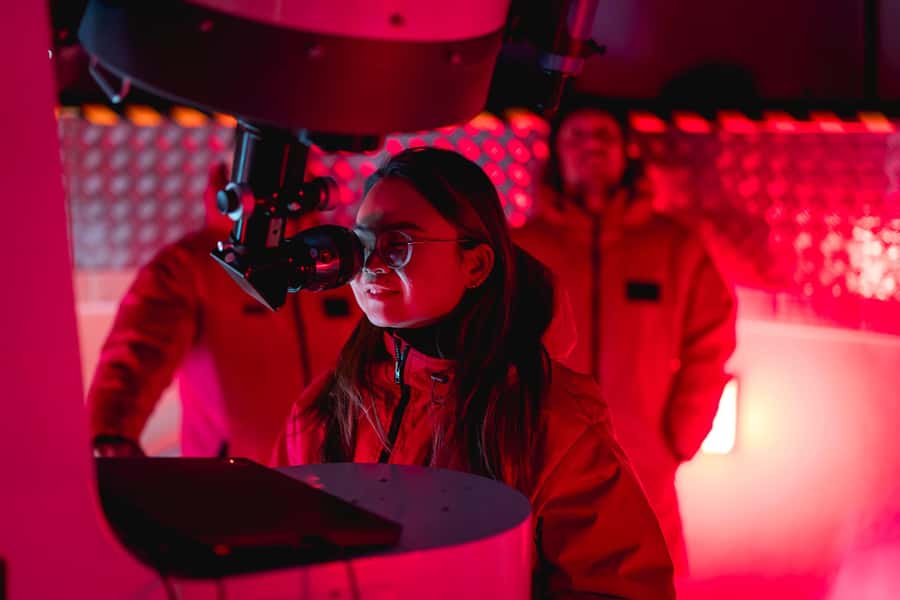
Stargazing is always at the mercy of the sky. Tours can be cancelled in bad weather, with an indoor alternative or a full refund offered. If you have flexibility, keep an eye on the forecast and consider rescheduling when conditions are poor.
Cloud is the obvious problem, but the Moon matters too. A bright moon can make the surrounding sky lighter, reducing the contrast of the Milky Way. One visitor specifically advised timing the tour near a new moon, while noting that a moonlit night can still make telescope views attractive.
A clear night with little wind gives you the best chance of seeing the sky at its most impressive. A moonless evening may reveal a stronger Milky Way, while a waxing moon can add its own interest. The important point is to choose your priority before booking: do you want the darkest possible sky, or are you happy to see a bright Moon and selected objects through a telescope?
If your schedule allows, ask about rescheduling when the forecast is poor. One participant changed nights after bad weather blocked access to the summit and found the next evening much better, with less wind and no clouds.
Cold-weather planning at 1,029 meters
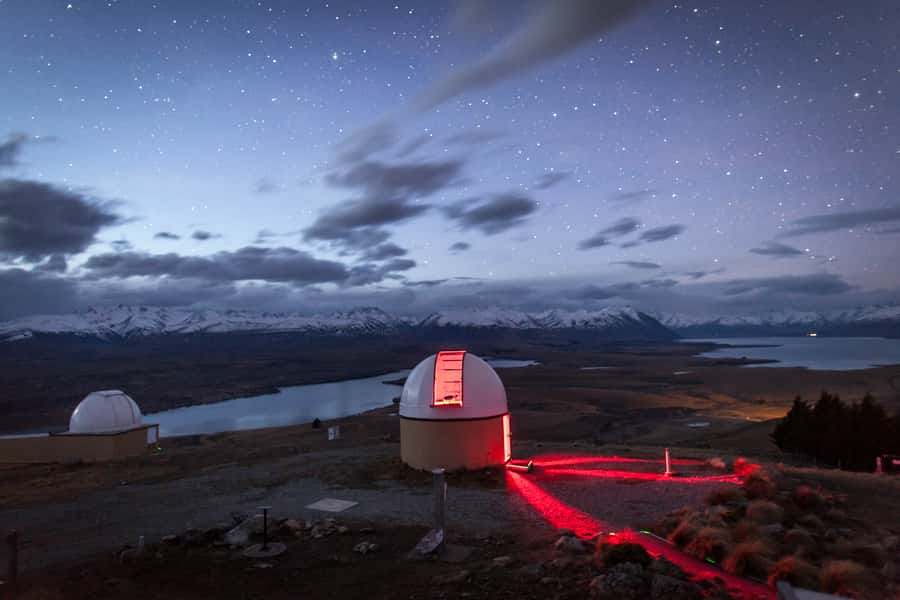
The supplied extreme-cold-weather jacket is one of the tour’s most useful inclusions. It can turn a chilly wait into a manageable one, especially during the naked-eye portion when you may be standing still for long periods.
Still, do not arrive in light holiday clothing simply because Tekapo felt comfortable earlier. Wear warm layers and bring weather-appropriate clothing. The tour takes place outdoors at night, and the summit is colder than the lakefront.
You also receive a small lanyard torch, according to one account, which helps you move around in the dark. Flash photography is not allowed. That rule protects night vision and keeps bright phone or camera flashes from disrupting the group.
Photography is not the main reason to book this tour. One participant managed only a few seconds of usable time-lapse footage despite trying for much longer. Your eyes will often do a better job than your phone, especially when the Milky Way is visible.
Walking, age limits, and language needs
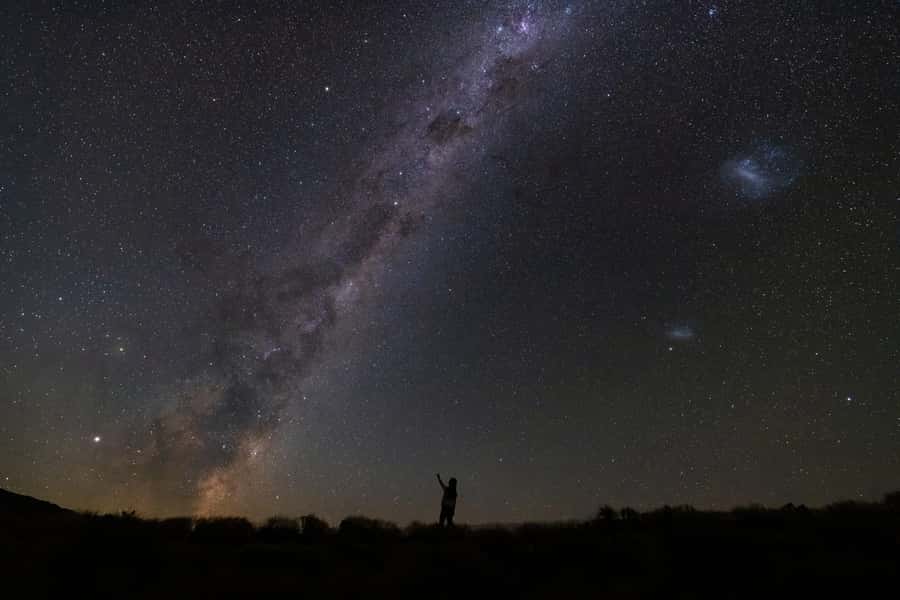
This is a family-friendly evening for ages 10 and older, but it is not suitable for everyone. You need to walk about 100 meters on a gravel incline and climb a couple of steps in the dark. People with mobility impairments may find the summit access difficult.
The tour requires you to speak the language used for health and safety instructions. Live guiding is available in English, Japanese, and Chinese. If you cannot speak the tour language, you will not be allowed to join, so check this point carefully before paying.
The physical demands are modest for most people who are comfortable outdoors, but the darkness, gravel, and cold deserve respect. Wear shoes you can walk in securely, and avoid treating this as a simple coach ride with a view.
Is $130 good value for 105 minutes?
At $130 per person, the price pays for more than telescope time. It includes return transport to the summit, access to a restricted mountaintop setting, a guide-led astronomy session, and the use of a cold-weather jacket.
The value is strongest if you would not otherwise reach Mount John at night or if you want help identifying Southern Hemisphere stars. The University of Canterbury research centre setting adds context, and the guides can turn an unfamiliar sky into something you can follow.
The price is harder to defend if you expect a large observatory telescope, guaranteed planets, or a long session. The full experience lasts 105 minutes, and weather may limit what you see. The tour is also not a meal outing, and there is no hotel transport included.
I would book it as a special Lake Tekapo activity, not as a cheap add-on. The clear-night accounts describe the sky as breathtaking, with strong praise for the guides, organization, and views. But you are paying for the chance to be there under good conditions, not a guarantee that every major planet will appear.
Who will enjoy this tour most?
You are likely to enjoy Mount John Summit Stargazing if you:
- Want to see Southern Hemisphere stars with help from an astronomy guide
- Appreciate science explained in plain language
- Can handle cold, gravel, darkness, and a short uphill walk
- Have some flexibility to change nights if the weather turns bad
- Prefer a guided experience over simply looking up from the lakeshore
- Are visiting Lake Tekapo with children aged 10 or older
You may want another plan if you dislike cold outdoor activities, need step-free access, cannot speak the tour language, or mainly want close-up planet images through a very large telescope.
Should you book Mount John Summit Stargazing?
Yes, if you want an organized introduction to the Southern sky and can accept weather risk. The summit location, skilled guides, return transport, and warm jackets make the evening easy to manage, while the naked-eye lesson gives you something useful to take home.
For the best chance of seeing the Milky Way, aim for a clear night near the new moon and keep your schedule flexible. If the forecast is poor, ask about changing dates rather than forcing the issue.
I would not book this expecting a guaranteed view of Saturn, Venus, or a giant telescope image. I would book it to learn the Southern sky from people who care about astronomy, then look up from Mount John and let the dark do the rest.
FAQ
How long does the Mount John stargazing tour last?
The experience lasts 105 minutes, or one hour and 45 minutes.
Where do I meet the tour?
You meet at the Dark Sky Project base on the Takapō, or Tekapo, lakefront. Check in at least 20 minutes before departure.
Is transport to Mount John included?
Yes. Return transport from the Dark Sky Project base to the Mount John summit is included. Hotel pickup and drop-off are not included.
What should I wear?
Wear warm, weather-appropriate clothing year-round. An extreme-cold-weather jacket is provided at check-in, but you should still bring suitable layers and outdoor shoes.
Can children join the tour?
Children must be at least 10 years old. The tour is not suitable for children under 10.
What happens if the weather is bad?
The tour may be cancelled in bad weather. An indoor alternative or a full refund will be offered.
Is the tour available in languages other than English?
Yes. Live guides are available in English, Japanese, and Chinese. You must speak the language used on the tour for health and safety reasons.
Just added around Lake Tekapo
- Virtual Stargazing & Astronomy Experience in Lake Tekapo★ 3.0 · 2 reviews
- Lake Tekapo Ultimate Stargazing Experience★ 5.0 · 3 reviews
- Lake Tekapo: Indoor Māori Cultural Astronomy Experience★ 4.5 · 43 reviews
- Lake Tekapo: Ultimate Stargazing Experience★ 4.3 · 12 reviews
- Lake Tekapo: Virtual Stargazing and Astronomy Experience★ 4.5 · 8 reviews
- Lake Tekapo: Stargazing Experience at Cowan’s Observatory★ 4.7 · 52 reviews
- Lake Tekapo: 1.5-Hour Hot Pools & Stargazing Experience★ 4.0 · 45 reviews
- Stargazing Experience at Cowan’s Private Observatory★ 4.0 · 85 reviews
Stargazing Tours, compared.
Dubai Red Dunes ATV, Camels, Stargazing & 5* BBQ Al Khayma Camp
Read our review →
Teide National Park Sunset & Stargazing with Dinner (Star Safari)
Read our review →
Sunset Camel Trek, Al Khayma Camp, Stargazing & BBQ
Read our review →
Overnight Safari, Dinner, Stargazing & Al Khayma Camp
Read our review →
Dubai Overnight Desert Safari, BBQ & Stargazing at Al Khayma Camp
Read our review →Browse the lists this tour appears in