
Review · GREECE
Kifissia Stargazing & Astrophotography
Look up, and Athens changes. At Alsos Ktimatos Siggrou, Panos from the Aegean Astronomy Club turns a dark evening into a guided tour of constellations, Greek myths, planets, and the larger questions behind them. I like the three-part format, which moves from simple star-finding to bigger cosmic ideas and then to photography. I also like the personal touch of using a telescope to bring the Moon and planets closer.
The main thing to consider is the short running time. Ninety minutes is enough for a focused introduction, but not for a long night of observing every major object in the sky. The activity also depends on good weather, and the meeting point in Marousi requires you to plan your transport carefully.
What makes this stargazing experience special
- Greek mythology meets the night sky: Learn how official constellations connect with famous stories from Greek mythology.
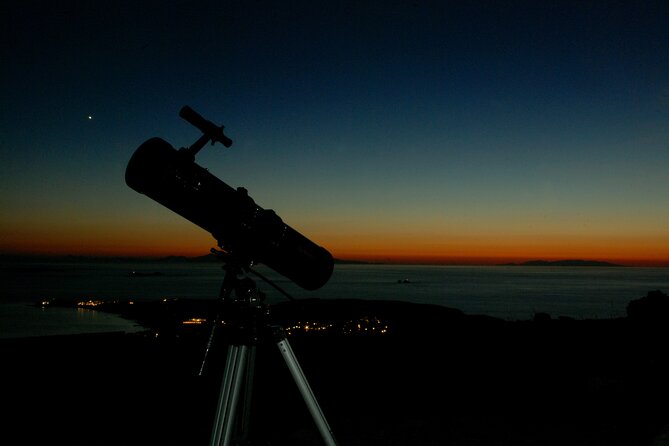
- A real telescope is part of the experience: The club’s telescope brings selected stars, planets, and lunar details closer.
- The evening has three clear sections: You get observational astronomy, philosophical questions, and astrophotography tips.
- Panos gives the experience a warm, personal tone: His enthusiasm, patience, and storytelling are central to the evening.
- You create a personal souvenir: The photography section aims to help you capture an image from the night sky.
- It is private for your group: You do not share the activity with a large public tour.
Meeting the stars in Kifissia
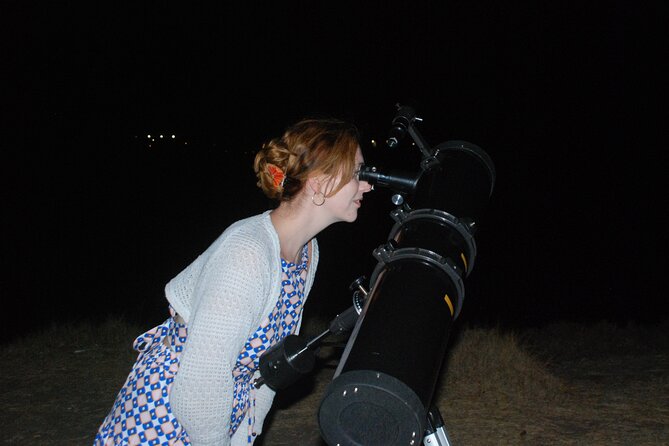
This experience begins at Leof. Kifisias 182 in Marousi, with the stargazing itself taking place at Alsos Ktimatos Siggrou. The activity finishes back at the meeting point, so you are not left arranging a return transfer from a different part of Athens.
That simple out-and-back setup is useful, but do not treat the address as a minor detail. Marousi is north of central Athens, and you should allow time to reach the meeting point. The experience is offered in English, and confirmation arrives within 48 hours of booking, subject to availability.
The activity lasts about one hour and 30 minutes. That makes it easy to fit into an evening, but it also means the guide has to keep the program moving. You will get a concentrated introduction rather than a long, open-ended night under the stars.
The setting at Alsos Ktimatos Siggrou is important. Stargazing is much easier when you have a quiet, dark place away from the strongest city lights. The available descriptions point to a peaceful outdoor setting, and the darkness helps the telescope do its job. Still, Athens is a large urban area, so you should keep expectations sensible. This is not an isolated mountaintop observatory.
More Astrophotography Tours in the world:
- Private astronomy tour with sunset toast, picnic, and astrophotography
★ 4.8 · 83 reviews - AuthenticAs Star Gazing -Nightscape Portrait Photography Tour
★ 5.0 · 59 reviews - Moab: The Windows Astro-Photography and Stargazing Hike
★ 4.8 · 36 reviews
Section one: finding your bearings among Greek constellations
The first part is called observational astronomy. It begins with the background of astronomy, ancient civilizations, and the official constellations recognized today.
This is a smart way to start. Many people look upward and see scattered points of light with no clear pattern. By learning how astronomers divide the sky into constellations, you gain a simple system for getting your bearings. The guide also connects those patterns with Greek mythology, giving the stars memorable stories instead of leaving them as dry labels.
I especially like this approach for first-time stargazers. You do not need a technical background. The stories give you a way to remember what you are seeing, while the astronomy explains how those objects fit into our cosmic neighborhood.
The guide also helps orient you according to the stars. That phrase matters because the session is not just a lecture. It is meant to connect the ideas with the actual sky above you. Cloud cover and visibility will affect how much you can identify, but the structure gives the evening a clear purpose.
You may hear about the history of astronomy as well as the way ancient cultures interpreted the heavens. The focus is not only on modern science. It links human curiosity, myth, navigation, and observation, which makes the subject feel connected to everyday life.
Section two: asking the unsettling questions
The second section shifts from identifying objects to thinking about what they mean. Here, Panos discusses some of astronomy’s most surprising facts and biggest mysteries.
This is the part that can make the experience more than a standard constellation lesson. You are encouraged to think about the scale of space, the nature of stars and planets, and the limits of what humans can know. The material is presented as philosophical astronomy, so expect questions as well as explanations.
That format suits curious people who enjoy asking how do we know this? and what does it mean? It also gives you room to ask questions. Panos has been praised for patience when explaining difficult subjects, which is useful when astronomy starts to move beyond the basics.
The tone appears to be friendly rather than academic. You should not need a science degree, and you will not be expected to know technical terms in advance. The point is to make large ideas understandable without draining them of their wonder.
There is a possible tradeoff. With only 90 minutes for the whole program, the philosophical section cannot explore every mystery in detail. If you already know a lot about astronomy, you may want a longer, more specialized session. For most visitors, though, this section adds welcome depth.
The telescope: seeing more than points of light
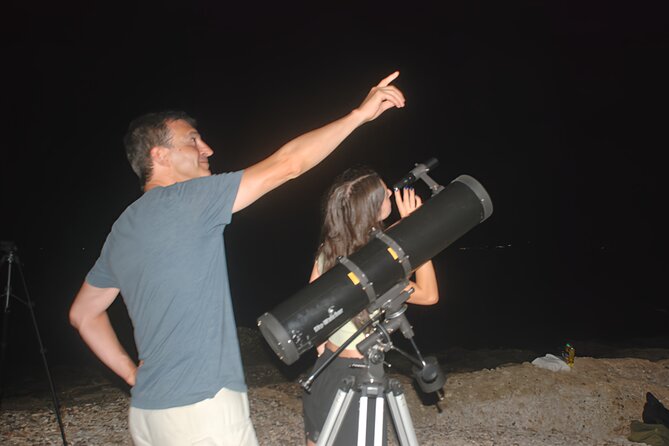
The club’s telescope is used throughout the experience. That gives the evening a practical center and helps break up the talking.
A telescope changes your relationship with the sky. A star map or phone app can identify an object, but seeing it through an optical instrument gives you a more direct sense of distance and scale. The exact objects available will depend on the date, time, and weather, so the guide cannot promise a fixed list.
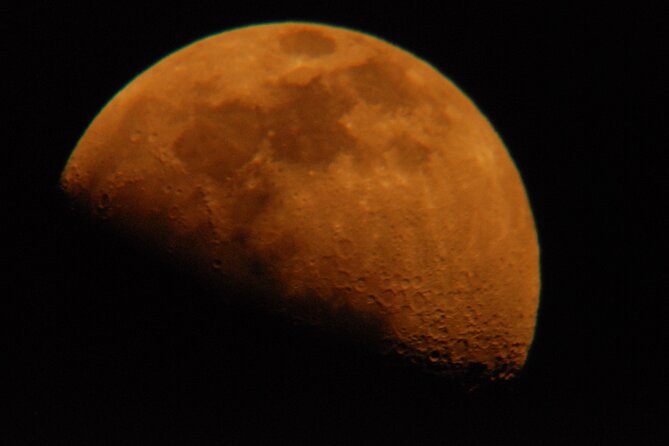
Past sessions have included clear views of the Moon and Saturn’s rings. Those sights can be especially memorable for someone seeing them through a telescope for the first time. Saturn is not just a bright dot when the rings are visible. It becomes a distinct planet with a shape you can recognize.
The same is true of the Moon. Telescope views can reveal a sharper sense of its surface than you get with the naked eye. You should treat these examples as possible highlights, not guaranteed features for every date.
The best way to approach the telescope is with patience. There may be pauses while the guide locates an object or adjusts the equipment. That is part of real observing. The sky does not operate on a fixed schedule, and a short wait can be worthwhile when the view finally appears.
More Stargazing Tours in the world:
- Dubai Red Dunes ATV, Camels, Stargazing & 5* BBQ Al Khayma Camp
★ 5.0 · 21,620 reviews - Sharm El-Sheikh: Ultimate ATV Quad, Stargazing & BBQ Dinner
★ 4.7 · 4,084 reviews - Tenerife: Teide National Park Sunset & Stargazing Tour
★ 4.2 · 3,812 reviews - Tenerife: Sunset and Stargazing at Teide National Park
★ 4.7 · 2,826 reviews
Astrophotography and your personal souvenir
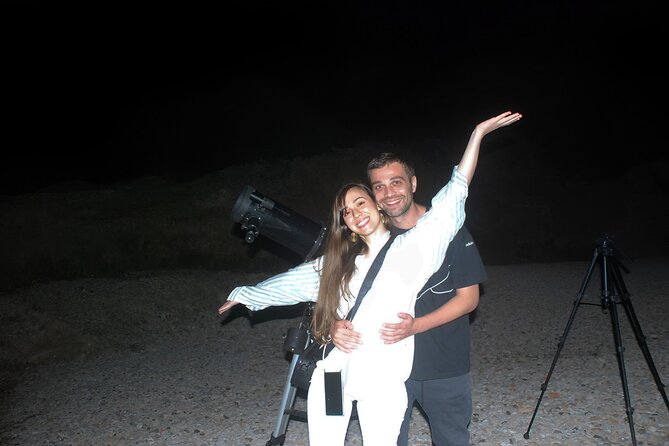
The final section introduces astrophotography tips and techniques. The goal is to help you capture an image from the starry evening as a personal souvenir.
This is not presented as a full photography course. It is a short introduction inside a broader stargazing session. You should expect practical guidance rather than an advanced lesson in lenses, tracking mounts, or image processing.
That makes it a good fit if you have never tried photographing the night sky. The guide can help you think about composition, timing, and how to approach the subject. The exact equipment and final image process are not specified, so you should not assume that a professional camera or a finished print is included.
The photography section also gives the evening a tangible ending. Astronomy can feel abstract, especially when you are discussing galaxies and cosmic time. Taking or helping create an image gives you something concrete to remember.
If photography is your main reason for booking, read the description carefully and ask the provider what equipment you should bring. The advertised experience promises tips and a unique image, but it does not spell out the camera setup or technical level.
Panos and the feel of a private evening
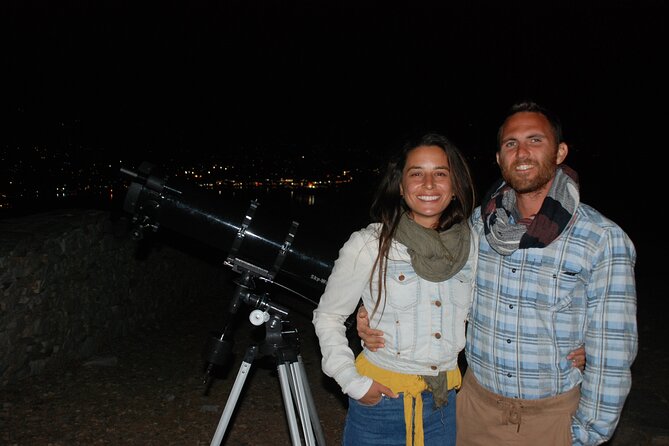
Panos is a major part of the appeal. His enthusiasm for astronomy comes through in the way the program combines storytelling, explanations, and telescope work.
You can expect a guide who enjoys Greek mythology as much as scientific ideas. That mix helps keep the evening human. Instead of treating the stars as a list of objects, Panos connects them to stories, questions, and personal curiosity.
His patience also matters. Astronomy can quickly become confusing when terms and distances pile up. A guide who takes time with questions makes the activity more comfortable for beginners and younger participants.
The private format is another advantage. Only your group takes part, so the pace can respond to your interests. You may have more freedom to ask questions than you would on a large group tour. It also makes the activity suitable for a couple, a family, or a small group of friends looking for a quieter evening.
The private setting does not mean you get unlimited time. The experience still lasts about 90 minutes, and the program has three planned sections. Think of it as a focused private presentation with hands-on observing, not a completely improvised night.
Is $102.13 a fair price?
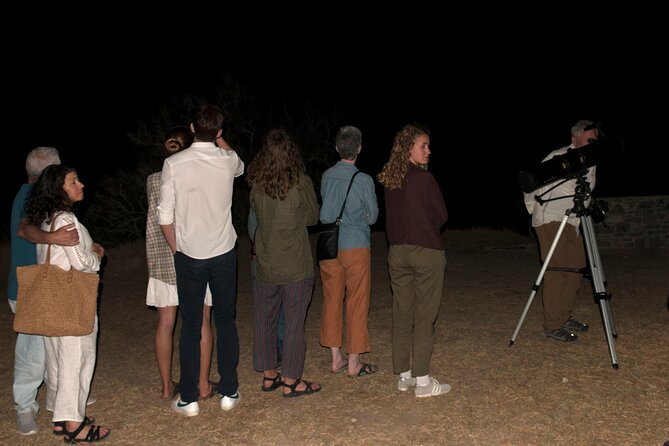
At $102.13 per person, this is not a bargain-priced evening activity. The value depends on what you want from it.
You are paying for a private experience, an English-speaking guide, access to a telescope, a structured astronomy program, and an introduction to astrophotography. For a couple marking a birthday or planning a special evening, the personal format can make the price easier to justify.
The activity also offers something you will not get from simply walking through Athens at night. The guide supplies a framework for seeing the sky, explains the stories behind the constellations, and helps you understand what you are looking at. That added interpretation is the main value.
For a solo visitor or a strict budget traveler, the price may feel high for 90 minutes. You should also remember that cloud cover can affect the telescope portion. The weather policy protects you if the operator cancels, but a clear sky cannot be guaranteed when you book.
I would see this as a special-interest experience rather than a basic sightseeing stop. If you already love astronomy, the private setting and telescope may make it worthwhile. If you are only mildly curious, compare the cost with other evening activities before committing.
Who should book this experience?
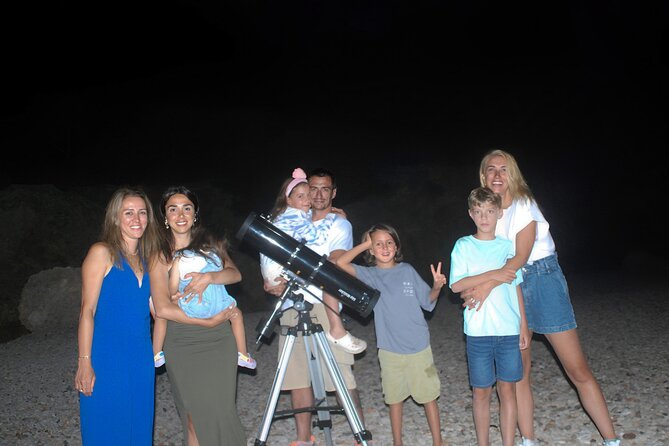
I would recommend it most strongly to:
- First-time stargazers who want clear explanations
- Couples looking for a thoughtful birthday or evening experience
- Families with children who enjoy stories and space
- Amateur photographers curious about night-sky images
- Visitors who like Greek mythology and want to connect it with the sky
- Small private groups that prefer questions and conversation
You may want to skip it if you need a packed sightseeing schedule or dislike weather-dependent plans. It is also not the best fit if you want an advanced astrophotography workshop or a long professional observing session.
The activity is broadly accessible, and most people can participate. Service animals are allowed. Since the experience takes place outdoors, it is sensible to prepare for an evening outside, though the available details do not specify clothing or equipment requirements.
Booking, weather, and timing advice
The experience is often booked well ahead, with an average booking time of about 33 days. That suggests you should reserve early if your Athens dates are fixed, especially if you want a particular evening.
You can cancel for a full refund up to 24 hours before the start time. Changes or cancellations made inside that window are not accepted for a refund. The cut-off follows local time.
Good weather is required. If poor conditions force a cancellation, you are offered another date or a full refund. This is a fair policy for an outdoor astronomy activity, but it means you should keep some flexibility in your schedule if the stars are important to your plans.
Plan your route to the Marousi meeting point before the evening begins. The activity returns to that same meeting point, which simplifies the end of the night. Confirmation is sent within 48 hours, subject to availability.
Should you book Kifissia Stargazing?
Book it if you want a personal, story-led introduction to the night sky, especially if Greek mythology, planets, and photography all interest you. The strongest features are Panos’s enthusiasm, the private format, the telescope, and the chance to see objects such as the Moon or Saturn when conditions cooperate.
Think twice if you want guaranteed views, a long observing session, or advanced camera instruction. The program is short and weather dependent, and the $102.13 price asks you to value personal guidance over sheer duration.
For the right person, this is a memorable way to spend an Athens evening. You leave with more than a few star names. You gain a better sense of how people have used the sky to tell stories, ask questions, and understand their place in space.
FAQ
Where does the stargazing experience begin?
It begins at Leof. Kifisias 182, Marousi 145 62, Greece.
Where does the activity end?
The activity ends back at the meeting point.
How long does the experience last?
It lasts approximately one hour and 30 minutes.
What language is the experience offered in?
The experience is offered in English.
Is this a private activity?
Yes. Only your group participates.
What happens during the astronomy introduction?
You learn about the history of astronomy, ancient civilizations, official constellations, Greek mythology, star-based orientation, and our cosmic neighborhood.
Is a telescope used?
Yes. The Aegean Astronomy Club’s telescope is used throughout the experience to bring you closer to objects in space and time.
What happens if the weather is poor?
Because the experience requires good weather, a cancellation caused by poor conditions gives you the choice of another date or a full refund.
Just added around the world
- ( canyon hurghada & stargazing )★ 4.9 · 16 reviews
- Vincentia: Jervis Bay Beach Stargazing with an Expert★ 4.9 · 19 reviews
- Twizel Stargazing Experience with a Guide (Carbon Positive)★ 4.7 · 26 reviews
- Twizel: Stargazing Tour with an Astronomer and Telescope★ 4.9 · 36 reviews
- Blue Mountains: Stargazing with a Telescope and Astronomer★ 4.4 · 21 reviews
- Star Safari Stargazing Experience, Martinborough★ 5.0 · 6 reviews
- Klein Karoo “High 5” Stargazing Experience in Oudtshoorn★ 5.0 · 7 reviews
- VIP Sunset & Stargazing experience★ 4.5 · 44 reviews
Astrophotography Tours, compared.
Private astronomy tour with sunset toast, picnic, and astrophotography
Read our review →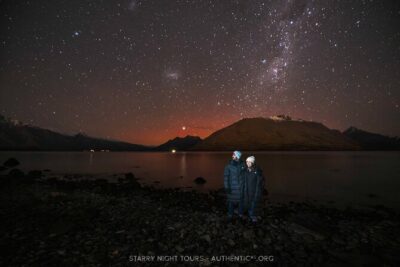
AuthenticAs Star Gazing -Nightscape Portrait Photography Tour
Read our review →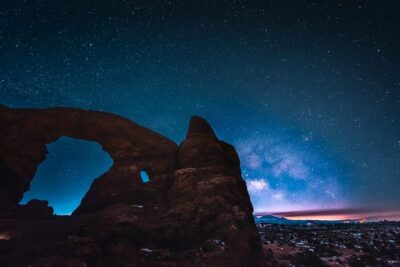
The Windows Astro-Photography and Stargazing Hike
Read our review →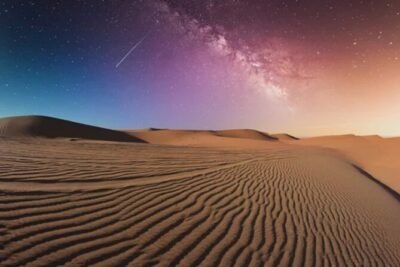
Doha Night Desert Safari, Stargazing, Photography، Relaxation
Read our review →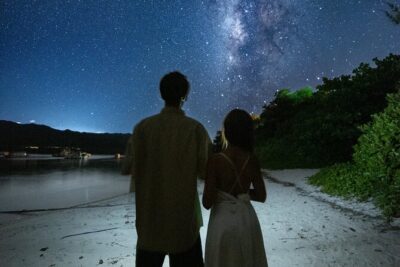
Private Stargazing Photography Tour In Kabira Bay
Read our review →Private Stargazing Photography Tour In Kabira Bay
Read our review →
Milky Way Photography Workshop in Acadia National Park
Read our review →
Browse the lists this tour appears in