
Review · CHILE
Easter Island: Rapa Nui Stargazing Tour
The best compass may be above you. This three-hour Rapa Nui stargazing tour connects the night sky with the voyages that brought Polynesian settlers to Easter Island. I like the mix of astronomy and cultural history, and I like that the evening includes telescope viewing near traditional observatory sites, a hot drink, local cake, and a digital photo. The main drawback is value: at $140 per person, the experience may feel costly if clouds or limited celestial activity shorten the evening.
You meet in front of Katipare Library in Hanga Roa, then travel by vehicle to a remote viewing area. Guide Marc, also written as Mark in tour material, has made a strong impression with clear explanations, a traditional song, and even an original song during one evening. Be ready for uneven ground, bring warm clothing, and remember that the National Park ticket is not included.
Key points to know before booking
- Polynesian navigation takes center stage: You learn how voyagers used stars, constellations, and basic astronomy to cross the Pacific.
- The timing changes by season: Meet at 9 p.m. in summer or 7 p.m. in winter, in front of Katipare Library.
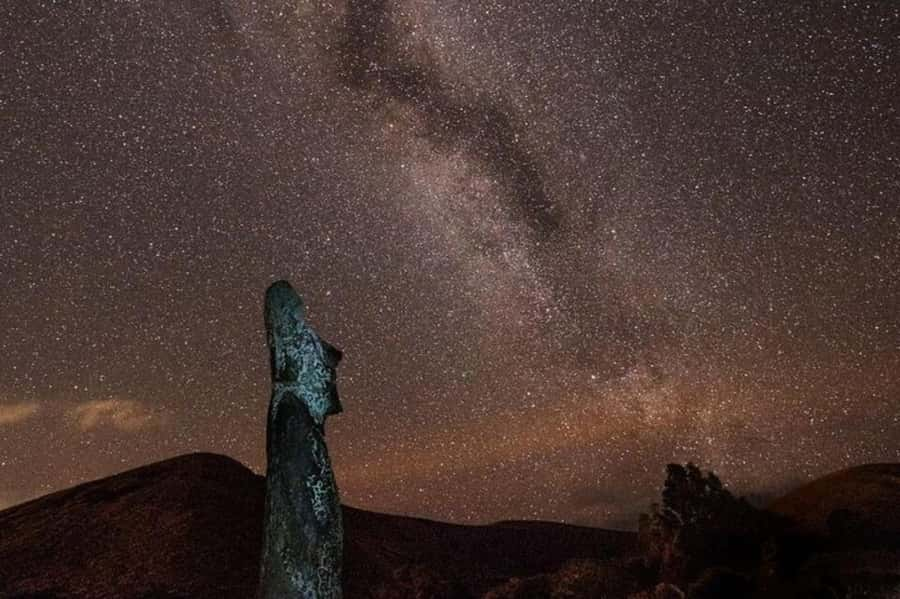
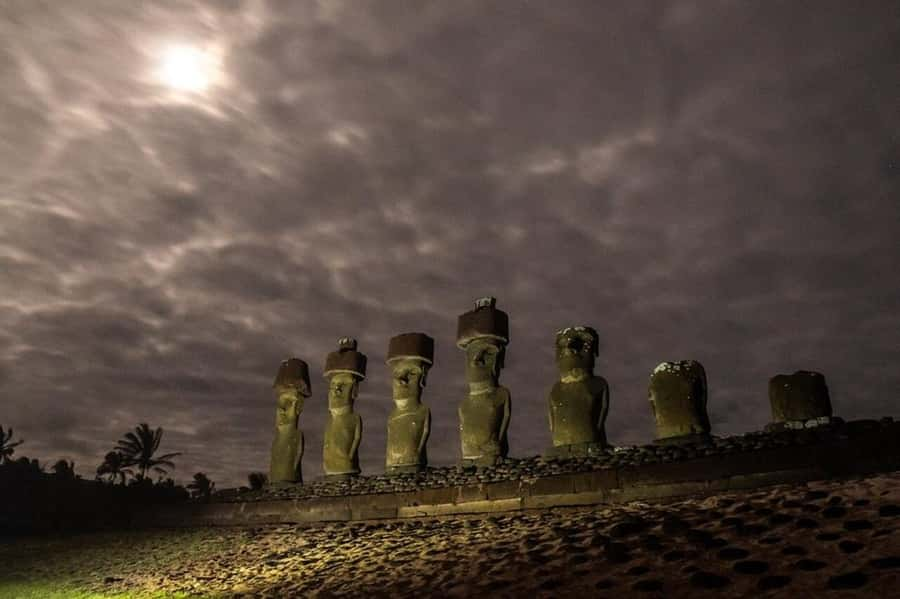
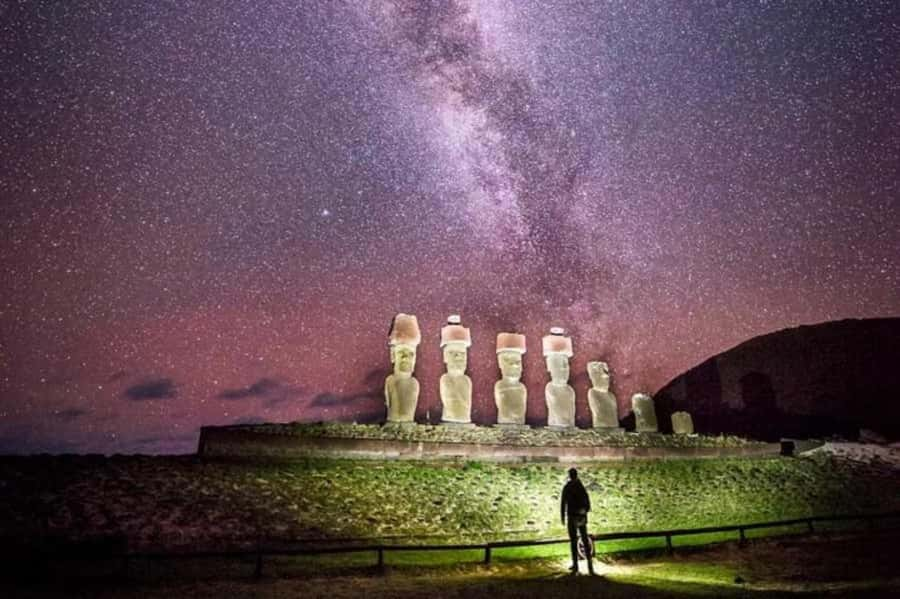
- Moai by moonless starlight: The experience can include access to Ahu Nau Nau at night and photos beside the statues.
- The telescope is the main activity: You spend meaningful time viewing stars and planets at a remote observation site.
- Small groups keep it personal: The maximum group size is 12 people, with English or Spanish commentary.
- Moon phase matters: The tour does not operate from four days before to two days after the full moon.
Why Rapa Nui is a powerful place for stargazing
Easter Island sits far from major population centers, and its isolation gives the night sky a central role. This tour uses that setting to explain more than star names. You learn how Polynesian voyagers read the sky as part of a much larger system of ocean travel, settlement, and direction finding.
That connection gives the evening a clear purpose. You are not simply taken outside to point a telescope at a planet. You are shown why the sky mattered to the people who reached one of the most remote inhabited islands on Earth.
The program covers basic astronomy, Polynesian voyaging, settlement of Rapa Nui, navigation methods, and archeo-astronomy. The last subject links astronomical observations with places built or used by earlier communities. That makes the tour especially useful if you want more context for the island’s archaeological sites.
I appreciate that the experience does not treat astronomy as a separate subject. The stars are tied to human movement, local culture, and the stone monuments around you. That gives the evening more substance than a standard telescope session.
More Stargazing Tours in Chile:
- San Pedro de Atacama: Etno-Stargazing Tour with Transfer
★ 4.8 · 629 reviews - San Pedro de Atacama: Stargazing Experience
★ 4.7 · 489 reviews - Astronomical Tour with Guide and Pick Up San Pedro de Atacama
★ 4.5 · 145 reviews
Meeting at Katipare Library and heading into the night
You meet outside Centro Lector Katipare, also called Katipare Library, in Hanga Roa. There is no hotel pickup, so you need to reach the meeting point yourself. Hotel drop-off is included at the end, which is useful after a late night.
The starting time changes with the season. In summer, the meeting time is 9 p.m. In winter, it is 7 p.m. Check the exact departure time for your date, since the schedule is designed around darkness rather than a fixed daily timetable.
The tour lasts about three hours. That gives you enough time for transport, explanations, telescope viewing, photography, and the refreshment stop, but it is not a full-night astronomy camp. The pace is likely to feel relaxed rather than rushed, though the amount you see will depend heavily on the weather and the night’s conditions.
The group limit is 12 people. That is a useful size for a telescope because you should have a fair chance to see through the instrument and ask questions without being lost in a crowd. Commentary is available in English and Spanish.
Learning how Polynesian voyagers read the sky
The cultural portion is the heart of the experience. Your guide explains how stars and constellations helped Polynesian voyagers navigate across the Pacific. This gives you a new way to think about the island’s settlement. Rapa Nui was not reached by accident, and the sky was one of the tools that made long ocean passages possible.
You also learn basic astronomy before using the telescope. That order matters. Once you understand what you are looking at, the viewing feels more connected to the story rather than like a series of unexplained bright points.
The focus on the Southern Hemisphere is another plus. Some stars and constellations visible from Rapa Nui are not familiar to visitors from northern countries. If you have spent most of your life looking at a different night sky, this can be one of the most memorable parts of the evening.
The guide’s style can shape the experience. Marc, also identified as Mark, has been praised for explaining constellations and navigation clearly. One evening ended with a traditional song, and another included a song he had written himself. Those touches are not the main reason to book, but they can turn an informative outing into a more personal cultural experience.
Telescope viewing at a remote observation site
After the introduction, you travel to a remote site for sky viewing. The telescope gives you a closer look at stars and planets than you can get with the naked eye. You also have time to simply look upward, which is important on an island where the darkness is part of the attraction.
The telescope is the most dependable feature of the program when conditions are good. One three-star assessment still described the telescope time as substantial, although the person felt there was not much else happening during that particular night. That is a fair warning: the tour is not packed with constant activity.
Your experience can change with cloud cover, visibility, and what is available in the sky. The operator requires good weather and will cancel if conditions are poor, offering another date or a full refund. Even on a clear evening, the range of stars and planets you see may vary.
You can take your own photographs. A phone on a tripod was allowed during one evening, which is helpful if you want to try your own night-sky images. Do not expect ordinary handheld phone photos to capture the sky well, but the permission to set up your own camera adds flexibility.
A digital photo is included. This is likely to be more useful for capturing you with the Moai than for replacing a serious astrophotography setup. Still, it gives you a ready-made memory without requiring you to manage a camera in the dark.
Same dark sky, a different way to spend it:
- “Astronomical Adventure in San Pedro de Atacama”
★ 4.5 · 96 reviews - San Pedro de Atacama: Guided Atacama Desert Stargazing Tour
★ 3.9 · 93 reviews - Rapa Nui Stargazing
★ 4.5 · 62 reviews - Stargazing Hiking Valle de Elqui
★ 5.0 · 46 reviews
Ahu Nau Nau, Moai, and the special feel of nighttime access
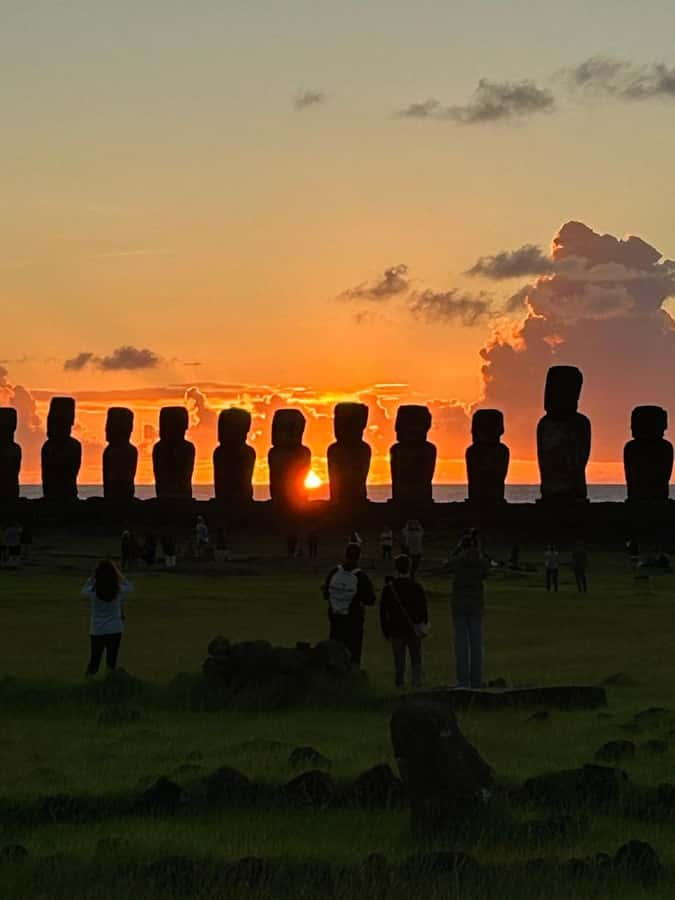
One of the most unusual elements is nighttime access to Ahu Nau Nau. Seeing the Moai after dark changes the mood completely. The statues are no longer part of a busy daytime sightseeing circuit. Instead, they become part of a quiet setting where the archaeological site and the sky are viewed together.
You may also have access to the beach at night. A particularly memorable evening included private access to the beach, stargazing, and photographs beside the Moai. That combination gives the tour an emotional lift that telescope viewing alone might not provide.
You should keep expectations measured. Night access and clear views depend on weather and the specific conditions of the outing. The supplied details confirm access to Ahu Nau Nau, but they do not promise every possible stop or the same photographic setup each night.
The ground can be uneven. An older participant found the surface difficult to navigate safely, and the lack of built-in light was a concern. Wear sturdy shoes, move slowly, and use your own small flashlight if you have one. The tour is not suitable for wheelchair users.
Hot chocolate, local cake, and a welcome pause
The refreshment break includes hot chocolate and local cake. This is a small feature, but it matters during a late outdoor activity. A warm drink gives you a chance to pause between explanations and telescope viewing, especially during the cooler winter departure.
The break also keeps the evening from feeling like a lecture followed by a quick look through an instrument. You have a simple social moment with the group and guide. The food is not a full meal, so eat beforehand if you need dinner.
The program includes a driver and guide, live commentary during the outing, hotel drop-off, your digital photo, and the option to take your own pictures. Hotel drop-off is especially practical because the return comes late, and it removes the need to arrange a ride back after the tour.
Is $140 a fair price?
At $140 per person, this is not a budget activity. The value depends on what you want from the evening and how much the cultural setting matters to you.
You are paying for a small-group experience, transport during the tour, a guide, telescope access, nighttime access connected with Ahu Nau Nau, refreshments, a digital photo, and hotel drop-off. You are also paying for a specialized program in a very remote destination, where a regular astronomy club experience may not be easy to arrange.
I think the price makes more sense if you care about the Polynesian navigation story and the chance to see the Moai at night. It is harder to justify if you mainly want a quick telescope session. One three-star assessment found the evening too limited for the cost, particularly when there was not much happening beyond the telescope.
Weather is the biggest value risk. A clear night can make the program memorable, especially with the beach, statues, and singing. Poor conditions can lead to cancellation, and even a merely average night may leave you feeling that three hours did not offer enough for the price.
The full moon schedule helps protect the experience. The tour does not operate four days before or two days after the full moon, when bright moonlight would reduce the contrast of stars. Plan your dates carefully if stargazing is a priority.
Who will enjoy this most?
I would recommend this tour to you if you like cultural context as much as scenic views. It suits people who want to understand how Polynesian voyaging worked, enjoy guided interpretation, and are happy to spend a quiet evening outdoors.
It is also a good fit if you want a different view of Easter Island beyond daytime archaeological visits. Seeing Ahu Nau Nau and the Moai after dark can make familiar sites feel new.
You should think twice if you need firm, weather-proof entertainment. The tour depends on clear conditions, and its activities are intentionally simple: explanation, sky viewing, photography, refreshments, and time at a nighttime archaeological setting.
It may not suit you if walking on uneven ground is difficult, if you use a wheelchair, or if you dislike late schedules. The summer start is at 9 p.m., and even the winter start at 7 p.m. leads into a three-hour outdoor evening.
Practical tips for a better night
Arrive at Katipare Library before the stated meeting time. Since hotel pickup is not included, allow enough time to reach the library in Hanga Roa without relying on a last-minute transfer.
Check the moon phase before booking. The operator avoids the period from four days before through two days after the full moon, and that restriction is a clue to how much the tour depends on dark skies.
Bring warm layers and shoes with a firm sole. The tour takes place outdoors, and the ground can be uneven around viewing areas. A small personal flashlight may help, but use it carefully so you do not spoil other people’s night vision.
If you want your own photos, bring a phone tripod or other stable support. The use of a tripod was permitted during one outing, but you should follow the guide’s instructions about where and when to set up.
Keep dinner plans in mind. Hot chocolate and local cake are included, but they are refreshments rather than a meal.
The tour has free cancellation up to 24 hours in advance. If bad weather or insufficient bookings cancel the experience, you are offered another date, another experience in some cases, or a full refund.
Should you book the Rapa Nui stargazing tour?
Book it if you want an evening that links Polynesian navigation, Southern Hemisphere stars, and Moai after dark. The small group, telescope, guide commentary, photo, refreshments, and hotel drop-off create a well-shaped experience, and Marc’s singing can add a memorable human touch.
Skip it if $140 feels too high for an activity whose quality depends on weather and the night’s sky. This is not a nonstop program, and some evenings may feel quiet. For the right visitor, that quiet is the point. You are not just checking off another attraction. You are giving the island’s sky time to tell part of its story.
FAQ
Where does the Rapa Nui stargazing tour meet?
You meet in front of Centro Lector Katipare, also known as Katipare Library, in Hanga Roa, Easter Island.
What time does the tour start?
The meeting time is 9 p.m. in summer and 7 p.m. in winter. Check availability for the exact time on your date.
How long does the experience last?
The tour lasts approximately three hours.
What languages are available?
Live guiding and commentary are available in English and Spanish.
Is hotel pickup included?
No. You must make your own way to Katipare Library. Hotel drop-off is included after the tour.
Is the National Park ticket included?
No. You need to purchase or already have your own National Park ticket.
Does the tour operate during the full moon?
No. The tour is not available from four days before to two days after the full moon.
What happens if the weather is poor?
If poor weather causes a cancellation, you are offered a different date or a full refund.
Is the tour accessible to wheelchair users?
No. The activity is not suitable for wheelchair users, and some ground may be uneven.
Just added around Chile
- Rapa Nui Stargazing★ 4.5 · 62 reviews
- Stargazing Hiking Valle de Elqui★ 5.0 · 46 reviews
- San Pedro de Atacama: Astronomical Tour★ 3.9 · 3 reviews
- San Pedro de Atacama: Stargazing Tour in the Atacama Desert★ 3.0 · 5 reviews
- San Pedro de Atacama: Stargazing Experience with Transfer★ 3.5 · 8 reviews
- SAN PEDRO DE ATACAMA: ASTRONOMICAL TOUR★ 3.6 · 3 reviews
- San Pedro de Atacama: Etno-Stargazing Tour with Transfer★ 3.5 · 5 reviews
- San Pedro de Atacama: Astro Tour with big telescopes★ 5.0 · 6 reviews
Stargazing Tours, compared.
Dubai Red Dunes ATV, Camels, Stargazing & 5* BBQ Al Khayma Camp
Read our review →
Teide National Park Sunset & Stargazing with Dinner (Star Safari)
Read our review →
Sunset Camel Trek, Al Khayma Camp, Stargazing & BBQ
Read our review →
Overnight Safari, Dinner, Stargazing & Al Khayma Camp
Read our review →
Dubai Overnight Desert Safari, BBQ & Stargazing at Al Khayma Camp
Read our review →Browse the lists this tour appears in