
Review · AUSTRALIA
Jervis Bay Beach Stargazing Tour with our Astronomer
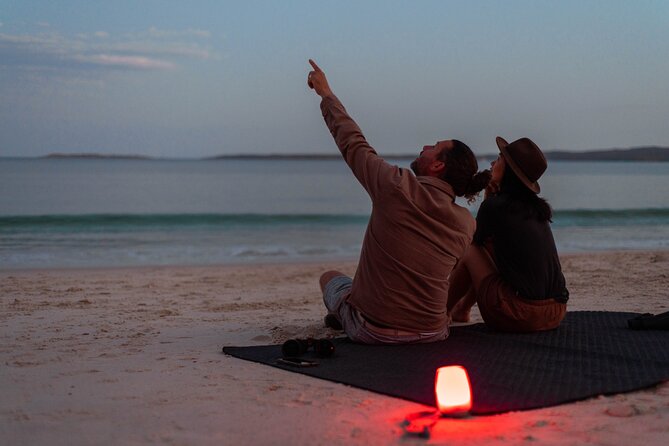
Look up, and the beach becomes your observatory. This 90-minute Jervis Bay experience pairs dark Southern Hemisphere skies with ocean sounds, laser-guided star finding, and telescope views led by astrophysicist Dimitri. I like the setting at Nelsons Beach, where you may check for glowing plankton in the water, and I like the clear teaching style built around simple navigation tips and constellation stories. The main drawback is weather: cloud can cancel the evening, and the non-weather cancellation terms are strict.
The tour suits families, couples, groups, and locals who want more than a quick look at the Moon. You sit near the beach, listen to the waves, and finish with questions for an astronomer. At $60.97 per person, the price is fair if the sky cooperates, but you should accept that nature controls the main event.
Key points to know before you book
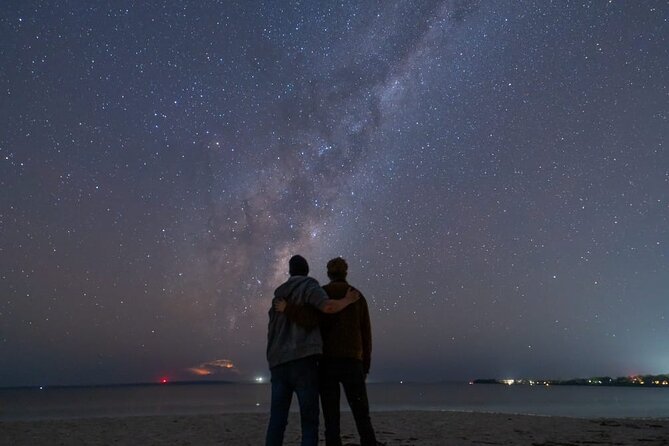
- Beach-based astronomy at Nelsons Beach: Start at Moona Moona Beach Playground, then use the nearby beach setting for naked-eye stargazing and ocean views.
- A PhD astronomer leads the session: Dimitri has worked with Sydney Observatory, Mt John Observatory, and Emirates One & Only Wolgan Valley.
- Telescope targets change with the season: You might see the Moon, planets, Orion Nebula, star clusters, deep-sky objects, or the Milky Way.
- Bioluminescence may appear: The group checks the sea for glowing plankton, though this is a natural possibility, not a promise.
- Small enough for questions: The maximum group size is 20, and the session ends with an astronomer-led Q&A.
- Cloud cover matters: A cancellation caused by poor weather brings a refund or another date, but a personal cancellation is non-refundable.
Why Jervis Bay is a good place for stargazing
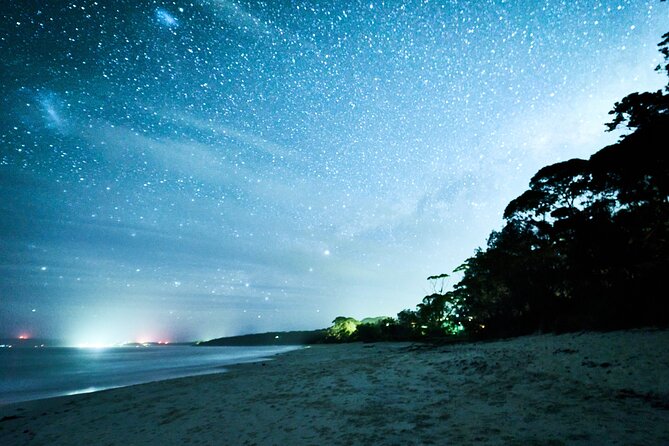
City light is the enemy of astronomy. Jervis Bay offers much darker skies away from major urban glow, so faint stars and broad Milky Way detail have a better chance of showing themselves. The exact view still depends on cloud, moonlight, season, and conditions, but the setting gives the tour a strong natural advantage.
I also like the choice of beach. A dark field can be ideal for astronomy, but a beach adds another sense to the evening. You hear the waves while the guide points out stars overhead. That makes the session feel like an outing rather than a technical lesson in a room.
The tour begins at Moona Moona Beach Playground, 7 Tapalla Avenue in Huskisson, New South Wales. It ends back at the same meeting point. You should plan to arrive ready for an outdoor activity, since the experience takes place on the beach and depends on the night sky.
More Stargazing Tours in Australia:
- Pinnacles Desert: Sunset BBQ & Stargazing Tour +Sandboarding
★ 4.8 · 1,555 reviews - Pinnacles Desert Sunset Dinner and Stargazing Tour
★ 5.0 · 1,034 reviews - From Perth: Pinnacles Sunset and Stargazing Tour with Dinner
★ 4.7 · 803 reviews
The opening session: stars, sunset, and sea sounds
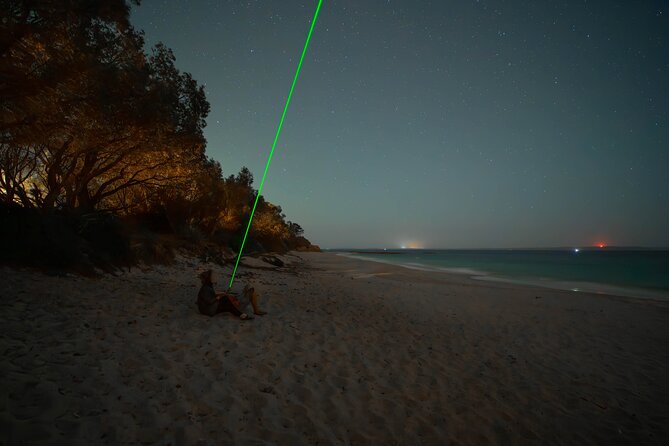
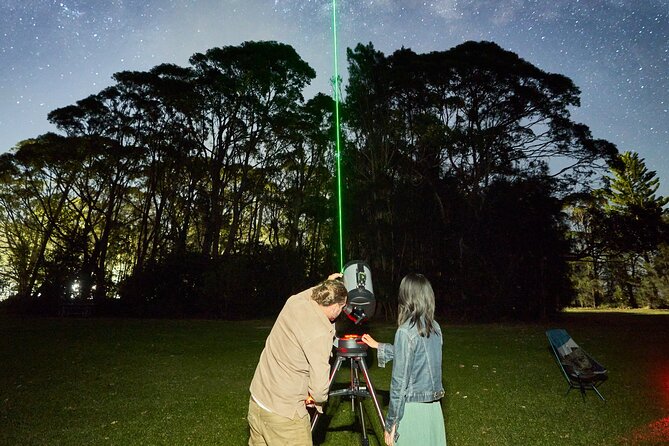
The first part uses the naked eye rather than the telescope. A laser helps the guide point out stars and constellations, making it easier for you to follow the explanation without guessing where to look. This is especially useful if you usually see the night sky as a mass of scattered lights.
You get tips for identifying stars and constellations, plus basic navigation guidance. The guide also adds stories connected with the constellations, which gives the session a human side. You are not only learning names. You are learning how to use the sky as a map and how to notice patterns.
The timing can include sensational ocean sunset views before darkness settles in. That gives you a changing scene during the first part of the tour. The sky moves from evening color to the first visible stars, then into proper night astronomy.
This is a good format for mixed groups. Children can look for obvious bright objects and follow the laser, while adults can ask about navigation, astronomy, and the stories behind the constellations. You do not need to arrive with technical knowledge. The presentation is designed to help you get your bearings quickly.
Checking the water for bioluminescence
One of the more unusual touches is the chance to look for bioluminescence in the sea. Some nights may reveal glowing plankton, creating small flashes or a luminous effect in the water when conditions allow.
This part should be treated as a bonus, not a guaranteed feature. Natural light in the sea depends on conditions outside the tour operator’s control. Still, it adds a second kind of night magic to the evening. You begin by looking up at distant suns, then possibly look down at glowing life in the water.
The coastal setting also helps the tour feel distinct from a standard telescope session. If you already enjoy beaches, the combination of waves, sunset, stars, and a possible glow in the sea gives the experience a strong sense of place.
Telescope viewing: what you may see
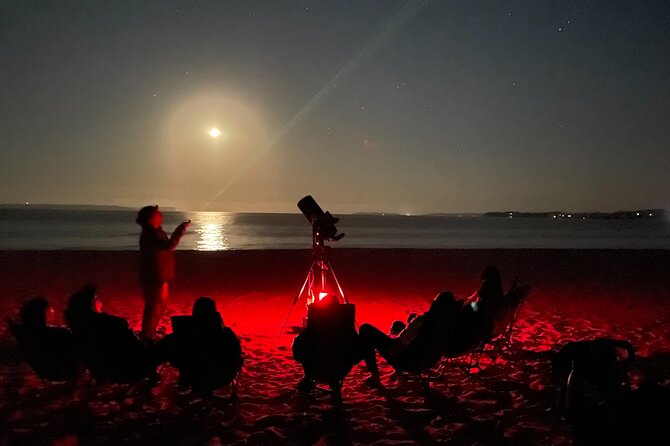
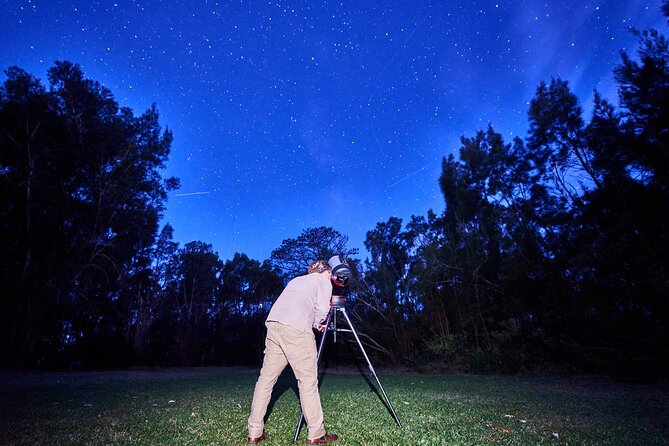
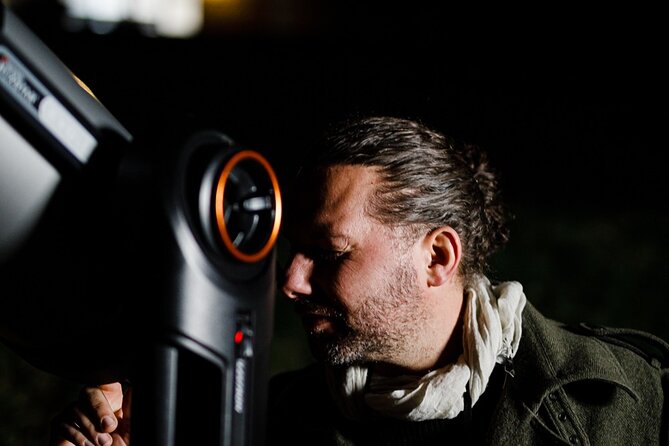
After the naked-eye introduction, the group moves to telescope viewing. The equipment is described as state of the art, and the targets depend on the date and the conditions. This is important: you are not buying a fixed list of objects. You are booking a guided look at whatever the sky offers that night.
Possible targets include:
- The Moon
- Planets
- The Orion Nebula
- Star clusters
- Deep-sky objects
- The Milky Way
The Moon can offer a dramatic first telescope target, with bright craters and sharp changes along its edge. Planets, when visible, provide another highlight, though their appearance will vary by date and position in the sky.
The Orion Nebula is a particularly appealing possibility. It is a vast star-forming region and one of the more rewarding objects to view through a telescope. Star clusters can also look striking, with many stars gathered into a compact group.
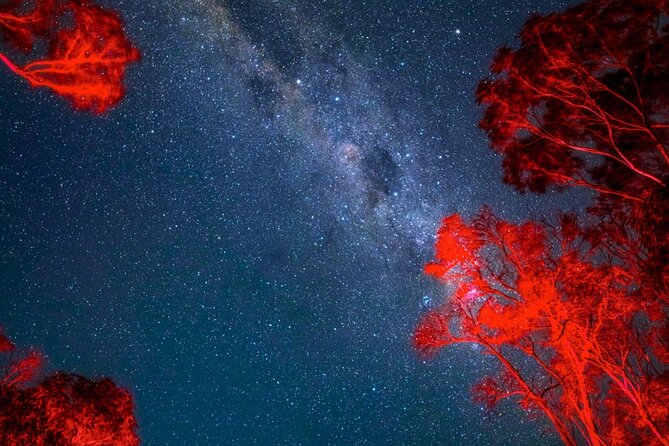
The Milky Way is best appreciated as a broad band across the sky rather than as one telescope target. In Jervis Bay’s darker conditions, it may be easier to see structure and contrast than it would be from a city. Keep your expectations sensible, since cloud and other conditions still decide how much you see.
The telescope section is where the tour’s value becomes clearest. You could look at stars on your own for free, but the equipment and instruction give you a better chance of understanding what you are seeing. The guide helps turn a bright point into a planet, a patch of light into a nebula, or a cluster of stars into a larger story.
Same dark sky, a different way to spend it:
- Pinnacles Sunset Stargazing Dinner Experience Small Group Tour
★ 4.5 · 396 reviews - Uluru: National Park Astronomy Tour with Telescope and Photo
★ 4.4 · 357 reviews - Stargazing with an Astronomer in the Blue Mountains
★ 5.0 · 243 reviews - Perth: Pinnacles Desert Sunset & Stargazing with Dinner
★ 4.3 · 215 reviews
Dimitri’s scientific background and teaching style
Dimitri is an astrophysicist with a PhD and more than 10 years of experience. His background includes Sydney Observatory, Mt John Observatory in New Zealand, and the astronomical observatory at Lake Tekapo, one of the world’s best-known astronomy locations.
He has also worked at Emirates One & Only Wolgan Valley and is a TEDx speaker and cultural astronomer. That mix matters because a good astronomy session needs more than equipment. You want someone who can explain complex ideas in plain language and connect the science to the way people have understood the sky across cultures.
The Q&A at the end gives you room to ask about objects you saw, stars you could not identify, navigation, or the wider universe. With a maximum of 20 people, the group is not private, but it is small enough for questions to feel practical rather than lost in a crowd.
One review describes a later session led by Tom, with a small group and plenty of questions. That suggests staffing can vary, so you should not assume Dimitri will personally lead every departure. The advertised guide profile is Dimitri, but the operator may use other capable astronomy guides.
How the 90-minute format works for different ages
Ninety minutes is a sensible length. It gives you time for the naked-eye lesson, telescope viewing, and questions without turning the evening into a long lecture. Children may find the pace easier than a full-night astronomy program, and adults get enough time to ask questions.
The beach setting can also make the activity more relaxed for families. You are not required to remain silent in a formal observatory. The sound of the waves creates a natural background, though it may also make it harder to hear at moments. Stay close to the guide so you can follow the laser and instructions.
For a date night, the setting has obvious appeal. Sunset, the shore, stars, and a possible sighting of glowing plankton make it more memorable than a standard evening activity. For a group, the shared surprise of spotting a planet or a nebula can provide a good focus after dinner.
The experience has also earned Bronze awards at the 2022 and 2023 NSW Tourism Awards. That does not guarantee perfect weather or a personal connection with the guide, but it does show the operator has received formal recognition in the state tourism industry.
Price, group size, and what you are paying for
The listed price is $60.97 per person. I see this as reasonable for a guided astronomy session with specialist equipment and an astrophysicist-led format, provided you value explanation as much as the view.
The price does not buy certainty. You are paying for access to a dark-sky location, a planned program, a telescope, and expert help in understanding the sky. If clouds block the stars, the company can offer another date or a refund, but you still lose the chance to use that particular evening.
A maximum of 20 people keeps the experience from becoming a huge crowd. It is not a private tour, so you may share the telescope and the guide’s attention. The smaller scale is useful during the Q&A, when a large crowd would make personal questions harder.
The tour is booked, on average, 25 days ahead. That is a helpful sign that you should not leave it until the last evening of a Jervis Bay visit, especially if your schedule is tight. Booking earlier also gives you more room to reschedule if weather interferes.
Weather and cancellation rules need careful attention
Cloud cover is the key risk. If the sky is overcast, the operator sends a cancellation email at 3 pm on the day of the tour. You may then choose to reschedule using a credit valid for three years in Jervis Bay or the Blue Mountains. The validity can be extended, and the credit can be transferred to another person as a gift card.
You can also request a refund when poor weather causes the cancellation, though 5 percent merchant and service fees are non-refundable. One complaint focused on that deduction, so you should understand the difference between a weather cancellation and a personal change of plans.
The general cancellation policy says the experience is non-refundable and cannot be changed for any reason if you cancel or request an amendment. If the minimum number of people is not met, the operator offers another date or experience, or a full refund.
This is a nature-dependent activity, so flexibility matters. I would avoid placing it on the final night of a short trip unless you are happy to accept a rescheduled credit rather than a replacement activity. Check your email on the afternoon of the tour, since the weather decision is sent at 3 pm.
Who should book this beach astronomy experience?
I would choose this tour if you want a friendly introduction to astronomy rather than a silent look through a telescope. It suits families, couples, groups, and local residents, with enough variety to keep both beginners and curious hobbyists interested.
You should also book if the beach setting matters to you. The ocean sounds, sunset timing, and possible bioluminescence give the evening more character than an indoor observatory visit.
I would think twice if you need a guaranteed list of objects. The Moon, planets, Orion Nebula, clusters, deep-sky objects, and Milky Way are possible targets, not promises. The night’s conditions and season decide the final program.
You should also be comfortable with the strict personal cancellation rule. If your plans often change, the booking terms may feel restrictive. On the other hand, the three-year weather credit gives you useful protection when nature, rather than your own schedule, cancels the event.
Should you book the Jervis Bay Stargazing Tour?
Book it if you want an easy, well-guided introduction to the Southern Sky in a genuinely dark coastal setting. The strongest reasons are the beach location, the mix of naked-eye and telescope astronomy, the chance of seeing bioluminescence, and the opportunity to question a trained astronomer.
The tour is not a guarantee of perfect stars. It is a carefully planned chance to catch them. If you can keep your schedule flexible, arrive ready for an outdoor night, and accept that the target list changes, $60.97 is a fair price for a memorable 90-minute session.
FAQ
Where does the Jervis Bay Beach Stargazing Tour start?
The tour starts at Moona Moona Beach Playground, 7 Tapalla Avenue, Huskisson, New South Wales 2540, Australia.
Where does the tour end?
The activity ends back at the meeting point.
How long does the experience last?
The tour lasts approximately 1 hour and 30 minutes.
How much does the tour cost?
The listed price is $60.97 per person.
What might I see through the telescope?
Depending on the season and conditions, you might see the Moon, planets, the Orion Nebula, star clusters, deep-sky objects, or the Milky Way.
Will I definitely see bioluminescence?
No. The group checks the sea to see if glowing plankton is visible, but this is a natural possibility and is not guaranteed.
Who leads the astronomy session?
The advertised guide is Dimitri, an astrophysicist with a PhD and more than 10 years of experience. The operator may also use other guides for some sessions.
What happens if the weather is too cloudy?
If overcast skies cause a cancellation, you can receive a refund or reschedule. The operator may also provide a credit valid for three years in Jervis Bay and the Blue Mountains.
How many people can join the tour?
The maximum group size is 20 people.
Just added around Australia
- Vincentia: Jervis Bay Beach Stargazing with an Expert★ 4.9 · 19 reviews
- Blue Mountains: Stargazing with a Telescope and Astronomer★ 4.4 · 21 reviews
- Gold Coast: Glow Worms, Sunset & Stargazing with BBQ dinner★ 4.5 · 3 reviews
- Pinnacles Desert Sunset Stargazing Adventure Tour from Perth★ 5.0 · 25 reviews
- Brisbane: Glow Worms, Sunset, Telescope Stargazing & Dinner★ 4.0 · 15 reviews
- Exmouth: Summer Sunset Turtle Watching and Stargazing Tour★ 5.0 · 2 reviews
- Esperance: Astronomy Night Experience★ 5.0 · 5 reviews
- Brisbane: Glow Worms, Sunset, Star Gazing & BBQ★ 4.4 · 26 reviews
Stargazing Tours, compared.
Dubai Red Dunes ATV, Camels, Stargazing & 5* BBQ Al Khayma Camp
Read our review →
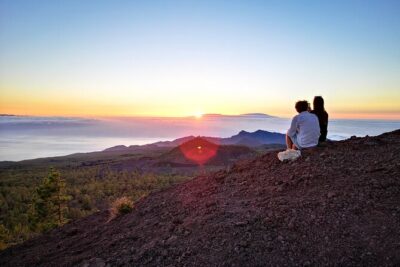
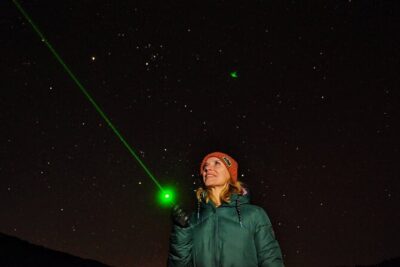
Teide National Park Sunset & Stargazing with Dinner (Star Safari)
Read our review →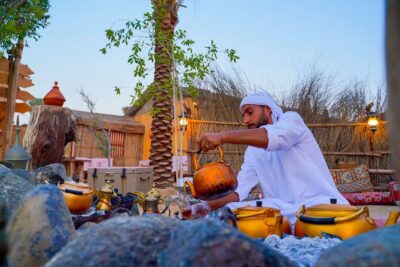
Sunset Camel Trek, Al Khayma Camp, Stargazing & BBQ
Read our review →
Overnight Safari, Dinner, Stargazing & Al Khayma Camp
Read our review →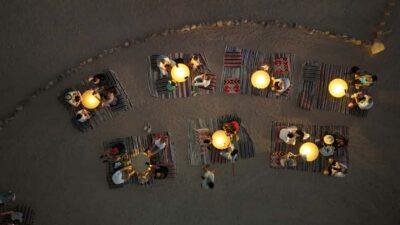
Dubai Overnight Desert Safari, BBQ & Stargazing at Al Khayma Camp
Read our review →Browse the lists this tour appears in