
Review · LAKE TEKAPO
Mount John Observatory Stargazing Experience, Tekapo
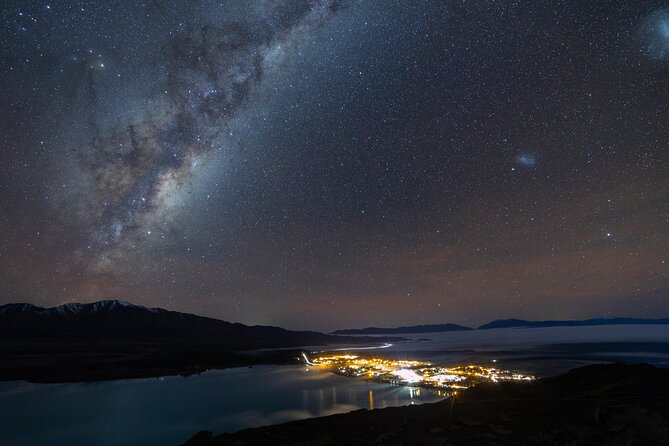
The Southern Sky puts on a fine show. This 1-hour-45-minute evening trip takes you from Lake Tekapo township to the summit of 1,029-meter Mount John, where expert guides explain the stars above the Aoraki McKenzie International Dark Sky Reserve. I especially like the mix of naked-eye stargazing and telescope viewing, plus the chance to visit a working university observatory rather than a simple viewing platform.
I also like how friendly the experience is for beginners. You do not need a background in astronomy to follow along, and guides use laser pointers to help you find major stars and constellations. The main drawback is simple: the weather controls the evening. Cloud can cancel the outdoor session, and even a successful trip may offer only scattered views if conditions shift.
Key points before you book
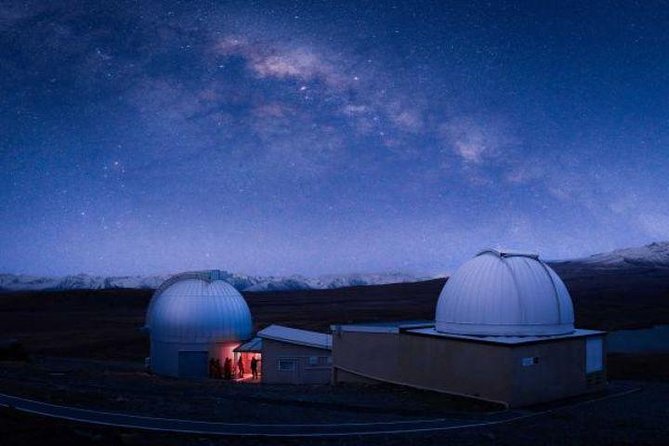
- Mount John summit access: You travel from the Dark Sky Project in Tekapo to the University of Canterbury’s observatory complex at the mountain top.
- Three ways to see the sky: Guides combine naked-eye viewing, laser-pointer explanations, and powerful observatory telescopes.
- A true dark-sky setting: The mountain sits inside the Aoraki McKenzie International Dark Sky Reserve, described as the largest Gold-standard reserve in the world.
- Cold-weather gear supplied: Extreme Cold Weather jackets are provided, but you should still wear warm layers and sensible shoes.
- Small scheduled groups: Each departure is limited to a maximum of 22 people, although the activity information also gives a maximum tour size of 30.
- Weather is part of the deal: Poor conditions can lead to a new date, a full refund, or an alternative indoor session.
Why Mount John makes stargazing special
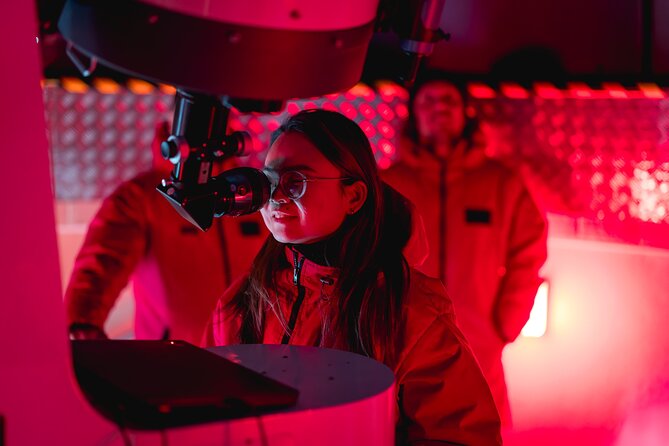
Lake Tekapo is known for its unusually dark skies, and Mount John gives you a high viewpoint above the township and surrounding lakes and mountains. The observatory’s position matters. Less stray light makes faint stars, clusters, planets, and the Milky Way easier to see than they are from a town or city.
This is also a working research site connected with the University of Canterbury. You are not simply looking through a tourist telescope in a car park. The setting gives the evening a stronger sense of place and purpose, with astronomy guides explaining both what you are seeing and why the site is useful for research.
The Southern Hemisphere brings its own rewards. You may learn to identify the Southern Cross, locate the true southern star, and tell it apart from a nearby false guide star. That kind of practical sky reading is more useful than a long list of facts. You leave with a better idea of how people navigate the southern sky.
The experience can reveal different sights on different nights. Possible views described during the session include Jupiter’s moons, star clusters formed soon after the Big Bang, new stars, distant galaxies, planets, and solar systems. No guide can promise a particular object, since visibility depends on the season, cloud, and the equipment being used.
More Observatory Visits in Lake Tekapo:
- Stargazing Experience at Cowan’s Private Observatory
★ 4.0 · 85 reviews - Lake Tekapo: Stargazing Experience at Cowan’s Observatory
★ 4.7 · 52 reviews - Royal Observatory Greenwich & Prime Meridian Entrance Ticket
★ 4.5 · 1,095 reviews
From Tekapo township to the summit
Your evening begins at the Dark Sky Project in Lake Tekapo. This is the check-in point, and return transport to the summit is included. Hotel pickup and drop-off are not included, so you need to make your own way to the township meeting point.
The ride to Mount John takes about 15 minutes. It is a short transfer, but it changes the setting quickly. You leave the lights of Tekapo and climb to the summit at 1,029 meters, overlooking the surrounding country. The altitude also explains why the cold can be sharper than expected, even in spring or summer.
The summit has exclusive access for this experience. That is an important part of the price. You are not just stopping at a public roadside lookout and hoping to spot a star. You are being taken to a restricted observatory site with guides, equipment, and a planned program.
Group size should feel manageable, at least on the scheduled departures limited to 22 people. The wider activity information lists a maximum of 30, so the exact group may vary. Either way, this is not a private astronomy lesson. You may need to share telescope time and stay close to the guide, especially in the dark.
What happens during the 90-minute summit session
The mountaintop portion lasts about 1 hour and 30 minutes. Guides begin with the naked-eye sky, often the best way to understand the scale of the night. Laser pointers help connect the dots, showing you where to look rather than leaving you to search blindly.
This part is particularly good for beginners. A dark sky can be overwhelming at first because there are so many stars. A guide can pick out the major constellations, point toward important stars, and explain which patterns are useful in the Southern Hemisphere.
The guides also make the science approachable. The strongest praise for this experience centers on staff who are enthusiastic, entertaining, and able to explain astronomy without assuming prior knowledge. Guides named Kieran, Alice, and Olive have received especially warm personal praise, and other sessions have been led in Mandarin or Japanese when arranged as the tour language.
After the naked-eye introduction, the group uses advanced observatory equipment. The program includes access to three telescopes, giving you a chance to see different kinds of objects through more than one instrument. You may look at planets, moons, star clusters, or other deep-sky targets selected for that night.
The telescope views are the main reason to choose this experience over simply lying outside your accommodation and looking upward. Your own eyes show the broad sweep of the sky, while the equipment brings distant objects into clearer view. The combination works well. One gives you the big picture, and the other gives you a closer look.
The guides make or break the evening
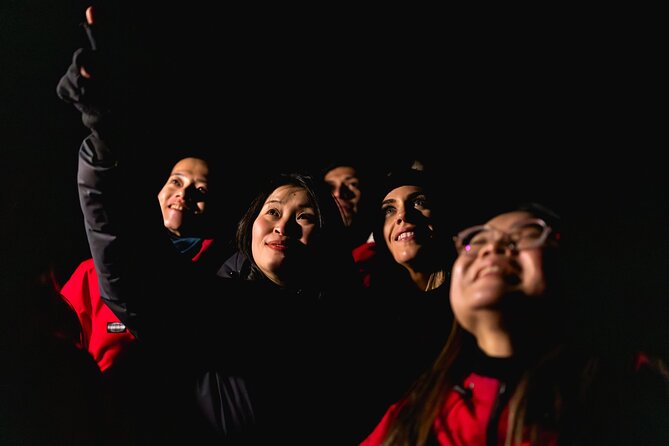
Astronomy can become dry if it turns into a string of technical terms. Here, the guide’s role is central. The best sessions balance explanation with time to look, and the feedback points to guides who keep the tone warm, lively, and easy to follow.
You should expect an educational experience, not a silent observatory visit. Guides may explain constellations, planets, star formation, and the scale of the universe. They also respond to the conditions in front of them. If cloud moves across one part of the sky, a good guide can shift attention to a clearer area.
That flexibility matters. One session had enough cloud to limit some views, yet the guide still used gaps to show the Southern Cross, the true southern star, and several telescope targets. Another evening was described as crowded, so your experience may depend partly on group size and how quickly people move between viewing points.
Language is a practical issue. English and Mandarin guides are listed, and one visitor had an English booking changed to Japanese. You must speak the language of the tour for health and safety reasons. If you cannot, you will not be allowed to join, so check this point carefully before paying.
More Stargazing Tours in Lake Tekapo:
- Lake Tekapo: Alpine Stargazing Experience with a Guide
★ 4.5 · 626 reviews - Lake Tekapo: Stargazing Experience
★ 4.9 · 607 reviews - Chameleon Stargazing Shared Tour
★ 5.0 · 181 reviews - Lake Tekapo: Mountaintop Stargazing at Mount John Summit
★ 4.5 · 176 reviews
Cold, darkness, and the small practical details
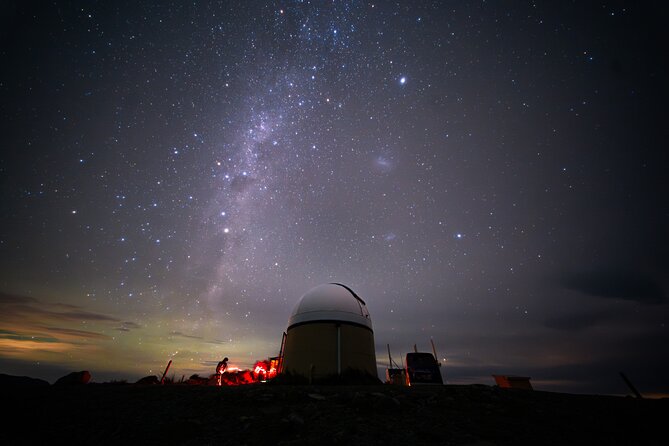
Mount John can be very cold after sunset. Extreme Cold Weather jackets are supplied, which is a real help, but do not treat the provided coat as your entire clothing plan. Wear warm layers, long trousers, and closed shoes. A spring visit still felt freezing at the summit.
The site is also very dark by design. That is excellent for stargazing and less helpful for finding your feet. White torches and phone lights are not allowed because they spoil night vision for the group. Stay close to your guide and the rest of the group, and avoid wandering off to take a better photo.
Photography is limited. At least one session noted that guides would not take photos on personal cameras if there was any wind. You should come for the viewing and explanations, not for guaranteed portrait shots beneath the stars.
The mountain setting may not suit anyone with mobility problems. The experience is not recommended for people with mobility issues, and the dark conditions can make walking more awkward. Children may participate, but they must be accompanied by an adult.
Weather can change the whole experience
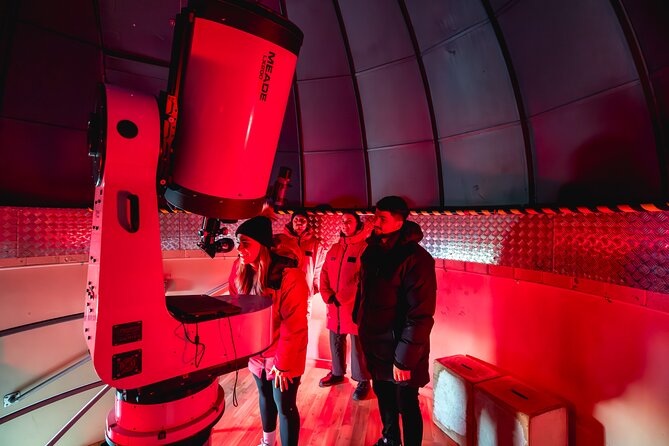
This is an outdoor astronomy session, so cloud is not a minor nuisance. It can stop the tour from operating. If poor weather forces cancellation, you are offered a different date or a full refund.
The provider may also offer an indoor alternative. That can be useful if your schedule is tight, but it is not the same experience. An indoor session may provide information, yet it cannot replace standing beneath a dark southern sky or looking through the summit telescopes. If the stars are your main reason for booking, ask what will happen before accepting a substitute.
Cloud does not always mean a wasted night. One guide worked around broken cloud and still showed several stars and constellations. If the sky is partly open, the group may move between targets and make good use of short clear patches. Still, you should keep expectations realistic. No one can control the clouds.
The full moon also affects the view. A bright moon can wash out faint details, including parts of the Milky Way. If you can choose among dates, a darker moon period may give you a better chance of seeing faint star fields. This is not a promise of clear weather, but it is a sensible planning point.
Is $139.39 good value?
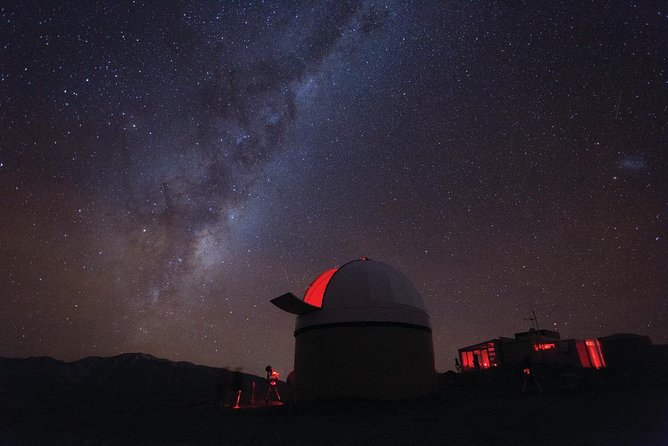
At $139.39 per person, this is not a casual add-on. You are paying for return mountain transport, summit access, expert instruction, cold-weather jackets, and the use of observatory equipment in one of the world’s best-protected dark-sky areas.
I think the price is reasonable if astronomy is a major interest or if this is your one special evening in Tekapo. The working observatory setting and three telescope stations add value beyond a basic guided walk. The guides also turn the sky into something you can understand rather than simply admire.
The value is less certain if you mainly want a scenic night out or a guaranteed photograph. Weather can cancel the outdoor session, cloud can limit the telescopes, and the indoor alternative may feel thin compared with the summit visit. You are buying access and expertise, not certainty.
The group size also affects value. A smaller departure should give you more room to ask questions and move between viewing points. A larger group may mean more waiting at the telescopes. The listed limits suggest a controlled experience, but it is still a shared tour rather than a private booking.
Who will enjoy this most?
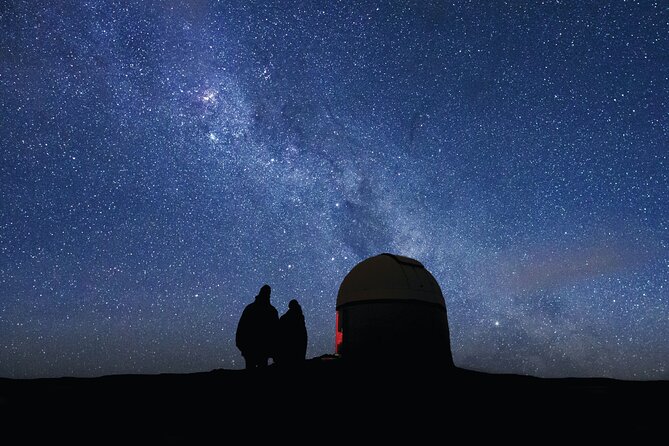
I would choose this for a first serious look at the southern sky. You do not need to know the names of stars in advance, and the guides explain the basics clearly. Families can enjoy it too, provided children are accompanied and can manage the late timing, cold, darkness, and need to stay with the group.
It also suits people with a strong interest in astronomy. The combination of a dark reserve, a university observatory, laser-guided sky reading, and telescope viewing gives experienced stargazers more to work with than a simple constellation talk.
You may want to skip it if you dislike cold, have mobility concerns, or need an activity that runs reliably in any weather. It is also a poor match if you cannot speak the scheduled tour language. Check that before booking, since the language rule is tied to safety.
Plan to arrive in Tekapo already dressed for the mountain. The jackets help, but warm clothing makes the difference between listening comfortably and spending the whole session thinking about your fingers.
Booking, cancellation, and timing tips
Confirmation is provided at booking, and free cancellation is available up to 24 hours before the start time. Canceling or changing the booking less than 24 hours before departure is not accepted for a refund.
Pay close attention to the date if you choose a departure after midnight. The calendar date can be easy to misread, especially if you are booking late at night or arranging a tight itinerary.
The activity lasts about 1 hour and 45 minutes in total, including the transfer and summit session. Build in enough time to reach the Dark Sky Project in Tekapo township, since hotel pickup is not included.
Should you book the Mount John Observatory experience?
Yes, if you want a serious, well-guided introduction to the southern sky and can accept the weather risk. The strongest reasons are the Mount John summit setting, access to observatory telescopes, and guides who make difficult science understandable and fun.
I would book it early during a Tekapo stay, leaving enough flexibility to move to another evening if cloud cancels the session. Choose a date with less moonlight if possible, wear more layers than you think you need, and keep your expectations focused on seeing and learning rather than taking photos.
If the sky clears, this can be one of the most memorable things you do around Lake Tekapo. If cloud closes in, the experience becomes a gamble. That is not a flaw in the astronomy, but it is the fact you need to accept before spending the money.
FAQ
How long does the Mount John Observatory Stargazing Experience last?
The experience lasts approximately 1 hour and 45 minutes. This includes about 15 minutes for the transfer from the Dark Sky Project to Mount John and about 1 hour and 30 minutes at the summit.
Where does the experience begin?
You check in at the Dark Sky Project in Lake Tekapo township. Return transport to the summit of Mount John is included, but hotel pickup and drop-off are not.
What can I see during the stargazing session?
Depending on the conditions, you may see the Milky Way, planets, star clusters, constellations, solar systems, distant galaxies, and Jupiter’s moons. The exact views depend on cloud, moonlight, and the targets selected that evening.
Are telescopes included?
Yes. The session includes telescope viewing through advanced observatory equipment, with access to three telescopes mentioned in the experience details.
Are warm clothes provided?
Extreme Cold Weather jackets are provided. You should still wear warm layers, since the summit can be very cold even during spring.
What happens if the weather is poor?
The outdoor experience may be canceled. You will then be offered a different date or a full refund. An alternative indoor experience may also be offered, but it may not provide the same summit stargazing.
Can children and people with mobility issues join?
Children must be accompanied by an adult. The activity is not recommended for people with mobility issues, and most participants must be able to remain with the group in dark outdoor conditions.
Just added around Lake Tekapo
- Virtual Stargazing & Astronomy Experience in Lake Tekapo★ 3.0 · 2 reviews
- Lake Tekapo Ultimate Stargazing Experience★ 5.0 · 3 reviews
- Lake Tekapo: Indoor Māori Cultural Astronomy Experience★ 4.5 · 43 reviews
- Lake Tekapo: Ultimate Stargazing Experience★ 4.3 · 12 reviews
- Lake Tekapo: Virtual Stargazing and Astronomy Experience★ 4.5 · 8 reviews
- Lake Tekapo: Stargazing Experience at Cowan’s Observatory★ 4.7 · 52 reviews
- Lake Tekapo: 1.5-Hour Hot Pools & Stargazing Experience★ 4.0 · 45 reviews
- Stargazing Experience at Cowan’s Private Observatory★ 4.0 · 85 reviews
Observatory Visits, compared.
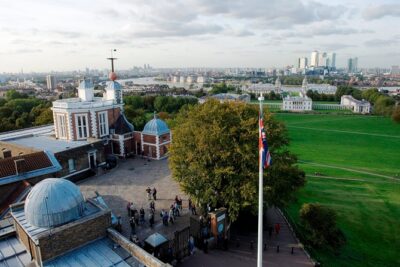
Royal Observatory Greenwich & Prime Meridian Entrance Ticket
Read our review →
Griffith Observatory Hike: Guided Tour through Griffith Park
Read our review →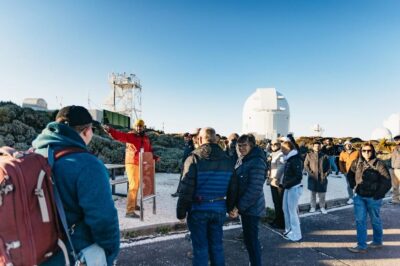
Royal Observatory Greenwich & Prime Meridian Entry Ticket London
Read our review →
Browse the lists this tour appears in