
Review · ITALY
Castel Gandolfo: Vatican Observatory experience
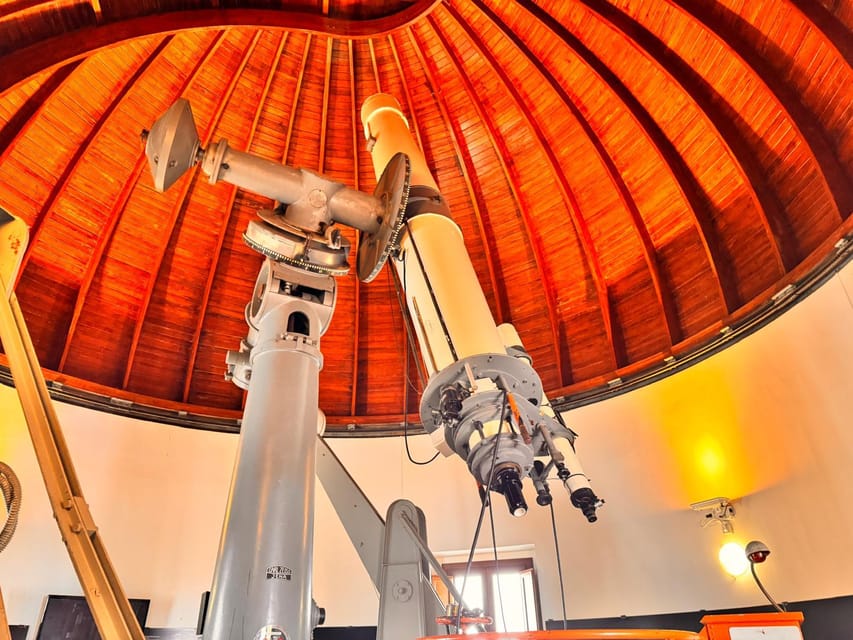
Look up from Rome, and the sky gets interesting. This one-hour visit combines the Papal Palace with two working Vatican Observatory domes, giving you a rare look at telescopes normally closed to the public. I like the unusual mix of astronomy and papal history, especially the chance to see the 8.5-meter Visual Telescope and the 8-meter Double Astrograph.
I also like the Lake Albano panorama from the palace terrace, a fine reward after climbing the spiral staircase. The main drawback is the short visit: $17 is fair for access to the domes and the view, but it may feel high if you expect a full guided tour, extensive palace access, or transport from Rome.
Key points to know before you go
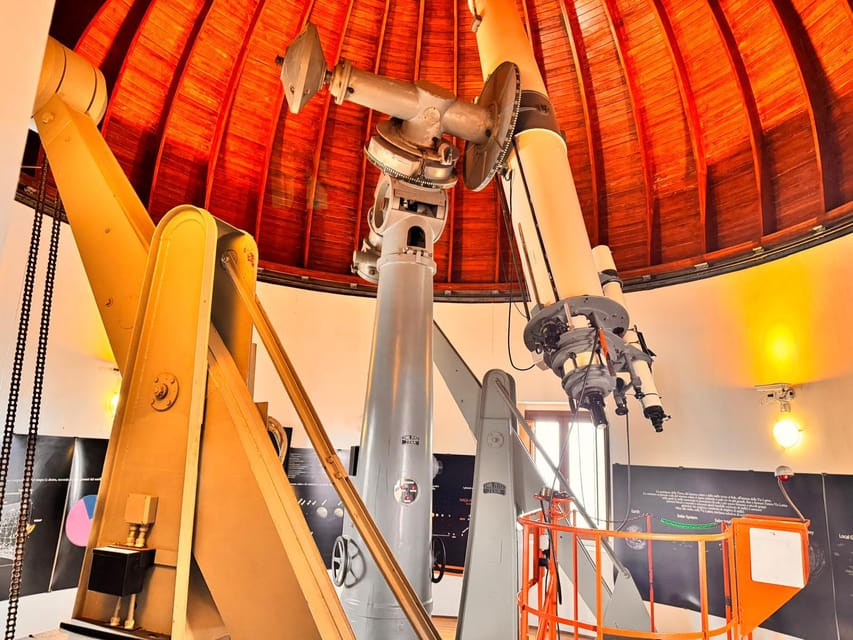
- Two working domes: See the major dome with its Visual Telescope and the minor dome with its Double Astrograph.
- A rooftop view: Climb to the third floor of the Papal Palace for a wide view over Lake Albano.
- A remarkable location: Pope Pius XI inaugurated this Vatican Observatory site in 1935 after light pollution made the Vatican Gardens unsuitable for astronomy.
- A compact visit: The scheduled experience lasts one hour, so it works best as one part of a Castel Gandolfo outing.
- A physical climb: The route uses a spiral staircase and is not suitable for wheelchair users, people with vertigo, or children under seven.
- Bring a warm layer: The domes and upper terrace can feel cool, and comfortable shoes are important.
Why Castel Gandolfo has a Vatican observatory
Castel Gandolfo is about 24 kilometers from Rome, in Lazio, and is known for the Papal Palace that served as the Pope’s summer residence. This visit adds a less familiar chapter: the palace roof also houses two astronomical domes belonging to the Vatican Observatory.
The setting is unusual. You are not heading to a remote mountain observatory or a modern science center. You are climbing through a papal residence to reach working astronomical equipment above the palace. That contrast gives the visit much of its appeal.
The observatory moved to Castel Gandolfo because the light from Rome had become a problem. Pope Leo XIII had established an earlier observatory in the Vatican Gardens, but by the 1930s the growing brightness of Vatican City and Rome made serious observation more difficult.
Pius XI inaugurated the new headquarters on September 29, 1935. The Jesuits were entrusted with the institution, and the new site received three telescopes as well as an astrophysical laboratory for spectrochemical analysis. Research included the study of variable stars, whose brightness changes over time.
You do not need an astronomy background to appreciate the place. The visit is short, and the equipment provides the focus. Still, knowing why the observatory moved here makes the domes more than an unusual rooftop feature. They are part of the Vatican’s long effort to support scientific study.
More Observatory Visits in the world:
- Mount John Observatory Stargazing Experience, Tekapo
★ 4.5 · 160 reviews - Tenerife: Mount Teide Observatory Astronomical Tour
★ 4.4 · 126 reviews - Stargazing Experience at Cowan’s Private Observatory
★ 4.0 · 85 reviews
Arriving at the Papal Palace entrance
Your meeting point is the main entrance of the Papal Palace in Castel Gandolfo. You should arrive 20 minutes before your scheduled time and show your reservation voucher to reception staff.
Transportation is not included, so you need to arrange your own way to Castel Gandolfo. The activity information does not provide a transfer from Rome, and that matters when you plan your day. The $17 price covers the experience itself, not the cost or effort of reaching the town.
The meeting arrangement is straightforward, but do not treat this like a flexible walk-in attraction. Arriving early gives you time to find the entrance and handle the check-in without cutting into the one-hour visit.
A host or greeter may be available in English, French, Spanish, Italian, or German. This is useful for basic assistance and orientation. Keep your expectations measured, though. A guided tour is not included, and there is no audioguide.
That distinction affects the value. If you want a detailed explanation at every stop, this may feel spare. If you are happy to see the domes, take in the setting, and absorb information at your own pace, the format is easier to accept.
Climbing to the third floor
The route goes upward through a spiral staircase to the third floor of the palace. This is not just a way to reach the telescopes. The climb is part of the character of the visit, taking you through a historic papal building and toward its highest panoramic point.
You should wear comfortable shoes. The staircase makes this experience unsuitable for wheelchair users and people with vertigo. Children under seven are also not permitted for safety reasons.
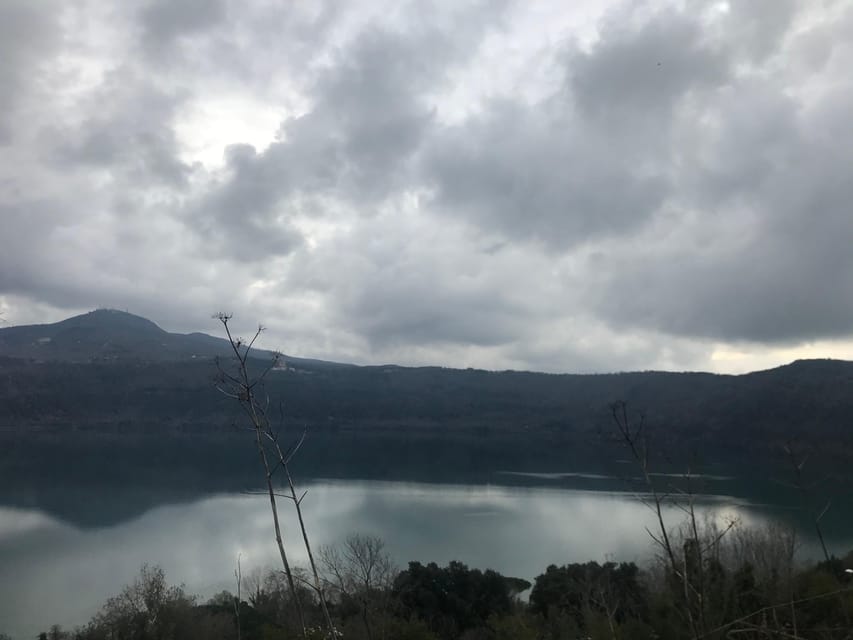
The upper level is where the visit becomes especially rewarding. From the panoramic terrace, you can look across Lake Albano and the surrounding area. The view is one of the most praised parts of the experience, and it helps balance the technical focus of the observatory.
Bring a camera if you enjoy photographing broad views. The terrace is also a good place to pause after the climb, although the schedule remains compact. You should not assume you will have unlimited time to linger.
One useful detail is that the terrace sits at the highest point of the palace. You are not simply looking out from a standard balcony. The elevation gives the lake view a wide, open quality, and the rooftop setting makes the palace feel different from a typical historic interior.
Inside the major dome
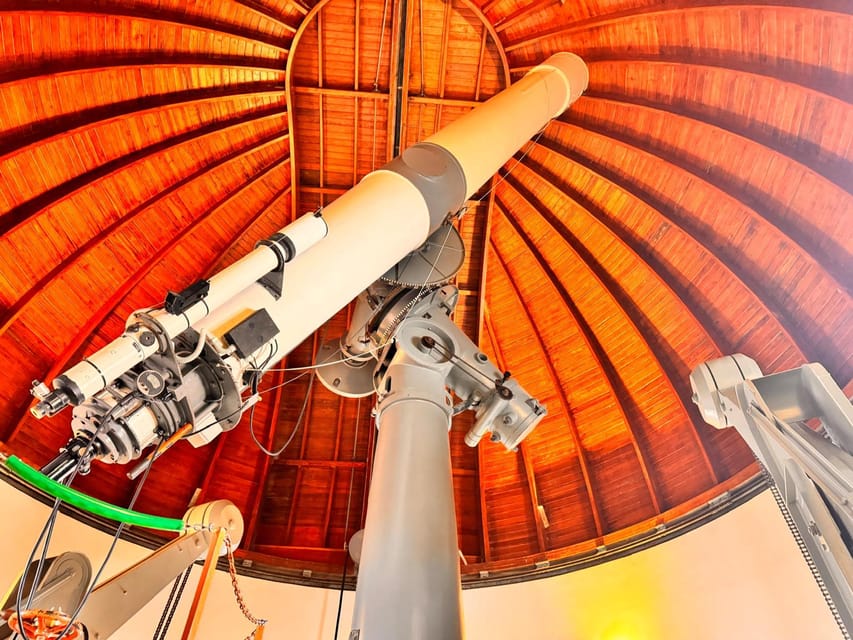
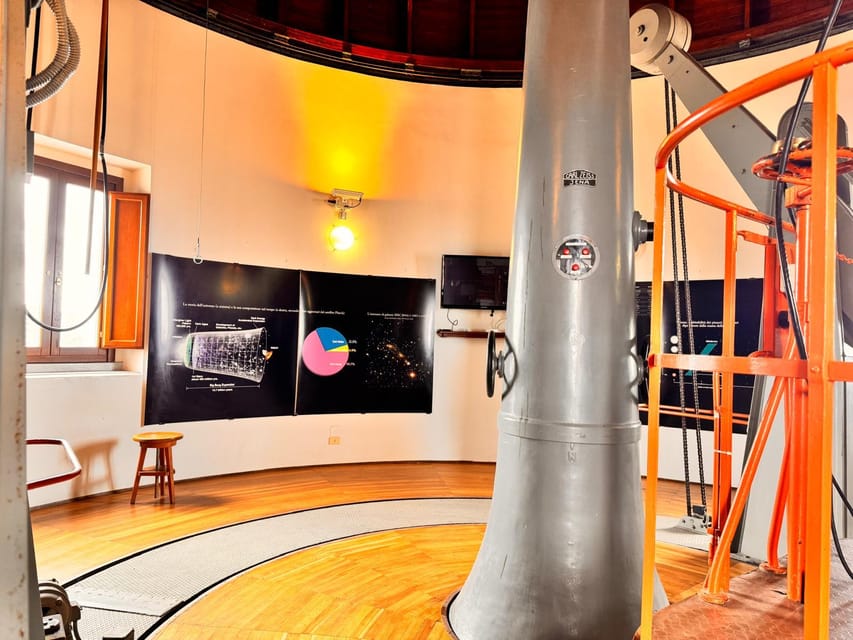
The major dome measures 8.5 meters in diameter and contains a Visual Telescope. It is designed for observing stars and planets, so its purpose is easy to understand even if you are not familiar with astronomical equipment.
The dome itself is the attraction as much as the telescope. After seeing papal rooms and climbing the stairs, you enter a space built for looking outward into the night sky. The machinery gives the palace a practical scientific role that is easy to miss from ground level.
The access is notable because the astronomical domes had been closed to the public for almost 90 years after their construction. That long gap gives the visit a sense of rarity, but you should interpret it correctly. You are seeing the observatory equipment and the rooms that house it, not taking part in a nighttime observing session.
The Visual Telescope is associated with stars and planets, but the supplied details do not promise a live viewing program or a particular celestial object. Plan for an architectural and scientific visit rather than a stargazing event.
I find that distinction helpful. You will get more from the major dome if you are interested in how astronomical work was carried out, rather than expecting a planetarium-style show.
Same dark sky, a different way to spend it:
- Dubai Red Dunes ATV, Camels, Stargazing & 5* BBQ Al Khayma Camp
★ 5.0 · 21,620 reviews - Sharm El-Sheikh: Ultimate ATV Quad, Stargazing & BBQ Dinner
★ 4.7 · 4,084 reviews - Tenerife: Teide National Park Sunset & Stargazing Tour
★ 4.2 · 3,812 reviews - Tenerife: Sunset and Stargazing at Teide National Park
★ 4.7 · 2,826 reviews
The minor dome and Double Astrograph
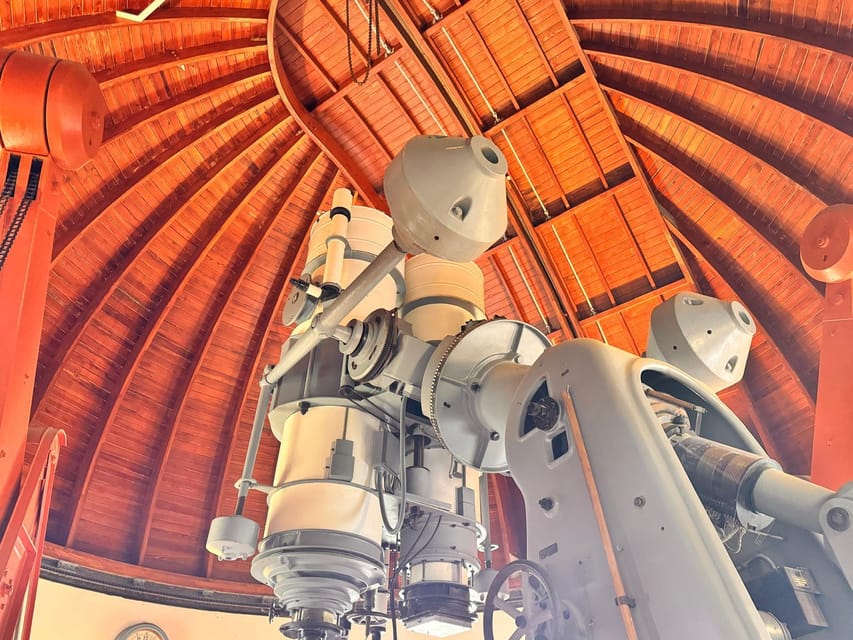
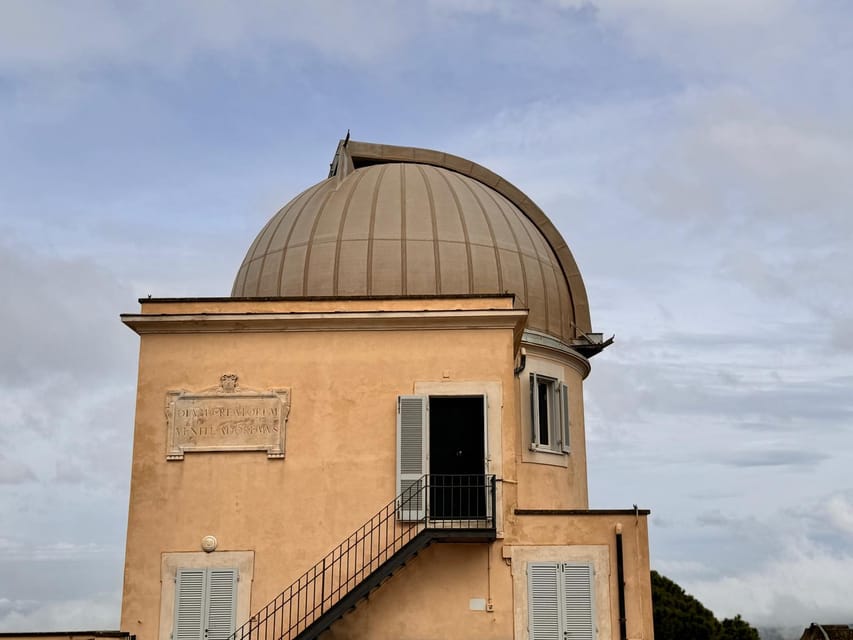
The minor dome is 8 meters in diameter and houses the Double Astrograph. This instrument was used for photographic surveys of the sky and for recording the positions of stars.
The two domes show different sides of astronomy. The major dome points toward direct observation through a Visual Telescope. The minor dome represents the careful recording and mapping of the sky through photographic work.
That difference gives the visit more substance than simply seeing two similar rooms. One telescope was used to observe stars and planets, while the other supported systematic surveys. If you like old scientific instruments, this division of purpose will make the equipment easier to understand.
The Double Astrograph also connects the palace to the patient work of charting the heavens. Astronomy is not only about dramatic images or distant planets. It also depends on repeated measurements and accurate records, and this instrument reflects that quieter side of research.
Again, the visit does not promise a hands-on demonstration. You should expect access to the dome and an explanation of its role, not a working laboratory session.
What the one-hour schedule really gives you
The stated duration is one hour. That is enough time for the two domes, the staircase, and the terrace view, but it leaves little room for a slow palace visit or a long conversation about astronomy.
The short schedule can be an advantage. If you are already spending time in Castel Gandolfo, the observatory fits neatly into a day without taking over your plans. You can see a distinctive part of the Papal Palace, enjoy the lake view, and still have time for other activities.
It can also be a limitation. One booking experience reported that the visit did not last a full hour, while another praised the helpful explanations and felt the setting made the time worthwhile. That range suggests you should judge the price by the access and location, not by the exact number of minutes.
The palace gardens are not included. An Italian booking experience noted that the one-hour observatory visit left time to visit the gardens separately, but you would need to pay for that extra experience. If you want a fuller day at Castel Gandolfo, budget for the gardens as an addition rather than assuming they form part of this ticket.
At $17 per person, I consider the price reasonable for people who value unusual access. You are paying for entry to both astronomical domes, the third-floor terrace, and the lake view. The value is weaker if you want a traditional guided tour or broad access to the palace rooms.
How the experience feels without a formal guide
The activity does not include a guided tour or audioguide. That is the clearest weakness for anyone who wants a structured history lesson.
You may still receive explanations from the staff or accompanying guide. One particularly positive account described the guidance as friendly and useful for people without an astronomy background. That is important because terms such as Double Astrograph and spectrochemical analysis can sound technical without context.
I would approach the visit with a little preparation. Knowing the basic difference between a visual telescope and a photographic instrument will help you notice what makes each dome distinct. Remembering the 1935 move from the Vatican Gardens will also give the rooftop setting a clear historical purpose.
The languages listed for the host or greeter are English, French, Spanish, Italian, and German. That does not mean you receive a full tour in each language. It simply gives you a better chance of receiving practical assistance in one of those languages.
The experience works best for a self-directed visitor who enjoys looking closely and asking a few questions. It is less suitable for someone who needs constant commentary or a scripted presentation.
The strongest reasons to book
I would book this visit for the combination of rare access and a memorable setting. Few short activities place working astronomical domes on top of a former papal summer residence.
The lake view is another strong reason. Even if the technical material is not your main interest, the terrace gives you something visual and immediate. The view also makes the climb feel worthwhile.
The visit is especially suitable for:
- Adults interested in astronomy, science, or Vatican history
- Visitors already planning time in Castel Gandolfo
- Photographers who want the terrace and lake view
- People who prefer a short activity rather than a long palace tour
- Families with children aged seven and older, provided everyone is comfortable with the staircase
- Independent visitors who do not need a full guided presentation
I would be more cautious if you are traveling from Rome solely for this one-hour activity. Since transport is not included, the total cost in time and money will be higher than the $17 admission price suggests.
I would also think twice if you dislike heights, narrow staircases, or upper-level viewpoints. The route is not suitable for people with vertigo, and wheelchair users cannot take part.
Practical preparation for the domes
Wear comfortable shoes for the spiral staircase and bring warm clothing. The upper floors and domes may feel cooler than the streets below, and a light layer is a sensible choice even when the weather is pleasant.
A camera is allowed and specifically recommended among the items to bring. The terrace view is the obvious photo opportunity, but the domes and telescope equipment also provide distinctive subjects.
Do not plan around a meal during the visit. Food and drinks are not included, and the one-hour schedule is too short to treat the activity as a full outing with refreshments.
Keep your reservation voucher ready at the entrance. Arriving 20 minutes early is part of the practical plan, not an unnecessary extra. The palace is in Castel Gandolfo rather than central Rome, so a late arrival could be harder to fix.
The activity allows free cancellation up to 24 hours in advance for a full refund, and you can reserve now and pay later. Those terms help if your Rome plans are still changing, but they do not solve the transport question.
Should you book the Castel Gandolfo observatory?
Book it if you want a compact, unusual visit that combines Vatican science, working telescopes, and a superb lake view. The two domes are the main reason to come, while the third-floor terrace supplies the visual payoff.
Skip it if you expect a full guided tour, a long palace visit, or live stargazing. The format is brief, transport is separate, and the information provided on site may be limited without an audioguide.
For an astronomy-minded visitor or anyone already visiting Castel Gandolfo, $17 is a sensible price. For a person making a special trip from Rome just for this hour, I would first make sure the extra transport and time fit your plans.
FAQ
Where does the Vatican Observatory experience take place?
It takes place at the main entrance of the Papal Palace in Castel Gandolfo, about 24 kilometers from Rome.
How long does the experience last?
The stated duration is one hour.
How much does admission cost?
The listed price is $17 per person.
What is included in the admission?
Admission includes access to the major and minor astronomical domes, the third floor of the Papal Palace, and the panoramic view of Lake Castel Gandolfo.
Is transportation from Rome included?
No. Transportation to Castel Gandolfo is not included.
Is a guided tour or audioguide included?
No. A guided tour and audioguide are not included.
What should I bring?
Bring comfortable shoes, warm clothing, and a camera.
Are children allowed to join?
Children under seven are not permitted for safety reasons.
Is the experience accessible for wheelchair users or people with vertigo?
No. The activity is not suitable for wheelchair users or people with vertigo because access includes a spiral staircase.
Just added around the world
- ( canyon hurghada & stargazing )★ 4.9 · 16 reviews
- Vincentia: Jervis Bay Beach Stargazing with an Expert★ 4.9 · 19 reviews
- Blue Mountains: Stargazing with a Telescope and Astronomer★ 4.4 · 21 reviews
- Twizel Stargazing Experience with a Guide (Carbon Positive)★ 4.7 · 26 reviews
- Twizel: Stargazing Tour with an Astronomer and Telescope★ 4.9 · 36 reviews
- Star Safari Stargazing Experience, Martinborough★ 5.0 · 6 reviews
- Klein Karoo “High 5” Stargazing Experience in Oudtshoorn★ 5.0 · 7 reviews
- VIP Sunset & Stargazing experience★ 4.5 · 44 reviews
Observatory Visits, compared.
Royal Observatory Greenwich & Prime Meridian Entrance Ticket
Read our review →
Griffith Observatory Hike: Guided Tour through Griffith Park
Read our review →
Royal Observatory Greenwich & Prime Meridian Entry Ticket London
Read our review →
Browse the lists this tour appears in