
Review · CUSCO
Planetarium Cusco Trip
Look up, and Cusco changes. This evening trip gives you a clear introduction to Inca astronomy, with a talk, a virtual sky show, and telescope viewing at a family-run observatory less than 20 minutes from the city center. I like the way the experience connects the night sky to Andean culture rather than treating astronomy as a purely modern science. I also like the simple timing: meet at 5:40 p.m. and return to Plaza de Armas at 7:40 p.m.
The main caution is reliability. One verified booking received a one-star rating because the guide never appeared, although another visitor praised the passionate family project and two other bookings received five stars. Telescope viewing also depends on weather conditions, so clouds can reduce the final part of the visit.
Key points to know before you book
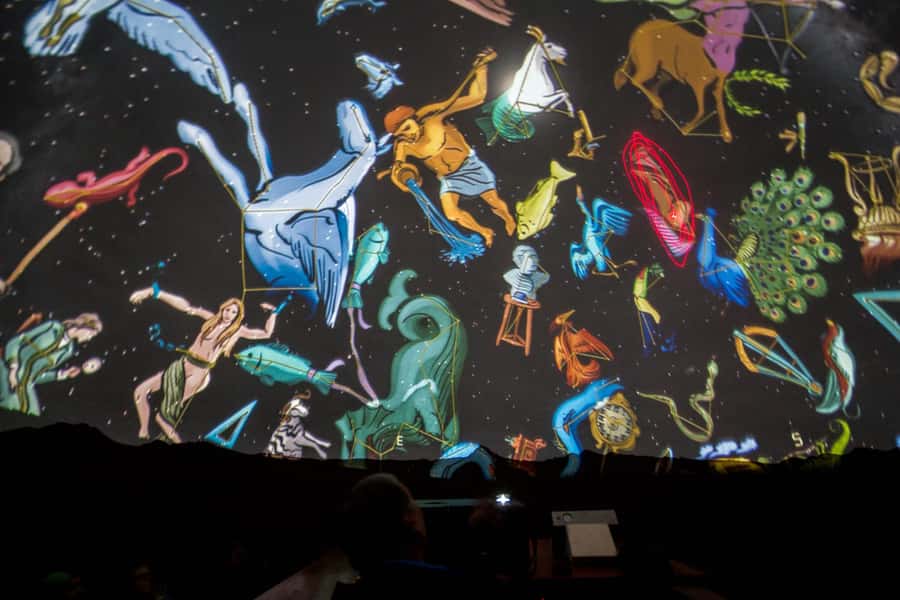
- Inca constellations take center stage: The presentation explains how the Incas understood the stars and organized their view of the universe.
- The observatory is close to Cusco: A minibus takes you from the center to the Planetarium in less than 20 minutes.
- The evening has three parts: You get an astronomy talk, a virtual projection across the dome, and possible telescope viewing.
- The telescope session is not guaranteed: Clouds or poor conditions can prevent close-up star viewing.
- The price is $43 per person: Transport, an English or Spanish-speaking guide, and admission are included.
- The timing fits a busy Cusco day: The group meets at 5:40 p.m. and returns to Plaza de Armas at 7:40 p.m.
Why Inca astronomy makes this visit different
A standard planetarium show can feel detached from the place you are visiting. This one has a stronger local focus. The subject is not simply planets, galaxies, and star charts. You learn how the Incas saw the sky and how their ideas shaped their understanding of the universe.
That focus gives the visit a useful cultural edge. You are not just looking upward. You are learning to interpret the stars through an Andean viewpoint. For anyone spending time in Cusco, this adds another layer to the city’s past without requiring a full-day excursion or a long journey into the countryside.
The presentation takes place in interpretation rooms before you enter the dome experience. That order makes sense. You first receive the basic ideas, then see the sky recreated above you. If you know little about Inca astronomy, the talk should help you follow the later projection instead of watching it as a pretty but confusing light show.
The available information does not list the length of the talk or name the guide, so you should expect the depth and style to depend partly on the person leading your group. English and Spanish are available.
More Planetarium Visits in the world:
- Planetarium Cusco OFFICIAL SITE: Andean Astronomy experience
★ 4.3 · 32 reviews - Balaton: All-Weather Private Stargazing & Planetarium Tour
★ 5.0 · 7 reviews - Miami: Frost Museum of Science and Planetarium Entry Ticket
★ 4.5 · 429 reviews
Meeting at 5:40 p.m. in central Cusco
The trip begins in the center of Cusco at 5:40 p.m., where you board a minibus. This is a useful setup for a short evening activity. You do not need to arrange a separate taxi to the observatory, and the ride takes less than 20 minutes.
That short transfer also keeps the outing focused. You spend most of the time on the astronomy program rather than sitting in traffic. The transport is included in the $43 price, along with admission and a live guide.
You will want to arrive at the meeting point early. The information provided confirms the departure time but does not specify the exact central-Cusco pickup location beyond the meeting arrangement. Check the final meeting instructions carefully before leaving your hotel, especially if you are unfamiliar with the narrow streets around the historic center.
The minibus portion may be less comfortable for anyone who dislikes group transport, but the short journey limits that drawback. It is practical rather than scenic. The real attraction begins once you reach the Planetarium.
Inside one of Cusco’s most original observatories
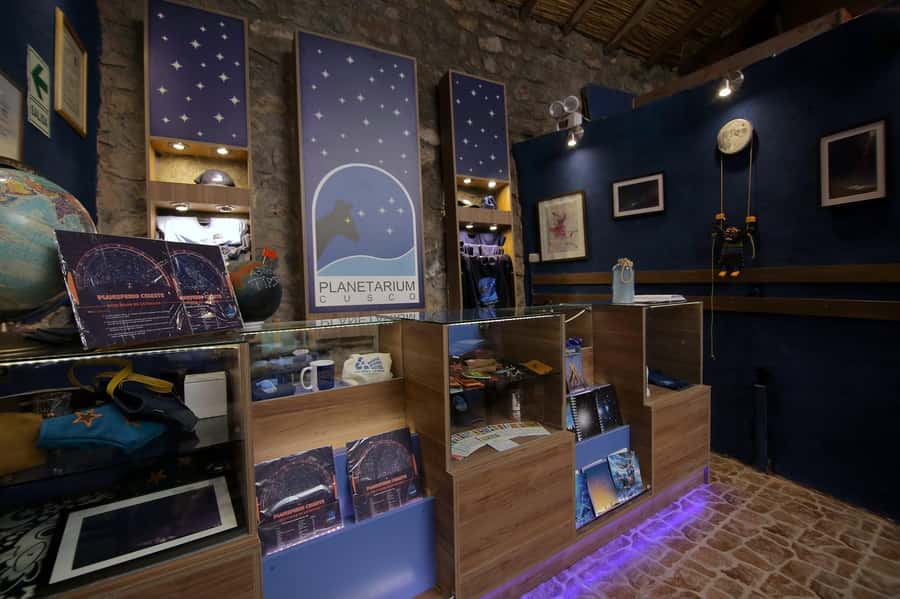
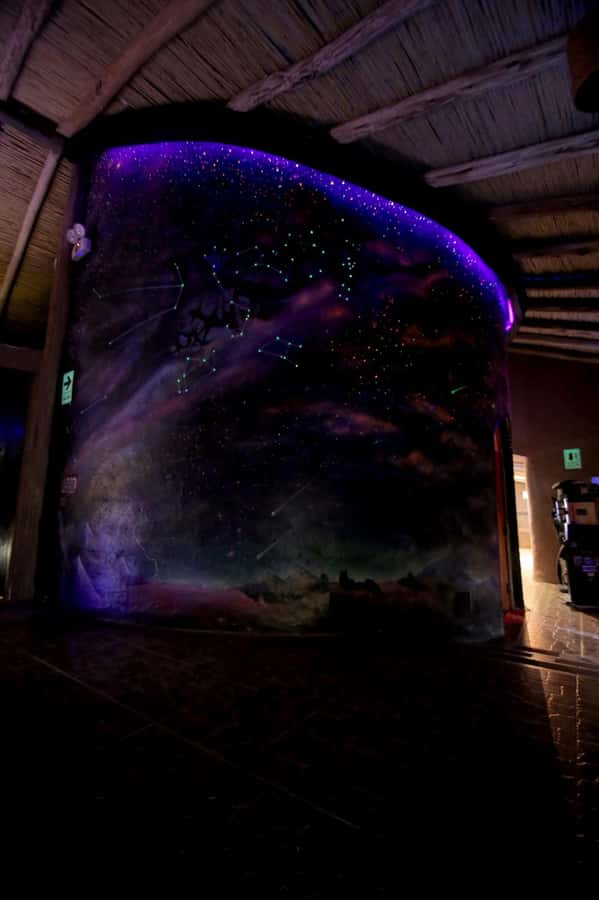
The Planetarium is described as one of the world’s most original observatories. That claim points to the character of the place, but the available details do not explain its architecture, equipment, or exact layout. I would treat the phrase as a reason to expect something more distinctive than a generic indoor theater, not as a promise of a large modern science center.
The setting matters because the visit links a physical observatory with an ancient way of reading the sky. The experience is designed around interpretation, not just equipment. You receive a guided explanation in the rooms before moving to the dome, which should make the visit approachable for people who do not normally follow astronomy.
I especially like this format for a first visit to Cusco. The activity gives you a cultural subject that is specific to the region, yet it does not demand specialist knowledge. Families, curious first-time visitors, and anyone looking for an evening plan beyond restaurants can all get something from it.
The description does not give a group size or specify how much time you spend in each room. Keep your expectations flexible. This is a compact 150-minute activity, not a full museum day.
The dome projection and Inca constellations
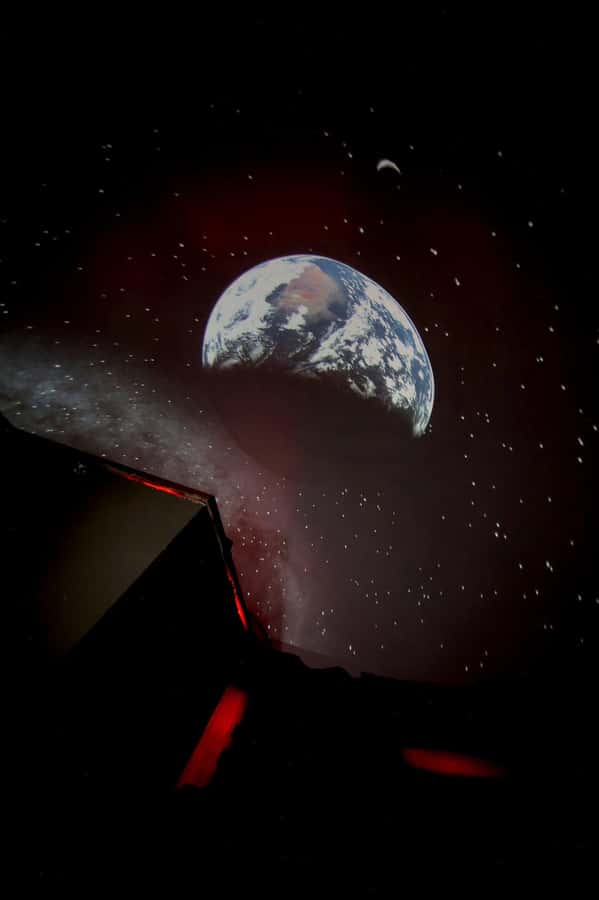
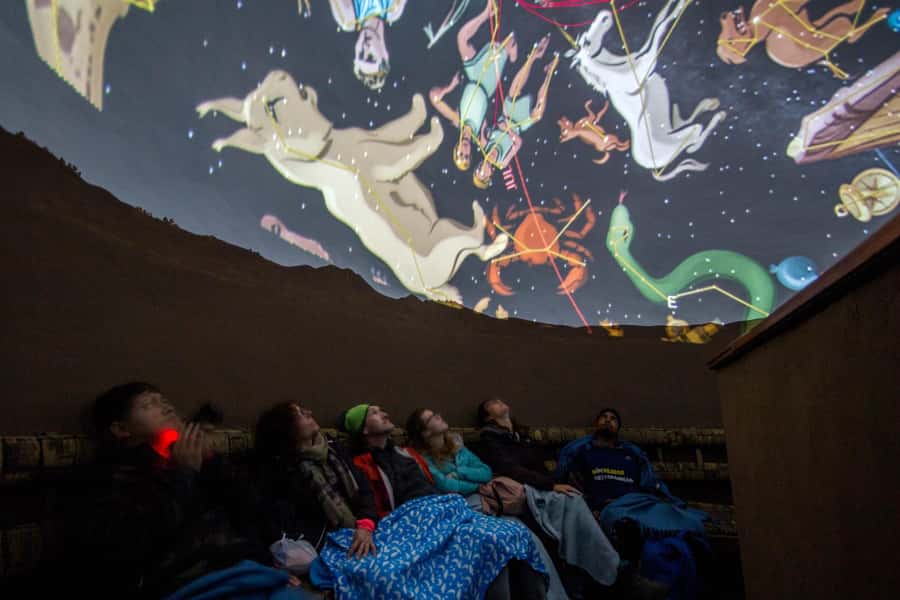
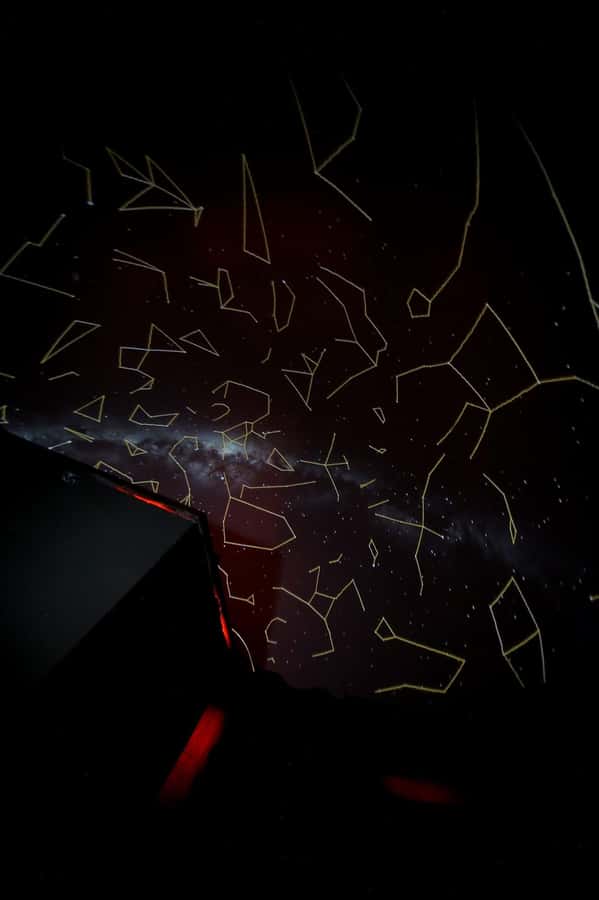
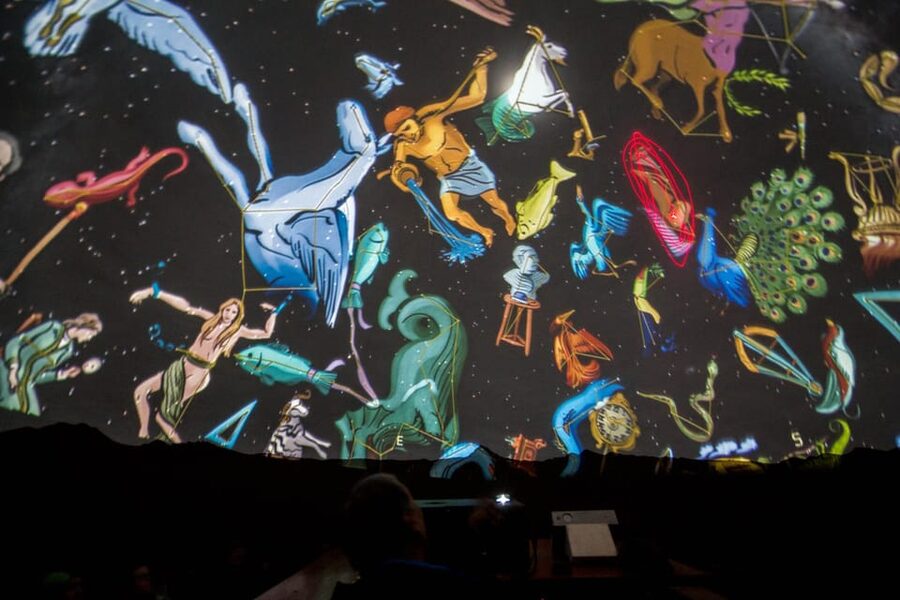
After the talk, you watch a virtual projection of the sky over the planetarium dome. This is the heart of the educational program. A dome can show the sky in a way that is easier to follow than a flat screen, especially when the guide points out star patterns and explains how the Incas interpreted them.
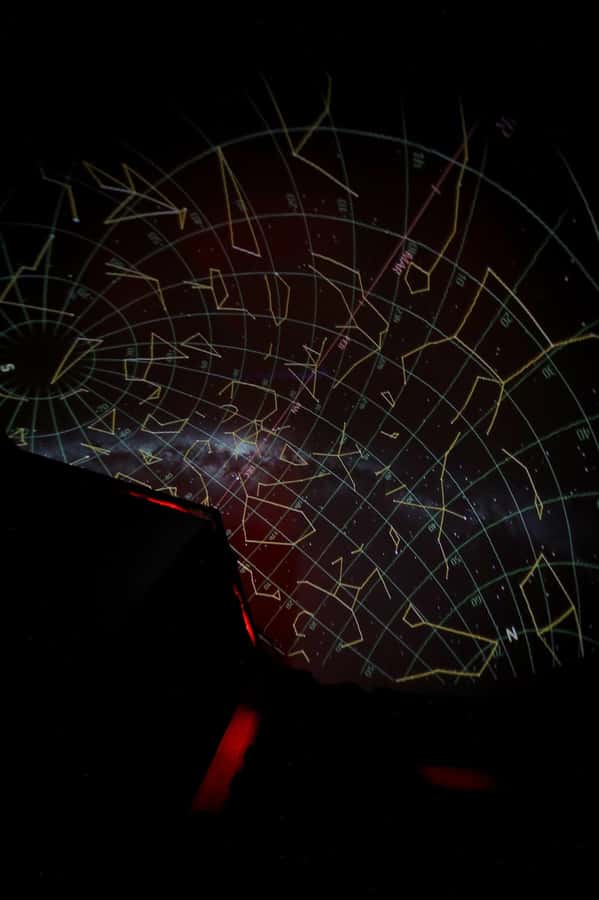
The focus on Inca constellations is the feature that gives this outing its purpose. You are not simply seeing a simulated night sky. You are being shown which patterns mattered within Andean thought and how the universe was understood from this part of South America.
For you, the value will depend on how much context the guide provides. A good explanation can turn familiar stars into part of a new cultural story. A shorter or less detailed presentation may feel more like a visual introduction. Since the tour is offered in English and Spanish, choose the language that lets you follow the ideas without effort.
This section should work well even if clouds later block the real sky. The dome projection is part of the planned program, while telescope viewing is conditional.
Same dark sky, a different way to spend it:
- Dubai Red Dunes ATV, Camels, Stargazing & 5* BBQ Al Khayma Camp
★ 5.0 · 21,620 reviews - Sharm El-Sheikh: Ultimate ATV Quad, Stargazing & BBQ Dinner
★ 4.7 · 4,084 reviews - Tenerife: Teide National Park Sunset & Stargazing Tour
★ 4.2 · 3,812 reviews - Tenerife: Sunset and Stargazing at Teide National Park
★ 4.7 · 2,826 reviews
Telescope viewing depends on the weather
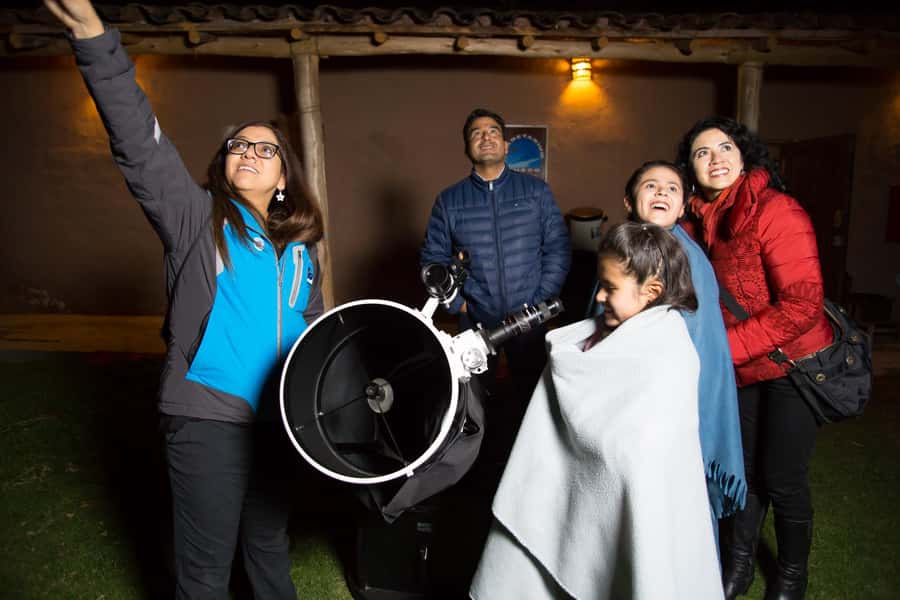
After the dome presentation, the group may use the Planetarium’s professional telescopes to view the stars in close detail. This is an appealing extra, but it is not guaranteed. The activity is specifically subject to weather conditions.
That point matters in Cusco. You may arrive hoping for a close look at the night sky and find that clouds make the telescope session impossible. The staff cannot control the weather, so you should judge the trip by its full program rather than treating the telescope as the only reason to book.
I would consider the telescope session a bonus. If the sky is clear, it can give the evening a memorable finish and make the equipment feel like more than a display. If conditions are poor, the Inca astronomy talk and dome projection remain the dependable parts of the visit.
The supplied details do not promise views of particular planets, moons, constellations, or deep-sky objects. You should not book expecting one exact celestial sight. The safe expectation is general star viewing when conditions allow it.
Returning to Plaza de Armas at 7:40 p.m.
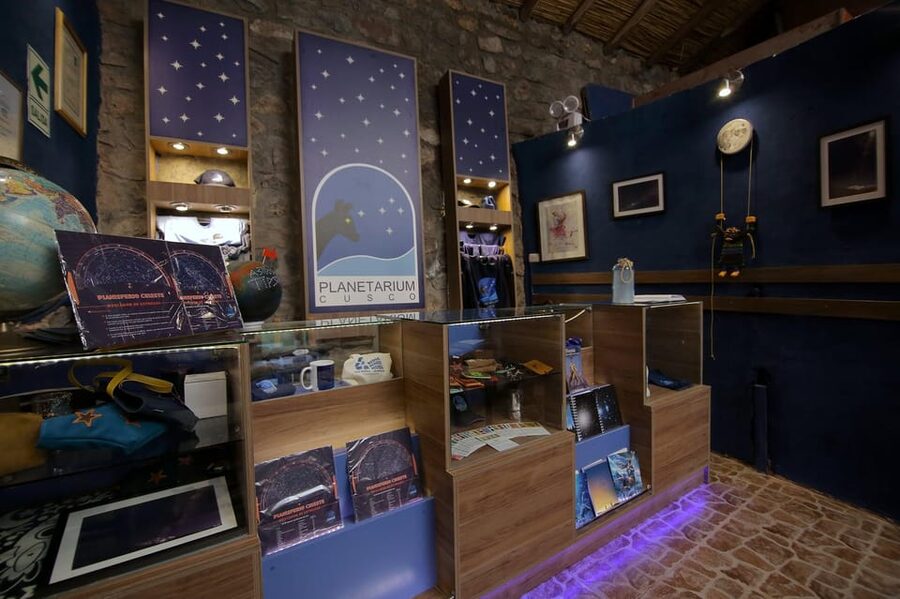
The trip ends with a return to Plaza de Armas at 7:40 p.m. That makes the schedule easy to combine with dinner, an evening walk, or another plan in central Cusco.
The stated duration is 150 minutes, while the listed meeting and return times cover two hours. That small difference is worth noticing when planning the rest of your evening. The activity may include transport and timing details that account for the published duration, so leave some breathing room instead of scheduling something immediately afterward.
The central return point is useful. You are not left at a remote observatory or asked to arrange your own ride back. Since food is not included, you can choose your own meal afterward in Cusco rather than paying for a packaged dinner you may not want.
Is $43 a fair price?
At $43 per person, the price is reasonable if you value the combination of transport, admission, and interpretation. You are paying for more than entry to a planetarium. The cost includes the ride from central Cusco, a live English or Spanish-speaking guide, and access to the dome and possible telescope session.
The value is strongest for visitors who would otherwise need to arrange their own transport and find a way to understand the Inca material. The guide is an important part of the experience. Without that explanation, the dome and telescopes would not offer the same cultural meaning.
The price is less attractive if you mainly want guaranteed telescope viewing. Weather can remove that part of the evening, and no food is included. You should also keep the mixed service record in mind. One verified booking reported that the guide never showed up, while another described the project as very passionate and family-run. Two five-star ratings suggest the experience can be excellent, but the one-star report is a practical warning to confirm the meeting details and allow a little flexibility.
Free cancellation up to 24 hours before departure and the option to reserve now and pay later reduce some booking risk. Those policies are useful when your Cusco plans may change, but they do not solve a same-day missed departure.
Who will enjoy the Cusco Planetarium most?
I would recommend this outing to you if you want a short cultural activity with a clear local connection. It is a good fit for:
- First-time visitors who want context for Andean beliefs
- Families looking for an evening activity
- People interested in astronomy but not trained in the subject
- Visitors who prefer a guided program to arranging an independent night-sky outing
- Anyone with a free evening after exploring central Cusco
It may not suit you if you want a long observatory session, detailed technical astronomy, or a completely independent visit. It also may disappoint if you need certainty that the telescopes will operate.
The family-project character is part of the appeal. One five-star booking praised the passion behind the operation, which suggests the experience can feel personal rather than mass-produced. Still, the reported no-show means I would not ignore the practical side. Confirm the meeting point and departure time, and keep the provider’s contact information available.
Should you book the Planetarium Cusco Trip?
Book it if the idea of seeing the sky through an Inca lens interests you. The strongest reasons are the cultural focus, the short transfer from central Cusco, and the combination of a guided talk with a dome projection. At $43, the package offers fair value when you use all three parts of the program.
Skip it if your main goal is guaranteed telescope viewing or a long, technical astronomy session. Weather can change the final activity, and the mixed service record means you should book with a little care.
For most visitors, I would treat it as a worthwhile two-hour evening plan, provided you see the telescopes as an extra rather than a promise.
FAQ
Where does the Planetarium Cusco Trip begin?
The group meets in the center of Cusco at 5:40 p.m.
How long does the activity last?
The activity is advertised as lasting 150 minutes. The stated meeting time is 5:40 p.m., with a return to Plaza de Armas at 7:40 p.m.
How far is the Planetarium from Cusco?
The Planetarium is located less than 20 minutes from the center of Cusco by minibus.
What languages are available?
The live guide is available in English and Spanish.
Is transport included?
Yes. Transport by minibus from central Cusco to the Planetarium and back to Plaza de Armas is included.
Is entry to the Planetarium included?
Yes. Entry to the Planetarium Cusco is included in the price.
Will I definitely use the telescopes?
No. Telescope viewing depends on weather conditions.
Is food included?
No. Food is not included in the activity.
Just added around the world
- ( canyon hurghada & stargazing )★ 4.9 · 16 reviews
- Vincentia: Jervis Bay Beach Stargazing with an Expert★ 4.9 · 19 reviews
- Twizel Stargazing Experience with a Guide (Carbon Positive)★ 4.7 · 26 reviews
- Twizel: Stargazing Tour with an Astronomer and Telescope★ 4.9 · 36 reviews
- Blue Mountains: Stargazing with a Telescope and Astronomer★ 4.4 · 21 reviews
- Star Safari Stargazing Experience, Martinborough★ 5.0 · 6 reviews
- Klein Karoo “High 5” Stargazing Experience in Oudtshoorn★ 5.0 · 7 reviews
- Moonlight Experience and Stargazing close to Victoria Falls★ 5.0 · 2 reviews
Planetarium Visits, compared.
Miami: Frost Museum of Science and Planetarium Entry Ticket
Read our review →
Houston Museum of Natural Sciences: Planetarium Ticket
Read our review →
Jasper Planetarium and Telescope Combo Tour Tickets
Read our review →

Cusco by Night: Planetarium Cusco, Dinner, and Pisco Sour
Read our review →
Planetarium Cusco OFFICIAL SITE: Andean Astronomy experience
Read our review →
Browse the lists this tour appears in