
Review · THE UK
Royal Observatory & Prime Meridian and Cutty Sark
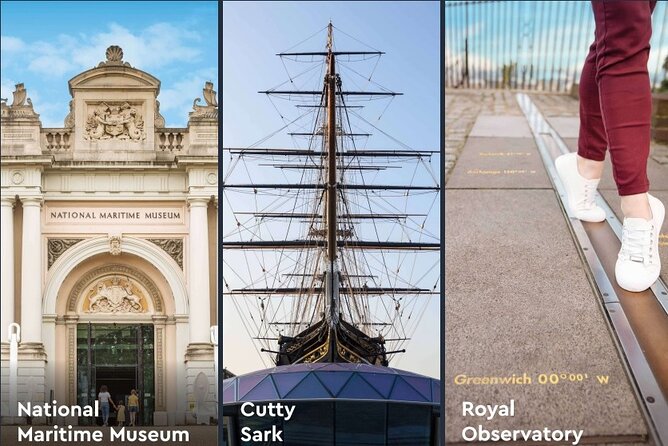
Time begins on a Greenwich hill. This self-guided day pass brings together the Royal Observatory, the Prime Meridian, the restored Cutty Sark, Queen’s House, and the National Maritime Museum in one compact part of London. I especially like the chance to stand with one foot in each hemisphere and the way the Cutty Sark turns maritime history into something you can walk through. The main drawback is value: Queen’s House and the National Maritime Museum are normally free, so the $53.86 price makes the most sense if you will use the Observatory and Cutty Sark fully.
Greenwich is easy to enjoy at your own pace. You receive admission to four attractions, but no guide or transportation is included, so you are planning your own route and schedule. Allow six to eight hours if you want more than a quick look, and wear sensible shoes because the Observatory sits uphill and several buildings involve stairs.
The Greenwich highlights worth planning around
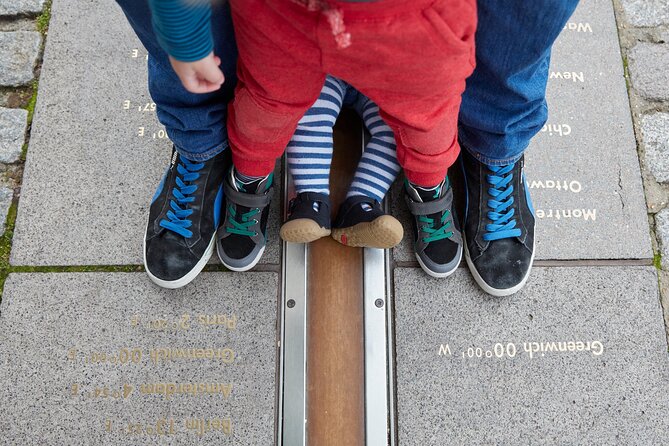
- The Prime Meridian on the Observatory hill: Stand at longitude zero and take the classic photo between the Eastern and Western Hemispheres.
- The Cutty Sark beneath its copper hull: Walk aboard the world’s sole-surviving tea clipper, then look up at the ship’s gleaming underside.
- John Harrison’s clocks and old telescopes: The Observatory connects astronomy, timekeeping, and the problem of finding longitude at sea.
- Queen’s House and its Inigo Jones design: See Britain’s first classical building, now filled with art rather than period furniture.
- The National Maritime Museum’s enormous collection: Its displays cover exploration, naval life, and the forces that shaped Britain’s place at sea.
- The park and riverfront setting: Greenwich gives you open space, walking routes, markets, cafés, and water-taxi connections alongside the museums.
Why Greenwich makes a strong day from London
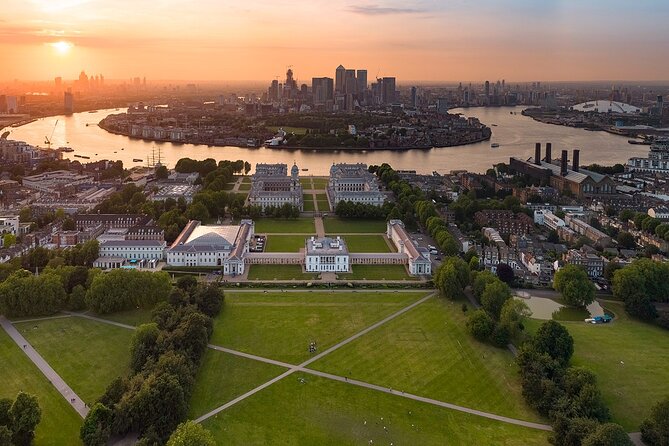
Greenwich feels removed from central London without being difficult to reach. You can get there by train, and the river offers another appealing approach by Uber Boat or ferry. Transportation is not part of the pass, so you pay separately and choose the route that suits your day.
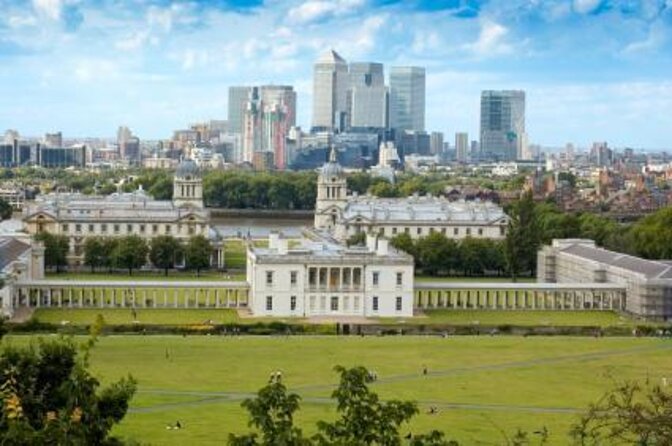
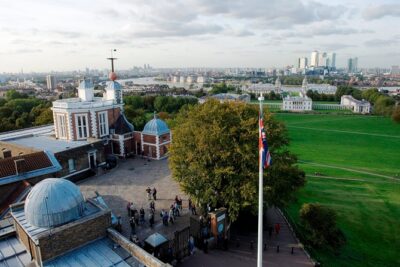
The attractions are spread around Greenwich rather than packed into one building. The Cutty Sark and National Maritime Museum are near the river, Queen’s House sits close by, and the Observatory requires a climb through Greenwich Park. That layout is part of the pleasure, but it also explains why a three-hour visit feels rushed.
A 10:00 a.m. start gives you enough daylight and time to build a sensible order. I would begin with the Royal Observatory if standing on the Meridian Line is your priority. The hill gets tiring, especially after a full day, and the Observatory may be one of the places you most want to see.
Another good plan is to start with the Cutty Sark, then visit the Observatory while your energy is still good. After lunch, use the remaining time for the National Maritime Museum and Queen’s House. You can reverse this order if the weather or opening arrangements make another sequence easier.
More Observatory Visits in the world:
- Mount John Observatory Stargazing Experience, Tekapo
★ 4.5 · 160 reviews - Tenerife: Mount Teide Observatory Astronomical Tour
★ 4.4 · 126 reviews - Stargazing Experience at Cowan’s Private Observatory
★ 4.0 · 85 reviews
Royal Observatory and the Prime Meridian
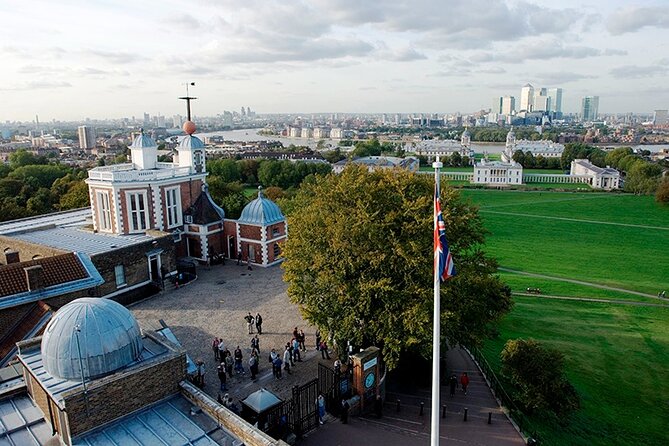
The Royal Observatory is the intellectual heart of this pass. It is where Greenwich Mean Time and the Prime Meridian are brought together in a place you can actually visit, rather than as abstract marks on a map.
The Meridian Line is the quick, memorable stop. You can place yourself across longitude zero and take a photograph with one foot in each hemisphere. It is a simple moment, but it gives a physical sense to a system that has shaped navigation, mapping, travel, and timekeeping around the world.
The Observatory itself rewards a slower visit. Displays cover royal connections, astronomy, old telescopes, charts, and timepieces. The story of John Harrison is especially compelling. His clocks helped solve the problem of calculating longitude at sea, a task that once meant the difference between reaching a port safely and becoming lost far from land.
This is also where you can see why accurate time mattered so much. At sea, knowing the local time and comparing it with a reference time helped sailors work out their position east or west. The exhibits connect mechanical skill with global travel in a way that is easy to grasp even if you are not an astronomy enthusiast.
The Peter Harrison Planetarium adds a space-focused side to the visit. Planetarium programs can sell out before the day, so arrange one in advance if it is important to you. Do not assume that arriving at the Observatory guarantees a planetarium seat.
The climb deserves honest attention. The hill is manageable for many people, but it can be strenuous, and the path can be particularly steep. One practical tip is to use the road up rather than the steepest path, especially if you have mobility concerns or are saving your legs for the museums.
Allow roughly two hours here. That gives you time for the Meridian Line, the displays, the clocks, the telescopes, and any talks that happen during your visit. The café near the Observatory is useful for a break, and Greenwich Park makes the walk back pleasant.
Cutty Sark, a ship you can walk through
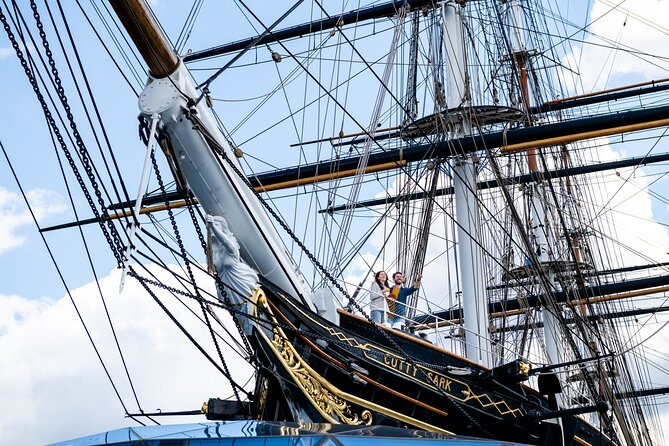
The Cutty Sark is the most physical attraction in the package. You do not just look at a ship from the quayside. You go aboard, move through its working spaces, and then walk underneath the hull.
This tea clipper is the only surviving ship of its kind. It became famous for fast passages around the globe, and its design tells you why speed mattered. Tea was valuable cargo, and getting it to market quickly mattered to the ship’s owners and the merchants waiting at the other end.
The ship’s copper hull is one of the memorable sights. From below, you can appreciate the shape that helped the Cutty Sark move quickly through the water. The view is particularly good for understanding the ship as a piece of engineering rather than simply as an old vessel.
Allow about two hours if you like reading displays and taking your time. You can shorten the visit to around an hour if the Observatory is your main goal, but the ship deserves more than a quick walk-through.
The Cutty Sark works especially well for families. Hands-on elements help younger children stay interested, while the ship’s size and unusual setting give adults plenty to study. A reasonably priced cream tea is available, making it possible to pause without leaving the site.
Stairs are part of the experience, so plan accordingly. The ship is not a flat museum gallery, and the pass may be less comfortable for anyone who finds repeated steps difficult. Staff are praised for being helpful, including assisting a visitor with a shoe problem, but you should still arrive with footwear that can handle a long day.
Queen’s House and the Inigo Jones breakthrough
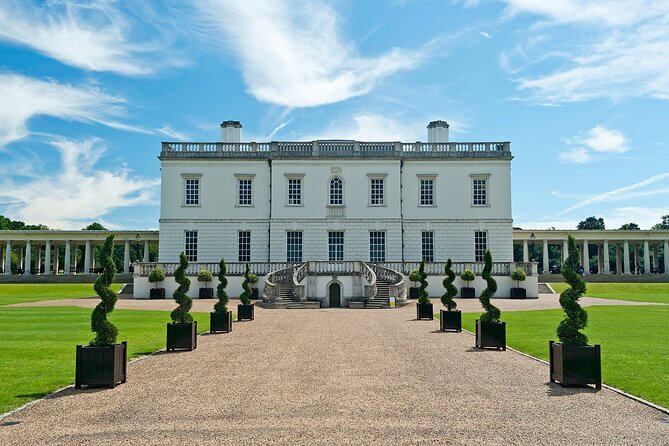
Queen’s House offers a change of mood. Built by Inigo Jones, it is described as Britain’s first classical building and an important step in 17th-century architecture. After the crowded decks of the Cutty Sark and the equipment-filled Observatory, its clean design and art displays provide a quieter stop.
Plan on about an hour, or longer if you want to study the collection carefully. The house contains art but little period furniture, so you should not expect a furnished royal residence. Its appeal comes from the architecture, the rooms, and the paintings rather than from recreated domestic interiors.
This is the least child-focused of the four stops. Older children with an interest in art may enjoy it, but younger children could find it slower than the ship or the maritime museum. If your time is tight, I would give priority to the Observatory and Cutty Sark, then decide how much time Queen’s House deserves.
Admission to Queen’s House is normally free, apart from guided tours and special exhibitions. That fact matters when you assess the pass. The building is a worthwhile stop, but its inclusion does not add the same direct financial value as a paid admission.
Same dark sky, a different way to spend it:
- Dubai Red Dunes ATV, Camels, Stargazing & 5* BBQ Al Khayma Camp
★ 5.0 · 21,620 reviews - Sharm El-Sheikh: Ultimate ATV Quad, Stargazing & BBQ Dinner
★ 4.7 · 4,084 reviews - Tenerife: Teide National Park Sunset & Stargazing Tour
★ 4.2 · 3,812 reviews - Tenerife: Sunset and Stargazing at Teide National Park
★ 4.7 · 2,826 reviews
National Maritime Museum and the stories behind sea travel
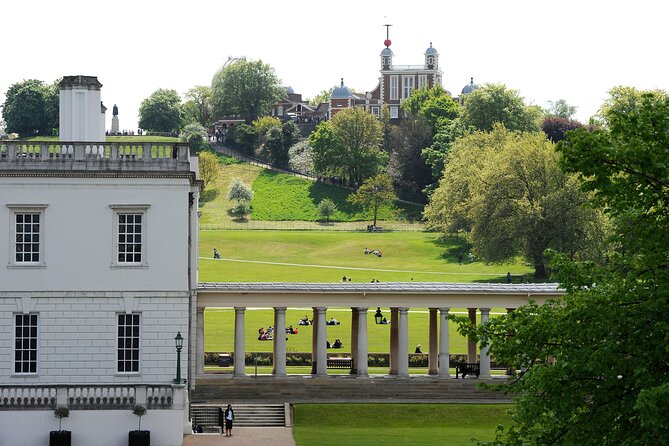
The National Maritime Museum is the largest museum of its kind in the world, and its size is both its strength and its planning challenge. You can spend two hours here and still leave with galleries unseen.
The museum covers exploration, naval life, technology, and the human effort behind journeys at sea. It helps explain the world that produced ships such as the Cutty Sark and the practical need for the Observatory’s timekeeping work.
I would use this stop to connect the other attractions. After seeing Harrison’s clocks, you can better understand why navigation mattered. After walking aboard the Cutty Sark, the museum gives you a wider view of the people, trade, and naval power that surrounded ocean travel.
The museum is family-friendly, with displays that appeal across age groups. It also has a café, useful if you need a break before returning to the park or riverfront.
Admission is normally free, except for guided tours and special exhibitions. That is the biggest issue with this package. The museum is excellent, but you could visit it without buying this pass. The same applies to Queen’s House, so compare the separate prices for the Royal Observatory and Cutty Sark before booking.
What the $53.86 price really buys you
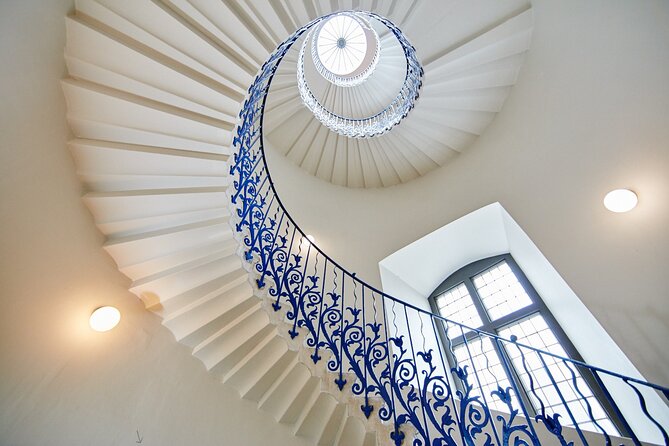
At $53.86 per person, this is not automatically a bargain. The financial value rests mainly on the Royal Observatory and Cutty Sark, since the other two attractions generally have free admission.
The pass can still be convenient. You receive entry to all four sites, and advance booking may shorten queuing. It is also helpful if you want a single purchase rather than sorting out admissions during the day.
I would buy it when you plan to spend most of the day in Greenwich and expect to visit both paid attractions. If you only want the Prime Meridian and Cutty Sark, check the combined cost of those two admissions first. Several people who used the pass felt it would have been cheaper to purchase only those entrances.
Do not expect the package to include the Painted Hall at the Old Royal Naval College. It does not. That is an easy mistake because the Painted Hall is another major Greenwich sight, but it requires a separate arrangement.
The pass also does not include transportation to Greenwich or between the attractions. You are paying for admission, not a guided excursion, shuttle, or river ride. That is perfectly fine for an independent day, but it should be clear before you book.
A practical route for a full Greenwich day
If I had one full day, I would use this order:
- Begin at the Royal Observatory at 10:00 a.m. and allow two hours.
- Walk downhill through Greenwich Park toward the river.
- Stop for lunch near the Cutty Sark or at a nearby café.
- Spend around two hours aboard the Cutty Sark.
- Visit Queen’s House for an hour, adjusting the time based on your interest in art.
- Finish at the National Maritime Museum, allowing up to two hours.
This schedule is ambitious but workable. If you arrive by boat, begin at the riverfront and visit the Cutty Sark first. If you have limited mobility, avoid the steepest route to the Observatory and leave extra time for the hill.
You can also treat the pass as a flexible entry ticket rather than a guided tour. There is no tour leader setting the pace. That means you can linger over John Harrison’s clocks, skip galleries that do not interest you, or spend extra time in the park.
A three-hour visit is possible, but it forces hard choices. You might manage the Cutty Sark and Observatory, with only a short look at the museum. For the full experience, six to eight hours is more realistic.
Who should book this experience?
I think this suits independent visitors who like history, science, ships, architecture, and the freedom to set their own pace. Families will find the Cutty Sark and parts of the National Maritime Museum especially approachable. The Observatory is a strong choice for anyone interested in astronomy, navigation, time, or old scientific instruments.
It is less suitable if you want a guide, organized commentary, or included transport. You are responsible for reaching Greenwich, walking between sites, and deciding how to use your time.
The day also demands some stamina. Expect stairs, a hill, and plenty of walking. Bring water, use practical shoes, and leave room for a rest in the park or at a café.
The pass is not ideal for someone focused only on free museums. Queen’s House and the National Maritime Museum are worthwhile, but their standard admission is free. The price becomes easier to justify when you include both the Observatory and Cutty Sark and make a full day of Greenwich.
Should you book the Greenwich pass?
Book it if you want the Royal Observatory and Cutty Sark in the same day, value advance entry, and are happy exploring without a guide. Those two attractions provide the strongest reason to buy, and together they make Greenwich a memorable break from central London.
Skip it if you plan to visit only the free museums, need the Painted Hall included, or prefer a fully organized tour. Check the separate admission prices before paying, then allow a full day if you can. Greenwich rewards patience, and rushing from the Meridian Line to the ship leaves too much of the story unseen.
FAQ
How much does the Royal Observatory and Cutty Sark experience cost?
The listed price is $53.86 per person.
How long should I allow for the full experience?
The stated duration is approximately three to eight hours. Six to eight hours is more suitable if you want to see all four attractions without rushing.
What time does the experience start?
The listed start time is 10:00 a.m.
Which attractions are included?
Admission includes the Royal Observatory, Cutty Sark, Queen’s House, and the National Maritime Museum.
Is transportation included?
No. Transportation to Greenwich and between the attractions is not included.
Is this a guided tour?
No. This is a self-guided experience, so you explore the attractions on your own.
Are children allowed?
Yes. Children must be accompanied by an adult, and children under four years old enter free.
Is the experience suitable for people with limited mobility?
Most people can participate, but the attractions include stairs and the Royal Observatory requires a walk uphill. Use the less steep road route to the Observatory if needed.
Can I cancel for a refund?
You can cancel at least 24 hours before the start time for a full refund. Changes or cancellations made less than 24 hours before the start time are not accepted, and poor weather may lead to a new date or full refund.
Just added around the world
- ( canyon hurghada & stargazing )★ 4.9 · 16 reviews
- Vincentia: Jervis Bay Beach Stargazing with an Expert★ 4.9 · 19 reviews
- Twizel Stargazing Experience with a Guide (Carbon Positive)★ 4.7 · 26 reviews
- Twizel: Stargazing Tour with an Astronomer and Telescope★ 4.9 · 36 reviews
- Blue Mountains: Stargazing with a Telescope and Astronomer★ 4.4 · 21 reviews
- Star Safari Stargazing Experience, Martinborough★ 5.0 · 6 reviews
- Klein Karoo “High 5” Stargazing Experience in Oudtshoorn★ 5.0 · 7 reviews
- Moonlight Experience and Stargazing close to Victoria Falls★ 5.0 · 2 reviews
Observatory Visits, compared.
Royal Observatory Greenwich & Prime Meridian Entrance Ticket
Read our review →
Griffith Observatory Hike: Guided Tour through Griffith Park
Read our review →
Royal Observatory Greenwich & Prime Meridian Entry Ticket London
Read our review →

Browse the lists this tour appears in