
Review · NATIONAL PARK
Milky Way Photography Workshop in Acadia National Park
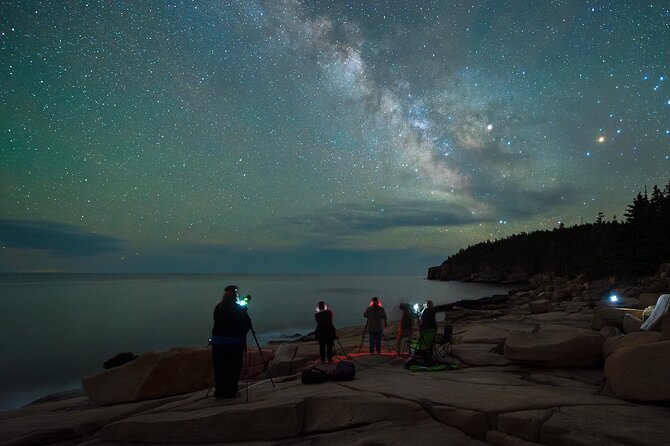
Stars meet the Maine coast. This five-day workshop pairs Acadia’s famous night views with patient, practical instruction from Christopher, a highly praised astrophotography teacher. I like the small group of no more than five, which gives you room for real help in the field, and I like the mix of shooting and editing rather than a quick photo outing. The main drawback is the price: at $2,500 per person, you still need to pay for lodging, meals, and the park entrance fee.
This is not a casual stargazing trip with a camera pointed at the sky. You will work on single exposures, stacked images, foreground detail, focus stacking, time-lapse ideas, and photo planning with PhotoPills. You should arrive with a camera suited to long exposures and at least a basic grasp of manual settings, since the workshop is built to improve existing skills rather than teach photography from the beginning.
Key points to know before booking
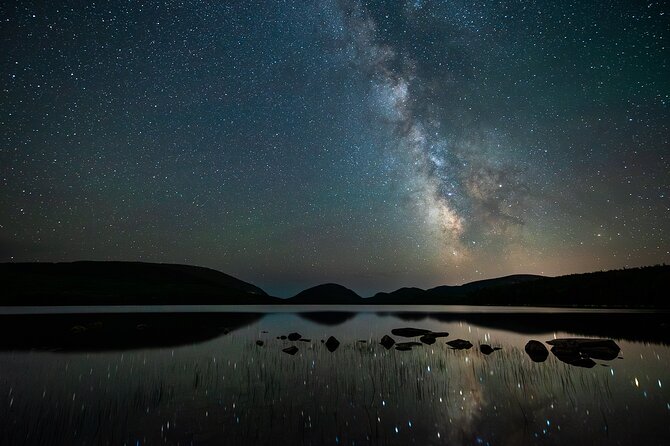
- Five Acadia locations after dark: You may photograph Jordan Pond, Otter Cliff, Bubble Pond, Sand Beach, and Eagle Lake.
- A true small-group format: The maximum group size is five, with private transport inside Acadia National Park.
- Editing is part of the course: You receive a one-on-one post-processing session through Discord, covering Lightroom and Photoshop workflows.
- The timing follows the stars: Sessions are scheduled in evening and overnight windows, including 7:00 PM to 11:30 PM and 12:00 AM to 3:30 AM.
- Bring serious camera gear: You need a DSLR or mirrorless camera, a fast wide-angle lens, a sturdy tripod, and an intervalometer unless your camera has one built in.
- Weather matters: Clear skies are essential, so poor conditions can lead to a new date or a full refund.
What makes this Acadia workshop different
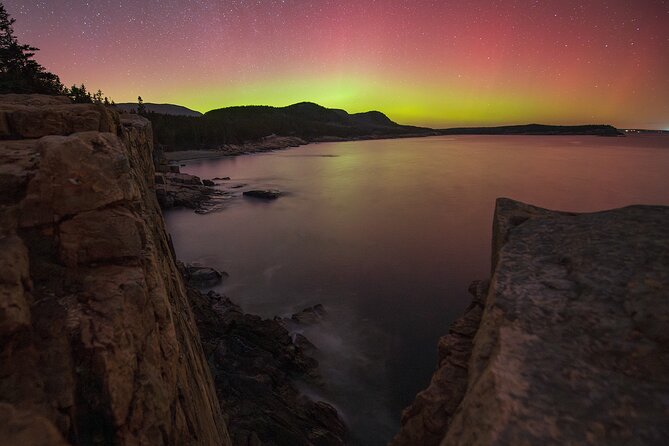
Acadia is a strong setting for night photography because the stars are only half the picture. Rocky shorelines, ponds, cliffs, and wooded edges give you foreground subjects that make a Milky Way image feel like a place rather than a star field.
That distinction shapes the teaching here. You will not simply learn how to point your camera upward and make the sky bright. The goal is to build a frame with depth, then use exposure and editing choices to connect the stars with Acadia’s coastal character.
Christopher is the instructor named throughout the experience, and his teaching style receives especially strong praise for being calm, patient, and welcoming. That matters after dark, when camera menus feel less friendly, focus is easy to miss, and small mistakes can cost you a clear shooting window.
The format also gives you time to repeat a process. You can plan a composition, set up the tripod, check focus, make an exposure, and then adjust. A five-person maximum is a major advantage here. Astrophotography often requires hands-on troubleshooting, and one instructor cannot give much personal help to a large group.
More Astrophotography Tours in the USA:
- Moab: The Windows Astro-Photography and Stargazing Hike
★ 4.8 · 36 reviews - Night Sky Private Photo Tour
★ 5.0 · 8 reviews - Milky Way Photography in Arches National Park
★ 4.0 · 4 reviews
Five nights and five very different viewpoints
The schedule includes Jordan Pond, Otter Cliff, Bubble Pond, Sand Beach, and Eagle Lake. The order may change with weather, moon position, access, or the best alignment of the Milky Way, so treat the locations as the core of the workshop rather than a guaranteed sequence.
Jordan Pond for reflections and clean compositions
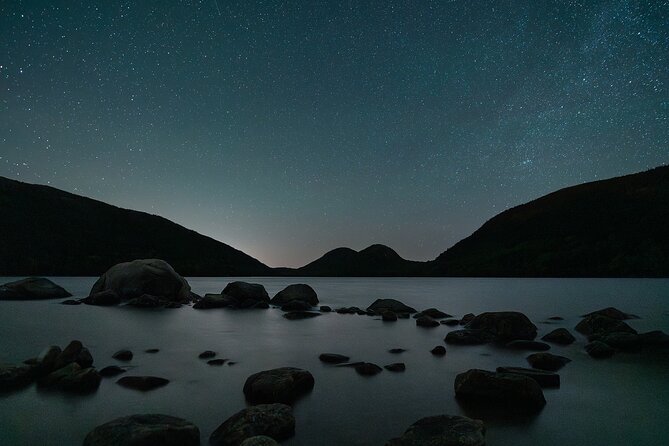
Jordan Pond gives you a quieter water-based setting for night images. The pond can provide a strong foreground and, when conditions cooperate, reflections that help balance the sky.
This is a useful place to practice the basic decisions that make or break an astrophotograph. You will need to consider where the Milky Way sits in relation to the pond, how much shoreline belongs in the frame, and whether a single exposure can hold both the sky and the foreground.
The calm setting should suit photographers working on composition. It may also expose a common problem: a technically sharp sky can still produce a weak picture if the foreground has no purpose. The workshop’s emphasis on storytelling helps address that issue.
Otter Cliff for drama along the coast
Otter Cliff brings a more forceful coastal element. Rock, open sky, and the Atlantic give you a chance to work with scale and movement in the composition, even in a still image.
This is where foreground technique becomes especially important. A bright Milky Way over a dark cliff can look impressive, but the image needs enough detail in the rocks to connect the viewer with the location. Christopher teaches the use of separate exposures for the sky and foreground, which can help preserve detail when one exposure cannot handle both.
The coast also adds practical limits. You should expect uneven ground and the need for careful tripod placement. The stated requirement for moderate physical fitness is worth taking seriously, even though the exact walking distances are not provided.
More Milky Way Tours in the USA:
- Stargazing and Milky Way Portrait in Capitol Reef National Park
★ 4.5 · 13 reviews - Mount Bromo Milky Way Photography and Sunrise Private Tour (1D1N)
★ 5.0 · 6 reviews - Milky Way Sanctuary Stargazing Tour at Pangue Observatory
★ 4.2 · 5 reviews - Milky Way: night snowshoe hike with a typical dinner in a mountain hut
★ 5.0 · 4 reviews
Bubble Pond for a more enclosed setting
Bubble Pond offers another water-based composition, with a different sense of scale from the open coast. Trees, water, and surrounding shapes can frame the stars and give you a natural border around the sky.
This stop should be useful for learning how to include foreground elements without letting them swallow the image. You may work on focus stacking here, a method that lets you combine frames focused at different distances for a sharper final result.
Focus stacking is not an automatic shortcut. It adds more files and more editing work. Still, it can be valuable when you want both a nearby foreground and distant stars to look crisp. The workshop treats this as part of a larger workflow, not as a single camera trick.
Sand Beach for a wide, open view
Sand Beach gives you an open coastal frame and a clear way to show the relationship between sky and shore. It is one of the most recognizable places in Acadia, but night photography changes how you see it. Familiar daytime scenery becomes a study in silhouettes, texture, and star placement.
This is a good setting for planning with PhotoPills. You can use the app to check where the Milky Way will appear and work toward a deliberate alignment rather than hoping the sky lands in the right place.
Planning is one of the most valuable skills taught here. A beautiful night sky does not guarantee a strong composition. If the Milky Way sits behind an unhelpful part of the frame, you may need to change your position, lens choice, or timing.
Eagle Lake for a final water-and-sky composition
Eagle Lake rounds out the location mix with another chance to use water and surrounding land as visual anchors. By this point, you should have worked with both open coast and more enclosed pond settings, giving you useful comparisons.
The value of including several locations is not just variety. Each one asks you to solve a different problem: how to handle a dark foreground, how to show scale, how to keep water from becoming an empty black shape, and how to make the Milky Way part of a larger story.
You should not expect every site to produce a perfect image. Clouds, haze, wind, or poor alignment can affect the result. The lasting benefit is learning how to respond when conditions are less than ideal.
What you will learn in the field
The workshop covers single-exposure and stacked night sky images. A single exposure keeps the process simple, while stacking several frames can reduce noise and improve detail when the conditions and subject allow it.
You will also learn how to make a longer exposure for the foreground and combine it with a Milky Way exposure in Photoshop. This blend can produce a more balanced image than trying to force the sky and ground into one exposure.
That technique requires care. A poorly blended horizon can look artificial, especially around trees or rough rock. The useful part of instruction is not just learning which buttons to press, but understanding when the blend helps and when a simpler image is more convincing.
Time-lapse photography is another notable part of the teaching. One past participant used the workshop to learn how clouds and stars can be recorded over time, with Lightroom and third-party software used to build a sequence. This is an extra skill rather than the central promise of the workshop, but it gives you another way to use the same night files.
The focus is not only on making technically correct pictures. You will work on visual storytelling through celestial movement and coastal elements. That approach should appeal to you if you want your photos to show a sense of place, not merely prove that you photographed the Milky Way.
The editing session gives the workshop lasting value
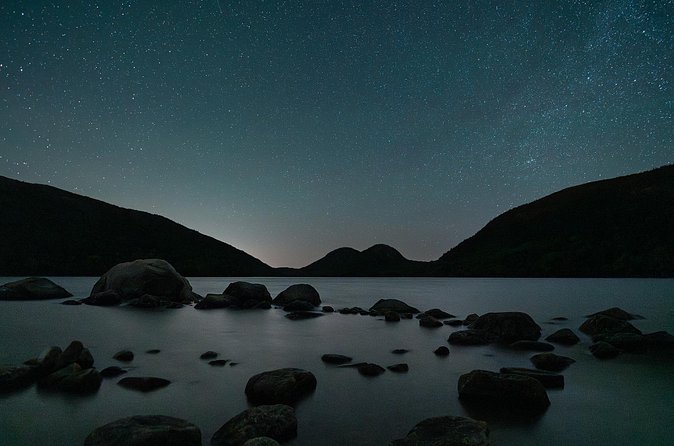
Many night photography outings end when the tripod comes down. This one includes a one-on-one post-processing session through Discord, which is a meaningful addition for anyone who wants to understand the entire process.
The stated software focus is Lightroom and Photoshop. You can expect attention to organizing and developing your files, improving the night sky, balancing the foreground, and blending exposures. The precise lesson plan is not provided, so you should confirm which editing topics will receive the most time if you have a particular goal.
The private format matters. You can bring your own images and ask about problems that a general lecture might skip. That personal follow-up also gives you support after the field work, which is helpful when you try the workflow alone at home.
The strongest praise for Christopher centers on the full path from pre-shoot teaching to field work and editing. The course appears to be most useful when you take part in all three parts. If you only want a guide to scenic viewpoints, you would be paying for skills you may not use.
The $2,500 price: costly, but not just a photo walk
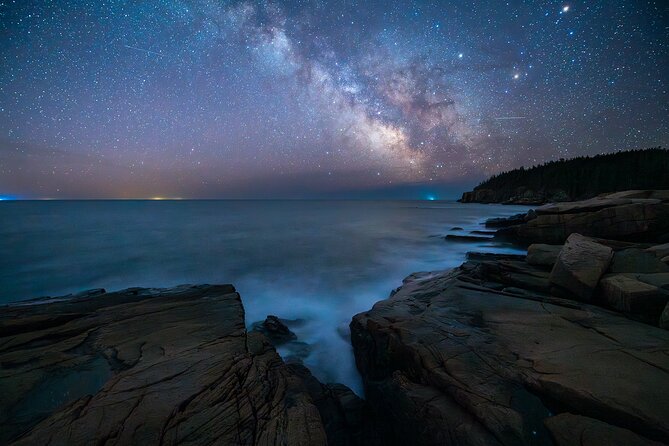
At $2,500 per person, this is an expensive workshop. The price makes more sense if you value private transportation, a maximum group of five, expert instruction across several nights, and individual editing help.
You are also paying for planning and access to a structured process. Acadia is not being treated as a backdrop for a single stop. You will work across five locations and learn how to choose compositions, expose the sky, handle the foreground, and finish the image later.
Still, the price does not cover everything. Lodging and meals are your responsibility, and the entrance fee is listed separately at $20 per person. The fee description refers to a valid Yellowstone National Park pass, which does not match an Acadia workshop. Confirm the correct park admission requirement before you pay, rather than relying on that wording.
The value is weaker if you already have strong astrophotography skills and a reliable editing workflow. It is stronger if you have a camera and lens but struggle with planning, focus, exposure blending, or post-processing.
Gear and preparation you should take seriously
You need a DSLR or mirrorless camera that can handle long exposures. The recommended lens is wide angle with an aperture of f/2.8 or faster, which helps gather more light from the night sky.
A sturdy tripod is essential. A light or unstable tripod can introduce movement and blur, especially during longer exposures or when wind reaches the camera.
You also need an external intervalometer unless your camera includes that function. This helps control the shutter without touching the camera and is useful for repeated frames, stacks, and time-lapse sequences.
You should already understand basic manual settings and some post-processing. The course is designed to build on that foundation. If you are still learning how aperture, shutter speed, ISO, and manual focus work, you may find the pace demanding.
Bring your own creative goals, too. You might want a clean single exposure, a blended foreground, a Milky Way panorama, or a time-lapse sequence. Knowing what you want to improve will help you use the small-group instruction well.
Timing, transport, and physical demands
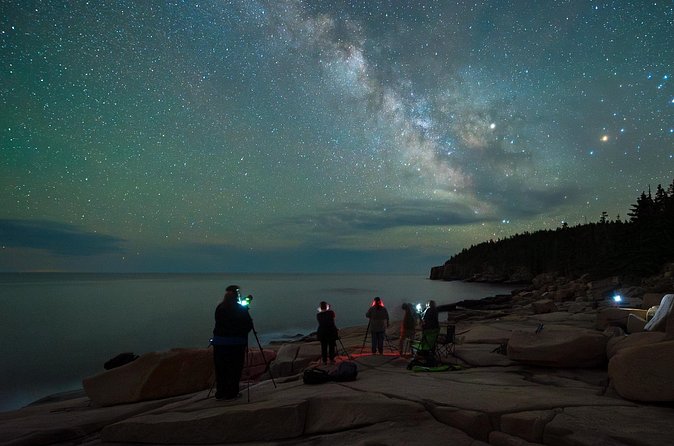
The listed operating hours include two night windows: 7:00 PM to 11:30 PM and midnight to 3:30 AM, from Tuesday through Saturday. These hours reflect the reality of the subject. You will be working late, and some sessions may run into the early morning.
Private transportation covers travel within Acadia National Park during the workshop. That is useful because you do not need to manage night driving between several shooting sites, and the small vehicle group should make movement more efficient.
Water and snacks are provided in the transport vehicle. Meals are not included, so plan your food around the late schedule. Lodging is also separate, and the workshop does not provide a room or hotel arrangement.
You should have moderate physical fitness. The exact trail distances are not stated, but outdoor night photography can involve uneven ground, carrying a tripod, and standing outside for extended periods. Service animals are allowed.
Weather is a serious factor, not a minor inconvenience. Clouds may hide the Milky Way, and poor conditions can make the planned work impossible. If the experience is canceled for weather or because the minimum number is not met, you are offered another date or a full refund.
Who will get the most from this workshop
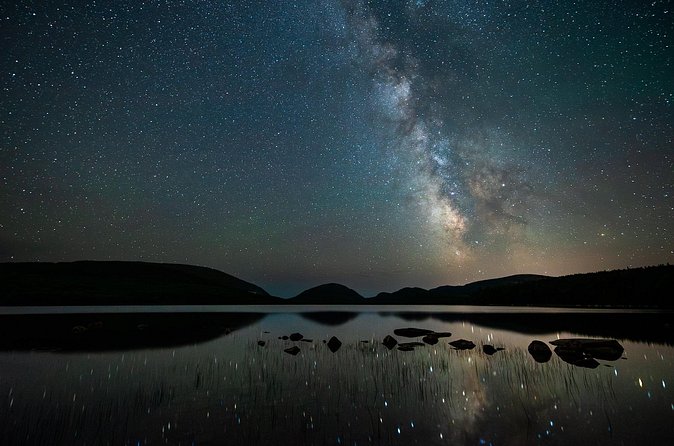
This experience suits you if you already know the basics of manual photography and want a stronger night workflow. It is especially useful if you have taken Milky Way photos but are not yet confident with planning, foreground exposures, stacking, or Photoshop blending.
It also fits photographers who want to learn from a calm instructor in a small group. Christopher’s teaching is repeatedly praised for patience, warmth, and clear guidance, which can make a difference when the subject feels technically demanding.
You may want to skip it if you are looking for a cheap introduction, a daytime sightseeing trip, or a guaranteed clear sky. The price and late hours require a real commitment. You also need to arrange your own room and meals.
Should you book the Acadia Milky Way workshop?
Book it if you want more than a few attractive night photos. The combination of five Acadia locations, private transport, field instruction, PhotoPills planning, and a private editing session gives you a full photography course rather than a short outing.
Before booking, confirm the exact five-day schedule, the correct Acadia entrance fee, the lodging plan, and how weather decisions are handled. If you have the required gear and a basic technical foundation, this looks like a strong choice for building a repeatable astrophotography process.
If your main goal is simply to see the Milky Way, $2,500 is hard to justify. If your goal is to learn how to plan, shoot, blend, stack, and finish professional-quality night images, the small group and personal instruction make the cost easier to defend.
FAQ
How long does the workshop last?
The workshop lasts approximately five days.
Where does the workshop take place?
It takes place in Acadia National Park, with Bar Harbor listed as the location.
Which places are included in the photography schedule?
The planned locations are Jordan Pond, Otter Cliff, Bubble Pond, Sand Beach, and Eagle Lake.
What camera do I need?
You need a DSLR or mirrorless camera capable of long exposures.
What lens should I bring?
You should bring a wide-angle lens with an aperture of f/2.8 or faster.
Do I need a tripod and intervalometer?
Yes. You need a sturdy tripod and an external intervalometer unless your camera has an intervalometer built in.
Are transportation and food included?
Private transportation within Acadia National Park is included, along with bottled water and snacks in the vehicle. Meals are not included.
Can I cancel for a full refund?
Yes. You can cancel at least 24 hours before the experience begins for a full refund. Poor weather or failure to meet the minimum number of participants may also result in a new date or a full refund.
More National Park Stargazing in the USA
- Stargazing in Zion National Park’s International Dark Sky
★ 5.0 · 73 reviews - Astro-Photo, Hiking and Stargazing Tour in Arches National Park
★ 5.0 · 63 reviews - Private Stargazing – Sequoia National Park
★ 4.5 · 14 reviews - Sequoia National Park: Group Stargazing Program
★ 4.7 · 10 reviews
Just added around the USA
- Stargazing and Milky Way Portrait in Capitol Reef National Park★ 4.5 · 13 reviews
- Temecula Wine Country Stargazing Tour★ 5.0 · 2 reviews
- Astronomy and Stargazing Tour in Utah★ 5.0 · 8 reviews
- Private Stargazing – Sequoia National Park★ 4.5 · 14 reviews
- Sunset Sedona Sacred Places -gourmet picnic dinner and stargazing★ 5.0 · 12 reviews
- Sedona Night Hike and Stargazing★ 5.0 · 7 reviews
- Stargazing Tour with Telescopes and Video Astronomy in Sedona★ 5.0 · 40 reviews
- PRIVATE Sedona Jeep Tour 4X4 Stargazing Tour at Night★ 4.5 · 11 reviews
Astrophotography Tours, compared.
Private astronomy tour with sunset toast, picnic, and astrophotography
Read our review →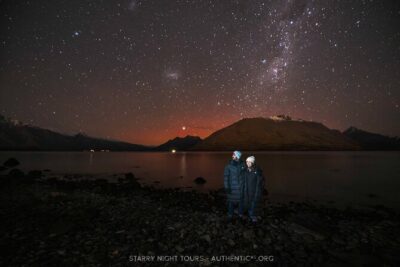
AuthenticAs Star Gazing -Nightscape Portrait Photography Tour
Read our review →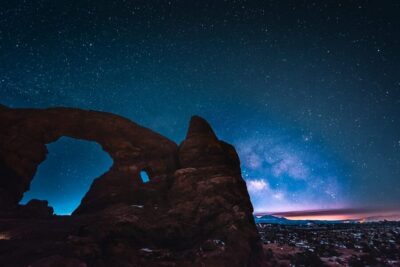
The Windows Astro-Photography and Stargazing Hike
Read our review →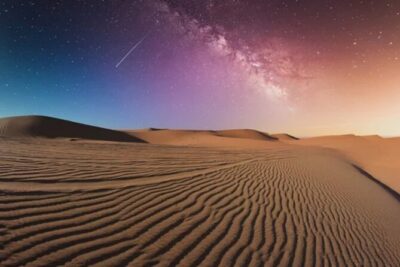
Doha Night Desert Safari, Stargazing, Photography، Relaxation
Read our review →
Private Stargazing Photography Tour In Kabira Bay
Read our review →Private Stargazing Photography Tour In Kabira Bay
Read our review →
Browse the lists this tour appears in