
Review · TELESCOPE
Uluru: National Park Astronomy Tour with Telescope and Photo
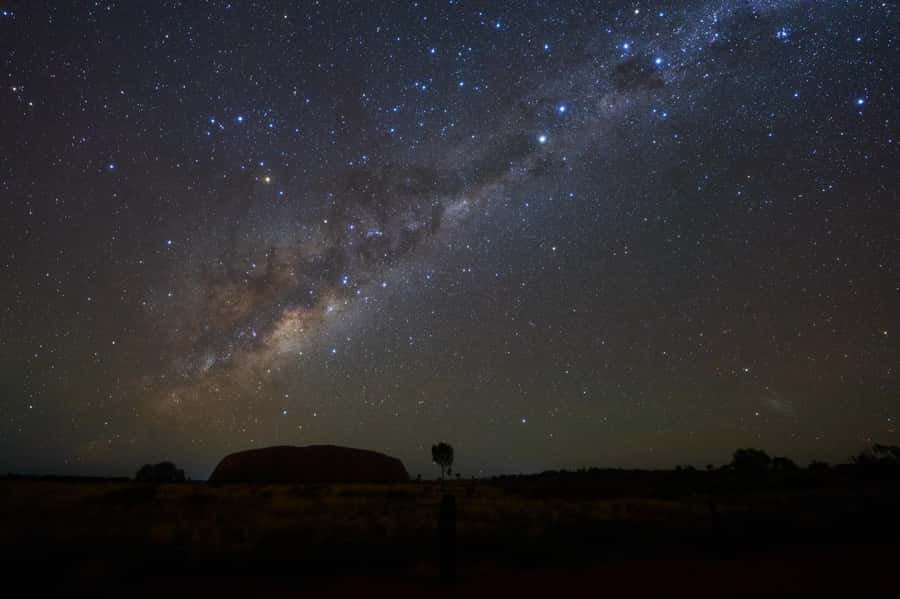
The outback sky does the heavy lifting. This 150-minute evening tour takes you away from resort lights and into Uluru and Kata Tjuta National Park, where guides point out stars, planets, constellations, and Indigenous sky stories. You also get telescope time, help with night photography, and a digital portrait with Uluru beneath the stars.
I especially like the dark-sky setting and the way the guides mix science with Indigenous astronomy. The included professional photo is another smart touch, since it gives you a keepsake that is far better than most quick phone snapshots. The main concern is group size: on busy nights, several buses and only a few telescopes can mean waiting.
The tour costs $91 per person, including transport, guide, telescope use, and one digital photograph. That is fair value if you want more than simply looking up from the resort, though the experience depends on cloud, moonlight, telescope queues, and how many people book that night.
Key points before you book
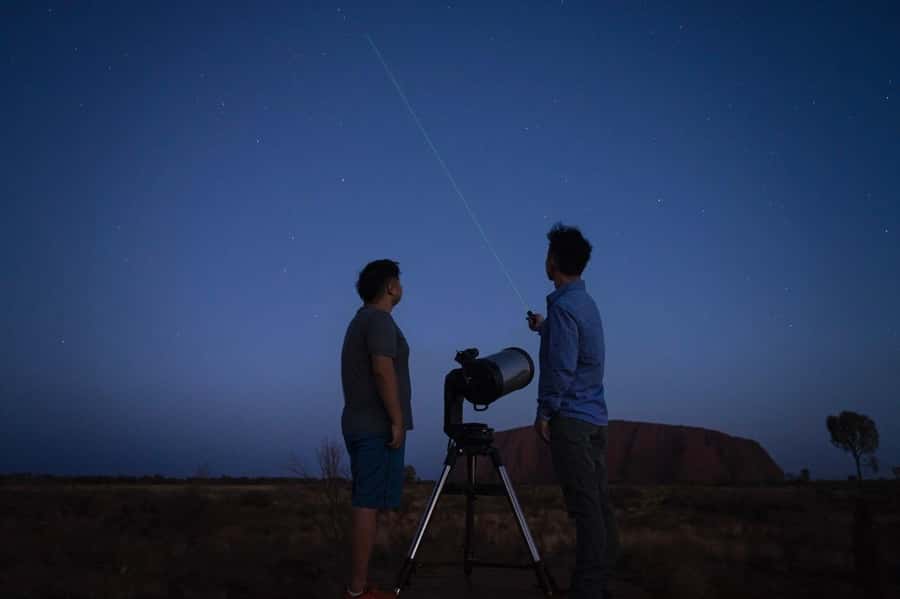
- The best views come after leaving resort lights behind: The tour travels to a darker location in the National Park, making the Milky Way and faint stars easier to see.
- Telescopes add real variety: You might see planets, nebulae, star clusters, Saturn’s rings, the Moon, or other distant objects depending on the night and season.
- Indigenous astronomy is part of the storytelling: Guides connect the southern sky with ancient stories and practical uses of stars.
- A professional night portrait is included: The photo shows you with Uluru and the star-filled sky behind you.
- Cold weather can surprise you: Blankets are available, but warm layers, closed shoes, and a water bottle are sensible.
- Queues can affect the pace: A large group may mean waiting for a telescope or for your long-exposure photograph.
Leaving the resort for a darker Uluru sky
Your evening begins with pickup from your accommodation. Look for the bus marked Atrip, and check your email for the confirmed pickup time on the day of the tour. The drive to the stargazing location is part of the point: the farther you get from artificial light, the more stars your eyes can pick out.
The setting is in or around Uluru and Kata Tjuta National Park, with Uluru providing a memorable outline beneath the sky. You do not need to bring your own National Park Pass for this activity, which keeps the arrangements simple.
The transfer is generally described as comfortable, and the full outing takes about two and a half hours. That includes transport, setup, storytelling, telescope viewing, photography, and the ride back to your accommodation. You are not committing an entire evening, but you should still allow time around the stated duration in case pickup or the final photo session runs slowly.
This is not a quick stop beside the road. The guides set up folding seats and telescopes, and blankets may be available when the temperature drops. Several people found the cold stronger than expected, particularly from April through September. Even in warmer months, conditions can change once you sit still under an open sky, so bring layers rather than relying on the daytime heat.
More Telescope Stargazing in Australia:
- Blue Mountains: Stargazing with a Telescope and Astronomer
★ 4.4 · 21 reviews - Brisbane: Glow Worms, Sunset, Telescope Stargazing & Dinner
★ 4.0 · 15 reviews - Teide by Night: Sunset & Stargazing with Telescopes Experience
★ 4.5 · 1,492 reviews
A guided tour of the southern night sky
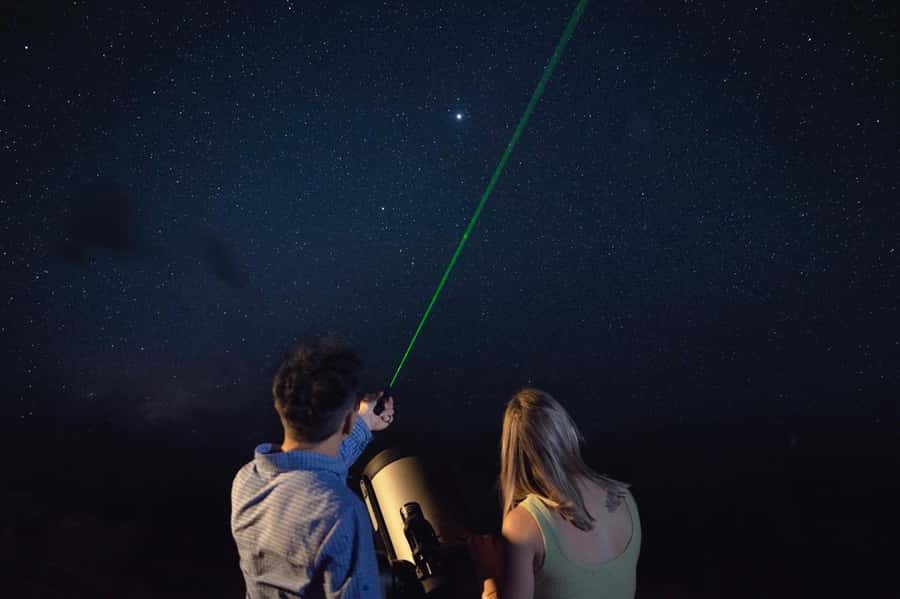
Once everyone is settled, the guide uses a laser pointer to identify stars and constellations. This makes a major difference. Looking at an enormous sky can feel confusing at first, especially in the Southern Hemisphere, where many familiar northern constellations are absent or appear in unfamiliar positions.
The guides explain what you are seeing in plain terms, then add stories and cultural context. Indigenous astronomy is not treated as a small extra at the end. It forms part of the explanation of how the sky has been read, remembered, and used across generations.
The strongest guides, including Neil, Lucy, Zack, Olina, Ollie, and Michaela, have been praised for being friendly, funny, and easy to approach. That matters because this tour suits beginners as much as experienced amateur astronomers. You can ask a simple question without feeling out of place, or ask something more technical if you already know your way around the night sky.
The science content can vary slightly with the guide and the group. Some people would like more hard astronomy, while others appreciate the balance of science, storytelling, and time simply sitting under the stars. If you want a university lecture, this is not it. If you want an understandable introduction with a strong sense of place, the format works well.
A microphone would help on particularly busy evenings. When several people chat at once, it can be difficult to hear every detail, especially when the guide is speaking to a large group outdoors. Choose a spot close to the guide if the subject matters to you.
What you see through the telescopes
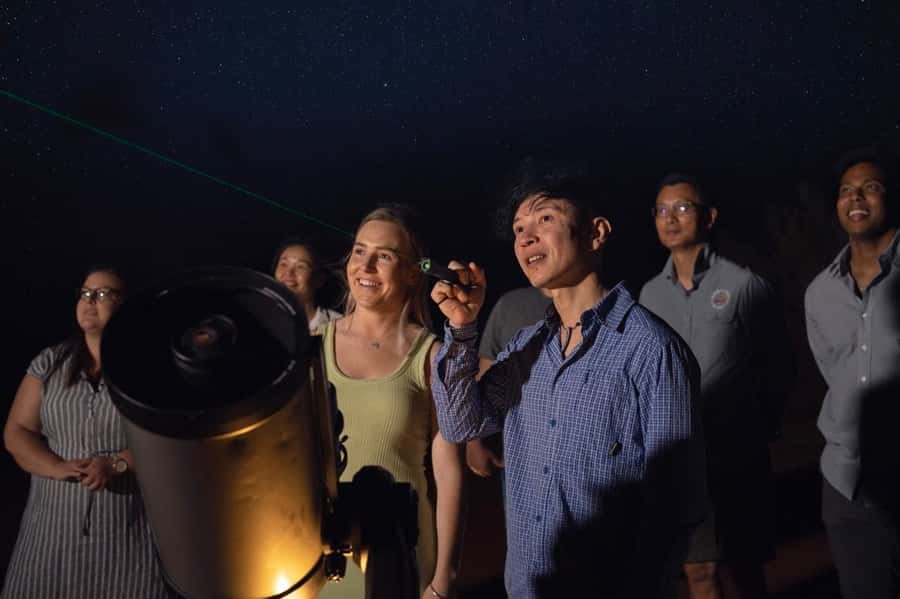
The naked-eye sky is the main event, but the telescopes give the evening a useful second layer. Guides aim the equipment at selected planets and deep-sky objects, which can include nebulae, star clusters, and distant stars. Depending on the date and conditions, you might see Saturn’s rings, the Moon, the Pleiades, Alpha Centauri, or other objects.
Saturn is a particular highlight when it is visible. Seeing the rings through a telescope is far more striking than hearing about them, even if the image is small. Some sessions have also included views of Pluto, the Moon, nebulae, and the Seven Sisters, although the exact selection changes with season, visibility, and the position of the planets.
Do not expect every telescope view to look like a glossy space-agency photograph. The experience is about seeing real objects through the equipment in front of you, with the guide explaining what is in the eyepiece. The visual quality also depends on atmospheric conditions and how well the group follows the viewing process.
The main weakness is waiting time. On one busy evening, two large buses shared three telescopes, and the queue for the photo reached roughly 45 to 60 minutes. Another person found that one telescope created a long wait. If you are visiting during a busy period, expect the telescopes to be shared rather than available on demand.
That said, the equipment is well prepared, and the guides help you understand what you are looking at. Binoculars are also used, giving you another way to examine parts of the sky while you wait.
The professional photograph with Uluru
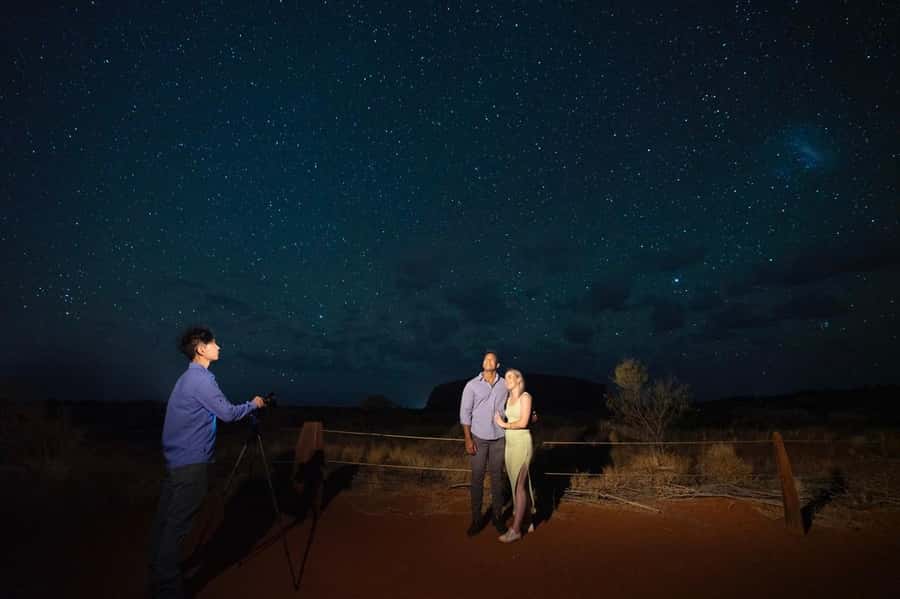
The photo is more than a quick group snapshot. A long-exposure camera captures you beneath the stars, with Uluru in the background, and the finished digital image is included in the tour price.
This is one of the tour’s best practical features. Night photography is hard, even with a good phone. People move, the sky is dark, and Uluru can disappear unless the camera is set carefully. A professional setup gives you a much better chance of taking home a clear image of the occasion.
The photography process can slow the evening. Each person or small group needs to be arranged for a long exposure, and larger parties may take time deciding who should be included. If you are travelling with family or friends, decide beforehand who should appear in the picture.
The image is provided for download later. One person had not received the file immediately after the tour, so keep an eye on your email and allow some time for delivery. The photo is a pleasant extra, not the sole reason to book, but it adds real value to the $91 price.
More National Park Stargazing in Australia:
- Tenerife: Teide National Park Sunset & Stargazing Tour
★ 4.2 · 3,812 reviews - Tenerife: Sunset and Stargazing at Teide National Park
★ 4.7 · 2,826 reviews - Teide National Park Sunset & Stargazing with Dinner (Star Safari)
★ 5.0 · 2,601 reviews - Teide National Park: Sunset & Stargazing Safari with Dinner
★ 4.6 · 2,115 reviews
Bring your own camera, but keep expectations sensible
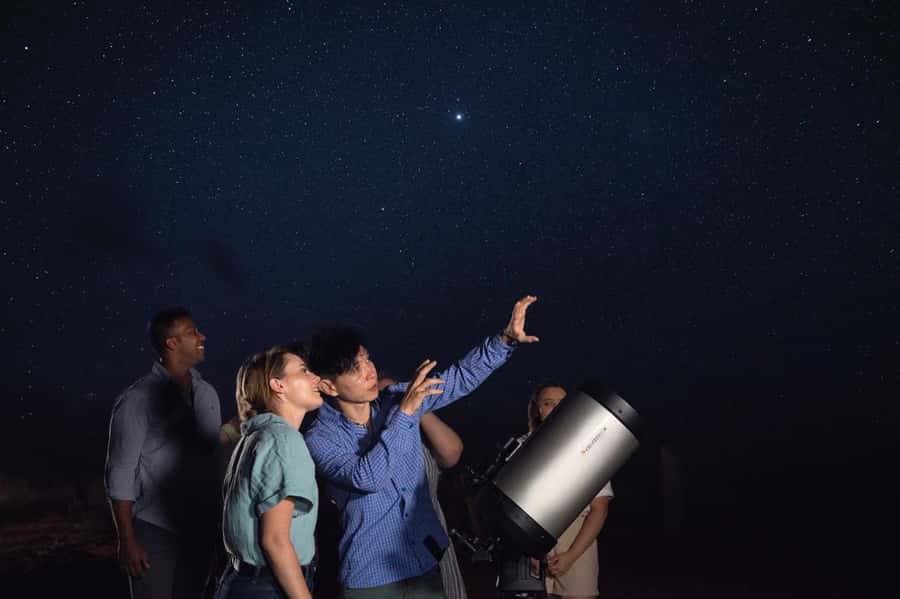
If you enjoy night photography, bring your own camera and tripod. You can try your own shots during the session, and the guides may help with phone settings. Several people found this useful, especially when trying to photograph the Milky Way or the moon.
A tripod matters because long exposures need a steady camera. A phone can produce good results too, but you will get more from it if you already know how to switch to a night mode or manual setting. It is worth practising before you leave home instead of trying to learn while everyone is waiting.
Do not let camera work take over the evening. The sky above Uluru is difficult to reproduce on a screen, and the strongest part of the experience is simply being there, with no city glow around you.
Moonlight is another important factor. A bright moon can make the evening beautiful in a different way, but it washes out many faint stars. A new moon usually gives the darkest sky, while a full moon makes Uluru easier to see and can create attractive silhouettes. The operator cannot control the lunar calendar, so check the moon phase if night-sky photography is your priority.
Cloud can also limit what you see. One session began with some cloud but still turned into a worthwhile night. Clear skies give the best result, but no astronomy tour can promise them.
Why the $91 price can make sense
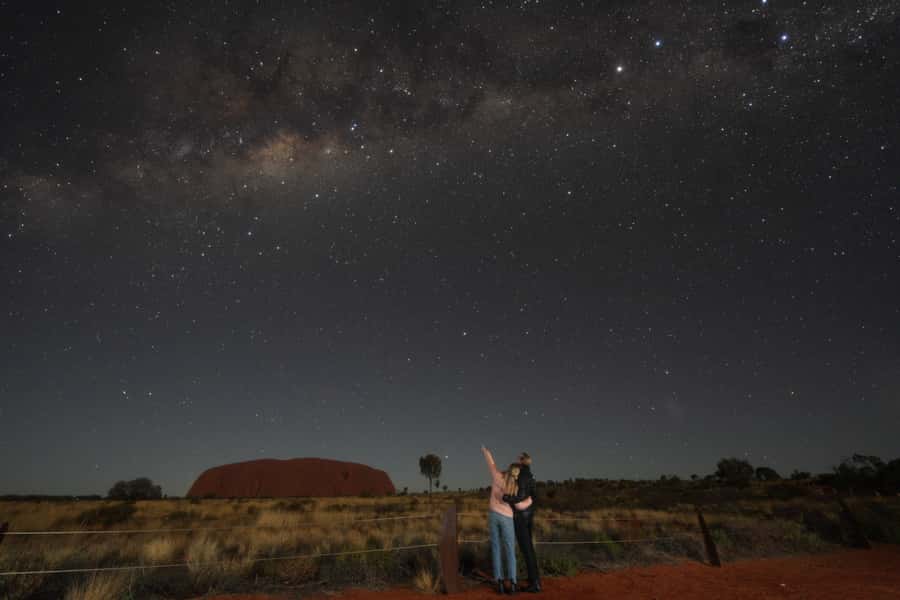
At $91 per person, this is not the cheapest way to look at the stars. You could step outside your accommodation for free and see plenty on a clear night. The difference here is the transport to a darker location, the guide’s explanation, access to telescopes, assistance with photography, and the included professional image.
For a first-time stargazer, that package is good value. You do not need to know the constellations, own equipment, or arrange a ride into the National Park. The English and Chinese guide options also make the activity more accessible to different groups.
The value is less clear if you are an experienced astrophotographer with your own dark-sky plan. You may find the group pace restrictive, particularly when the telescopes and photo station are busy. You will still benefit from the location, but the tour is designed for a shared experience rather than a private observing session.
Free cancellation up to 24 hours before departure and the reserve-now, pay-later option make it easier to fit the activity into a changeable Uluru itinerary. Those details are useful in a region where weather can affect outdoor plans.
Who will enjoy this tour most
I would recommend it most strongly to:
- First-time stargazers who want an easy introduction
- Families with older children and teenagers
- Couples who want a memorable night photo
- Visitors who want Indigenous astronomy alongside basic science
- Amateur photographers carrying a tripod
- Anyone staying at the resort without their own transport
Children can enjoy the spectacle, but the tour involves sitting quietly, waiting for telescope access, and listening outdoors at night. A young person who loves space may find it the highlight of the Uluru visit. Someone who needs constant activity may lose patience during queues.
The experience also suits people who prefer a guide to do the organising. Pickup, transport, equipment, seating, and photography are handled for you. You simply arrive, look up, and ask questions.
Practical tips for a better night
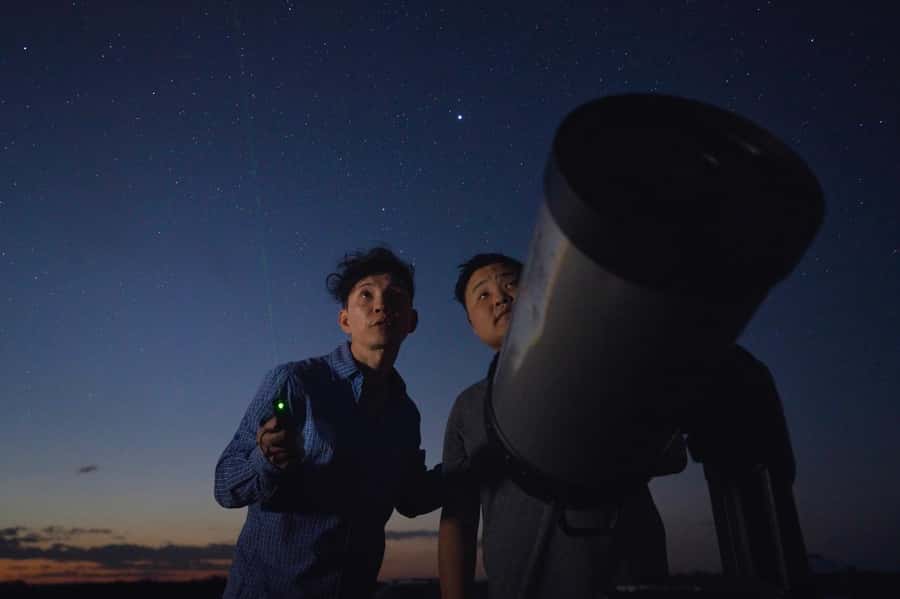
Bring warm clothing even if the afternoon feels hot. Several people were surprised by how cold the night became, especially in May and during winter. Closed-toe shoes are recommended, and a reusable water bottle is sensible.
Try to stand or sit where you can hear the guide clearly. On a large departure, the back of the group may miss some of the explanations. If you care most about the telescope views, move through the queue when invited rather than waiting until late in the session.
Ask questions. The guides are praised for being approachable, and the value of the tour comes partly from their explanations. If you are interested in Indigenous sky stories, astronomy, or phone photography, say so early.
Finally, give your eyes time to adjust to the darkness. Resist checking your phone every few minutes. A bright screen can make it harder to see faint stars, and the sky rewards patience.
Should you book the Uluru astronomy tour?
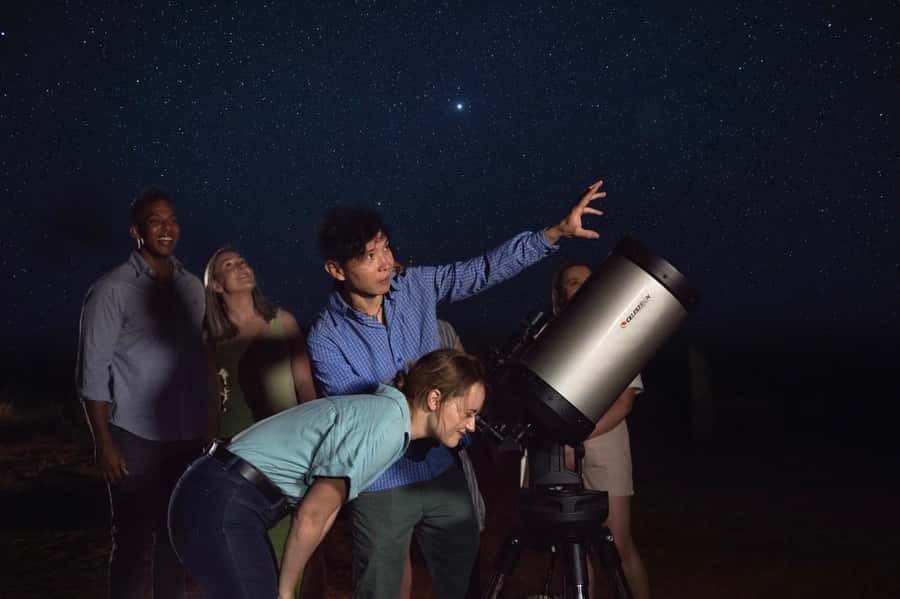
Yes, if you want an organised introduction to the night sky and a chance to see Uluru after dark. The combination of a dark National Park setting, telescopes, Indigenous astronomy, helpful guides, and a professional photo makes this more worthwhile than a simple resort-side stargazing session.
Book with realistic expectations. You may wait for a telescope, the moon may brighten the sky, clouds may interrupt the view, and a large group can soften the quiet atmosphere. If you can choose your date, aim for a clear evening close to the new moon, and dress more warmly than you think you need.
For most visitors, this is a strong evening addition to an Uluru itinerary. The professional photo is a bonus, but the real reward is sitting beneath a southern sky that feels much larger once the resort lights are gone.
FAQ
How long does the Uluru astronomy tour last?
The tour lasts 150 minutes, including pickup, transport, stargazing, telescope use, photography, and return to your accommodation.
What is included in the $91 price?
The price includes the tour, guide, hotel pickup and drop-off, use of telescopes, and one digital professional photograph.
Do I need a National Park Pass?
No. You do not need to bring your own National Park Pass for this tour.
What should I bring?
Bring warm clothing, closed-toe shoes, and a reusable water bottle. You can also bring your own camera and tripod if you want to try night-sky photography.
Is the tour available in languages other than English?
The live guide is available in English and Chinese.
Can I cancel the booking?
You can cancel up to 24 hours before the activity for a full refund. The reserve-now, pay-later option lets you book without paying immediately.
Just added around Australia
- Vincentia: Jervis Bay Beach Stargazing with an Expert★ 4.9 · 19 reviews
- Blue Mountains: Stargazing with a Telescope and Astronomer★ 4.4 · 21 reviews
- Gold Coast: Glow Worms, Sunset & Stargazing with BBQ dinner★ 4.5 · 3 reviews
- Pinnacles Desert Sunset Stargazing Adventure Tour from Perth★ 5.0 · 25 reviews
- Jervis Bay Beach Stargazing Tour with our Astronomer★ 5.0 · 35 reviews
- Brisbane: Glow Worms, Sunset, Telescope Stargazing & Dinner★ 4.0 · 15 reviews
- Exmouth: Summer Sunset Turtle Watching and Stargazing Tour★ 5.0 · 2 reviews
- Esperance: Astronomy Night Experience★ 5.0 · 5 reviews
Telescope Stargazing, compared.
Teide by Night: Sunset & Stargazing with Telescopes Experience
Read our review →
Teide National Park: Guided Large Telescope Stargazing Tour
Read our review →
Northern Lights Tour and Stargazing by Telescope
Read our review →
Jasper Planetarium and Telescope Combo Tour Tickets
Read our review →
Cavalleria: Guided Stargazing at the Beach with Telescope
Read our review →
Stargazing Tour with Telescopes and Video Astronomy in Sedona
Read our review →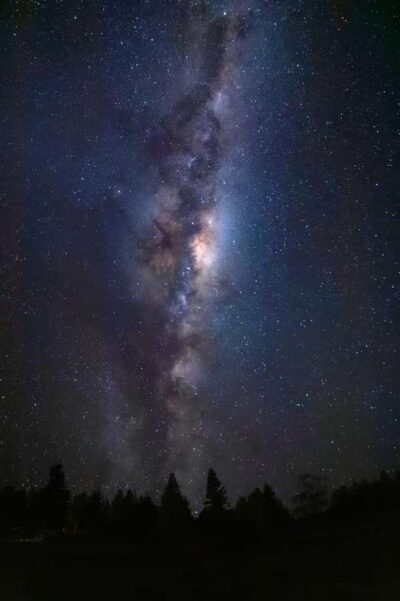
Twizel: Stargazing Tour with an Astronomer and Telescope
Read our review →Browse the lists this tour appears in