
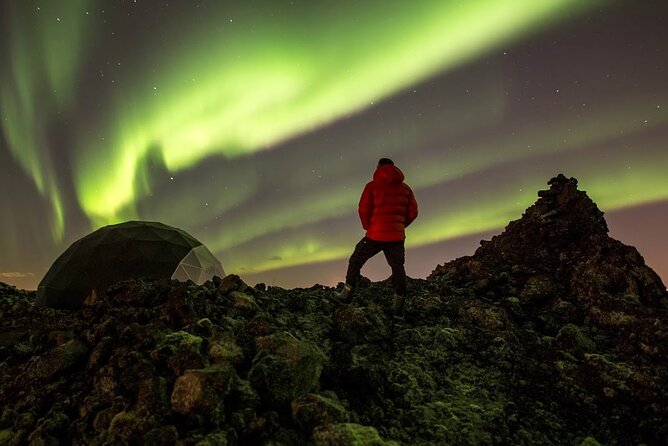
Review · ICELAND
Northern Lights: Aurora Basecamp Observatory Guided Experience
The lights are only half the story. At Aurora Basecamp in Hafnarfjörður, you get a short guided introduction to the aurora, a low-lit viewing area, and useful advice for recognizing natural lights in the sky. I like the real-time plasma tubes, which show how the aurora behaves, and I like the fire pits, benches, tea, and hot chocolate outside. The main drawback is simple: this is not a guaranteed northern lights sighting, and transportation from Reykjavik is not included.
I also like the modest 90-minute format. You can learn the basics without giving up an entire evening, then spend time outside when conditions are right. But if your only goal is to see a strong aurora, you need to remember that weather and geomagnetic activity control the result, not the observatory.
Key points at a glance
- Real-time plasma tubes: The exhibition uses special tubes that mirror current aurora activity, giving you a visual way to understand what may appear overhead.
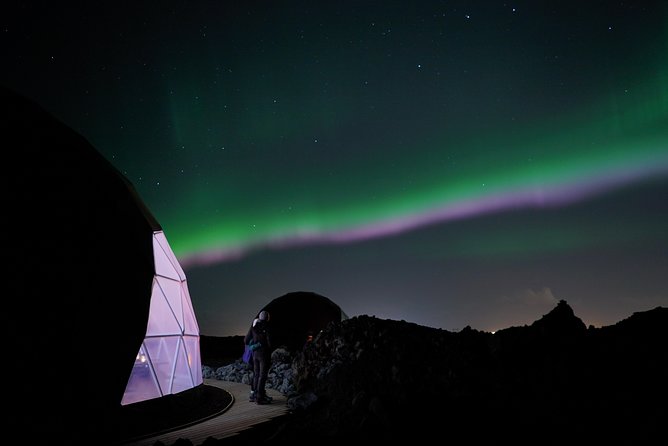
- Fire pits and benches outdoors: The viewing area is kept dim and includes places to sit near fires while you watch the sky.
- Hot chocolate and tea included: Warm drinks make the waiting period easier, especially on a cold or cloudy night.
- About 90 minutes on site: The visit combines a guided exhibition with outdoor viewing time.
- No transportation from Reykjavik: You must arrange your own way to Aurora Basecamp in Hafnarfjörður.
- Small-group feel is possible, but not guaranteed: The maximum group size is 50 people, so the atmosphere may vary by departure.
Aurora Basecamp puts the science first
Aurora Basecamp is at 417, 221 Hafnarfjörður, outside Reykjavik. The experience begins with a guide leading you through a compact exhibition about the northern lights and the different phases they can take.
That introduction matters. Many first-time viewers expect the aurora to look like bright green curtains waving across the entire sky. Sometimes it does. Often, the first signs are much fainter: a pale streak, a soft gray-green arc, or a quiet glow that can be mistaken for cloud.
The guide helps you learn what to look for. This is one of the strongest parts of the visit because it gives you a better chance of recognizing an actual aurora before it becomes more dramatic. The experience is not simply a place to wait in the dark with a camera pointed upward.
The exhibition is small, so do not expect a large museum with room after room of displays. Its value comes from the explanation. You get a focused lesson before heading outside, and that makes the sky easier to read.
More Observatory Visits in the world:
- Mount John Observatory Stargazing Experience, Tekapo
★ 4.5 · 160 reviews - Tenerife: Mount Teide Observatory Astronomical Tour
★ 4.4 · 126 reviews - Stargazing Experience at Cowan’s Private Observatory
★ 4.0 · 85 reviews
The plasma tubes make an abstract subject easier to understand
The most unusual feature inside is the set of Northern Lights Plasma Tubes. These tubes mirror aurora activity in real time, showing the natural lights in a controlled and easy-to-see form.
That is helpful because the aurora can be hard to understand from a verbal explanation alone. The tubes give you a visual reference for movement and changing activity. You can connect what you see inside with the patterns you might later notice above you.
I especially like this feature for families and first-time visitors. Children may find a display like this easier to grasp than a technical talk, while adults get a clearer sense of why the lights change from faint and steady to active and shifting.
The tubes do not predict a guaranteed display overhead. They are an educational aid, not a promise. Still, they give the indoor portion a purpose even on a night when clouds or weak activity keep the sky quiet.
The outdoor viewing area is designed for patience
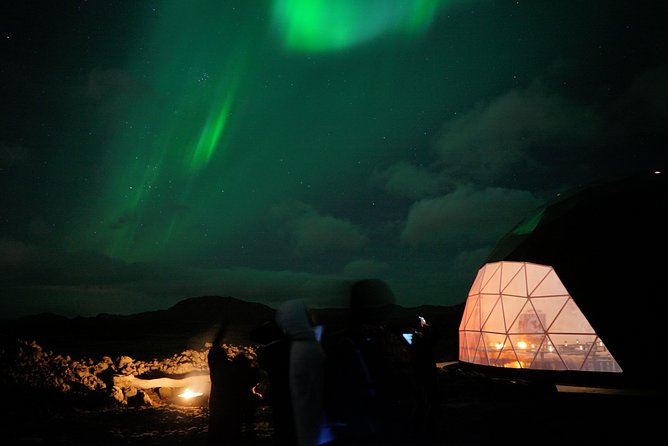
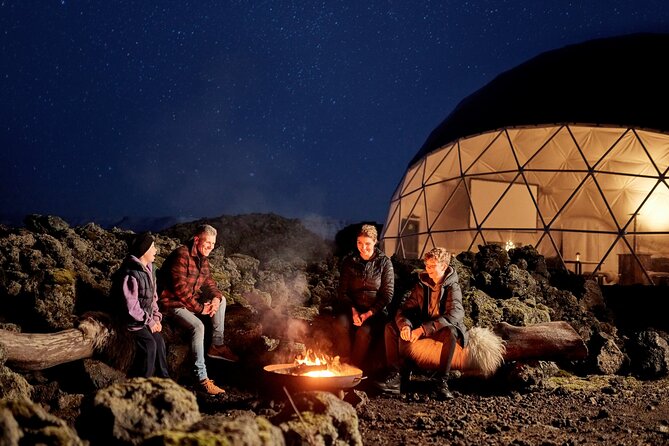
After the exhibition, you move outside to the observatory area. It is deliberately low-lit, which helps protect your night vision and reduces stray light while you look upward.
Benches are arranged around fire pits, giving you a place to sit while you wait. This is a practical touch. Northern lights viewing can involve long stretches of stillness, and standing in the cold with your neck tilted back gets uncomfortable quickly.
The fires also give the outdoor area a social, relaxed feel. You can warm up without returning indoors every few minutes, and the setting encourages you to enjoy the open air even if the aurora does not appear.
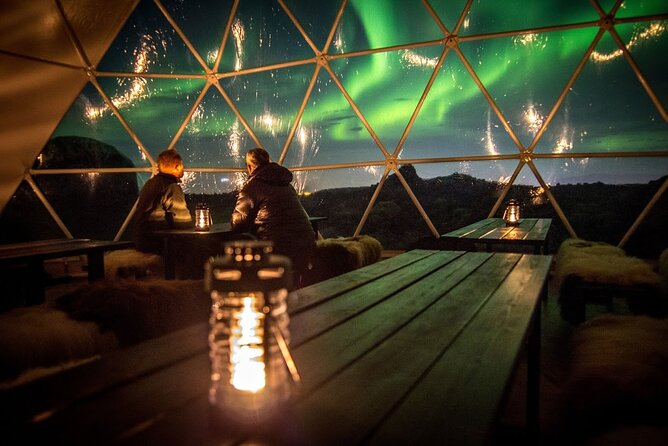
A dome is also available as a warm place to stay, according to the experience details. That gives you another option when the temperature becomes unpleasant. The information does not specify how much indoor viewing space there is, so I would think of the dome and fires as comfort features rather than a replacement for being outside.
The low lighting is useful, but it also means the area may feel quite dark. Bring patience and dress for Icelandic weather. Tea and hot chocolate are included, but warm drinks do not replace proper outdoor clothing.
Your guide adds the most practical value
A guide accompanies you through the exhibition and explains the different stages of the aurora. The strongest praise for this experience centers on the instructor’s explanation and practical help.
That personal guidance is important. You can find basic northern lights facts online, but an on-site guide can show you how to distinguish natural lights from ordinary clouds or light pollution. The guide can also explain why a clear night does not always produce a strong display.
The experience also gives you insider tips for improving your chances of seeing the aurora. These tips cannot change the weather or create geomagnetic activity, but they can improve your preparation and expectations.
One particularly useful lesson is to avoid treating the aurora as an instant show. You may see nothing at first, then notice a faint band after your eyes adjust. A guide who points out subtle changes can make the difference between missing a weak display and recognizing it.
No guide name is provided for this experience, so I would not book it expecting a particular instructor. The quality of the evening depends in part on who leads your visit, but the format gives the guide a clear job: explain the science, help you identify the lights, and make the wait more comfortable.
More Guided Tours in the world:
- Teide: Guided Sunset & Stargazing Tour by Night with Dinner
★ 4.7 · 1,339 reviews - Lake Tekapo: Alpine Stargazing Experience with a Guide
★ 4.5 · 626 reviews - Fuerteventura: Guided Stargazing Calderón Hondo Volcano Tour
★ 4.7 · 594 reviews - Teide National Park: Guided Large Telescope Stargazing Tour
★ 4.9 · 319 reviews
What the 90-minute visit feels like
The total visit lasts about one hour and 30 minutes. The sequence is straightforward:
- You meet at Aurora Basecamp in Hafnarfjörður.
- A guide takes you through the exhibition.
- You learn about aurora phases and watch the plasma tubes.
- You go outside to the low-lit viewing area.
- You use the benches and fire pits while watching the sky.
- Tea and hot chocolate help you stay warm.
- The visit ends back at the meeting point.
This compact schedule works well if you are fitting several activities into an Iceland itinerary. You get a clear introduction and a chance to look for the lights without committing to a full-night chase.
The limit is flexibility. A 90-minute visit may end before the aurora becomes active. If the sky is quiet during your scheduled time, you may leave with good information but no sighting. The experience is best viewed as a guided observatory visit, not as a guaranteed aurora hunt.
A sighting is never promised
This point deserves plain language: Aurora Basecamp cannot control the northern lights.
The aurora depends on solar activity, geomagnetic conditions, cloud cover, darkness, and local visibility. Even a clear night can be disappointing if activity is weak. A cloudy night can hide a display that is happening above the clouds.
The experience details openly set this expectation, and one evening received high praise even though the lights did not appear. That is a fair result for a natural phenomenon. The guide still provided useful information and advice for finding the lights on a better night.
At the same time, another visit produced a successful sighting, and the instructor received strong praise for helping make the experience suitable for a family. Those two outcomes show the basic reality of aurora tourism: you are buying access to a good viewing setup and informed guidance, not a guaranteed spectacle.
If seeing the aurora is the single most important goal of your Iceland trip, consider allowing more than one night for it. Aurora Basecamp can improve your understanding and comfort, but it cannot remove the element of chance.
The $30 price is reasonable, with one major cost to add
The listed price is $30 per person. For that amount, you receive the guided exhibition, outdoor observatory access, the fire-pit viewing area, and hot chocolate or tea.
I consider that fair value for a short educational experience, especially if you appreciate the science behind the aurora. The price is easier to justify when you treat the visit as both a lesson and a viewing opportunity. If you only want a guaranteed light show, no price is truly safe because no provider can promise the sky will cooperate.
The important extra cost is getting there. Transportation is not included. One person reported spending more than 11,000 Icelandic króna to reach the site from Reykjavik and more than 12,000 króna to return. Actual fares can vary, but that warning is worth taking seriously.
A $30 ticket can become an expensive evening if you have not planned transport. Check the route, taxi cost, or other available arrangements before booking. The meeting point is in Hafnarfjörður, not central Reykjavik, so do not assume you can simply walk over from your accommodation.
Who will enjoy this experience most
I think Aurora Basecamp suits several types of visitors particularly well.
First-time aurora viewers will benefit from the explanation of aurora phases and the help identifying faint activity. If you have never seen the lights before, the exhibition gives you a useful foundation.
Families may appreciate the short duration, indoor exhibition, warm drinks, and fire pits. The plasma tubes offer something visual to enjoy even when the sky is inactive.
Photographers and sky watchers may like the low-lit outdoor area because it is intended to reduce unnecessary light. Still, the supplied information does not promise special photography support or equipment, so bring realistic expectations.
Visitors with limited time can fit the 90-minute stop into a busy Iceland schedule. You get a focused experience instead of spending an entire night on an uncertain search.
It may be less suitable if you want a guided chase across several locations. This experience keeps you at the observatory. It also may disappoint anyone who sees the educational portion as unnecessary and only wants a strong, immediate aurora.
Most people can participate, and service animals are allowed. The maximum group size is 50, so the atmosphere may be intimate on one evening and busier on another.
What to bring and how to prepare
Dress as if you will spend meaningful time outside. The fire pits and warm drinks help, but they do not make Icelandic night conditions mild.
Before you go, check your transport plan carefully. The experience begins and ends at Aurora Basecamp in Hafnarfjörður, and the ticket does not include transportation from Reykjavik.
Keep your expectations flexible. You may see a bright display, a faint glow, or nothing at all. The best attitude is to value the explanation, the warm viewing area, and the chance to improve your skills for the next clear night.
If you are booking around a tight schedule, note that this experience is often reserved about 38 days in advance on average. That does not guarantee availability rules for your dates, but it suggests that planning ahead is sensible.
Free cancellation is available if you cancel at least 24 hours before the scheduled start. Cancellations or changes made less than 24 hours before the start are not refunded or accepted.
Should you book Aurora Basecamp?
Book it if you want a reasonably priced, guided introduction to the northern lights with a comfortable place to wait. The plasma tubes, practical instruction, low lighting, fire pits, benches, and warm drinks give the visit more substance than a simple outdoor lookout.
Skip it if you expect transportation from Reykjavik to be included or if you need a guaranteed aurora sighting. The added transport cost may be significant, and the natural conditions remain beyond anyone’s control.
My advice is to book Aurora Basecamp as part of a wider northern lights plan, not as your only chance. You may see the aurora, and the guide can help you recognize it. Even on a quiet night, you leave with a better sense of what to look for next time.
FAQ
Where does Aurora Basecamp meet?
The meeting point is Aurora Basecamp at 417, 221 Hafnarfjörður, Iceland. The experience ends back at the same meeting point.
How long does the experience last?
The visit lasts approximately one hour and 30 minutes.
Is transportation from Reykjavik included?
No. Transportation is not included, so you must arrange your own way to Aurora Basecamp in Hafnarfjörður.
Are drinks included?
Yes. Hot chocolate and tea are included during the experience.
Is seeing the northern lights guaranteed?
No. The aurora is a natural phenomenon, and sightings depend on weather and geomagnetic activity.
Can I cancel for a full refund?
Yes, if you cancel at least 24 hours before the experience start time. Cancellations or changes made less than 24 hours before the start are not refunded or accepted.
Just added around the world
- ( canyon hurghada & stargazing )★ 4.9 · 16 reviews
- Vincentia: Jervis Bay Beach Stargazing with an Expert★ 4.9 · 19 reviews
- Twizel Stargazing Experience with a Guide (Carbon Positive)★ 4.7 · 26 reviews
- Twizel: Stargazing Tour with an Astronomer and Telescope★ 4.9 · 36 reviews
- Blue Mountains: Stargazing with a Telescope and Astronomer★ 4.4 · 21 reviews
- Star Safari Stargazing Experience, Martinborough★ 5.0 · 6 reviews
- Klein Karoo “High 5” Stargazing Experience in Oudtshoorn★ 5.0 · 7 reviews
- VIP Sunset & Stargazing experience★ 4.5 · 44 reviews
Observatory Visits, compared.
Royal Observatory Greenwich & Prime Meridian Entrance Ticket
Read our review →
Griffith Observatory Hike: Guided Tour through Griffith Park
Read our review →
Royal Observatory Greenwich & Prime Meridian Entry Ticket London
Read our review →
Browse the lists this tour appears in